
Is it difficult to control Florida betony? You betcha
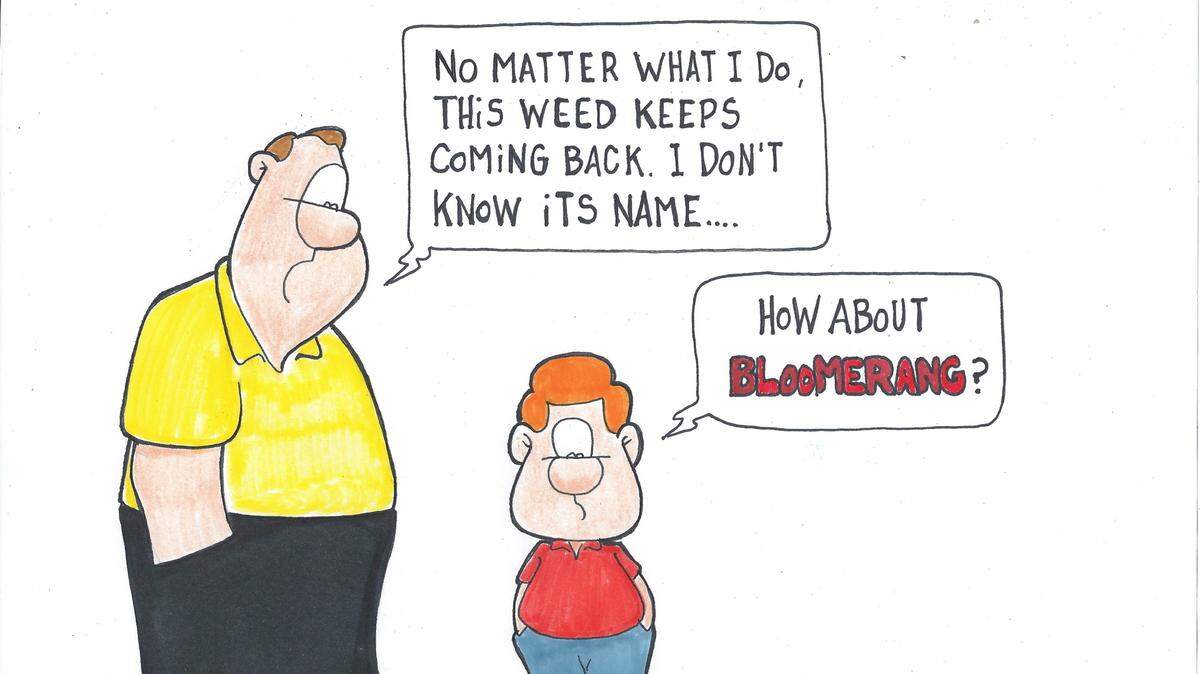
When most people think about Florida, they see orange groves, beaches or Disney World. I see a weed: Florida betony.
Florida betony (Stacvhys floridans) is known as a winter perennial and is a first cousin to heal-all (S. officianalis) and Chinese artichoke (S. affinis). It's a mint, and like most mints, it has a square stem and aromatic leaves. The unique characteristic of this particular plant is its production of a tuber that looks like the tip of a rattlesnake's tail. These tubers can reach a length of over 1 meter and give the plant its unofficial name -- rattlesnake weed. These tubers also are the reason it's so difficult to control this weed once it's established.
Florida betony is dormant during the hotter months of the year. It begins its growing season around this time of year. Extreme cold will slow it down, but it really reaches its top speed in the early spring. It can reproduce by seed, but its primary method of dispersal is through the spreading of the tuber. Even a tiny piece of the tuber can produce another plant.
Controlling this weed is both difficult and time consuming. The only good thing about attempting control is that it's done during the more comfortable months of the year. In our lawns, products containing atropine are best on centipede and St. Augustine grasses. In other types of grasses, products containing 2, 4-D, dicamba and mecoprop can provide fairly good control.
If it's in your flower bed or among your woody ornamentals, a product named Casoron (dichlobenil) is an excellent choice. Round-up (glyphosate) also has a good effect against Florida betony. No matter what you choose to use, read and follow the label's directions carefully.
If you prefer non-chemical methods, something as simple as a good layer of mulch could work over time. For that matter, you could always dig up the tubers and eat them. It is a mint, after all. Similar to Chinese chorogi, Florida betony has a sharp, radish-like flavor. Cooked, they have peppery taste.
It could take up to two years to get this weed under control. Any new plants that show up should be removed as soon as you spot them (before they start making tubers).
Tim Lockley, a specialist in entomology, is retired from a 30-year career as a research scientist for the U.S. Department of Agriculture. For answers to individual questions, please send a stamped, self-addressed envelope to Tim Lockley, c/o Sun Herald, P.O. Box 4567, Biloxi, MS 39535.