
Coast Chronicles: Greats & Boomers. Family generations create ‘tribes’
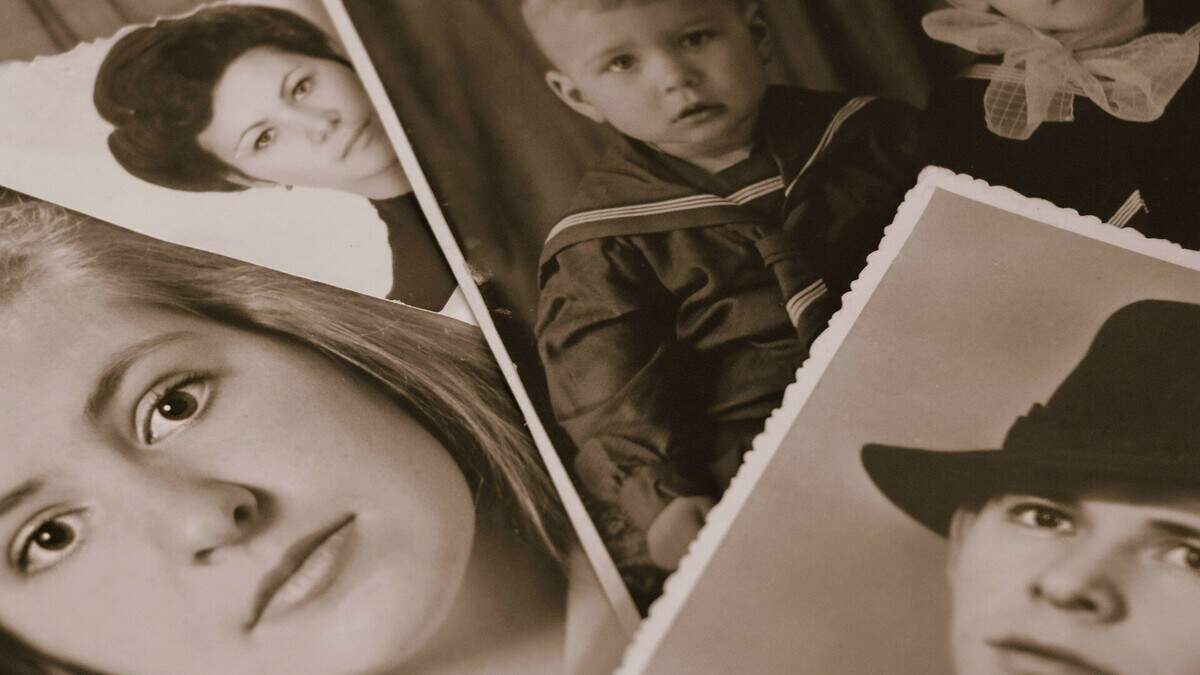
The last of my tribal elders, Aunt Elda, lies on her deathbed, a loss made more poignant as America observes its Semiquincentennial.
May the tributes to those who positively impacted our nation and our lives include our tribal elders.
In much of my lifetime, my tribe was led by members of what is delineated as the Greatest Generation, the men and women born between 1901 and 1927 who came of age in World War II to be our battlefront soldiers as well as those who became home-front warriors.
As the Greats began to die off, familial leadership often became the little recognized Silent Generation that followed the Greats. As example, my Aunt Elda belongs to these so-called Silents born between 1928 and WWII’s end, although their shared experiences often lumps them with the Greats.
Aunt Elda was the last sibling to be born in a large Louisiana Cajun family of nine kids, with the majority of her brothers and sisters correctly falling into the more widely recognized Greats. In fact, most of my aunts, uncles and my own parents do.
The Greats would now range in age from 99 to 125, so how many veterans and civilians of that generation are still alive?
It’s impossible to know with their dying off at a rapid rate but longevity increasing at the same time. They would be classed as centenarians, of course. Two years ago Pew Research estimated there were 108,000 people that are 100 years or older in the U.S. That number today would be different.
By the time the Gen Zers and Gen Xers reach old age, longevity predictions will also be a challenge because of improving medical care and lifestyles.
Did you know that the Greatest Generation is the only generational group officially designated by the U.S. Census Bureau? Because we hear so much about Baby Boomers – that’s me, a post-WWII brat! –I’m surprised the Census Bureau doesn’t make us official. Many of you reading this are likely Boomers like me because we’re the group that remains steady newspaper readers.
Before I delve more into this human habit of bestowing generational names, I pay homage to all our tribal elders. As I have pointed out, mine were mostly members of the Greats, a selfless and patriotic generation we are unlikely to see again given today’s splintering nation and prevalent me-ism.
My use of “tribe” is meant to be broader than cavemen and early peoples who felt they must isolate and ban together for survival, keeping away all others not like them. With speedy travel, internet and other amazing technology, the world is too reachable to go back to that kind of tribalism.
Instead, I use the Merriam-Webster definition: A “tribe” is primarily a social group composed of numerous families, class or generations that share the same language, customs and beliefs.
The Bergeron-Murray tribe begins in my memory with grandparents and great-grandparents, of which we were fortunate to see two become centenarians.
But when I think of my tribal elders today, the ones that influenced me most, I think of the next generation that was my parents and their 11 brothers and sisters who became my aunts and uncles.
They are typical examples of the Greatest Generation – the men and women who suffered through the throes of the Great Depression before throwing themselves full-force into World War II, either as soldiers or to help in the home-front war effort through sacrifice and hard work.
My dad, Roy L. Bergeron, was a Cajun from Louisiana and my mom, Cotton L. Murray, was an Irish-American from far-away Pennsylvania. They met in the final months of WWII when both were in the military and stationed at Pensacola Naval Air Station.
They married not long after Gen. Douglas MacArthur signed the surrender treaty with Japan.
MacArthur landed at Atsugi, a strategic Imperial Japanese naval base, in late August 1945 to established the headquarters of the Allied occupation of Japan and to sign the Japanese surrender document on the USS Missouri in Tokyo Bay. Ironically, the youngest of my siblings, Estelle, was born while our family was station at Atsugi, then turned into a strategic American naval air station.
We progeny of Roy and Cotton – one boy and three girls – are definitely post-WWII Baby Boomers, the lucky generation with more economic opportunities and ability to drive cultural and political shifts.
Research of the different generational eras shows there is no exact equation for cutoff points, and in fact some sites list the Greats birth years from 1901-1924 instead of ending in 1927.
In my mind, my Cajun aunts and uncles are all Greats and I add with a smile that’s either upper case or lower case. They always found time to come to the Mississippi Gulf Coast to check on us, or invite us for a bayou stay.
Sadly, my dying Aunt Elda is the youngest and last of her generation of Bergeron siblings –four boys and five girls who grew up on a subsistence farm on Bayou Blue. I cherish their stories of collecting Spanish moss in a pirogue to sell to furniture dealers and gathering crawfish not to eat as a novelty but as a main food source.
And, oh, the gumbos and tea cakes that came from my Cajun grandmother’s kitchen, or the unrivaled navel oranges from my grandfather’s trees.
I must also mention my Pennsylvania grandmother, an extraordinary baker and country mid-wife, and my Pennsylvania grandfather, a teacher and an oil gauger. These four grandparents were of the seldom recognized Lost Generation, the first generational era to get a designation name in our history books.
The Losts were born between 1883 and 1900 and came of age in Word War I. The term, Lost Generation, was popularized by WWI correspondent Ernest Hemingway in his 1926 novel in which he quotes Gertrude Stein telling him, “You are all a lost generation.”
Sociologists characterize the Losts as having a sense of disillusionment. Maybe I was too little to see that in my grandparents, for my young self remembers them as strong, disciplined, determined and always there for us when family tragedies struck, such as the illness and early death of my father.
Because they would be 127 or older today, no one is alive to represent the Losts. Soon the Greatest Generation and my tribal elders will be without representation, too.
I remember well the Houma funeral of my oldest aunt, Grace, who many years earlier had promised our dying father that she would not let his children forget their Cajun heritage.
As the priest commented on Aunt Grace’s apt name, another favorite aunt, Jeannette, tearfully whispered in my ear: “The tribe is getting smaller.” Aunt Jeannette, too, is now gone.
We do have a wealth of cousins to continue on, but the legacy of Greatest Generation tribal leaders is peerless. At least that is true for me, although I hope newer generations are acknowledging their own.
If you are curious about generational delineations, here’s a primer:
- Lost Generation, 1883-1900, came of age in WWI and Roaring ‘20s, faced vast wealth disparities of Gilded Age
- Greatest Generation, 1901-1927,term coined by Tom Brokaw in his1998 book of the same name, a gen characterized by those who faced the Great Depression and WWII
- Silent Generation, born 1928-1945, term likely came from 1951 Time magazine essay that described this gen as more cautious than their parents
- Baby Boomers, born 1946-1964, named from significant increase in births post-WWII, grew up in era defined by Civil Rights, Vietnam War, economic ease
- Generation X, born 1965-1980, name comes from 1991 Douglas Coupland book, “Generation X: Tales for An Accelerate Culture,” faced hands-off parenting, away childcare and divorcing parents
- Millennials, born 1981-1996, faced tech revolution with Internet as 3rd millennium approached
- Generation Z, born 1997-2012, raised on Internet and social media, and historically most diverse
- Generation Alpha, born 2013-2024, the first generation born entirely in 21st century; techno adept and digitally immersed
Kat Bergeron, an award-winning veteran reporter and feature writer who specializes in Gulf Coast history and sense of place, is retired from the Sun Herald. She writes this Gulf Coast Chronicles column as a freelance correspondent.
Reach her at: BergeronKat@gmail.com
Or, Southern Possum Tales, P.O. Box 33, Barboursville, VA 22923