
More demands, fewer dollars driving legislative agenda in Mississippi
Lawmakers will return to Jackson this week with fewer dollars to spend and the usual ever-growing list of things to spend them on.
It won't be easy to pry that money from the Republican leadership, and it will be all but impossible if a request involves a tax increase.
"Once again, your elected leaders have recommended a balanced budget that does not spend one-time money on recurring expenses," said Lt. Gov. Tate Reeves, chairman of the Joint Legislative Budget Committee, after it finished work on the next fiscal year's budget. "Today's proposal is a starting point. As we see revenues come in over the next few months, we will be better able to see how the final budget will shape up."
The committee expects the state to take in $38 million less than this fiscal year and it recommended cuts of up to 3 percent to most major agencies.
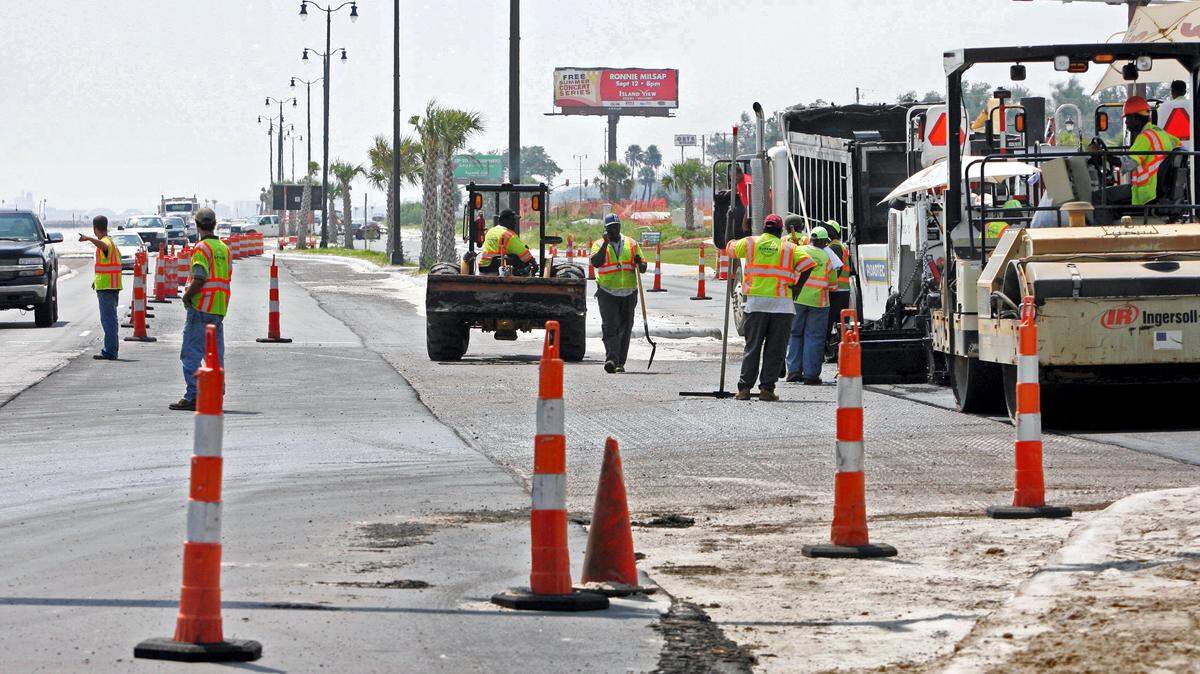
However, the Mississippi Economic Council, the state's chamber of commerce, wants the state to dramatically increase the amount of money spent on roads and bridges. An MEC report that came out in December suggests several tax increases that could pay for better roads. It argues that, in the long run, those tax increases would give taxpayers a good return on investment. It says an increase that would cost each Mississippian about 37 cents a day eventually would return about $1.45 a day in reduced driving costs.
Opponents to such a tax increase are lining up.
Others have their eyes on the $150 million the state will have to spend next year from the $750 million BP will pay Mississippi over 17 years for economic damages from the 2010 oil disaster in the Gulf. The battle over that BP money will be one of the most important fights for the Coast, its delegation says.
"I think everyone agrees we need to find a sustainable solution for the infrastructure needs in our state -- for funding the infrastructure needs of our state," said Rep. Scott DeLano, R-Biloxi. "I just do not believe that the Gulf Coast should be put at a disadvantage by using those BP funds for that sustainable solution."
The 80 percent
The Coast delegation wants at least 80 percent of the BP money to come to the Coast, and David Baria, D-Waveland, said he plans to introduce a bill to ensure that happens.
"Should this bill be signed into law it will officially recognize that the primary damage done to our economy and marine ecosystem occurred in Hancock, Harrison and Jackson counties, but will also acknowledge that other areas of the state sustained damage to a lesser extent," Baria said last year.
Coast Republicans agree.
"I can guarantee you one thing," Rep. Richard Bennett, R-Long Beach, told the Mississippi Gulf Coast Chamber of Commerce's pre-legislative briefing in December, "this delegation will be fighting for every penny."
Then there's education. Faced with a ballot initiative last year that would have forced the legislature to fully fund the Mississippi Adequate Education Program, lawmakers pointed out they had been putting more money into education, but not all of it was going to MAEP.
The initiative was defeated and the budget committee a little over a month later recommended keeping education funding flat. School officials on the Coast contend level funding means their districts are essentially losing millions.
"You hear about MAEP and it being underfunded," Bennett said. "The fact is, we've put more money into education than ever before. The reason you don't see it in the formula is we have to dictate where it goes."
More for schools
Sen. Sean Tindell, R-Gulfport, said lawmakers are sure to talk about ways to get more money to schools even with the declining revenue.
"Yeah, Initiative 42 failed, but it was really close," he said. "People are really adamant about improving public education in Mississippi, so that's going to be a top priority."
Both Bennett and DeLano say the MAEP formula will be tweaked.
"There will be a bill to change the MAEP formula and how it allocates funds to our local school districts," DeLano told the chamber gathering. "But what we all need to focus on is the larger number -- the K-12 budget. And you need to impress upon us to make sure we put as much money as we can, as we can afford, into the K-12 total."
MAEP, he said, is just one part of that K-12 budget.
Other issues of interest
Tax credits: The delegation wants a review of the credits for historic properties, which could benefit projects at the Markham Hotel and Centennial Plaza in Gulfport.
Insurance: Coast lawmakers will be working on ways to increase competition among insurers and lower property insurance costs, and getting money to challenge FEMA's remapping of the Coast.
Tourism: A "red cup" bill would allow customers to leave bars and nightclubs with alcohol in certain entertainment areas -- such as Vieux Marche in Biloxi or Fishbone Alley in Gulfport. Other changes to Alcohol Beverage Control laws will be discussed, particularly to those governing the sale of wine.
Mental health: Proposal for a crisis-intervention center to keep the mentally ill out of jail and in treatment.
Development: Looking for a way to pay for a frontage road along Interstate 10 to attract businesses to the interstate corridor.
This story was originally published January 2, 2016 at 10:03 PM with the headline "More demands, fewer dollars driving legislative agenda in Mississippi ."