
Cooler weather could end red tide algae bloom
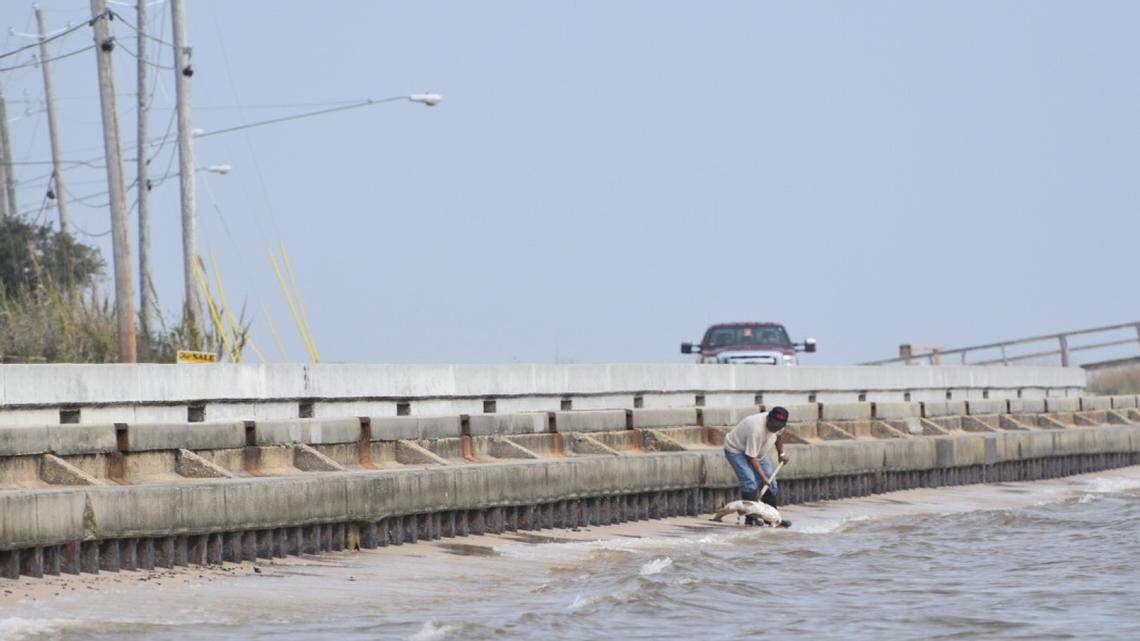
As temperatures begin to drop from the upper 70s to mid-60s -- with lows expected to move into the 40s and 30s -- the cooler weather could weaken the destructive red tide algae bloom that has had the Mississippi Sound north of the barrier islands in its grip since early December.
"We certainly hope the cooler weather helps dissipate the algae bloom," said Melissa Scallan, public information director for the state Department of Marine Resources.
The Karenia brevis algae bloom is commonly found in the warm waters of the Gulf of Mexico. Experts say it is uncommon for a red tide outbreak this late in the year this far north in the Gulf.
But Scallan said there is no exact breaking point for the bloom.
"We don't see this too often, so nothing is set in stone," she said. "If the temperatures could stay (down) in the 50s during the day for three or four days, it would really help."
Rain should help
Scallan said the recent rain should also have helped to break up the bloom's concentration.
"The rain should help, but the temperatures were really warm and the algae thrives in warm temperatures," Scallan said. "The cooler weather is really the key to getting the red tide out of here. We thought it had subsided before but the warm temperatures did not help."
Scallan said the bloom was detected in Florida in August, and it has now made its way to Texas.
"The red tide is in patches," she said. "It's not completely engulfing the Gulf of Mexico. It's in concentrations and patches here and there."
The outbreak closed area beaches and oyster reefs. Officials said the oyster reefs were closed Dec. 11 as a "precautionary measure" when algal concentrations with a presence of more than 5,000 cells per liter of water were detected along the sound.
Some areas reported more than 1 million cells per liter of the algae.
Weather hampers sampling
Scallan said the recent bout of severe weather prevented water samples from being properly collected Monday.
"We could only get samples along the shoreline," she said. "We need to get offshore to really get good water samples.
DMR Chief Scientific Expert Kelly Lucas said proper water samples were collected Tuesday; the results are pending.
Fish kills blamed on bloom
The algae bloom has also been blamed for several large fish kills along the Coast, the most recent occurring in Hancock County.
About 1,000 dead fish, mostly black drum, washed up on Hancock County beaches Sunday. Another 1,000 or so dead fish were found Monday near Waveland, Scallan said.
"This is because of the weather," she said. "It's just the way the wind blew the current."
Lucas said the fish died from eating the algae and getting the toxin into their bloodstreams.
When the toxin enters a fish's central nervous system it kills it, Lucas said.
"Then you have fish that are eating the fish that eat the algae," she said. "It's kind of twofold as to why the fish kills are happening. It's the same thing with the ducks -- some ducks are ingesting the algae and some are eating the fish."
Lucas said there may be more dead fish washing ashore in the coming days.
"They have found some dead fish in the Mississippi Sound west of Gulfport Harbor and they will eventually end up washing up on the beach."
Shrimping closure
The DMR announced Tuesday all waters north of the Intracoastal Waterway in Mississippi will be closed for shrimping beginning Jan. 1.
"This is not red tide-related," Scallan said. "This is something we do every year."
She said shrimp season will remain open in all other state waters.
Commercial fishing season for red drum will open New Year's Day. The allowable catch for commercial red drum is 60,000 pounds through the end of 2016.
This story was originally published December 29, 2015 at 8:58 PM with the headline "Cooler weather could end red tide algae bloom ."