
Even as Kemper power plant struggles, it might outlive coal as an energy source
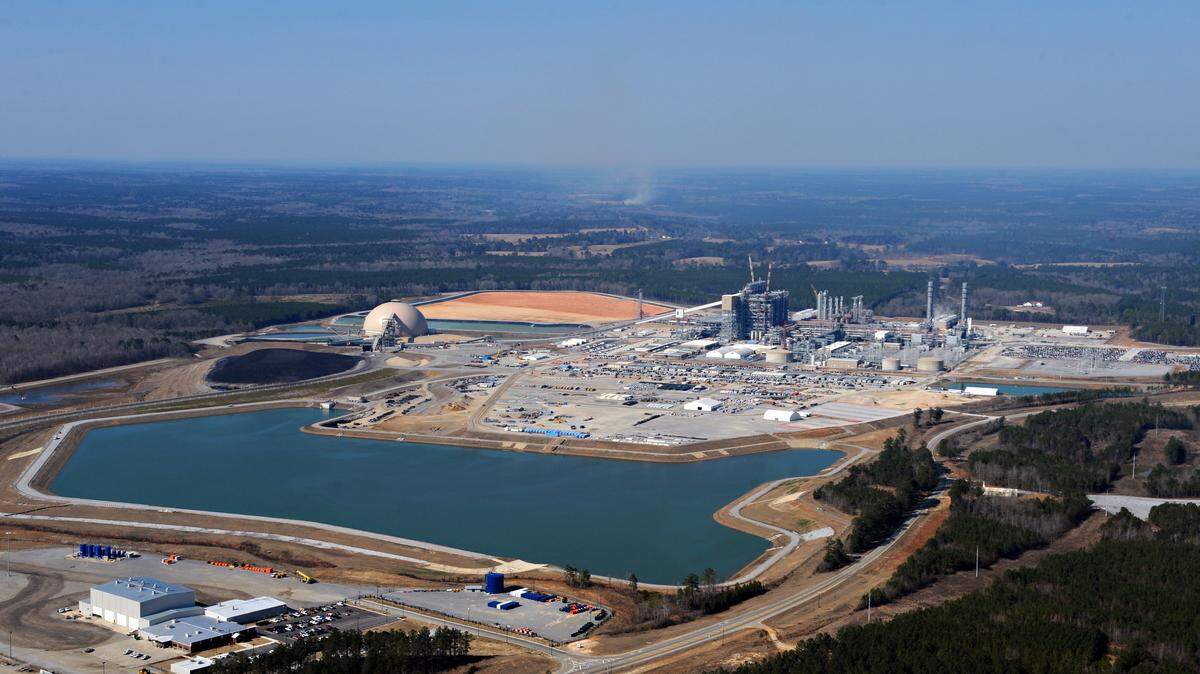
The final casualty in the Kemper power plant story could be coal itself.
Plant Ratcliffe, which is supposed to convert lignite, one of the dirtiest forms of coal, into a gas that would be burned to boil water into steam to drive the plant's turbines and produce electricity, has yet to produce any gas. The Mississippi Power plant is seriously over budget and behind schedule. The company has suffered credit downgrades as a result.
Kemper was supposed to be in operation in 2014. And as the startup date slips further into 2016, the world is losing its appetite for coal.
"The tombstone for coal will be in Kemper County," said Stan Flint, a lobbyist who for years fought Kemper, the Baseload Act financing scheme designed to pay for it, and a $1 billion bond that is supposed to pay for some of those cost overruns.
In mid-November, the United Kingdom revealed plans to shut down the last of its coal-fired plants by 2025. New Zealand said it will shut down the last of its plants by 2018. This spring, coal prices hit a seven-year low, further evidence of coal's decline. Hundreds of miners have been laid off in the past couple of years, 264 mines have closed and 26 mining companies have filed for bankruptcy.
The chief environmental office for Southern Co., Mississippi Power's parent company, said coal use is dropping sharply in the states in which it sells electricity: Florida, Georgia, Alabama and Mississippi.
"Coal generation in 10 years has dropped from 70 percent to under 35 percent," Larry Monroe of Southern Co. told the website Utility Dive in early November. "It's been made up by natural gas, primarily natural gas combined cycle."
Earlier this year, analysts found China's desire for coal, though among the most voracious in the world, also waning. China, Kemper supporters have repeatedly said, would be highly interested in the Transport Integrated Gasification technology being deployed at Plant Ratcliffe. But through July, coal imports were down 34.4 percent, according to the Institute for Energy Economics and Financial Analysis even as the use of electricity increased slightly "so this collapse in coal demand suggests a massive market share loss to other sources of electricity generation."
Wind power, for example, was up 22 percent, the institute said.
Last plants?
An environmental activist in Indiana calls Ratcliffe, and a similar plant in Indiana that gasifies coal, "the last coal plants that will be built in America."
Mississippi Power President Ed Holland didn't go to that extreme when he met with the Sun Herald in October but he did say had he known everything he knows now, Plant Ratcliffe never would have been built.
"We would not have built the plant had we known we would not get construction work in progress," he said of the funding mechanism that would have allowed the utility to begin charging customers for the cost of the plant as it was being built. "That commitment was made to us. Had we gotten it, the rate impact would have been far, far less."
That funding mechanism was a central feature of the 2008 Baseload Act, a state law Holland said "has virtually no applicability" after the state Supreme Court invalidated an 18 percent rate increase granted under the act and ordered Mississippi Power to refund millions to customers.
The company has since got an emergency rate increase and has an agreement to get a permanent 15 percent increase to cover the cost of the gas-fire portion of the plant that is producing electricity. How much ratepayers will pay for the lignite portion of the plant probably will be up to a newly elected, Democratic-majority Public Service Commission.
Hattiesburg oilman Thomas Blanton successfully appealed the rate increase to the high court, then unsuccessfully ran for PSC.
Had he won, he said he would take his know-how to other states with similar laws. Now, he said, it's time for someone else to take up the cause.
Lot in common
Only a handful of states have laws similar to Mississippi's. Most, it appears, draw on at least some aspects of the American Legislative Exchange Council's model Utility Construction Review Act.
"That's straight out of ALEC," said Louie Miller of the Sierra Club, which reached a settlement with Mississippi Power and agreed not to challenge rate increases in exchange for, among other things, increased investment in renewable energy projects such as solar.
The states all have something else in common -- expensive power plants, billions in cost overruns and higher power bills for ratepayers.
In Edwardsport, Ind., Duke Energy has built a multibillion-dollar plant that turns coal into gas. About the only thing it doesn't have in common with Mississippi Power's Kemper plant is Duke uses coal while Kemper uses lignite.
Like Kemper, the Edwardsport project is using first-of-its-kind technology. And like Kemper, the plant cost much more than the company predicted, it failed to meet many deadlines and it isn't producing the economical electricity the company promised consumers.
The plant has met opposition from environmental groups and consumer advocates. Like Mississippi, the plan was for ratepayers to begin paying for the plant before it was finished. But unlike Mississippi Power, Duke deals with an appointed oversight board, the Indiana Utility Regulatory Commission.
"They passed I guess it was a clean coal bill, a clean coal law, but they had to get construction work in progress, CWIP, " said Kerwin Olson of the Citizens Action Coalition, which has been fighting the plant for years. "They would not have been able to build this without CWIP. And everything we said then and everything we said since then has come true.
"You have a plant that was sold as the greatest thing ever, the future of coal.
"And it doesn't work."
It was a plant that was supposed to cost close to $2 billion, a figure even smaller than the original $2.88 billion cost estimate for the Kemper plant alone. The cost of the lignite mine and other infrastructure pushed the original Kemper estimate to $4.2 billion. But like Kemper, that cost continues to rise.
"Here it is four-plus billion dollars later and it's not going to capture a single drop of carbon and it's just a coal plant."
And the wrangling continues over how to pay for it.
In September, a settlement was reached that, if approved by the IURC, would take $85 million out of the rate mix because Duke agreed to push back the date the plant was considered "in service."
They're still collecting
But that's a small victory.
"They were collecting financing, they're collecting interest and now they're collecting O and M (operating and maintenance)," Olson said. Ratepayers now are paying about $16 a month for the plant, Olson said. But if the terms of the latest settlement with Duke Energy are accepted, ratepayers could see that double. "There will be some rate shock when those bills hit the mailboxes."
South Carolina Electric and Gas Co. and Santee Cooper are building a multibillion-dollar addition to its V.C. Summer Nuclear Station in Jenkinsville, S.C. In late September, the state Public Service Commission approved a 2.6 percent rate increase for SCE&G, effective at the end of October, to pay for the plant, which, if all goes well, won't be in operation until 2020.
It is the eighth rate increase approved for the $10 billion addition of two nuclear reactors granted under the state's Base Load Review Act, which was passed in 2006. Like the Mississippi law, it allows utilities to raise rates to cover the cost of a building a plant as it is being built.
Also like Mississippi, there is growing opposition to the practice. The Small Business Chamber of Commerce and the state's chapter of AARP opposed the latest increase.
And, like Mississippi, the utilities say raising the rates now will save customers money in the long run.
"Paying financing costs while these two new nuclear units are being built, as opposed to waiting until they are complete, lowers the project cost by about $1 billion," utility spokesman Eric Boomhower told The Post and Courier of Charleston shortly before the new rate was approved. "We estimate the (financing method) will save our customers approximately $4 billion in electric rates over the life of the new units."
Mississippi Power's Holland makes similar arguments. He said because Kemper has a 40-year contract to buy lignite at a set price, the plant won't be subject to fuel-price volatility. He said he still believes natural gas prices will one day rise.
He said when the lignite portion of the Kemper plant is activated, its electricity will be even cheaper than the electricity produced by its natural gas portion.
New world proposed
Scientific American in November reported audacious plan to wean the globe from fossil fuels entirely.
Mark Jacobson, a civil and environmental engineer professor at Stanford University, said, "Although international agreements to reduce carbon dioxide emissions are worthwhile, they would not even be needed if countries switched wholesale to renewable energy, ending the combustion of coal, natural gas and oil that creates the vast majority of those emissions, and without any nuclear power."
For Mississippi, that would mean a switch to 100 percent renewables by 2050, not too long before the end of Kemper's planned life cycle.
Under the plan created by Jacobson and Mark Delucchi, a research scientist at the University of California at Davis, Mississippi would get about 74 percent of its energy from solar photovoltaic plants, 10 percent from offshore wind, another 10 percent from equal parts concentrated solar power and wind power, 2.4 percent from residential rooftop photovoltaic cells, 1.6 percent from commercial and government rooftop PV cells and 1 percent each from wave devices and tidal turbines. That conversion, they contend on their Solutions Project website, would create 100,778 construction jobs and 40,659 operation jobs.
They say those jobs worldwide -- 24 million construction jobs and 26.5 million operational jobs -- would offset the loss of 28.4 million lost in the fossil fuel industries.
Compromise, new rules
If coal meets its demise in sparsely populated and chronically poor Kemper County, the power plant project that held out economic promise for the 10,000 or so folks who live there will be among the culprits in its death.
To get the Sierra Club off its back, Mississippi Power agreed to a settlement that required it to stop burning coal at its Watson plant in Gulfport, close a plant in Lauderdale County or switch it to gas, and stop using coal in Greene County, Ala. It also agreed to set up a foundation to nurture renewable energy.
Mississippi Power also committed itself to renewable energy, promising to try to buy wind and/or solar power operations. And it promised not to oppose certain net-metering plans before the PSC. Net metering would enable homeowners to install rooftop solar and sell excess power back to the utility.
Then there is the administration of President Barack Obama, which wants to sharply cut the amount of heat-trapping carbon emissions from power plants.
The Senate on Nov. 17 voted to block the Environmental Protection Agency's limits on coal-fired plants and to strike down an EPA rule that would block construction of new coal plants. Obama has said he'll veto any such moves, should they make it to his desk.
Even though the Mississippi Power president said the EPA rules underscore the value of Kemper, the latest round of restrictions, which Holland said he doesn't believe will ever go into effect, would in his mind be a disaster.
"We spent billions and billions of dollars across the country retrofitting and putting in environmental controls at all these plants to comply with (a previous) rule and as soon as you get to a point where you're complying with that rule, here comes this rule.
"To comply with it, and again, we don't know the full impact but taking it to its logical conclusion, just about every coal-fired plant in this country would have to be shut down."
This story was originally published December 5, 2015 at 10:02 PM with the headline "Even as Kemper power plant struggles, it might outlive coal as an energy source ."