
Billy Cannon will be remembered for his Heisman Trophy win, punt return against Ole Miss
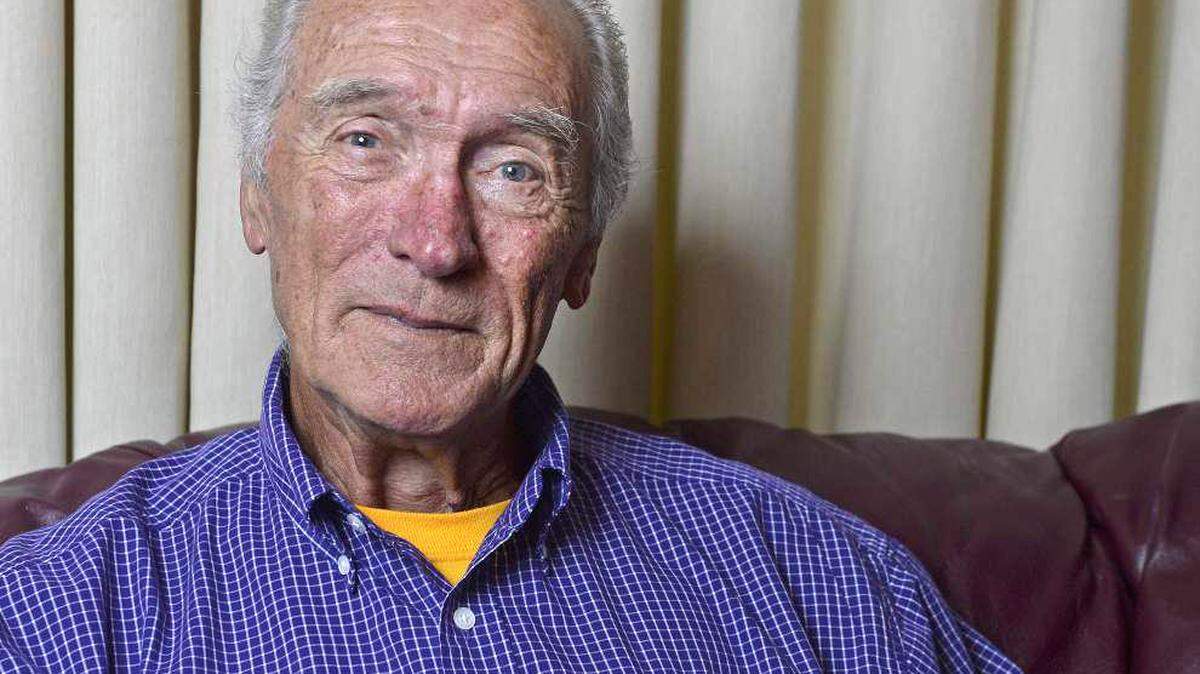
Billy Cannon, who carried LSU to college football’s dizzying heights, then took perhaps the most precipitous fall from grace in Louisiana history, died in his sleep Sunday. He was 80.
The most acclaimed athlete Louisiana has ever produced, Cannon, the central figure on LSU’s 1958 national championship football team, was a two-time All-American and the 1959 Heisman Trophy winner.
His epic 89-yard punt return in the fourth quarter against No. 3 Ole Miss, in which he was at least touched by eight Rebels, remains one of the most memorable plays in college football history.
'I wonder if Billy realized what he was ...'
After a noteworthy professional career, Cannon lived what seemed to be an idyllic life in Baton Rouge, providing for wife Dorothy — his high school sweetheart — and their five children as an orthodontist with a successful practice and profitable real estate investments.
A former Istrouma High School star, Cannon was idolized beyond belief in his community before his world took a perplexing twist.
In July 1983, he was identified as the main figure in a $6 million counterfeiting scheme after FBI agents found phony money in ice coolers buried on a parcel of one of Cannon’s properties.
The case was said to rank among the biggest in U.S. history. He was sentenced to five years in prison and fined $10,000.
Former teammate Don Purvis, who backed up Cannon at LSU, reflected at the time, “I wonder if Billy realized what he was and what he had.’’
Normally a warm man with a whimsical sense of humor, Cannon cracked to agents after his arrest, “You can tell it’s a phony $100 bill if Benjamin Franklin has braces on his teeth.”
A model inmate at a prison in Texarkana, Texas, he was released to a halfway house in Baton Rouge after 2½ years.
When friend Ray Termini picked Cannon up to bring him back to Baton Rouge, there was a traffic snafu, and Termini had to slowly squeeze his way around a flatbed truck.
“Ray,” Cannon quipped, “as a getaway driver, you get an F.”
Having seen a need for his services, Cannon started providing dental care for prisoners at Angola State Prison before overseeing the prison’s entire medical system.
Still, no one — friends, family or former teammates — could understand Cannon’s rationale for such a drastic criminal act, but those who knew him best said there were always two distinct sides to his personality.
A kid who grew up poor near the refineries and petro-chemical plants in the blue-collar north side of Baton Rouge, Cannon had run-ins with the law as a juvenile, once being arrested with three others for petty robbery, earning probation.
The late Goober Morse, an avid LSU fan and close friend, said Cannon, while always a sweet, intelligent and thoughtful person, could never quite shake the dust from the wrong side of the tracks off his shoes.
To add to the dichotomy, at LSU Cannon took on a difficult academic discipline — pre-dentistry — and was a solid student, maintaining a B average.
Tommy Neck, an LSU teammate and later a member of the school’s Board of Supervisors, recalled the thing he remembered most about Cannon: “One spring and summer, he was having trouble with a particular class. So he locked himself in a room for a month to make his grades.”
If the offseason of his pro career, Cannon pursued his studies at the University of Tennessee dental school, then got an advanced degree from Loyola of Chicago.
Rise to SEC glory
A product of weightlifting pioneer Alvin Roy, Cannon was a dual sport champion athlete. At 6-foot-1 and 210 pounds, he was described as a frightening combination of Olympic speed and Olympic strength.
Cannon amazed fans at LSU meets when he ran the 100-yard dash in the world-class time of 9.4 seconds, then trotted across the field to throw the 16-pound shot 54 feet, both SEC records at the time.
He also could bench-press 400 pounds, just 20 pounds off the gold medal effort for his weight class in the 1956 Olympics.
He aspired to compete in the 1960 Games, but he married as a college freshman and had three children by the time he left LSU. Pro football was an immediate means to support his growing family.
Cannon was not only named the SEC’s Back of the Decade in the 1950s, but he also was the Defensive Back of the Decade, which backed up LSU assistant coach Carl Maddox’s assertion that he was not only a great runner but the best defensive player he ever saw.
According to the College Football Hall of Fame, Cannon, who had a career average of 5.2 yards per carry at LSU, was the most offensively efficient back of the 1950s.
In a six-year period starting in 1955, Cannon displayed his marvelous talents on three levels.
An all-state halfback, he scored 228 points for undefeated Istrouma, won the 1959 Heisman in a landslide and by 1962 was an All-Pro with the Houston Oilers.
He garnered 1,929 Heisman votes, more than tripling the total of runner-up Richie Lucas of Penn State (613) and getting more than the combined vote of the next eight contenders (1,854) one year after helping LSU to its first national title in football.
In the pros, Cannon was a two-time MVP of the AFL championship game and possessor of the young league’s rushing record of 948 yards.
You can read more about Billy Cannon's life and career at TheAdvocate.com
This story was originally published May 20, 2018 at 11:45 AM with the headline "Billy Cannon will be remembered for his Heisman Trophy win, punt return against Ole Miss."