
PAUL HAMPTON: If we didn't have polls, how would we know who to vote for?
The national media finally got around to reading the fine print in the McClatchy-Marist poll that was released early last week.
On Monday, "New poll might have let more candidates into GOP debate" was the headline on one of the first stories about the poll. Subsequent stories delved into the qualities voters believe candidates need. Others concentrated on the poll question that found Americans fear guns more than terrorism.
Yes, it was one shocker after another.
Many Americans even go so far as to label the campaign for president "crazy." Can you believe it?
But it wasn't until Wednesday that the national press got the real shock.
I know it was a shock because The Hill's headline said: "In new shock poll, Sanders has landslides over both Trump and Bush."
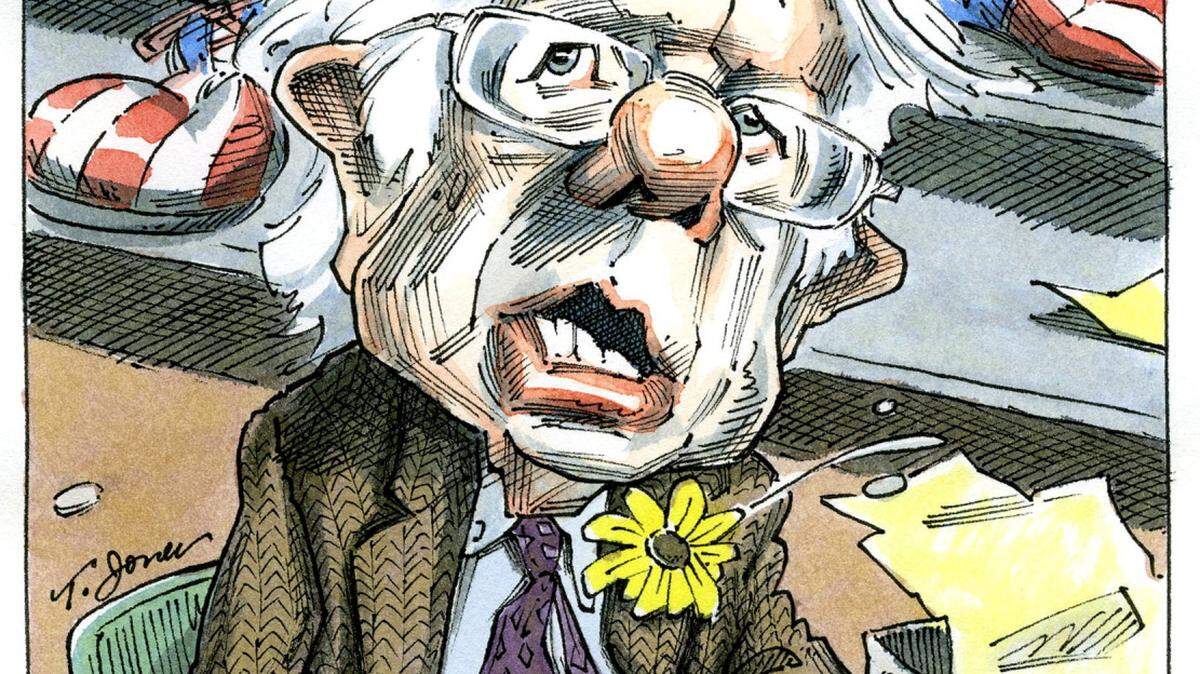
I wasn't so shocked. But I have the advantage of having a Facebook feed full of Sanders' supporters. They've been sure for months the fix is in for Clinton.
"The mainstream media will keep offering the notion U.S. Sen. Bernie Sanders is unelectable, and it is in their best interests to stick with that message. However, recent polls have shown this is clearly not the case," one fellow posted after the latest poll came out.
It's obvious the media has never been particularly enamored of Sanders, who won his Senate seat as an independent and calls himself a democratic socialist.
That's why the pollsters had to ask voters if they would vote for a socialist. Half said they would not. The headline: "Woman? Yes. Latino? Yes. Socialist? No. Voters react to diverse candidates."
No wonder Sanders' media misery has become as much of a story as Sanders himself. One reason is the media sees the race as Hillary Clinton's to lose. That's reasonable given she has a rather large, although not insurmountable lead, over Sanders.
But that's what the "shocked" media chose to ignore. That, and Clinton's lead over all the top six GOP candidates. And the fact Sanders trails Ben Carson 47 percent to 45 percent. Oh, and Clinton's lead over Carson has collapsed from 10 points in July to two points, 50-48, in the November poll.
Seems to me the only reason they do these polls is to influence the election. For instance, the pollsters have managed to convince Republicans to let them help winnow the GOP field by deciding who gets in the main debate and who gets relegated to the junior debate.
The Associated Press on Friday released a survey of Democratic superdelegates (translation: Party insiders who you don't get to vote for) who are "overwhelmingly" for Clinton. Further translation: It's over, don't vote.
Gallup, for one, was too embarrassed to continue the charade. That organization admitted accuracy is fleeting when trying to poll a world that relies less and less on the phone call. That was after it whiffed on the 2012 presidential race.
So why poll?
The so-called horse-race polls ask, "If the 2016 presidential election were held today." And it relies on a national total.
Pop quiz: Which two of those have nothing to do with the way the United States elects a president?
Correct. We aren't voting "today" and the electoral vote, not the popular vote, chooses the president.
Unless the polls have already eliminated him or her.
Contact Paul Hampton, politics editor of the Sun Herald, at 896-2330 or jphampton@sunherald.com. Follow him on Twitter@jpaulhampton