
Hurricane forecasters set accuracy records in ‘24, but there’s one thing they got worse at
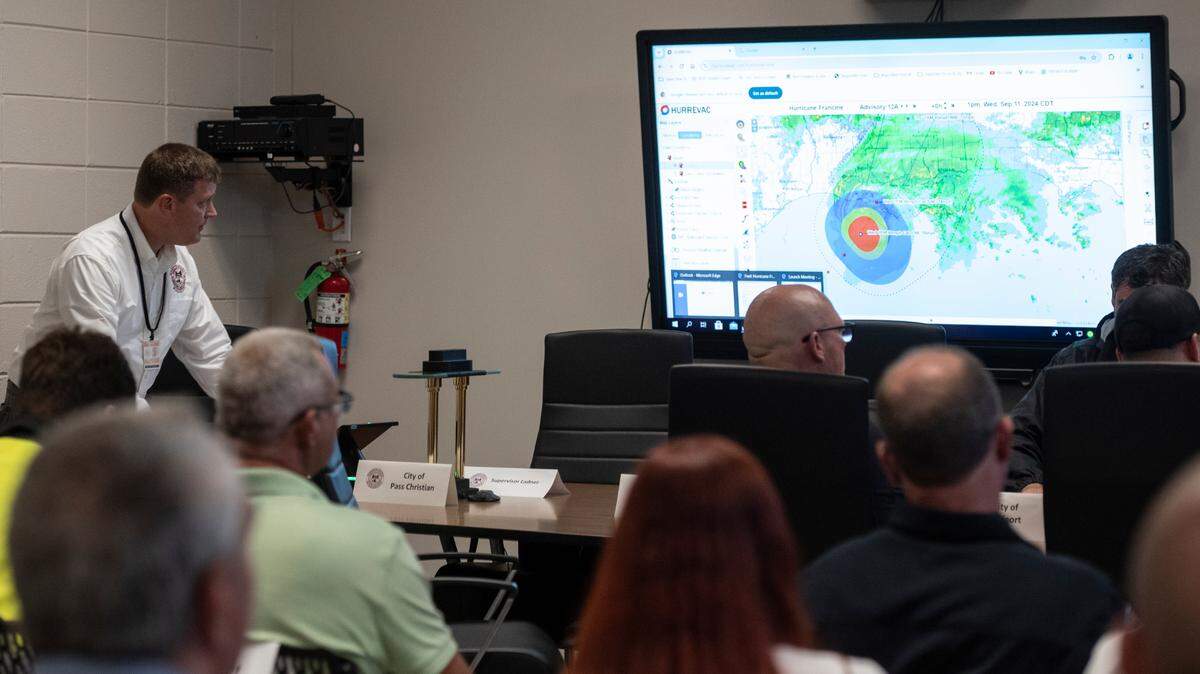
Hurricane forecasters made big strides in reliability during the 2024 Atlantic hurricane season, predicting the tracks of storms small and large more accurately than ever before.
The same was not true, however, for intensity forecasting, an area that has long presented a challenge — particularly when the rapid intensification of storms is involved.
The National Hurricane Center on Monday released preliminary highlights from its post-season analysis of the 2024 Atlantic hurricane season. Forecasters at the NHC analyze every hurricane season after the fact to verify the accuracy of its forecasts and model guidance, and 2024’s full analysis will be released this spring.
Last year’s mean track errors at every forecast interval, from 12 to 120 hours out from predicted landfall, broke records for accuracy, “meaning that NHC’s 2024 forecast track performance was its best in history,” NHC officials said. That means last season’s storms held closer than ever to the routes forecasters predicted they’d take through the Atlantic and, sometimes, over land.
“I would definitely credit technology as the No. 1 advancement in general,” said John Cangialosi, a senior hurricane specialist at the NHC.
But Cangialosi said the NHC’s track forecasts were also more consistent, changing less from cycle to cycle, compared to the global models. For that, he credited the NHC’s experts and forecasting strategies.
While track forecasting accuracy often varies greatly year to year, data collected by the NHC shows that track errors have been steadily decreasing since 1990.
Intensity posed a challenge
Intensity forecasting has become increasingly accurate since then, too, but the 2024 season proved to be a tough one for forecasters to nail down.
There were 34 episodes of rapid intensification recorded during the 2024 hurricane season, according to the NHC, nearly double the average of the last 10 years.
Errors in the NHC’s storm intensity forecasts were up in 2024 compared to a couple of years prior, and no records were set for accuracy.
NHC officials said rapid intensification, an unpredictable process that can supercharge storms, poses “one of the most significant challenges in hurricane forecasting.”
Rapid intensification is defined by the NHC as a 35 mph increase in maximum wind speeds in 24 hours, and forecasters are still working to understand all the factors that aid that kind of fast-paced strengthening.
“It’s hard to predict because it depends on lots of factors that are both big and small,” Cangialosi said.
While bigger factors like sea-surface temperatures and atmospheric conditions are easier to track, it’s not always clear how or why storms develop the tight core also needed for rapid intensification.
“The models struggle with this,” he said. “This has always been a challenge.”
But, he said, it’s a mystery that forecasters are slowly trying to chip away at.