
La Niña has yet to return as predicted. Is that good for the rest of hurricane season?
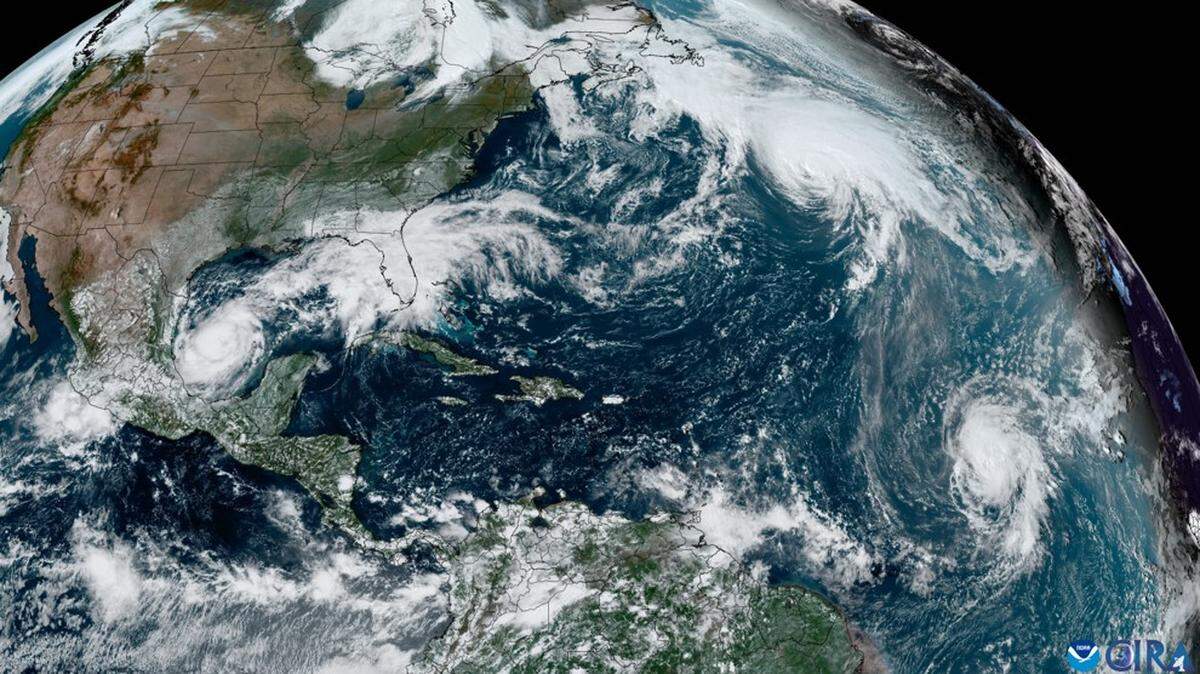
There’s about a month and a half left in the 2024 Atlantic hurricane season and La Niña has yet to emerge, despite early forecasts predicting its return by late summer.
That’s good news for the Gulf Coast and other storm-weary regions, according to National Weather Service Climate Prediction Center forecaster Matthew Rosencrans, since La Niña is associated with more tropical activity in the Atlantic Ocean.
“It doesn’t look like we’re going to have a real intense November at this point,” Rosencrans said.
In its latest update on Oct. 10 on what is known as the El Niño-Southern Oscillation, or ENSO, cycle, the Climate Prediction Center said the tropical Pacific Ocean continues to reflect the neutral conditions often seen in the transitionary period between El Niño and La Niña.
La Niña still has about a 60% chance of returning sometime before the end of November, according to the Climate Prediction Center, though forecasters expect that if such conditions do emerge, they will be “weak” and won’t stick around for long.
La Niña is the cool phase of the ENSO cycle, a pattern of alternating warmer and cooler surface waters in the tropical Pacific. Rising warm air in the tropics drives global atmospheric circulation, including the jet stream, storm tracks, and temperature and rain patterns.
La Niña tends to promote the formation and intensification of Atlantic hurricanes by reducing vertical wind shear across the Caribbean and tropical Atlantic. Wind shear can tear apart storms as they begin to form.
Before the start of the 2024 hurricane season on June 1, hurricane researchers and forecasters widely predicted that La Niña would return in full force after a near-record multi-year period of warmer water in the eastern Pacific Ocean, also known as El Niño.
The shift to La Niña was expected by peak hurricane season, historically between mid-August and early October. The Climate Prediction Center said in its spring outlook that La Nina had a 77% chance of emerging sometime in August, September or October, according to Rosencrans.
That, plus record-warm temperatures in the Gulf of Mexico, fueled alarming pre-season forecasts predicting that 2024 would be among the most active hurricane seasons in history.
Instead, Rosencrans said neutral conditions have persisted and the chances of La Niña returning by the end of the season have declined.
Now, after an explosion in tropical activity in September and early October that included two catastrophic hurricane landfalls in Florida, uncertainty around La Niña comes as a relief.
Rosencrans said that without its return, it’s unlikely this season will pump out the 17 to 25 named storms, eight to 13 hurricanes and four to seven major hurricanes of Category 3 strength and above that the National Oceanic and Atmospheric Administration predicted in May.
He said a normal end to the season would include about three more named storms.
“If anything, we’re likely to get to the lower end of our forecasts,” Rosencrans said. “We’re definitely not going to continue the torrid pace we’re at.”
The reasons that neutral conditions have persisted aren’t simple and there are countless factors that impact the ENSO cycle, Rosencrans said, including both long-term climate patterns and short-term weather conditions. That can make it difficult to predict how ENSO will play out well ahead of time, he said, and pre-hurricane season ENSO forecasts have gained a reputation for inaccuracies.
“That’s one of the big research challenges, is how do we fix that spring barrier?” he said.