
A look at the new hurricane maps coming in 2024, with an updated ‘cone of uncertainty’
.jpg "This GOES-East GeoColor satellite image taken at 12:41 p.m. EDT on Thursday, Sept. 29, 2022, and provided by the National Oceanic and Atmospheric Administration (NOAA), shows the eye of Hurricane Ian moving away from the coast of Florida. Ian’s most damaging winds began hitting Florida’s southwest coast Wednesday, lashing the state with heavy rain and pushing a devastating storm surge after strengthening to the threshold of the most dangerous Category 5 status.")
The National Hurricane Center plans on adding a bit more certainty to its “cone of uncertainty.”
The introduction of a new forecast track graphic in mid-August will do more than show the expected area where hurricanes and tropical storms may travel. It will also depict where wind watches and warnings are posted to better warn of dangers residents outside the cone are facing.
The new, more colorful map is part of a multiyear effort by the center and the National Weather Service to turn the recommendations of social scientists studying the way forecasters present information to the public into more visually friendly forecast products.
During its first test year, the new map will be available about 30 minutes after the official storm advisory is released, and forecasters will be collecting public comments on its use. Its introduction in mid-August occurs just as the more active part of the hurricane season usually begins.
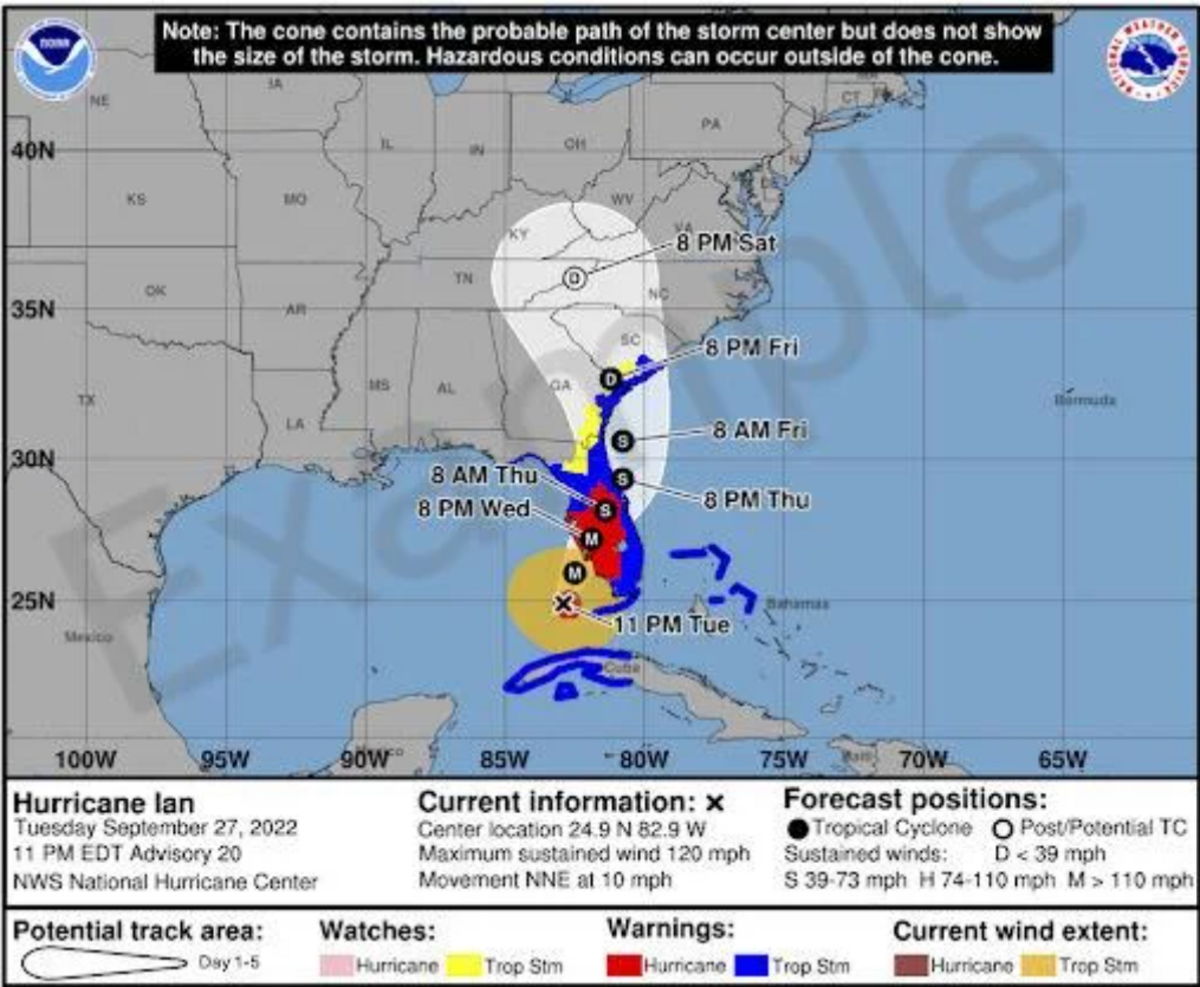
The current cone graphic will continue to be available at the time forecasts are released, the center said in a news release.
With the new graphic, viewers will see the watch and warning colors covering inland areas, not just along shorelines. The traditional cone showing where the center of the storm might track will be adjusted to take into account the margin of error calculated by the hurricane center through the 2023 hurricane season — 26 nautical miles at 12 hours and 205 nautical miles at five days.
It will be all white in color. The present cone includes different hatchings of the white area for where storm centers may be during the first 3 days and 4-5 days.
The changes are aimed at addressing concerns raised repeatedly in recent years that the public focuses only on the white cone on the graphic, failing to recognize that tropical storm and hurricane threats, especially high winds, can occur outside of it.
“A recent unpublished study of alternative cone variations found that the inclusion of inland wind risk information on the cone graphic decreased focus on the storm track and increased focus on wind hazard information compared to the versions of the cone without inland watches and warnings,” the news release said.
Separate forecast products, including maps, will continue to be issued for other threats that occur outside the forecast error cone, including inland flooding and storm surge.
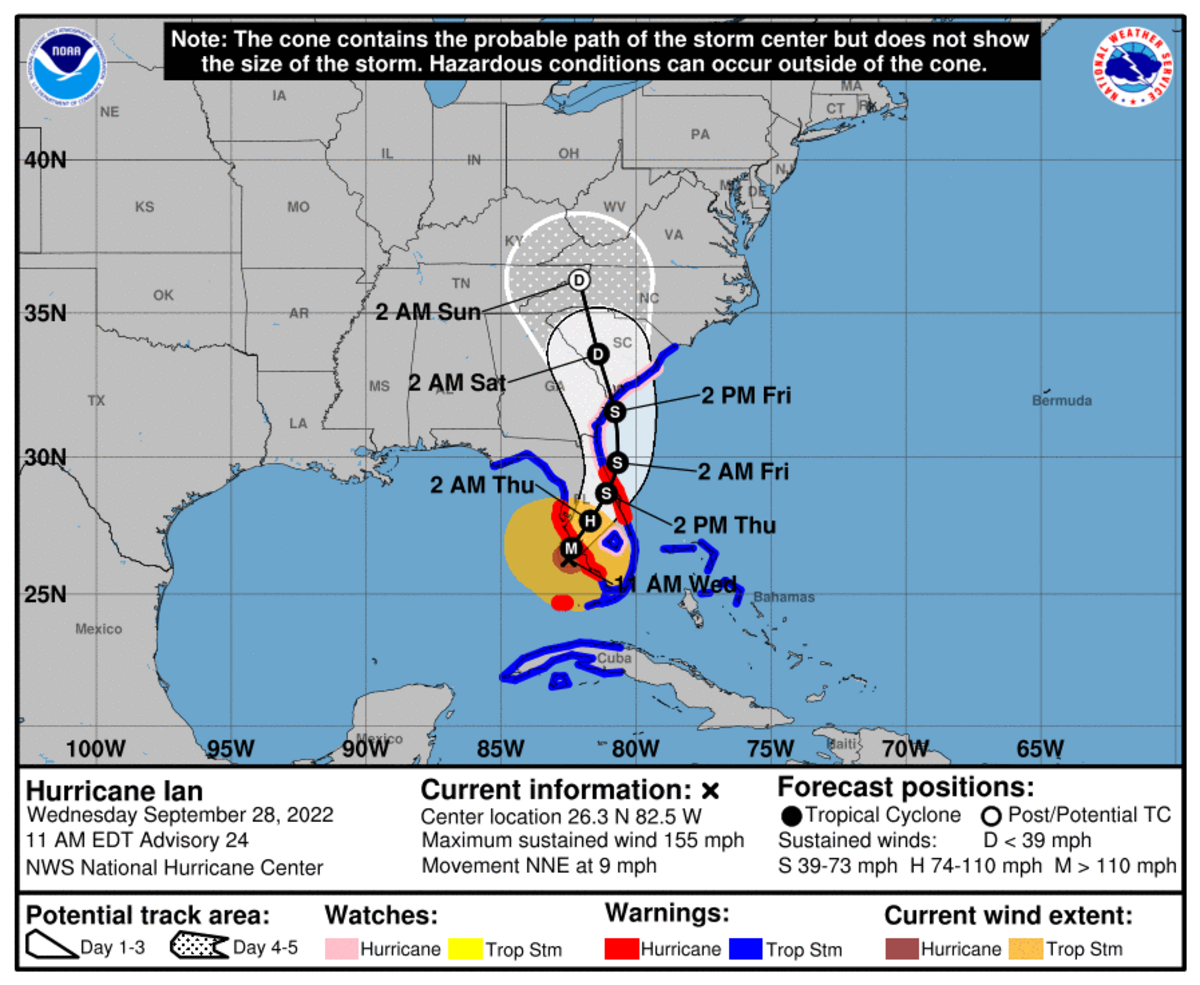
In October 2022, following Hurricane Ian’s tragic strike on the Florida west coast, NHC Deputy Director Jamie Rhome discussed the efforts then underway to redraw the cone graphic, in an interview published on the hurricane center site.
The narrow area of error at the time Ian was going ashore meant not much of the coastline was covered with the white of the cone that indicated where the storm’s eye might travel, though the storm’s winds extended much farther north and south of that area.
“We’ve spent the past 5-10 years working with social scientists to upgrade our risk communications aimed at not focusing on the cone,” Rhome said.
“All the recent additions to our forecast suite, including new storm surge warnings and maps, were driven by social science to help us communicate hazards — something the cone was never intended to do. The challenge is that not everyone has the time, bandwidth or desire to sift through all this information. The cone is simple and familiar to them, so they make assumptions, oftentimes subconsciously, about what it means.”