What are frost quakes & could MS experience one? What to know about the arctic phenomenon
Winter Storm Enzo has shattered records with its historic snowfall, from Texas to the Florida Panhandle. Meteorologists are reporting snowfall totals anywhere from one to 10 inches in these areas, leaving behind blankets of snow, ice and hazardous road conditions.
But what if we told you there’s another arctic phenomenon that could create earthquake-like booms?
They are called “frost quakes” and although they are rare, they “can be loud enough to jolt people awake in the middle of the night,” said Brian Lada, an AccuWeather meteorologist. Here’s what to know.
What are frost quakes?
It’s not an earthquake, but it might sound like one.
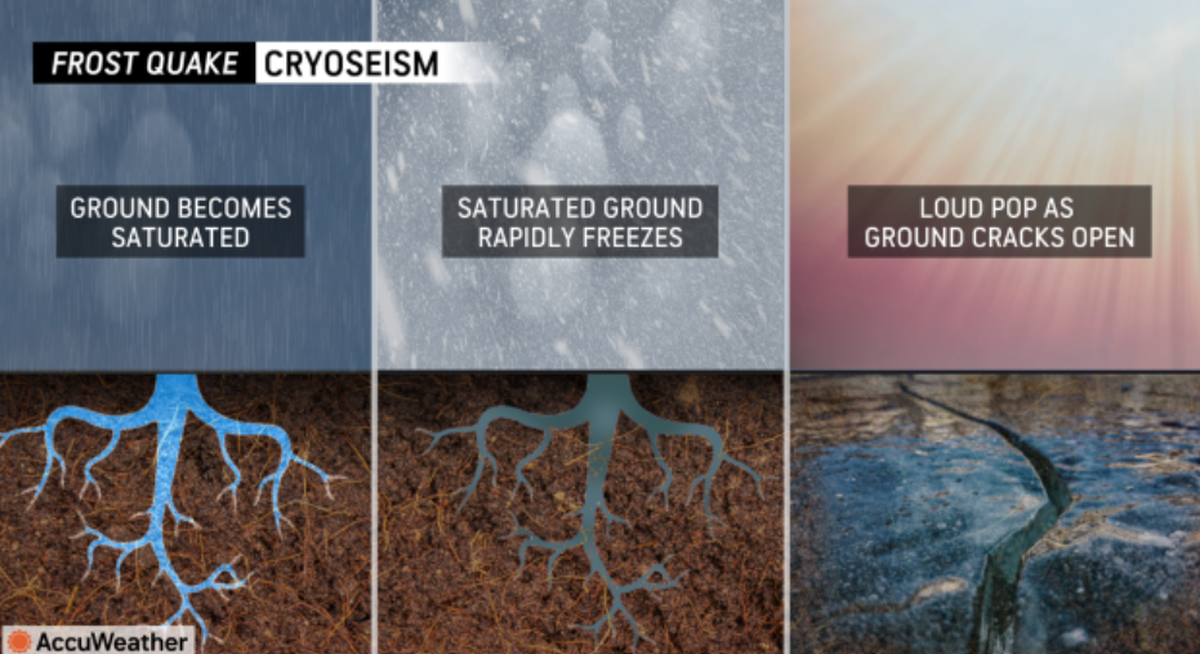
“Frost quakes happen when water from rainfall, snowmelt or flooding soaks into the ground, filling all available spaces,” said Alison Pearce Stevens with Science News Explores.
She explained that once the soil soaks up the moisture and temperatures drop below freezing, water in the soil will freeze.
“As water freezes, its molecules line up in a specific crystal structure. This causes solid ice to take up more space than liquid water,” and this causes a buildup of pressure, which can result in a shaking sensation in the ground and a loud boom, Stevens said.
Lada said frost quakes, also referred to as cryoseisms, usually occur between midnight and dawn because of nighttime temperature drops and have been common among northeastern states in the U.S.
But will southern states feel frost quakes? Here’s what to know.
Will Mississippi experience frost quakes?
Because of the recent snowfall and ice, many Mississippi residents may be wondering if they will experience a frost quake after the record-setting snowfall from Winter Storm Enzo.
“This week’s Arctic blast will send sub-freezing temperatures reaching as far south as the Gulf Coast states, which could set off frost quakes in areas that rarely experience the phenomenon,” said Lada.
However, residents should not panic if they feel or hear the quake because the phenomenon doesn’t actually cause tectonic plates to move, as earthquakes do.
“Frost quakes are localized events with a smaller risk of damage than earthquakes,” Lada said.
Some people also may only hear the pop and not feel it, as the rumble may only be limited to a small area of a hundred feet or so.
Have you ever heard a frost quake before? Let me know in the comments or email me at cmadden@mcclatchy.com.