
Category 5 Hurricane Milton has a tiny eye. Here’s why that could be a huge problem
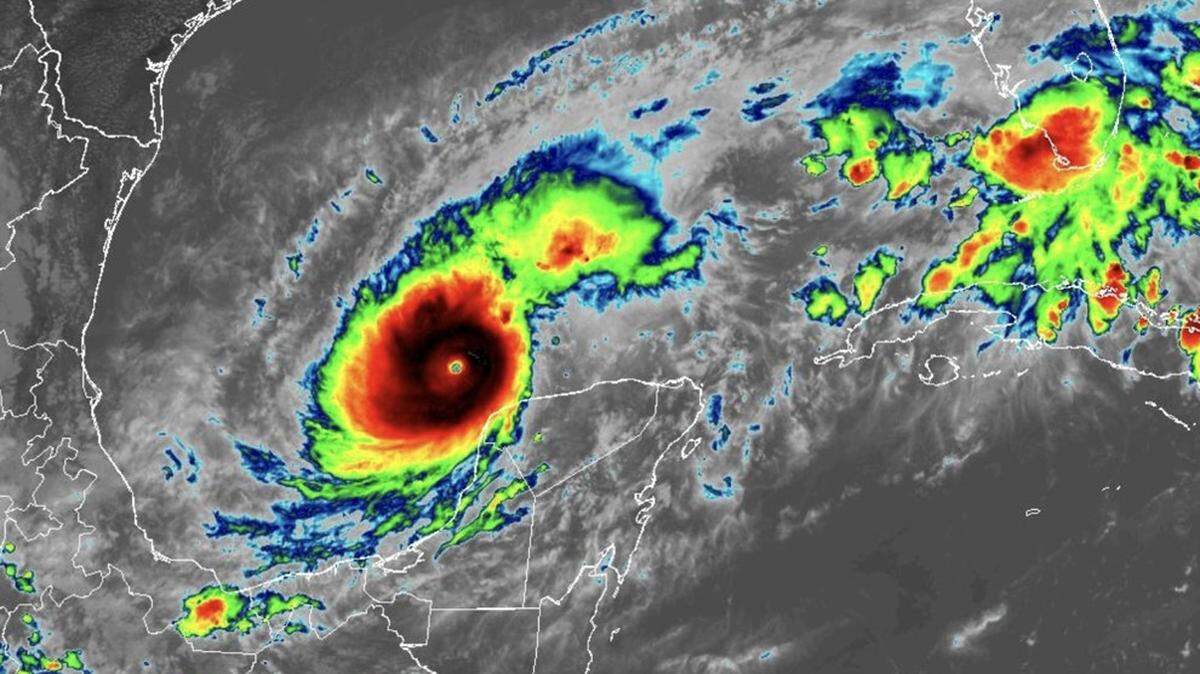
Hurricane Milton rapidly intensified from a tropical storm to powerful Category 5 storm in less than 24 hours, making it the strongest hurricane to form this late in the Atlantic season in history.
With maximum winds Monday afternoon of 175 mph, the storm is barreling toward Florida’s west coast. Hurricane watches are in effect for much of the Florida Peninsula — including Tampa, St. Petersburg, Venice and Fort Myers.
Milton is expected to weaken some as it hits wind shear but still make landfall as a major hurricane. Strong winds, heavy rain and life-threatening storm surge is expected.
As the storm shattered records and rapidly intensified, it also got better organized and a tiny, pinhole eye emerged.
But don’t let the size of the eye fool you — it could be very telling at just how bad the storm will be.
What is a ‘pinhole’ eye and is it dangerous?
Compact hurricanes with a smaller eye field are often described as having “pinhole” eyes, said Payton Malone, a meteorologist at WWL Louisiana.
At 1 p.m. Tuesday, Milton’s eye was just 8 miles across, and that is indicative of the storm’s record breaking rapid intensification.
“The thing about small eyes and small cores is that the smaller it is, the faster they can go up and down in intensity,” Malone said.
In Milton’s case, the warm water, low wind shear and compact size of the helped the storm get stronger Monday afternoon.
“It can really dramatically jump in either direction,” Malone said. “in this case, it’s dramatically increasing at record pace.”
Only two other storms in history — Wilma and Felix — have rapidly intensified as the same rate as Milton, according to data from the National Hurricane Center in Miami.
Eyes can fluctuate in size
Milton’s eye is tiny now, but as long as the system is over water it will undergo several eyewall replacements, Malone said.
An eyewall replacement can change the size of the eye and lead to weakening. Re-strengthening could occur, but the cycle could repeat itself in the next replacement, Malone said.
Milton’s eye could get larger in a replacement cycle, and the storm could still weaken when it meets wind shear on Tuesday or Wednesday. Milton, now compact with a super powerful eye wall, is expected to also grow in size when it hits the shear.
“We hope toward Wednesday it will weaken briefly, but storm and eye should get larger,” Malone said.
Regardless of size or wind speed at landfall, the storm is still expected to bring catastrophic effects to Florida, forecasters have said.
What other storms have had pinhole eyes like Milton?
Milton isn’t the only record-breaking storm to have a ‘pinhole’ eye that rapidly intensified in the Gulf.
In 2005, Hurricane Wilma’s pinhole eye was evident as it strengthened over warm waters in one of the most active hurricane seasons in history.
Wilma holds the record as having the lowest pressure of any hurricane that’s formed in the Atlantic basin at 882 millibars.
The average hurricane pressure is usually in the low-to-mid 900s, Malone said.