
Once a rare sight, why ‘mysterious’ great white sharks keep showing up in Gulf of Mexico
The last fish LeeBeth Young caught before she died in early 2021 was a massive lemon shark.
Like her father, Dallas pastor and fisherman Ed Young, LeeBeth developed a healthy shark obsession at a young age. The 34-year-old loved fishing, often heading out on the boat with her dad, hoping to help reel in the aquatic predators before releasing them back into the sea.
So it’s only fitting that a history-making shark, one that was just tracked swimming farther west through the Gulf of Mexico than any other great white before it, bears her name.
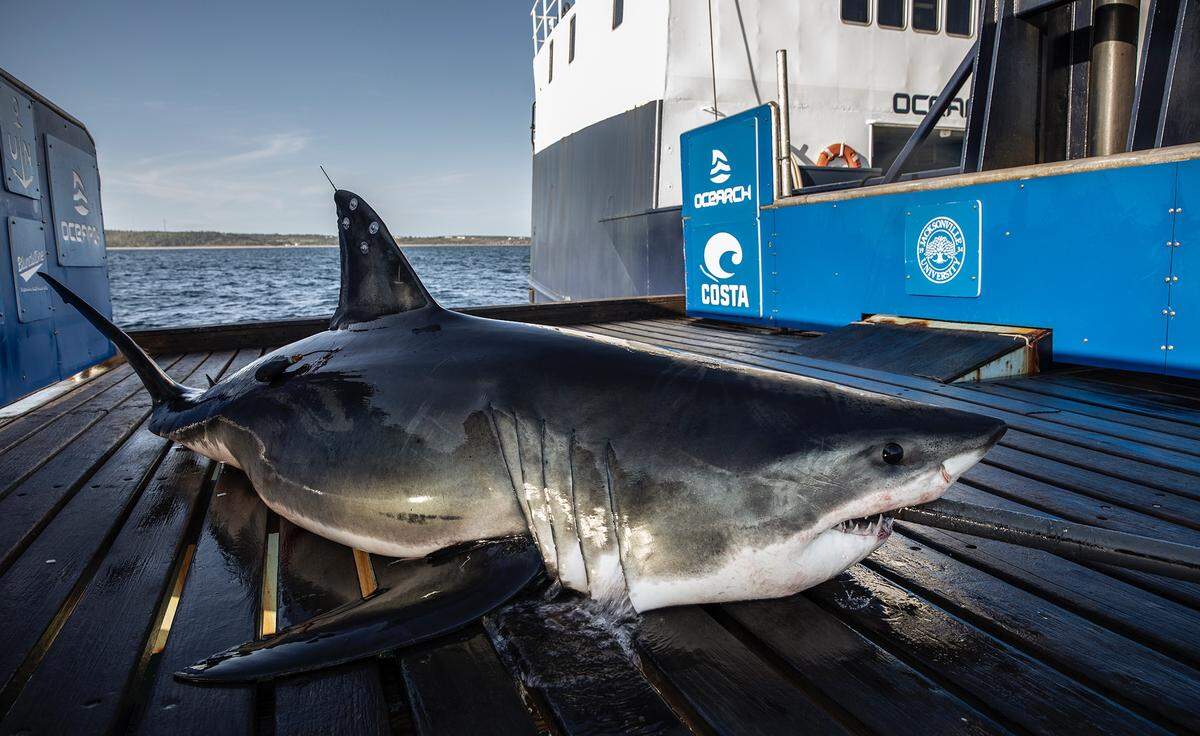
Ed was one of a handful of researchers and fishermen who helped reel in and tag a 14-foot, roughly 2,800-pound great white shark just off the coast of South Carolina in December.
Dubbed LeeBeth, in honor of Ed’s late daughter, the shark has since traveled more than 2,600 miles along Florida and the Gulf Coast, shattering previously held records and notions about great white sharks and their migratory patterns.
When Ed saw that LeeBeth was pinged mere yards away from the beaches of South Padres Island in Texas, his home state, he couldn’t help but feel like that — plus the perfect L-shaped scar below the shark’s left eye — was some kind of “God wink or something.”
“I just can’t believe it happened,” he said. “... I’ve never heard of a great white shark in Texas, no.”
While northwest Atlantic great white sharks are known to travel south from the coasts of Canada and Cape Cod during winter months, only a handful have ever been tracked swimming west through the Gulf of Mexico past the Mississippi River. Only LeeBeth has been pinged as far west as Matamoros, Mexico.
But researchers say several great whites that have been tracked swimming deep in the Gulf this year, in areas not previously considered to be great white territory, offer evidence of two things: a promising recovery in shark populations near the U.S., and just how little we actually know about great whites.
“This is still, despite its reputation, one of the most mysterious animals on the planet,” shark researcher Megan Winton said.
Advances in tracking
Like many shark researchers, Winton, a Massachusetts-based scientist at the Atlantic White Shark Conservancy, has been obsessed with sharks ever since she was a kid. Back then, while she was growing up in Florida, she thought a career in shark research would require a move to Australia, South Africa or California, where large populations were known to congregate.
Winton had no idea great whites were migrating past her home every winter.
Now, thanks to both old and new tracking methods and recently recovering shark populations, scientists know that hoards of northwest Atlantic white sharks travel from the coasts of Canada, Maine and Massachusetts each winter to the warmer waters along the southern U.S. coast and in the Gulf of Mexico.
Researchers use several different tools to tag and track sharks, Winton said, each that offer different insights into the lives of great whites.
There’s one tag that equates to something like giving a shark a Fitbit and a GoPro, Winton said, which takes in all kinds of health and environmental data before falling off after a day or two. There’s a traditional satellite tag, which stays on for about a year, and an acoustic transmitter that helps scientists track a shark’s migratory patterns for nearly a decade.
Then there’s a newer kind of satellite tag — the one Winton is currently most excited about — that allows researchers to track sharks in real time through a mobile phone app, Sharktivity. That tag is attached to the shark’s dorsal fin and pings its location in real time every time the fin breaks the surface of the water.
Great whites in the Gulf
Through Sharktivity and a similar tracking app offered by OCEARCH, a few great whites have been pinged deep in the Gulf of Mexico in recent months.
In early January, a juvenile white shark named Keji was pinged off the coast of Mississippi after OCEARCH crews tagged him in Nova Scotia a couple years earlier. A month later Crystal, another great white, was pinged in the Gulf west of the Mississippi River, marking only the sixth white shark OCEARCH had ever tracked that far west.
It’s hard to say whether this activity deep in the Gulf is unusual or new, Winton said. Historical sighting and catch records seem to suggest that great whites have always been present in the Gulf.
But between the shark fishing boom of the ‘60s and the implementation of endangered species protections for great whites in the ‘90s, northwest Atlantic great white populations are thought to have dropped by as much as 80%, Winton said.
Recent recoveries in great white populations and in their prey species could be contributing, alongside improvements in tracking technology, to more activity in the Gulf of Mexico.
“This is a really long-lived, slow growing species that was knocked down really hard,” Winton said. “And to see these indications that the population is now coming back is really encouraging.”
An ‘awe inspiring’ shark
Despite recent advances and discoveries, there’s still a lot researchers don’t know about great white sharks. No one knows where they mate or where they give birth. It’s obvious that the Gulf of Mexico plays some kind of role in their migratory patterns, but it’s not completely clear why.
Even less is known about mature great whites, which can live to be around 70 years old and don’t reproduce until their late 20s or 30s.
While there have been great gains in tagging and tracking great whites, Winton said many of the sharks that are caught and tagged in the Cape Cod area are juveniles or sub-adults, sharks that aren’t ready to reproduce.
Mature great whites tend to be more illusive, and it’s not clear where they spend most of their time or how they live.
That’s why catching and tagging LeeBeth was so special.
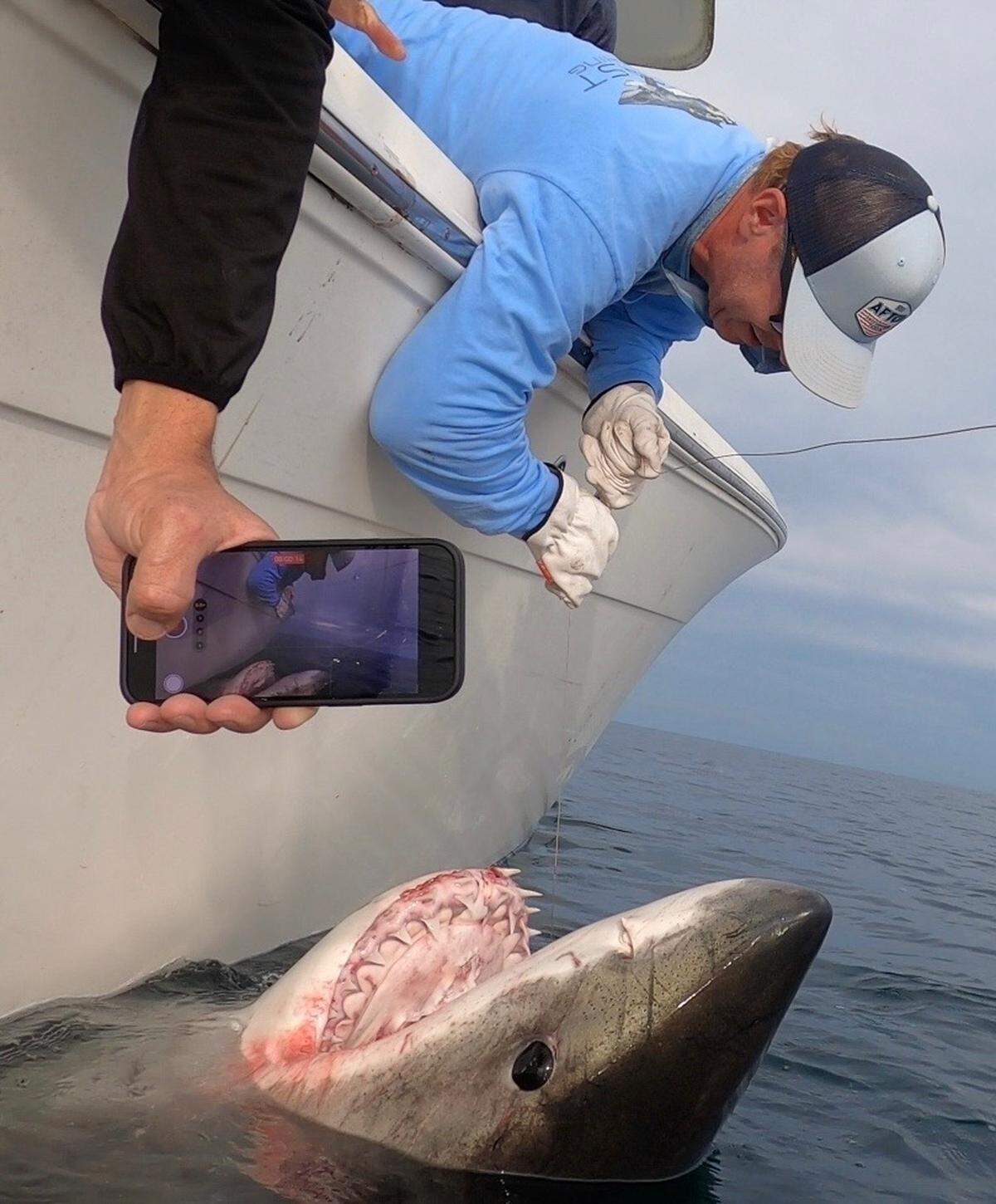
“She was huge — she was such a beautiful, awe inspiring fish,” said Winton, who helped Ed Young and other shark fishermen reel LeeBeth in to tag her, a process that involved the entire boat being dragged around in the ocean for over two hours before she tired.
“It was emotional from that perspective,” Winton said, “knowing she was such an important animal to track.”
LeeBeth started breaking boundaries almost immediately. She tends to breach the surface frequently, meaning she pings in her location to the Sharktivity app more often than most of the other sharks the Atlantic White Shark Conservancy tracks.
Within just a little over a month of being tagged, LeeBeth had already made her way from the coast of South Carolina and around the tip of Florida, where great whites are known to hang around during the winter. But by early February, she was in what are thought to be less traveled waters off the coast of Louisiana.
Then she did something only a handful of great whites have ever been recorded doing: she continued west past the mouth of the Mississippi River. By late February she was pinged off the coast of Texas, and in March she was pinged near Mexico before she turned around and headed back east along the Gulf Coast.
Winton, who said she’s been glued to her phone following LeeBeth’s every move, couldn’t believe it. The fish’s journey showed one thing is for certain: great white sharks can cover a lot of ground in a short period of time.
“So that really kind of drives home the need for international cooperation for conservation and management of the species,” she said.