
Mississippi quietly amends its Medicaid work requirement waiver
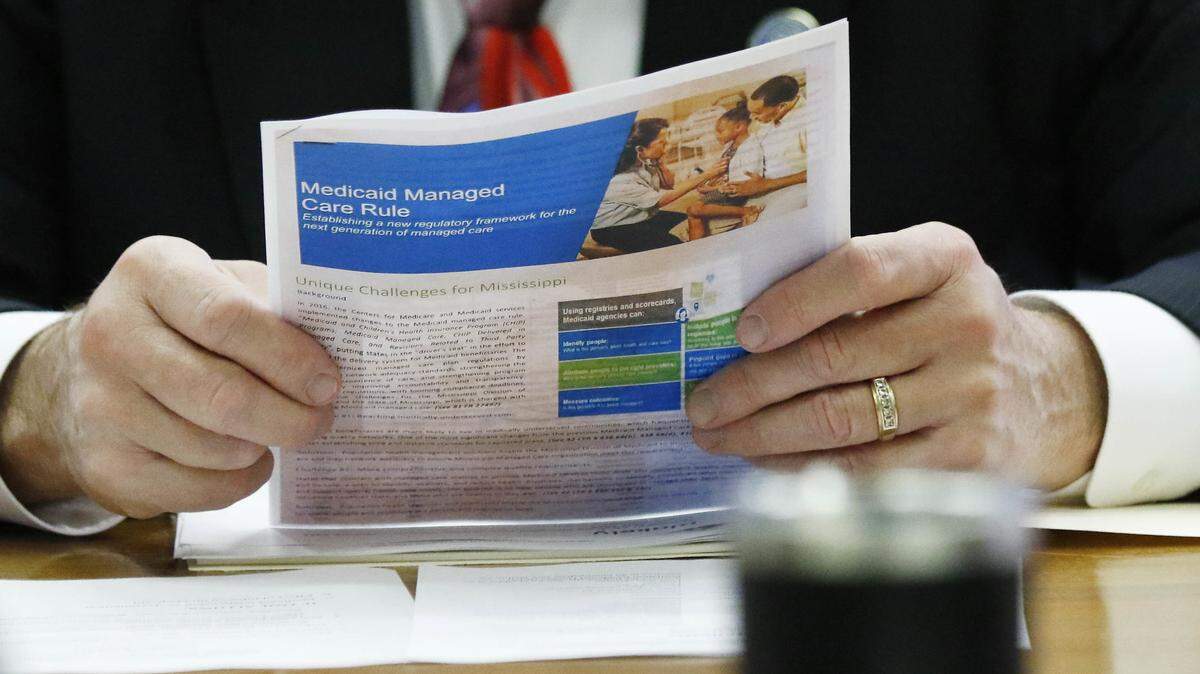
What didn’t get any attention is that on the same day it also quietly reopened comments on Mississippi’s waiver.
Both states are seeking permission from the federal government to require low income, “able-bodied” adults to work, volunteer or train for a job to maintain their health benefits through Medicaid.
What makes these two states different is their Medicaid populations. Kentucky is one of the nearly three dozen states that accepted the Affordable Care Act’s offer to expand Medicaid to cover more people. Mississippi is not.
Instituting work requirements in non-expansion states means the absolute poorest Americans, who are largely single mothers, would be caught in a catch-22 where working could earn them too much money to qualify for Medicaid, but not working would also make them ineligible for the benefits.
The new comment period, which ends when Kentucky’s does on Aug. 18, seems to be a result of Mississippi amending some parts of its waiver application.
Mississippi first submitted its application in January shortly after the Trump administration issued a guidance encouraging work requirements and was waiting for a response. Then, the state recently updated its request with several important changes. Most notably, it extended from one year to two a transitional Medicaid period available for people who comply with the work requirements every month but fall into the catch-22 scenario.
Mississippi also removed language from its waiver related to the state’s desire to save money. These waivers are designed for states to propose new concepts for their Medicaid programs, not as a way for the state to control costs.
Joan Alker, a Georgetown University public-policy professor who follows these waivers very closely, believes the changes are an attempt to make the plan more palatable, so the federal government can reasonably approve it.
“To me,” she said, “the Trump administration is looking for way to get to yes on these proposals.”
If the government struggled to get Kentucky’s waiver past a judge, many assume the challenge for non-expansion states will be much greater. Even those who support work requirements in theory have their doubts. Thomas Miller, health policy expert at the conservative American Enterprise Institute, told MedPage Today this week that “it’s unlikely that imposing work requirements on a non-expansion, ‘old’ Medicaid population can thread the legal needle to withstand a court challenge.”
Alker says giving extremely low-income people an extra year of coverage on the condition they work or volunteer 20 hours a week just delays the problem, but doesn’t fix it.
The state projects the population who will fall into the catch-22 category and be eligible to receive the additional 24 months of coverage is only 1,280 people, or, by Alker’s calculations, 2 percent of the parents or caretakers who have Medicaid. Alker said the administration’s contention has been that Medicaid should be “preserved for the truly needy.”
“That’s exactly who is hit by these proposals,” she told me. “If they were to approve one of these [non-expansion states] it would really lay bare the hypocrisy of what they’re saying.”
Mississippi has some of the country’s most restrictive eligibility for Medicaid already, allowing only families who earn up to 27 percent of the poverty level. For a family of three, that’s an annual income of less than $6,000. Most of those people are African American mothers living in rural areas, data analysis shows.
The Mississippi Division of Medicaid did not respond to a request for comment. Neither did CMS.
But shortly after a judge ruled the Kentucky’s waiver did not adequately address the consequences of tens of thousands of people likely losing coverage, CMS Administrator Seema Verma told reporters that her agency was working with Mississippi and other non-expansion states to help them address any potentials issues of adding work requirements to their Medicaid programs.
Yet Roy Mitchell, the executive director of the Mississippi Health Advocacy Program, said the state and CMS kept the changes to the waiver and the reopened comment period “under the radar.”
“Why isn’t there more transparency on this if it’s such a great program?” he asked. “If you’re going to implement this and you’re serious, you have to talk to us. There’s going to be nothing short of panic when you implement this. I already have people calling here asking me questions because there hasn’t been an open dialogue.” They include: “How’s this going to work?” (He doesn’t know) and “What does this mean for Medicaid for my children?” (They’re still covered).
At the end of July, Mitchell’s group traveled the state talking to community health groups about what’s at stake if Mississippi’s waiver is approved and actually goes into effect. The extra layer of bureaucracy and confusion alone will cause some Medicaid recipients to fall off the rolls.
Advocates like himself and Alker also point out that the state isn’t offering additional resources to assist these mothers with child care or transportation, which are two common barriers to employment.
“If CMS approves it, I won’t be surprised,” Mitchell told me. “Mississippi is a worst-case scenario, and you can expect to hear the worst-case stories of people being harmed.”
As a related aside, proponents of work requirements say self sufficiency leads to healthier lives. Work requirements are then, in their view, in line with the overall mission of Medicaid to help promote the health of the poorest Americans. But the Kaiser Family Foundation released a comprehensive review of research on the intersection of employment and health this week and found insufficient evidence to conclude that working would improve health outcomes for Medicaid beneficiaries.
The reasons: Most studies that assess work and health are surveying a wide swath of the population, and not just individuals who may be in low-wage, poor-quality jobs. While there is a correlation between unemployment and bad health, Kaiser researchers caution against using that as evidence that work would then be the cure without considering other variables. Moreover, when someone takes a job or volunteers out of fear of losing needed benefits, it may not have the same positive effects as doing so of their own volition, the Kaiser analysts wrote.
“Given the characteristics of the Medicaid population, research indicates that policies could lead to emotional strain, loss of health coverage, or widening of health disparities for vulnerable populations,” they concluded in their report. “As debate considers the question of whether policies to promote health-versus health coverage-are the aim of the Medicaid program, the question of whether work requirements will promote health also will remain key to the ongoing debate over the legality of work requirements in Medicaid.”