
Public vs. private school debate plays out in Mississippi Legislature
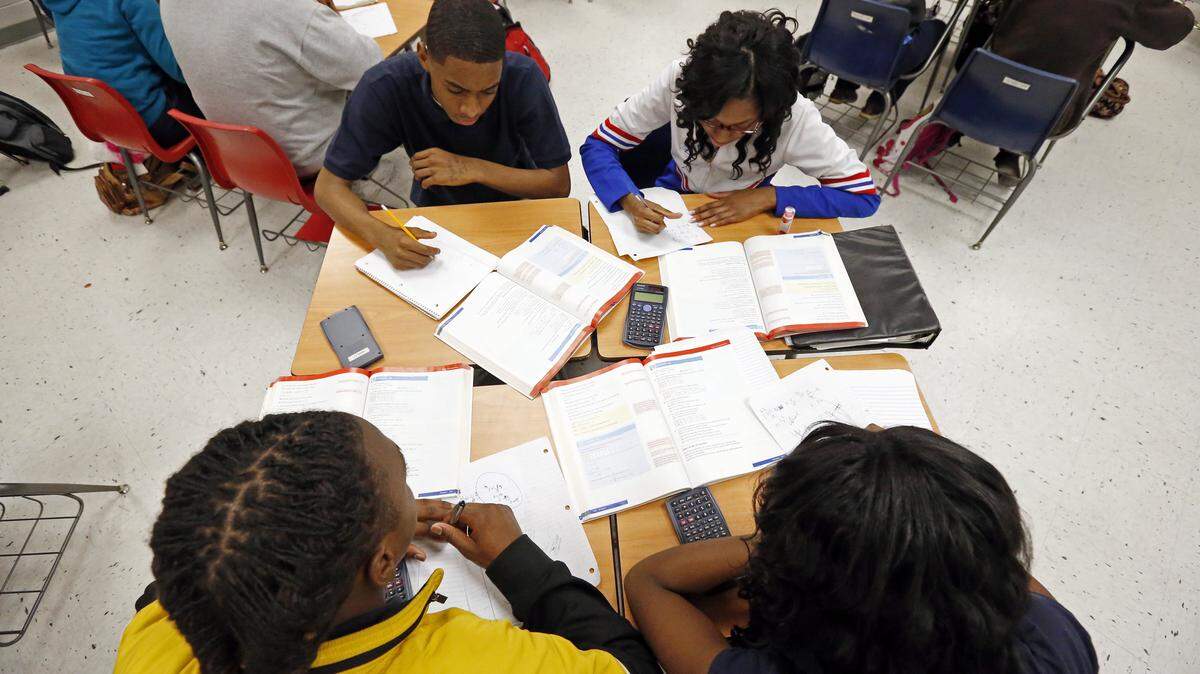
There is a bill before the Legislature this term that would require faltering schools to make change after change -- including mandatory home economics classes, school uniforms and mandatory spelling, math and science bees.
Another bill would allow changes in school district boundaries.
Yet another would limit the number of superintendents in each county. Another would require all superintendents to be appointed.
There is a bill that would exempt some students from vaccination requirements.
And one that would limit the engagement of school personnel in the political process.
There are several that deal with the formula for the Mississippi Adequate Education Program, including one that says the Legislature doesn't have to fully fund MAEP -- something it has rarely done anyway.
And that's just scratching the surface (there are 348 active bills with the word school in the title). Many of them won't make it out of committee by Tuesday's
deadline and will die one of what could be several deaths.
But at the heart of many of the proposals is the tug of war between public and private schools.
"Clearly, some of the things being proposed would be extremely detrimental to Mississippi children, the overwhelming majority of whom are being educated in public schools," said Nancy Loome of the Parents' Campaign, a group that advocates for public schools. "Some of these bills will transfer tax dollars from public schools or from the general fund into private schools, virtual schools, for-profit schools, home schools. Any taxpayer dollars that are expended for private schools -- schools that are not accountable to taxpayers -- diminish funds that are available for public schools."
Voucher expansion
One way the Legislature could make that transfer is through a bill that would expand the special-needs voucher program. In 2014, when that program was defeated, critics said it was just a way for the camel to get its nose in the tent and the real goal was to get vouchers for all students.
Bills this year would expand the program for lower-income families but, as the proposals stood Friday, wouldn't have vouchers -- or Education Scholarship Accounts, as supporters call them -- for all.
Loome said it's an expansion that takes more tax money from public schools.
Supporters, though, argue vouchers save tax money.
Grant Callen runs Empower Mississippi, a free-market advocacy group that has a goal of getting 50,000 -- 10 percent -- of public school students into education-choice programs by 2025.
Its program of choice is the Education Scholarship Account that would put tax money in an account to be spent at the school of the parents' choosing.
"Each one of the scholarships would be less than the state would be spending on that child if the child was in public school," Callen said. The scholarships would be based on need with more money going to the families with the lowest incomes. "It's a cost savings for the state and for the districts. (Districts) get to keep the federal and local money."
Same results
But Frank Yates, the leader of the 8,000-member Mississippi Association of Educators, said he doesn't buy the argument that students need to seek out private, or charter, schools to get a better education.
He said reports from Stanford University, Rand Corp. and Western Michigan University show no difference in academic achievement between charter and public schools. In Michigan, charter schools have been around for 20 years, and as Loome suspected, the effect has been to stretch the public-schools budget thin.
"(Charter schools in Detroit) should be doing better, but they're not," Gary Miron, a Western Michigan professor whose work focuses on charter schools, told Mlive.com. "So now, instead of having one struggling system, we have two. Instead of fixing our problems, we're starting a whole new system, and the new system isn't better."
Yates said the studies have consistently found only about 17 percent of charter schools do better than their public school counterparts.
"That means 83 percent don't perform any better than public schools," he said. "Those that do perform better have a substantially more per-pupil funding than our K-12 and many of them have smaller class size."
Yates and others say the schools have been shortchanged to the tune of $1.7 billion by the Legislature not fully funding MAEP, noting if they did fully fund public schools there would be no need for other schools.
Callen and other free market advocates, such as Russ Latino, state director of Americans for Prosperity-Mississippi, said parents should be allowed to make that choice.
"We believe students and parents should have more than one choice about how their children should be educated," Latino said. "The options should be a litany. Whether it be to take the funding that's allotted to a student and put it into a private school, (or) it means the development or expansion of charter schools. At the end of the day, what we want to see is more competition at every level of our education system. We think ultimately that's what promotes excellence."
Funding in question
But Yates and Loome both say the answer is increased funding for public schools. Both the MAE and the Parents' Campaign backed Initiative 42, which would have changed the state Constitution and, they say, forced the Legislature to fully fund K-12 education through the MAEP. Detractors said the amendment would have transferred power from the Legislature to the courts and lawmakers had argued they were putting more money toward education anyway. Initiative 42 lost but the vote was close enough to get House and Senate members at least talking about trying to fix the formula.
Then the state found it is likely to have fewer dollars to spend this year so the joint Legislative Budget Committee recommended keeping funding at the current level.
So far, Yates hasn't seen anything from the Legislature that would strengthen public schools.
"It just says we need to look at the formula, tweak the formula, change the formula, review the formula," he said. "A whole lot of terminology is out there about what they want to do. We have no way of knowing exactly what that means. Are we going to have more resources or not? We don't really know at this point.
"We're not saying don't make any changes. But if there are going to be changes, let them be positive for all children."
This story was originally published February 20, 2016 at 9:42 PM with the headline "Public vs. private school debate plays out in Mississippi Legislature ."