
Harrison: Could voting rights decision place Rep. Bennie Thompson in jeopardy?
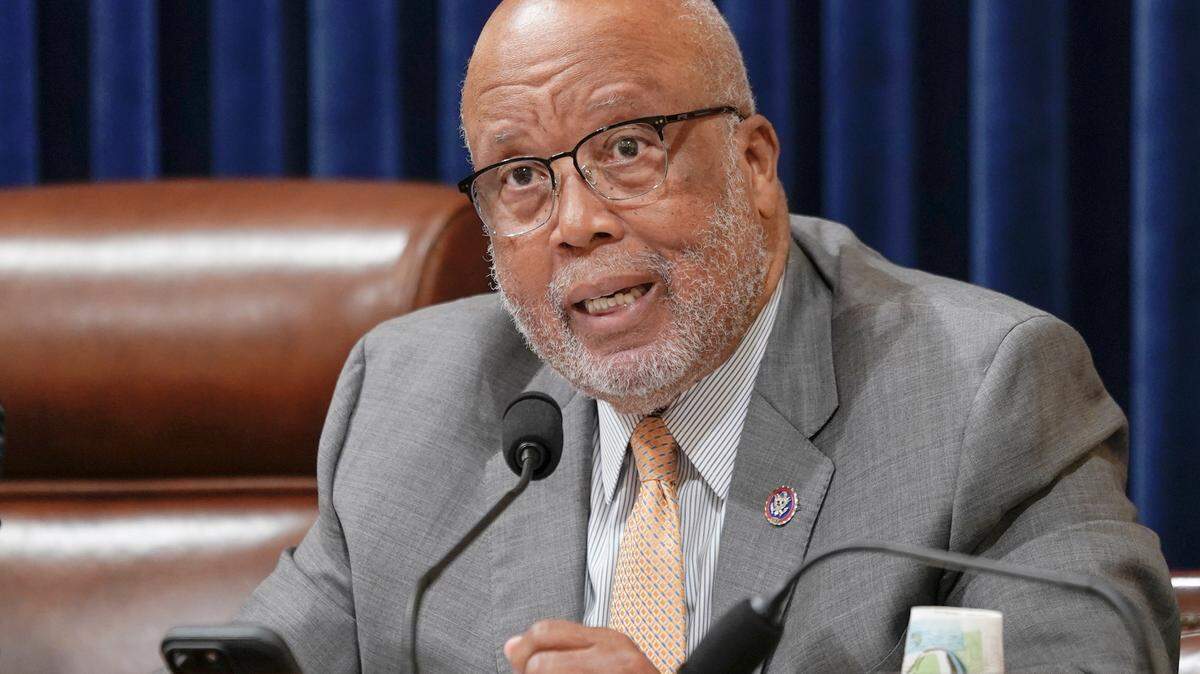
State Auditor Shad White and other Republican politicians gleefully boasted on social media that last week’s U.S. Supreme Court decision in Louisiana vs. Callais could lead to the redrawing of Mississippi’s four U.S. House districts to eliminate the seat long held by Rep. Bennie Thompson.
Thompson, the state’s only Black member of Congress and only Democrat, is often the target of disdain for Mississippi Republicans. That disdain has intensified since Thompson led the congressional investigation of the Jan. 6, 2021, assault on the nation’s Capitol and the attempt to stop a legal transfer of federal executive power from Donald Trump to Joe Biden.
“Will the district gerrymandered to protect Jan. 6th Committee Chairman Bennie Thompson soon come to an end?” White asked on social media.
It is a brave new world where often the courts seem to be saying anything goes. Still, it does not seem feasible that the Mississippi Legislature, despite White’s obvious obsession, could redraw districts to eliminate Thompson’s seat before the November general election.
First of all, to do so the Mississippi Legislature would have to invalidate an election. Party primaries were held in March, and Thompson and his three Republican House colleagues won and earned the right to be on the ballot in November as their parties’ nominees.
Would those elections and those votes just be tossed aside? Would U.S. Sen. Cindy Hyde-Smith, who won the Republican nomination in the March primary, have to run again in a primary like the four U.S. House members would have to do?
The courts have long espoused a principle of not wanting to create chaos in an upcoming election. It seems a process of invalidating recent election results would violate that principle.
In the Callais decision, the U.S. Supreme Court ruled that one of Louisiana’s two majority-Black congressional districts is unconstitutional. In the 6-3 decision, most agree the Court severely gutted the authority of the landmark U.S. Voting Rights Act, which for about 60 years has ensured Black Southerners would have opportunities in certain circumstances to elect the candidates of their choice in various political districts – from school boards, to boards of aldermen and city councils, to state legislative and U.S. House seats.
It was the Voting Rights Act that ensured the creation of a majority-Black U.S. House district where Mike Espy was elected in the 1980s as the first Black congressman in Mississippi since the 1800s. And it was the Voting Rights Act that provided a district where Bennie Thompson was elected in 1993 to succeed Espy.
Thompson is expected to be elected to another two-year term representing the 2nd District in November unless White and other Republicans get their wish.
Redistricting before 2028 elections?
But in reality it would probably be less cumbersome and problematic to redraw the congressional district to try to eliminate Thompson from the U.S. House before the 2028 election instead of before the quickly approaching 2026 election.
But even with the Callais decision it still might be more difficult to get rid of Thompson than some people might think.
Black Mississippians comprise about 38% of the state’s population – the highest percentage in the nation.
SCOTUSblog explained that Justice Samuel Alito, writing for the majority, said: “And under the Constitution, a violation of Section 2 (of the Voting Rights Act) only occurs when ‘the circumstances give rise to a strong inference that intentional discrimination occurred’ – for example, when there are several possible maps that contain majority-minority districts, but the state ‘cannot provide a legitimate reason for rejecting all those maps.’”
While the Supreme Court ruling left a lot for the lower courts to interpret, and no doubt the litigation will ensue based on the high court ruling, it seems logical to assume that it would be difficult to deny one of four districts from being majority-Black in Mississippi where African Americans comprise well over one-third of the population.
In the Jim Crow days, Mississippi politicians neglected such mathematical logic. But surely it is a new day in Mississippi – at least that is what we like to say.
This column was produced by Mississippi Today, a nonprofit news organization that covers state government, public policy, politics and culture. Bobby Harrison is the editor of Mississippi Today Ideas.