
Democrats made gains on the Coast. Is it a blip, or a sign of a political shift?
AI-generated summary reviewed by our newsroom.
- Democrats used grassroots outreach to flip local seats and tighten Gulf Coast races.
- High turnout narrowed margins: Gulfport mayor race saw 13,007 ballots cast.
- Demographic change and redistricting boosted Democrats; officials stress voter outreach.
After an hourslong Gulfport City Council meeting, newly elected councilwoman Carrissa Corbett would change out of her black dress and leopard-print coat and into a T-shirt and jogging pants before heading to a community center to host her weekly line dancing class.
Once there, Corbett collects canned goods the dancers bring to stock a food pantry for residents who lost food-stamp benefits after the government shutdown. And during dance breaks, she slips in questions: Are y’all getting out and voting? Are y’all talking to your nieces and nephews about voting?
Leaning into informal, unscripted settings like this one to connect with voters, she said, is helping Democrats along the Mississippi Gulf Coast gain traction in a traditionally red state.
“Just having casual conversation,” Corbett said, sitting in her office on a recent Tuesday night. “No one wants someone to come in and talk over their heads.”
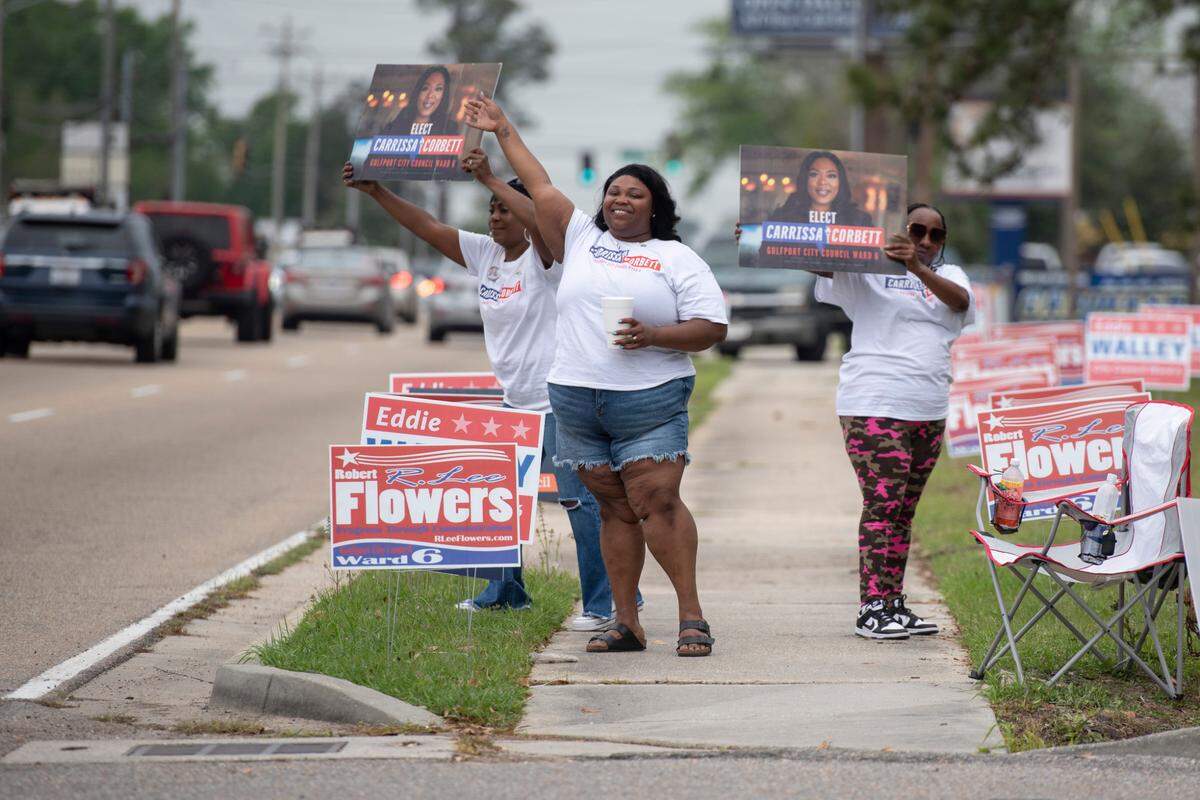
Her effort reflects a broader push by Democrats across the Gulf Coast to make elections more competitive as newcomers from across the country move into coastal cities and the population rises and diversifies.
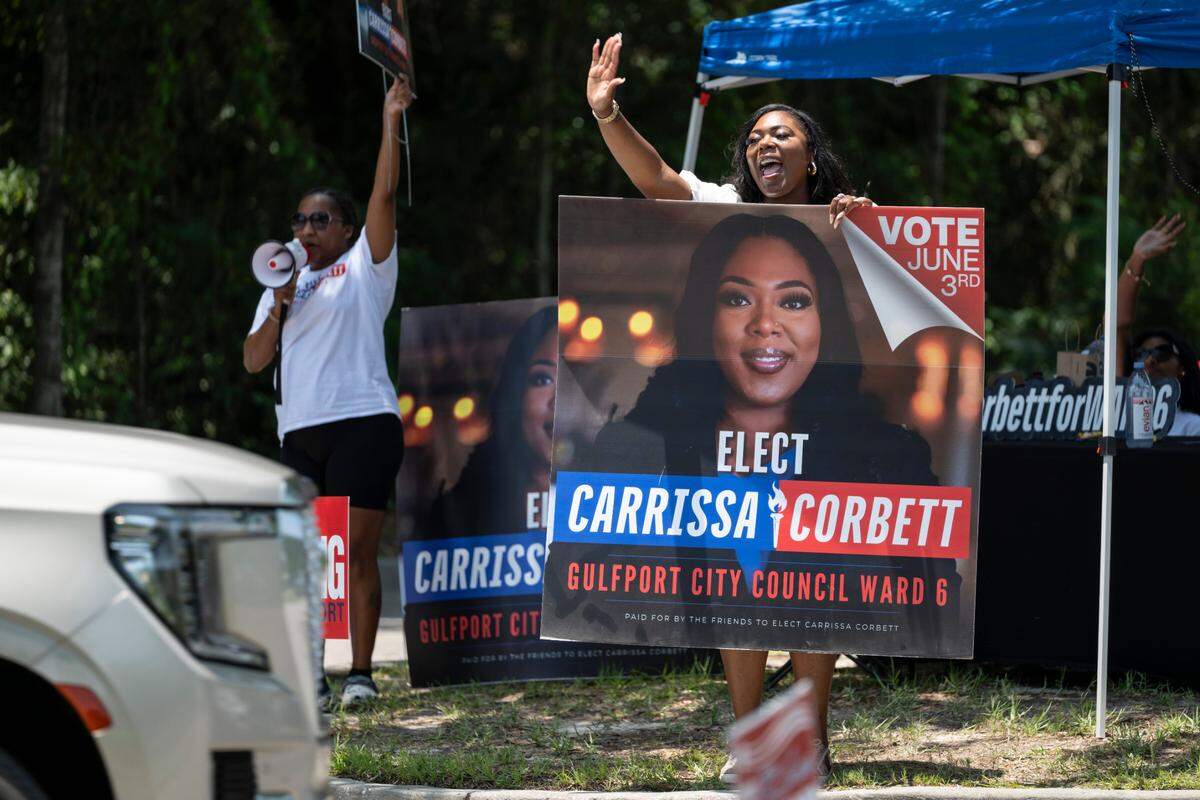
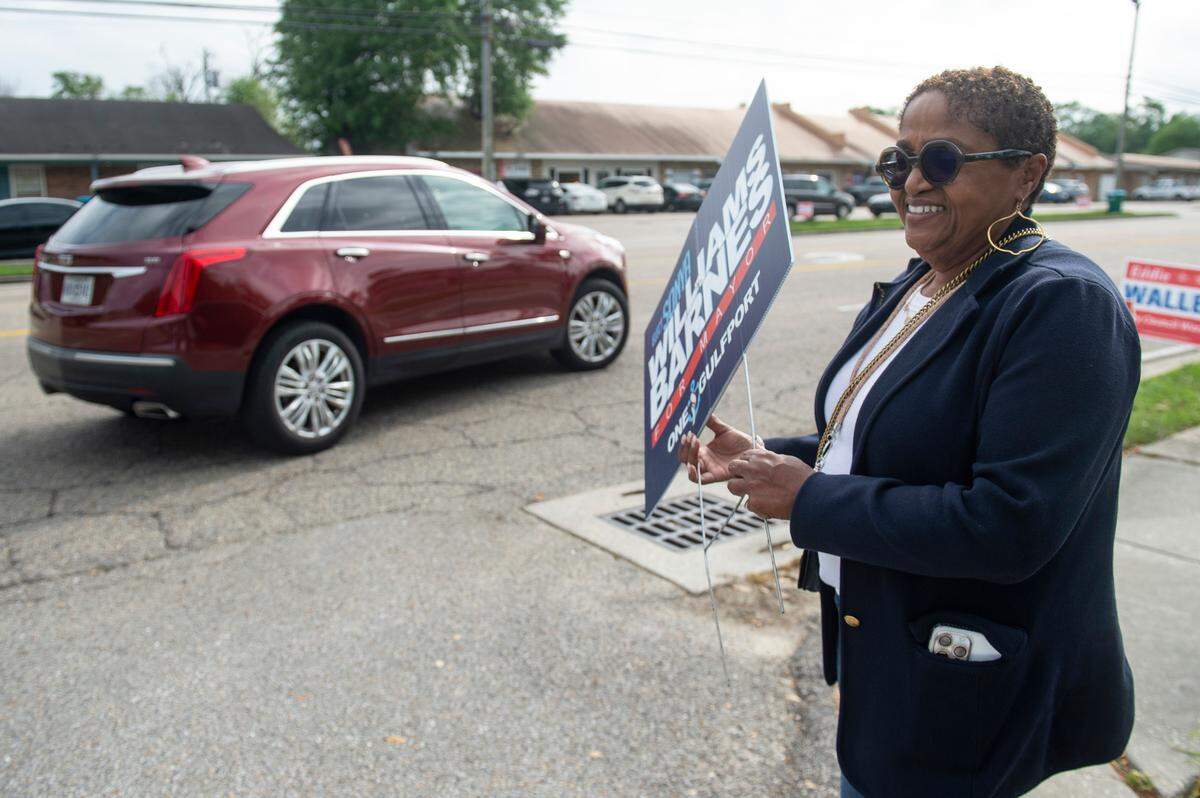
That shift was evident this summer in Gulfport, when Sonya Williams Barnes, a Democrat and former state representative, lost to Republican attorney Hugh Keating by just 840 votes in a contentious mayoral race that drew an unusually high turnout. And earlier this year, local politics showed signs of change when Corbett flipped a Republican-held City Council seat, defeating incumbent R. Lee Flowers with about 63% of the vote.
On a statewide scale, Democrats this month won two special elections for State Senate after court-ordered redistricting gave Black voters more electoral power, breaking the Republican supermajority and offering the party a rare boost in Mississippi. Corbett described the wins as a “blue wave,” saying that recent federal shifts such as funding cuts and furloughs of government workers had galvanized many voters.
A ‘blue wave’ or crossing political lines?
Before this year, signs suggested Mississippi’s politics might be evolving. In the 2023 governor’s election, Republican Governor Tate Reeves won re-election by 50.9% of the vote to Democrat Brandon Presley’s 47.7%, the closest gubernatorial race since 1999. Along the Mississippi Coast, though, Reeves led Presley by 17% in Harrison County, 26% in Jackson County and 44% in Hancock County.
Some Democrats say these tighter races may suggest voters are more open to crossing political lines. Others believe elections are driving stronger civic engagement, regardless of political leanings. And Searcy Taylor, a Democrat and president of the Mississippi Gulf Coast Alumnae Chapter of Delta Sigma Theta Sorority, Inc., said increasing voter turnout is helping Democrats.
“If we’re unified and we actually get the people out,” she said, “we can do this.”
Republicans along the Mississippi Gulf Coast, however, argue that lower Republican voter turnout is partly behind the region’s subtle shifts. Pete Wilson, chairman of the Harrison County Republican Party, said the Coast’s long conservative history has produced a sense of voter apathy.
“People don’t go to the polls because they think, ‘Oh, what’s the use? We’re just going to win anyway,’” Wilson said.
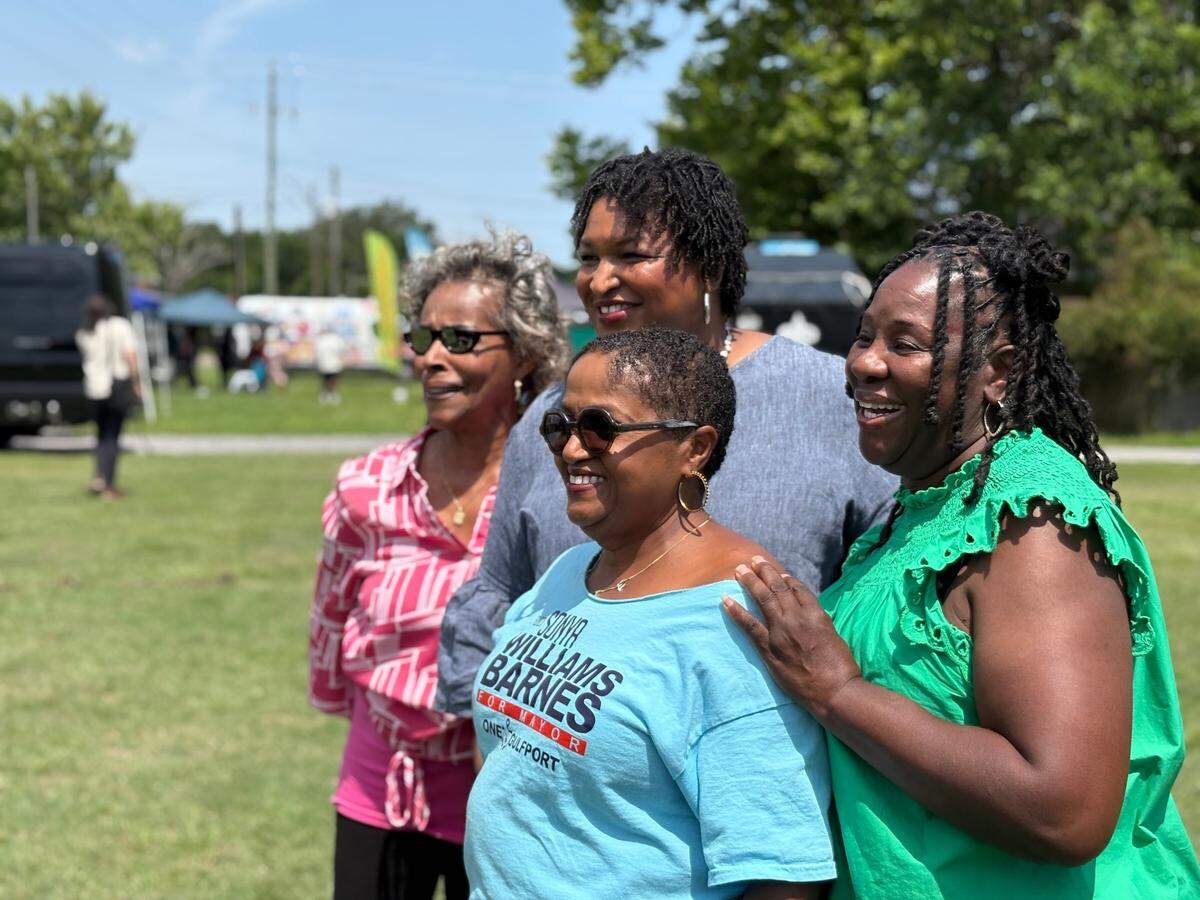
That did not appear to be the case for Democrats in Gulfport’s mayoral race, he added, noting that key political figures, including Stacey Abrams, visited the coast to encourage turnout. U.S. Sen. Tim Scott of South Carolina also visited Gulfport to campaign during the race to campaign for Republicans.
The turnout surged to 13,007 voters — a significant jump compared to the previous mayoral election. Williams Barnes captured 46.81% of the votes to Keating’s 53.19%. In the 2021 Gulfport mayoral race, when 4,204 residents cast ballots, Republican Mayor Billy Hewes won with 63.27% of the total vote.
Voters want ‘someone who will be good’
Others believe that many voters in local elections no longer feel compelled to define their political leaning at all. Len Blackwell, a retired attorney and Democrat who lives in Gulfport, said voters in South Mississippi seem to be a mix of devoted Republicans and also some Democrats, who Blackwell suspects sometimes are quiet about their political preference. But he also said many who vote in local races may not place much emphasis on party.
“They just want someone who will be good,” he said.
Signs of that shift are also emerging in other parts of the region. A Democrat running to fill former Rep. Matt Gaetz’s congressional seat in the conservative Florida Panhandle last spring lost to a Republican but carried Escambia County, which includes Pensacola, for the first time in decades.
On the Mississippi Coast, Tom Carpenter, vice chairman of the Harrison County Republican Party, is “cautiously optimistic” about his party’s future. He said Republicans need to be more deliberate about hosting community-oriented events to reconnect with voters, especially those less inclined to turn out.
“If we get our people to realize that they need to…get out, and they need to talk to neighbors, and they need to discuss things, and so on and so forth, I think we will continue in the right direction,” Carpenter said, adding that the focus should remain on jobs, education and security.
In Bay St. Louis, City Council member Nancy Moynan, who flipped a Republican-held seat earlier this year, agrees that voters remain driven by key issues — insurance prices, city services and the challenges of rapid population growth. She described seeing “a better blending of political views” as more residents move in from out of state.
“If you align your thoughts and your feelings with a candidate who happens to be of a different political party, people are much more apt to cross political parties,” Moynan said. “Because they found somebody that can speak their voice.”
This story was originally published November 25, 2025 at 8:00 AM.