
Louisiana election delay sparks flurry of court action
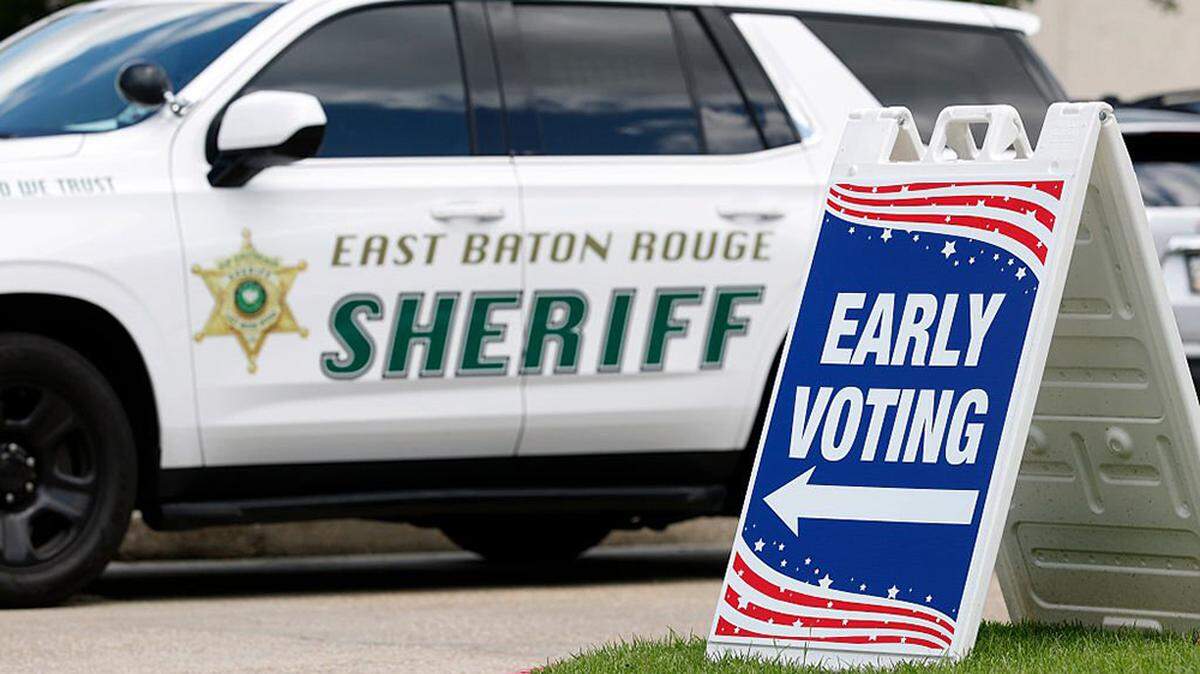
WASHINGTON - The Supreme Court’s decision last week invalidating Louisiana’s congressional map has spawned a fast-moving set of court fights over the state’s ongoing primary, as Gov. Jeff Landry seeks to halt the ongoing primaries to draw a new congressional map.
The Supreme Court ruled Louisiana should not have been forced to draw a congressional map with a second Black-majority district to comply with the Voting Rights Act. The following day, Landry postponed his state’s May 16 primaries for the House, saying in part that elections should not proceed under an unconstitutional map.
Voters have challenged Landry’s move in both state and federal court, as a different group of voters who brought the Supreme Court case, Louisiana v. Callais, asks the justices to speed up typically perfunctory actions after a decision.
In the federal challenge to Landry’s order, which was assigned to a three-judge panel, voters argue the election cancellation violated their civil rights. The judges have asked both sides to file arguments over how to handle the issues by Thursday, in an order that also said the panel and could call a hearing.
In the state challenge, voters and voting rights groups argue in part that the cancellation exceeds the governor’s authority to invoke emergency power to stop elections because of a Supreme Court ruling, rather than a natural disaster, public health or other safety emergency.
At the same time, a separate group of voters, the ones who successfully challenged the current map, asked the justices to fast-track the issuance of the decision - formally sending it back to a different three-judge panel so that the state could redistrict. The court agreed late Monday to let the ruling take effect, instead of waiting the typical 32 days.
The three-judge panel in that case said in an order last week that the state would have three days to lay out its redistricting plans once the justices formally issue that decision.
The challengers in that case, similar to Landry, argue that the state should not conduct a primary election under a map that was already found to be unconstitutional.
The new federal challenge to Landry’s decision to cancel the election could get to the Supreme Court in a test of how the justices will handle a redistricting effort so late before an election.
In December, the justices wrote that a lower court “inserted itself into an active primary campaign” by issuing a ruling invalidating Texas’ map four months before the state’s primary. In 2022, the justices blocked a lower court order mandating a new congressional map for Alabama three months before its primary.
In Louisiana, early voting had been set to start Saturday ahead of a May 16 primary. Ballots have already been sent to overseas and military voters, according to court records.
Florida governor signs new GOP-favored congressional map into law
Florida Gov. Ron DeSantis has signed into law a newly passed congressional map that gives his fellow Republicans four pickup opportunities in this fall’s midterm elections.
A spokeswoman for DeSantis confirmed his action Monday after he posted a photo of the map on social media with the message: “Signed, Sealed, and Delivered.”
The Republican-led legislature approved the new map in a special session last week, making Florida the latest state to redraw its congressional lines ahead of the midterms.
Under Florida’s new map, Rep. Kathy Castor’s Tampa-area district and Rep. Darren Soto’s Orlando-area seat become significantly more favorable to Republicans, according to calculations by Inside Elections with Nathan L. Gonzales. Additionally, fellow Democratic Reps. Jared Moskowitz and Debbie Wasserman Schultz both appear to have more difficult paths to reelection under the new lines.
The Equal Ground Education Fund and 18 individual plaintiffs promptly filed a lawsuit challenging the new map on Monday, arguing that it violates Florida’s Fair Districts Amendments, which prohibit partisan gerrymandering. Republicans have said that the recent Supreme Court ruling strengthens their argument that districts cannot be drawn specifically for minority voters as permitted under the Fair Districts Amendments.
House Democratic leaders have said they’ll engage in several Florida races regardless of the lines, pointing to recent overperformances in special elections across the state.
“Florida Republicans are blind to the wave headed for them in November and they will pay for aimlessly following their failed leader,” House Minority Leader Hakeem Jeffries, D-N.Y., said in a Monday statement.
Florida is the eighth state to enact a new map for the 2026 elections. This cycle’s redistricting push took off in Texas last year at President Donald Trump’s urging, and the Republican legislatures in Missouri and North Carolina followed suit. Republicans could also pick up seats in Ohio, where a new map was constitutionally required this cycle.
Alabama Gov. Kay Ivey and Tennessee Gov. Bill Lee, both Republicans, have both called special sessions this week for their respective legislatures to revisit their congressional maps.
Georgia Gov. Brian Kemp has reportedly said his state should adopt a new map ahead of the 2028 elections.
Mississippi Gov. Tate Reeves had already announced a special session to reconsider the states’ judicial lines, but the Magnolia State already held its congressional primaries this year.
Democrats are set to pick up seats in California and Virginia, where voters approved new maps in recent elections, although the Virginia Supreme Court is expected to soon weigh in on the process that set up last month’s referendum there. Democrats also have a pickup opportunity in Utah this year, after a legal challenge to the state’s House map resulted in a redraw.
And Democrats in Colorado have already begun an effort to redraw their state’s House map ahead of 2028.
DCCC reports fundraising surge after ruling
The Democratic Congressional Campaign Committee said it saw its best fundraising period of the year last week, bringing in over half a million dollars after the Supreme Court’s ruling.
House Democrats’ campaign arm raised about $522,000 in the roughly 48 hours between the court issuing the ruling on Wednesday and Friday morning, the group told CQ Roll Call.
“Republicans – with the help of this conservative Supreme Court – are attempting to rig the midterms so that they can stay in power,” DCCC spokesperson Courtney Rice said in a statement. “But just like their backfiring redistricting scheme, this will also fail.”
According to the DCCC, 10% of the nearly 23,000 contributions following the ruling came from people who had not previously given to the committee. The average donation was $22.75.
Recent federal filings showed the DCCC trailing its Republican counterpart, the National Republican Congressional Committee, in available cash at the end of March, with $70 million banked compared with the NRCC’s $78 million.
Still, the timing of the ruling may limit its potential impact on redistricting ahead of the November elections. But several states are eyeing redraws of their congressional maps for the 2028 elections, potentially sparking another cycle of uncertainty around district lines.
Copyright 2026 Tribune Content Agency. All Rights Reserved.
This story was originally published May 4, 2026 at 12:37 PM.