
‘Geological wonder’ in seafloor canyon off Hawaii resembles a wall of sunken columns
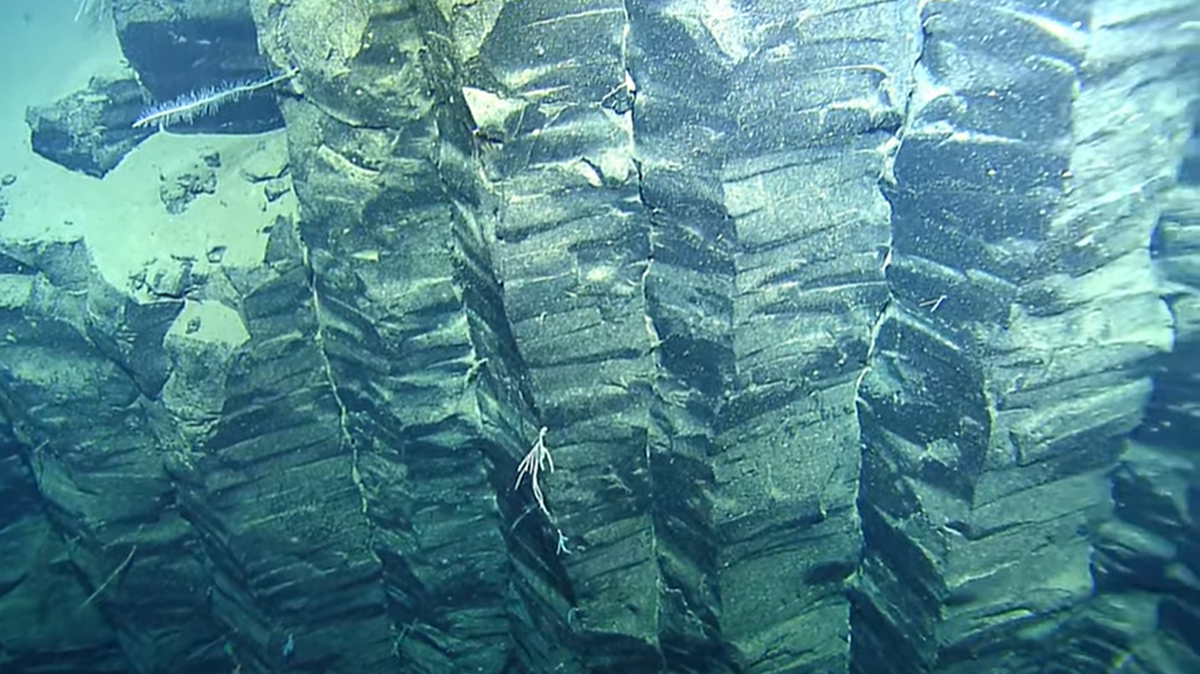
Newly recorded video captured the clearest images yet of a “geologic wonder” off Hawaii that resembles the skyline of an abandoned seafloor metropolis.
The surreal collection of shapes — each around 80 feet tall and 2 feet wide — is located across steep terrain in a canyon north of Molokai, according to Nautilus Live Ocean Exploration Trust.
Footage of the “stunning deep-sea columnar basalt” was recorded at a dept of just over a mile by the remotely operated vehicle Hercules and shared Oct. 25 on YouTube.
“Basalt is an igneous rock that, as lava, cools in a particular way that creates these unique hexagonal columns,” the trust explained.
The towers likely date back 1.8 million years and were created during an ancient volcanic eruption, when the rock was still hot and “there was a lot of pressure in different directions.”
“All the columnar basalt I’ve seen in the field, I’ve never seen this kind of layering ... this horizontal layering,” one researcher says in the video. “It may be a cooling phenomenon. ... It’s like a bunch of (stacked) pizza boxes.”
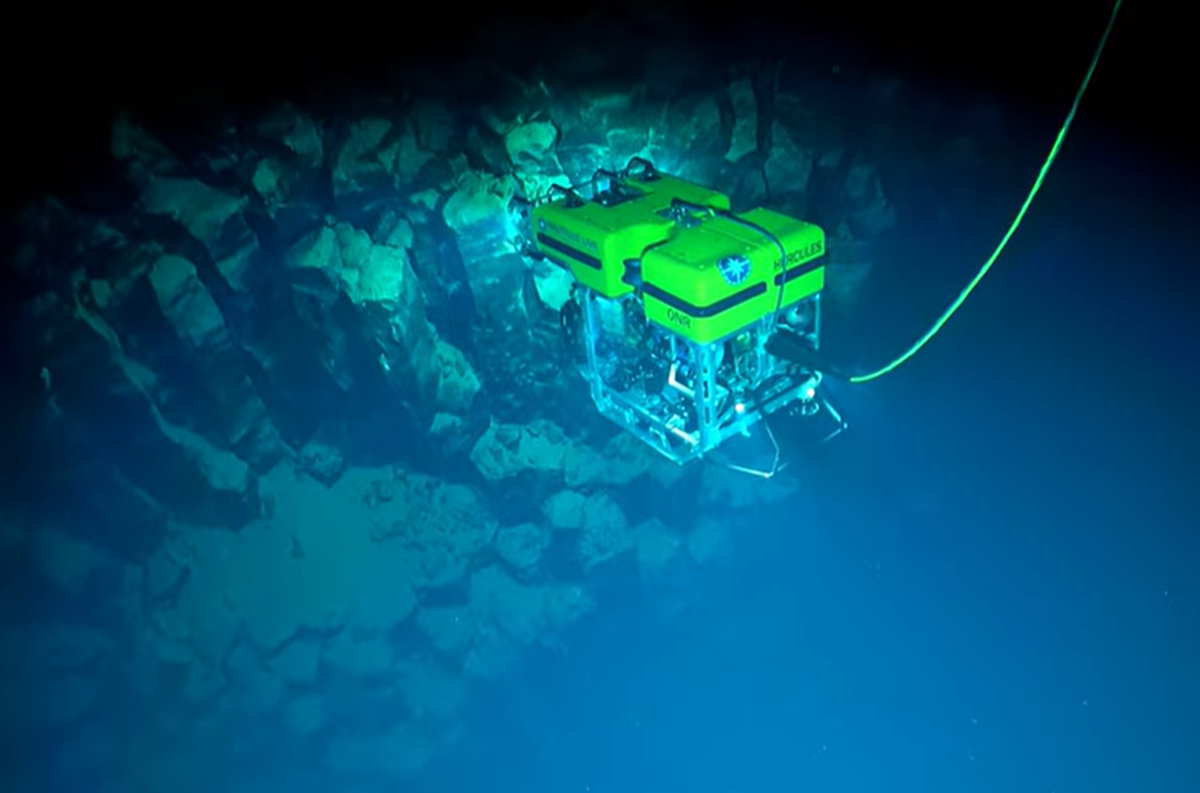
Very little sea life was seen near the formations, with the exception of a single “grumpy looking” monkfish recorded resting on its side.
The recording was made as part of a 14-day expedition aboard Exploration Vessel (E/V) Nautilus, which will visit “some of the most dramatic deep-sea habitats surrounding the Main Hawaiian Islands.”
New wide field camera technology is being tested during the expedition, and high-resolution video and sonar data are being collected, the trust says.
In the case of the basalt columns, a “wide field camera array system” enabled the team to create “a 220-degree immersive wrap-around perspective” of the outcrop, officials said. (The site was first imaged by scientists in 1996, officials said.)
“The Hawaiian Islands are part of the oldest, longest, and most remote island chains on Earth, and have been a key natural laboratory for many important scientific discoveries,” the trust says.
“Noteworthy areas that will be explored ... include World War II wrecks, hydrothermal vents located above the Hawaiian Hotspot, unique geological formations bordering the highest sea cliffs off Molokai, and deep-sea coral gardens.”
This story was originally published October 27, 2023 at 6:30 AM with the headline "‘Geological wonder’ in seafloor canyon off Hawaii resembles a wall of sunken columns."