
Harvard details ties to slavery, eugenics as it weighs reparations. Here’s the history
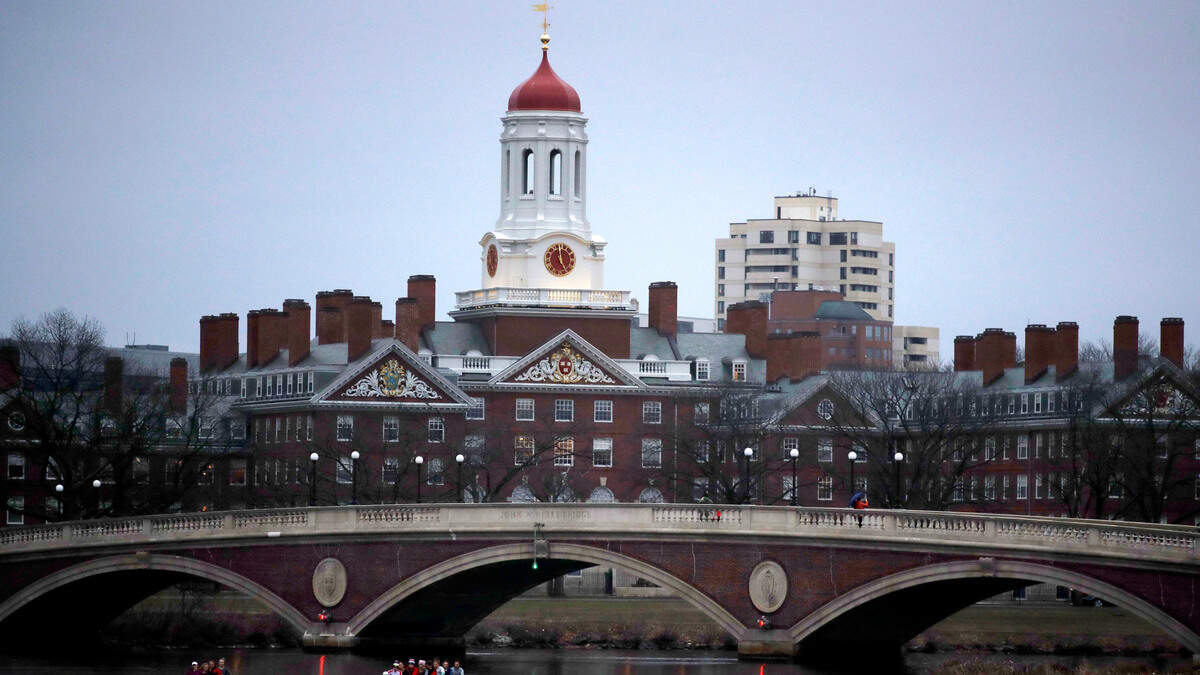
Harvard University has released a report detailing the university’s ties to slavery in an attempt to hold the institution accountable for tolerating and perpetuating racism throughout its history.
The 134-page report, compiled by a committee assembled in 2019 by Harvard President Lawrence Bacow, was intended to provide an in-depth look at the university’s history and its relationship with the present, including the impact slavery had on campus.
The report says that the university has had deep and long-reaching ties to the U.S. slave trade, and that “the responsibility for involvement with slavery is shared across the institution” – including by university presidents, faculty, staff, donors, “namesakes memorialized all over campus,” and more.
With that in mind, the university says it must take steps to remedy “the damage done.” Some of that damage includes the fact that enslaved people were forced to live and work on Harvard’s campus, that university donors in the 17th, 18th and 19th centuries profited directly from the slave trade, and that the university previously supported the study of eugenics, according to the report.
Here are some of the report’s main takeaways.
Slavery has long legacy at Harvard
Harvard has had significant ties to slavery since it was founded in 1636, the report said. Over 70 people were enslaved by Harvard presidents, other leaders, faculty and staff in the institution’s first 150 years. Some of them were forced to work on campus – enslaved people “served Harvard presidents and professors and fed and cared for Harvard students,” the report detailed.
Buildings on Harvard’s campus today also have deep ties to the slave trade. Elmwood, a historic building on campus known as the president’s house, was originally owned by Thomas Oliver, the last Royal Lieutenant-Governor of the Province of Massachusetts. Oliver was born to the “wealthy slaveholding owners of a sugar plantation” and later married into a family who owned a Jamaican plantation, the report said.
Oliver enslaved at least 11 people at Harvard’s Elmwood – Buff, Cato, Jerry, Jeoffry, Samuel, Mira, Jude, Sarah, Jenny, Violet and “Young Jerry,” the report said.
Several Harvard stewards also enslaved people. One past steward, Andrew Bordman, may have been one of the largest slaveholders in the colony of Massachusetts in the mid-1700s, the report said.
Indigenous people, who were the first peoples to be enslaved in Massachusetts, were also enslaved and sold by people at Harvard, the report said.
The committee concluded that slavery was not only a part of daily life at Harvard, but in Massachusetts as a whole, and was “not an abstraction” to anyone involved with the university.
Financially benefiting from slavery long after it became illegal in Massachusetts
Harvard’s financial ties to the slave trade didn’t end after slavery was officially made illegal in Massachusetts in 1783, the report said. A “substantial portion” of its income came from investments in industries that were heavily dependent on the labor of enslaved people, including the sugar, cotton, rum, real estate, and railroad stock industries, the report said.
The university also accepted “major gifts and bequests from donors” who profited off the slave trade, the report said. Those funds were “critical to Harvard’s growth and the establishment of its reputation as a prestigious university,” the report said.
Similar financial ties extended to Harvard’s student body. Some wealthy students in the colonial era paid their tuition with “plantation commodities like sugar, molasses, and cocoa,” which were all produced through the labor of enslaved people. It was advantageous for the university to establish relationships with those students’ families, and the institution benefited from them financially “for generations,” according to the report.
Perpetuating harmful ideas about Black people through ‘race science’
Harvard Medical School became a “focal point of scientific theories and practices rooted in racial hierarchy, racial exclusion, and discrimination,” the report said.
Part of that included several faculty members’ involvement with the field of “race science,” underscored by the racist belief that there are supposed inherent biological traits that establish white people as superior and Black people or other people of color as inferior, the report said. One former dean of Harvard Medical School, Oliver Wendell Holmes Sr., promoted the idea that there are “innate differences in moral character, health and intelligence among races,” the report said. He also supported the ideas of Francis Galton, known as the “father of eugenics,” writing in an essay that “in most cases, crime can be shown to run in the blood.”
In 1850, white students at Harvard Medical School antagonized the few Black students in their program, according to the report. That year, when three Black students were briefly admitted to the school, around 60 of their white peers voted to approve a resolution that stated having Black students in their program degraded the quality of their degrees. The three Black students were then excluded from the program, with faculty declaring them a “distraction” in the learning environment and saying that the “intermixing of races” at the school was a “failed experiment.”
The field of “race science” would continue to grow at Harvard, and the university produced several prominent figures in the field whose work would “legitimize racist views among generations of scientists, medical researchers, and indeed political leaders“ for years to come.
Black students were few and far between at Harvard for decades
According to the report, Harvard only had 160 Black students between 1890 and 1940, or an average of about three students a year. In 1960, around nine Black men were admitted to the school, a number that was seen at the time as a “vast improvement over prior decades,” the report said.
Black students often found themselves “isolated and marginalized on campus,” even though they excelled academically and either matched or exceeded the performance of white students, the report said. Black students were often shut out of activities like sports and were only allowed to play through the “half-opened door,” a term used to describe the exclusion of Black, Jewish and other marginalized students from such activities, the report said.
Harvard only became notably more accepting of nonwhite students in the 1970s, when the university began considering race in the admissions process and became a leader in defending the practice, the report said. Several Harvard presidents have acted as “steadfast proponents of diversity in education,” and the university was one of many that supported the University of Michigan in two Supreme Court cases in the 1990s regarding the school’s use of affirmative action policies. (The school will be defending itself again after the Supreme Court earlier this year decided to hear a challenge to the admissions policy.)
University considers issuing reparations to atone for its legacy
The report comes with seven recommendations from the committee to Harvard’s president and other leaders on how to remedy the “persistent educational and social harms” that the institution of slavery caused throughout the country.
“Such action cannot possibly address the many complex and damaging legacies of slavery in and beyond the United States, but nonetheless, action is vital,” the report said. “Harvard should take responsibility for its past, and it should leverage its strengths in the pursuit of meaningful repair.”
Those recommendations include:
developing relationships with Black colleges and universities
expanding learning opportunities to marginalized children “from birth through high school and college”
memorializing enslaved people on campus
supporting the direct descendants of enslaved people
supporting Native communities
Establishing a “Legacy of Slavery” fund to support reparative efforts
The committee also suggested that, if reparations are implemented, they should be evaluated yearly and modified as necessary.
The report does not lay out specifics about those reparations, like who specifically would get them or how much, just that the effort should be “generously funded, preserved in an endowment, and strategically invested.”
“Harvard must set a powerful example as it reckons with its own past,” the report said. “We must pursue not only truth, vital though that is, but also reconciliation. Doing so requires a range of actions — visible and continuing — that address the harms of slavery and its legacies, many of which still reverberate today, affecting descendants of slavery in the community and indeed the nation.”
This story was originally published April 27, 2022 at 2:43 PM with the headline "Harvard details ties to slavery, eugenics as it weighs reparations. Here’s the history."