
CDC recommends getting COVID booster sooner if you got Pfizer, 3rd dose for some kids
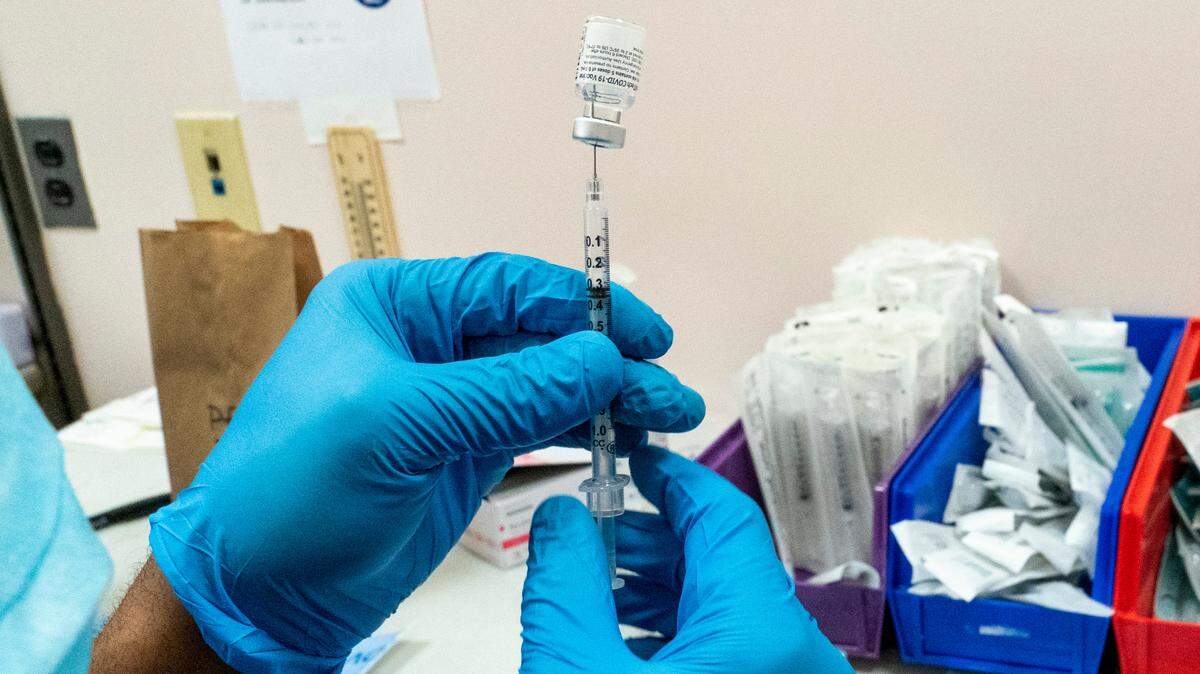
If you are fully vaccinated with the Pfizer COVID-19 vaccine, you can get a booster shot a bit sooner than previously suggested, the Centers for Disease Control and Prevention recommends.
The wait period for an mRNA booster of one’s choosing is shortened from six months to five months after getting a second Pfizer dose, the CDC announced Jan. 4.
Additionally, the CDC is recommending “moderately or severely immunocompromised” children ages five to 11 to get an additional vaccine dose 28 days after their second shot.
For those ages, only the Pfizer COVID-19 vaccine is authorized for use, according to the CDC.
The new guidance comes during the rapid spread of the omicron coronavirus variant, which accounts for 95.4% of positive virus cases in the U.S. while the delta variant accounts for just 4.6%, according to the CDC’s most recent data estimates for Dec. 26 through Jan. 1.
The CDC’s booster wait period recommendation for anyone vaccinated with the Moderna vaccine remains the same at six months. The wait period for a booster for anyone inoculated with the J&J vaccine remains two months.
“Following the FDA’s authorizations, today’s recommendations ensure people are able to get a boost of protection in the face of Omicron and increasing cases across the country, and ensure that the most vulnerable children can get an additional dose to optimize protection against COVID-19,” CDC Director Dr. Rochelle Walensky said in a statement.
The omicron variant is believed to potentially be more contagious than other variants including delta, according to the CDC.
“I’ve NEVER seen anything like the speed of Omicron,” Dr. Tom Frieden, a former CDC director, wrote in a Dec. 20 Twitter post. “It’s as infectious as measles spreading in a non-immune population, with a much shorter incubation time therefore much faster doubling time.”
However, early data has suggested it causes a “lesser degree of severity” in regards to illness, Dr. Anthony Fauci, chief medical adviser to President Joe Biden, said during an interview on ABC’s “This Week” on Dec. 26
Omicron’s spread has prompted a recent change in the CDC’s isolation recommendations for those infected with or exposed to the coronavirus, the agency announced on Dec. 27.
Now, those who test positive can isolate for five days if they are asymptomatic or have “resolving” symptoms instead of the previously recommended 10 days of quarantine, according to the CDC.
“Follow that by 5 days of wearing a mask when around others to minimize the risk of infecting people they encounter,” the CDC said.
Those who are exposed to COVID-19 and unvaccinated or have received their second dose more than six months ago (or more than 2 months for the J&J vaccine) without a booster shot should also quarantine for five days followed by “strict mask use” for another five days, according to the agency.
If you are exposed to COVID-19 and have received a booster, the CDC recommends you wear a mask for 10 days after exposure — but do not need to quarantine.
The new isolation recommendations “balance what we know about the spread of the virus and the protection provided by vaccination and booster doses,” Walensky said in a statement.
Before the updated quarantine guidance, the CDC gave “clinical preference” to the Pfizer and Moderna vaccines over the J&J vaccine in a unanimous vote from its advisory committee on Dec. 16.
This is due to risks connected to the J&J vaccine such as a rare blood clotting condition that has affected 54 people as of Dec. 17 out of more than 17 million people who received the shot, called “thrombosis with thrombocytopenia syndrome (TTS).” Another risk is “Guillain-Barré syndrome (GBS).”
However, the CDC noted that “receiving any vaccine is better than being unvaccinated.”
In regards to the new vaccine recommendations for immunocompromised children, the CDC said they are “consistent” with prior recommendations for adults with weakened immune systems.
In August 2021, the CDC first announced immunocompromised adults can get a third shot of the Pfizer or Moderna vaccine at least one month after being fully vaccinated.
That was followed by a new CDC announcement in October that said any of those adults who have immunocompromising conditions and were vaccinated with Pfizer or Moderna can get a fourth booster shot of Pfizer, Moderna or J&J vaccines at least six months following a third dose. The adults who first got a single J&J vaccine could get a single booster dose of J&J, Pfizer or Moderna at least two months later.
To help protect against the omicron variant and COVID-19 in general, the CDC suggests getting vaccinated — including getting “boosted” — wearing a mask indoors and testing yourself for the virus before gathering with others.
This story was originally published January 4, 2022 at 9:53 AM with the headline "CDC recommends getting COVID booster sooner if you got Pfizer, 3rd dose for some kids."
.jpg)