
Blue-eyed cottonmouths can be seen in late summer heat. It’s not a trick of light
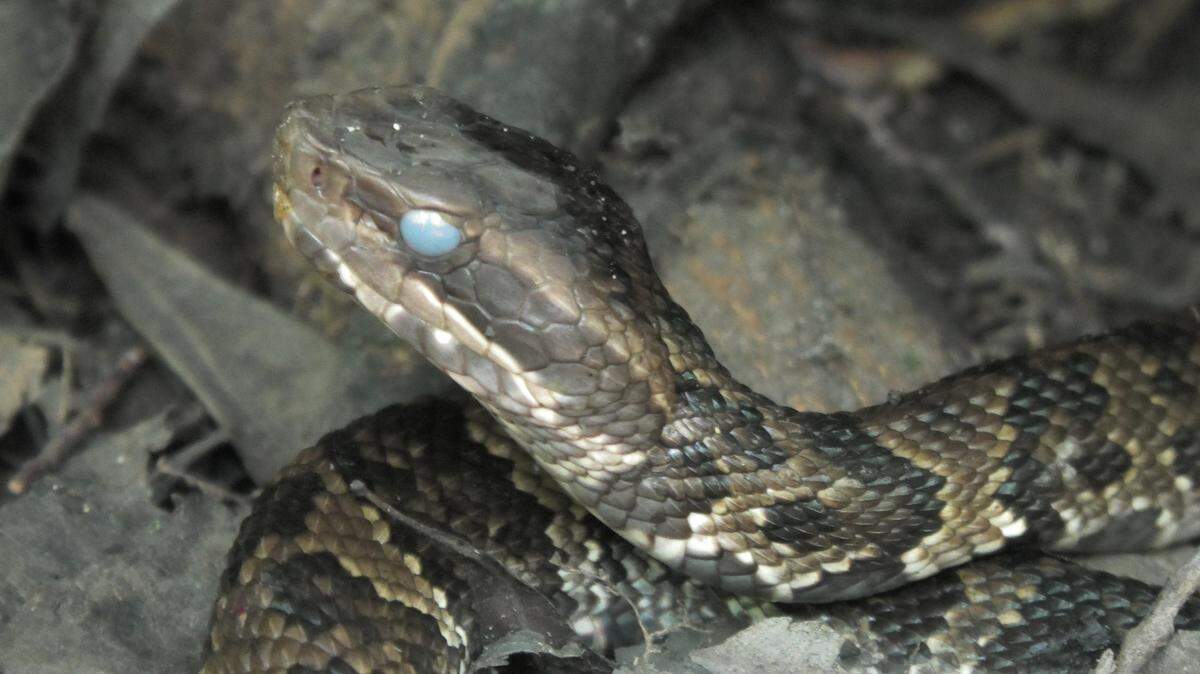
Cottonmouths with pretty blue eyes may be showing up in wetlands across the Southeastern United States, and it’s not an illusion.
The striking change is a very real transformation in the venomous snakes that often goes unseen by humans, due to the elusive nature of the cottonmouths (also known as water moccasins).
“There is an old saying that ‘the snakes are blind in the dog days of summer.’ Unlike most things you hear people say about snakes, there might actually be a bit of truth to this one,” according to Frederick Boyce, a herpetologist with the N.C. Aquarium at Pine Knoll Shores.
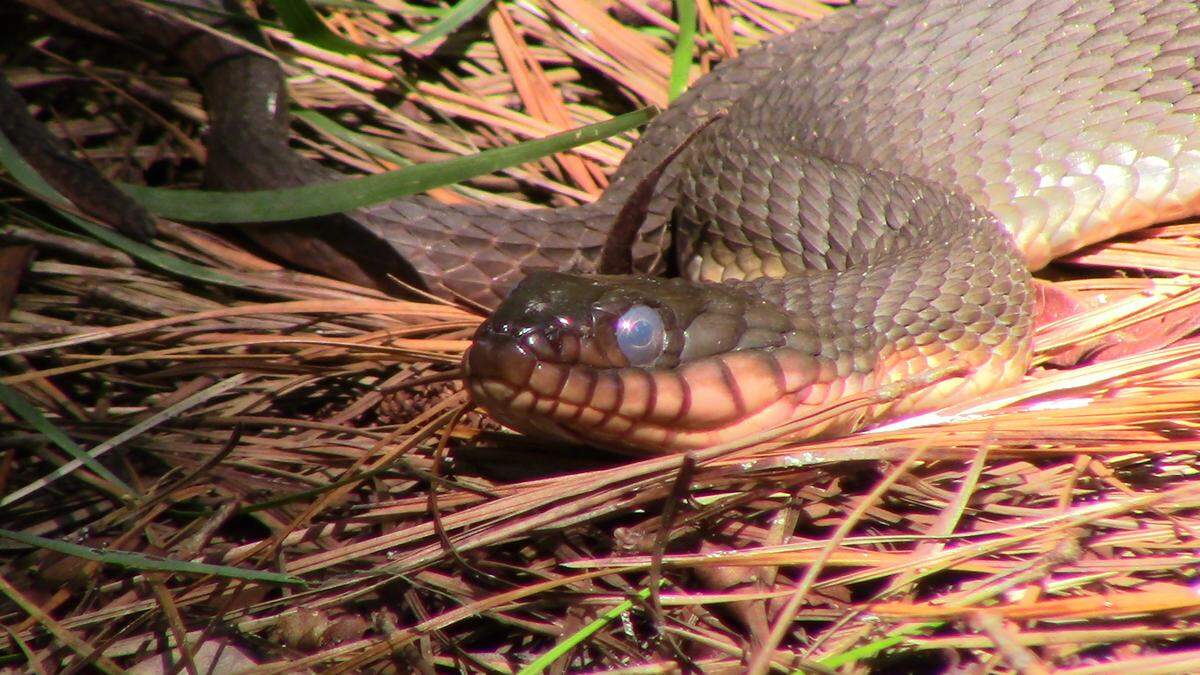
“When snakes are getting ready to shed their skins they produce a creamy, bluish fluid underneath the skin that will help moisten and loosen the old skin. As a snake’s eyes are protected by a transparent scale rather than moveable eyelids, this bluish fluid is much more apparent in the eyes than anywhere else on the snake.”
Boyce says he has little doubt the folk saying came from “snakes being seen when their eyes are clouded and blue” for shedding, “though in truth snakes can shed their skins at any time of year.”
The shedding process can last a week or two (depending on the species), and the snakes typically have impaired vision during that time, he says. The snakes are not very active and normally do not feed during a shed cycle and will typically seek shelter in a secluded place, he says.
Boyce shared photos of multiple blue-eyed cottonmouths on his Facebook page, Cottonmouth Acres, which documents his observations of social behavior in a coastal population of these snakes. The site is located on a large tract of restored wetland in eastern N.C. and is home to a resident population of adult cottonmouths and their offspring, plus additional “transients” passing through while looking for food
“While I do seem to encounter a lot of these so-called opaque snakes during ‘the dog days,’ I don’t believe that it’s really any more likely to occur in late summer,” Boyce says.
“Expectant mother cottonmouths, often seen basking in July and August, will go through a shed cycle before giving birth, and the baby cottonmouths, born in late August or early September, will become cloudy almost immediately, on their first or second day, shedding for the first time about a week later.”
The Carolinas are home to the Eastern cottonmouth, (Agkistrodon piscivorus), a species that averages two to three feet in length and can potentially reach lengths of five or even six feet, but such cases are rare and exceptional,” according to the N.C. Wildlife Resources Commission. Their venom is toxic to humans, but it is considered less dangerous than rattlesnake and coral snake venom, the commission says.
“Of the six venomous species native to North Carolina, the cottonmouth is the most reluctant to actually bite in defense, preferring to warn intruders away with its trademark open-mouthed display,” Boyce says.
This story was originally published August 5, 2021 at 8:03 AM with the headline "Blue-eyed cottonmouths can be seen in late summer heat. It’s not a trick of light."