
What’s a heat dome? The extreme weather phenomenon is scorching much of the US

An extreme heat spell is expected to send temperatures soaring across the U.S. this week, this time baking both coasts.
A “heat dome” similar to one that brought record heat to the Pacific Northwest, sending temperatures into the triple digits last month, is forecast to cover a huge swath of the country stretching from the northwest “eastward through the Upper Mississippi Valley” over the next several days, according to the NWS Climate Prediction Center.
Forecasts show above-average temperatures, coupled with lower-than-normal precipitation in some places, could last well into next week. The high pressure ridge could also spell high heat across the Southern Plains and Southeast U.S.
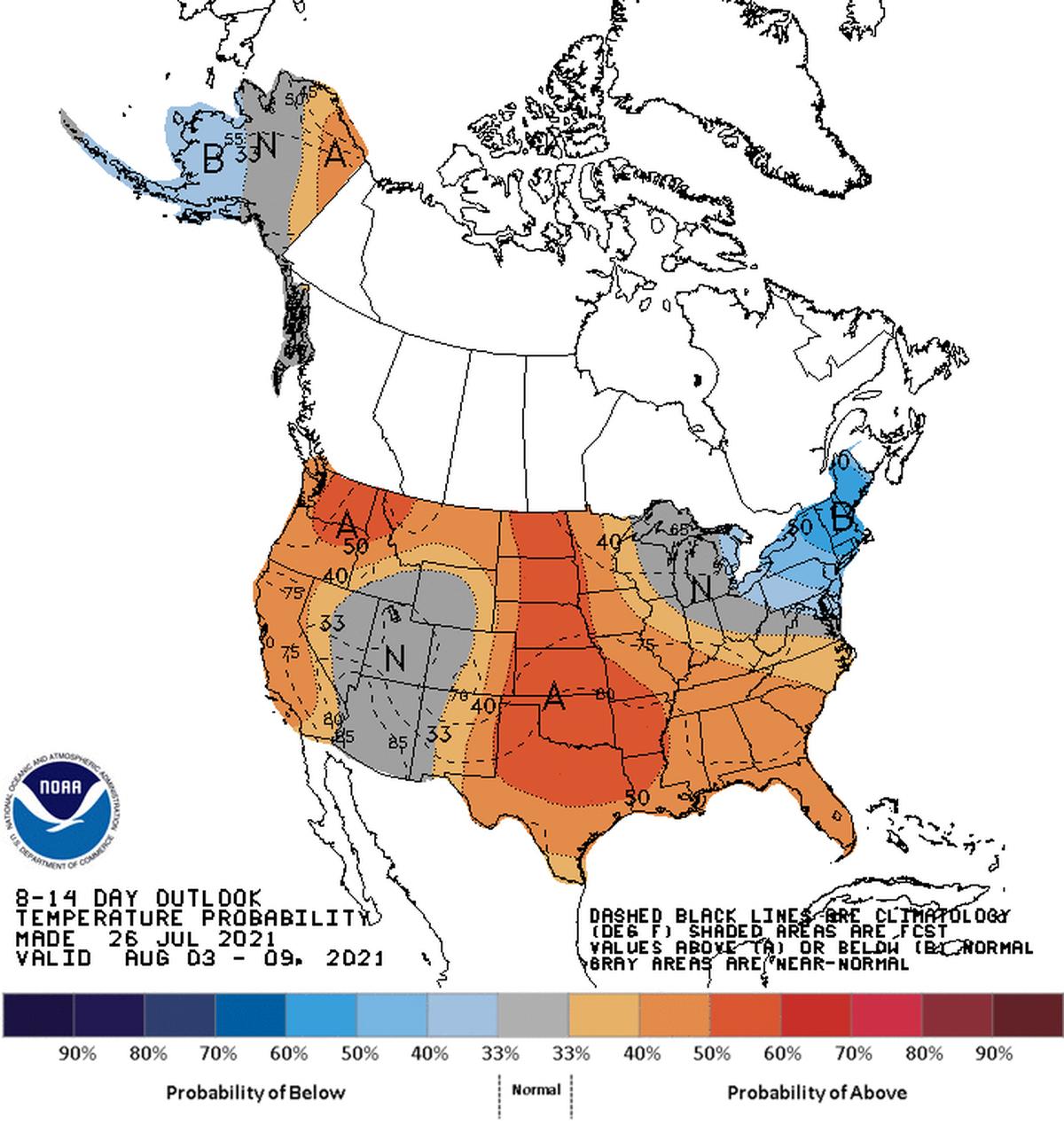
“Most of the US mainland will be under this huge heat dome of high pressure,” Meteorologist Gerard Jebaily said, WGN-TV reported. “Meteorologists unaffectionately call it a Ridge of Death. . . . It gets its name because the sinking air underneath the high-pressure dome suppresses shower and thunderstorm activity and the air becomes hot and stagnant.”
What’s a heat dome?
Heat domes can bring about extreme heat waves and are typically triggered by a “strong change in ocean temperatures from west to east in the tropical Pacific Ocean,” according to the National Oceanic and Atmospheric Administration. That steamy air becomes trapped under a dome-like area of high pressure, causing “vast areas of sweltering heat.”
“As prevailing winds move the hot air east, the northern shifts of the jet stream trap the air and move it toward land, where it sinks, resulting in heat waves,” according to the weather agency.
So, how hot could it get?
Areas of the Northwest including Washington and Idaho could see temperatures 15 to 25 degrees above average, leading to record-breaking heat. Across the Midwest, rising heat and humidity could make it feel like 100-plus degrees by the middle of the week, according to the National Weather Service in Kansas City.
Folks in the Southeast aren’t faring much better. Forecasts show temperatures reaching into the 90’s across Georgia — with heat indices between 100 and 106 degrees.
A heat advisory also remains in effect for a portion of the northern Gulf Coast, according to NWS New Orleans.
This story was originally published July 27, 2021 at 10:16 AM with the headline "What’s a heat dome? The extreme weather phenomenon is scorching much of the US."