
Mysterious seafloor plateau off East Coast being explored for first time by NOAA team
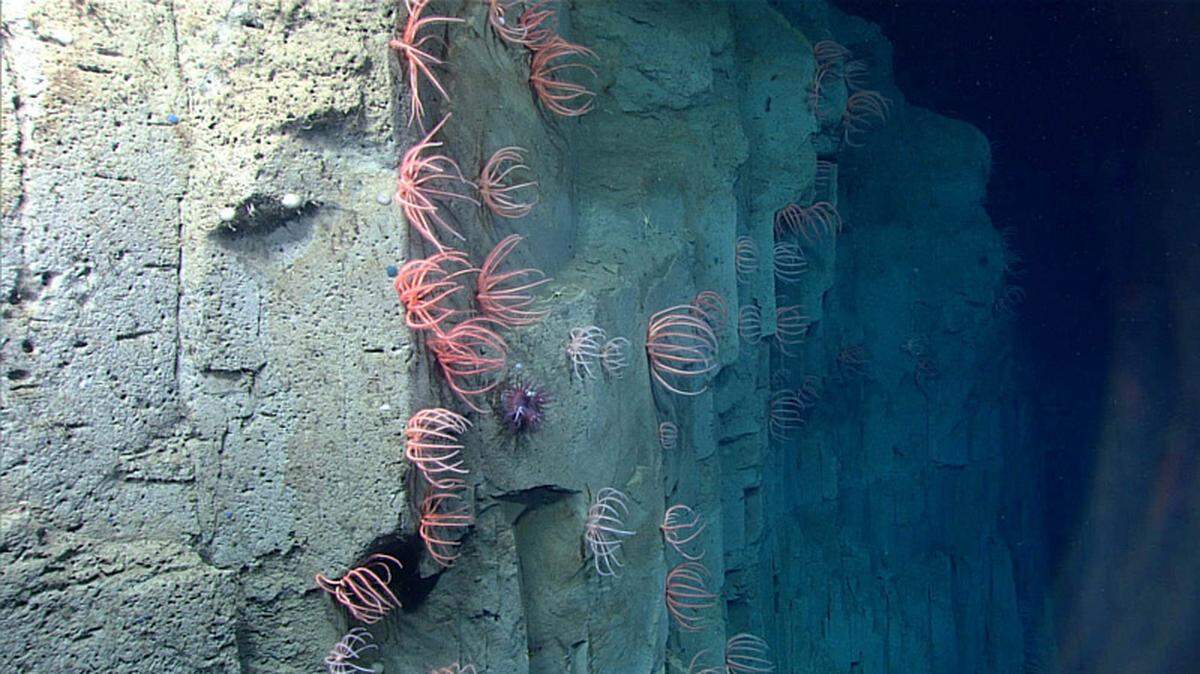
A NOAA expedition is underway to explore unmapped areas of seafloor off the East Coast, including the first known visit to a puzzling deep sea anomaly known as the Caryn Seamount.
The “underwater plateau” rises roughly 6,500 feet (2,000 meters) over an otherwise flat section of Atlantic seafloor, NOAA officials say.
Its origins are a mystery, but if all goes as planned, scientists will record the first images of the formation June 19 through June 21.
“The Caryn Seamount sits hundreds of miles offshore and there is nothing quite like it in that area,” according to Kasey Cantwell, operations chief for NOAA Ocean Exploration.
“It’s like a little (submerged) island way offshore, and no one’s ever been there before. We’re hoping to learn a lot more about it.”
The mount has remained a mystery largely because it is so inaccessible. It sits about 440 miles off Virginia, under 16,400 feet of water (5,000 meters) and is likely surrounded by an accelerated deep-sea flow.
Along with photos and video (taken by remote camera), the team hopes to collect seafloor samples so geologists might get a better understanding of the seamount’s origins. That’s if wind, waves and the currents permit, Expedition Coordinator Matt Dornback told McClatchy News.
“It could be barren rock and sediment. It could be teeming with life. It could be a mix of both, depending on what side or depth of the seamount we look at,” Dornback said.
“Three thousand meters deep is getting to the deeper limits of where deep-sea corals can live. Some sponges can live deeper. We may be lucky and find deep-sea corals and sponges on the ridges of Caryn ... but we don’t know.”
The visit is part of two-week expedition (June 13-27) that could also turn up previously unknown shipwrecks on the seafloor from North Carolina to Rhode Island.
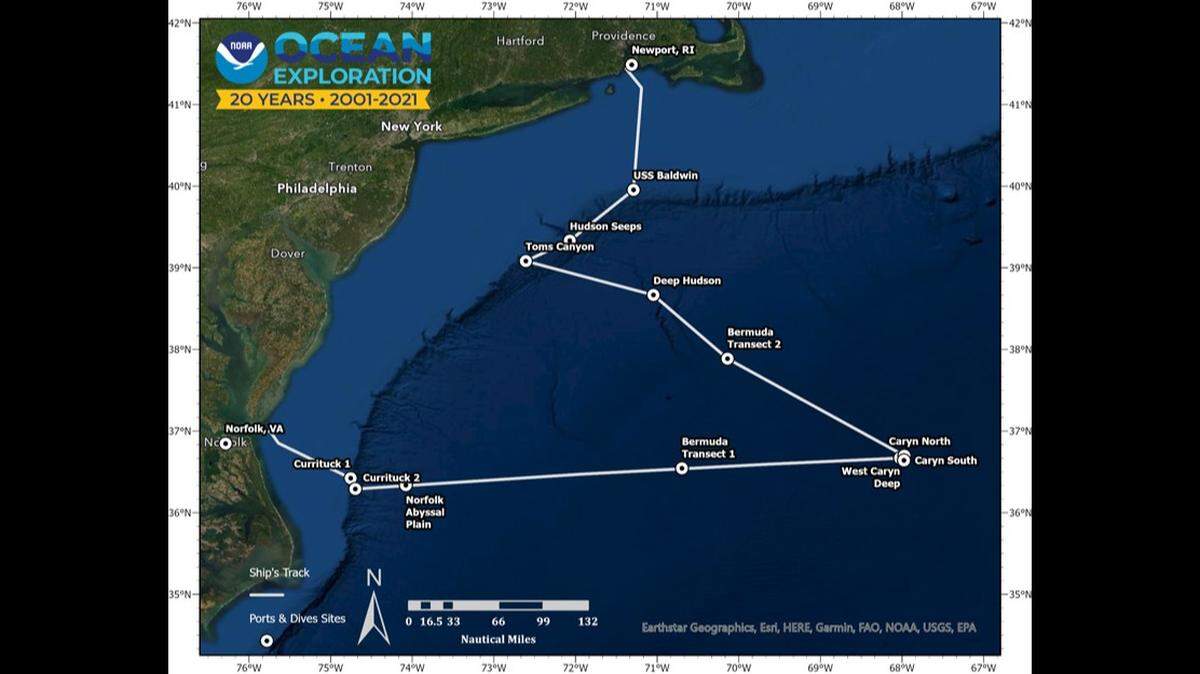
Should a shipwreck be found, the team intends to collect images and data using new and improved equipment that is being tested during the mission.
“This is known to be an area where lots of ships were lost in the past. Finding shipwrecks is always potential along the East Coast, and we absolutely hope we find them,” Cantwell said.
The new equipment will also be utilized in mapping the area’s canyons, where the team expects to find methane gas seeps bubbling from the seafloor. Prior to 2010, only two such seeps had been located off the East Coast. However, exploration teams have since found more than 500, each of them supporting a unique ecosystem.
Dornback likens them to natural springs one sees on land, adding that “unique compounds” in the surrounding sea creatures are of great interest to medical and research communities.
The seeps rise from canyons that are dynamic and unexplored, including spots where massive landslides have occurred, he said.
“There are flows going through them. It’s not just sea water sitting there stagnant,” Dornback said.
“It’s like there are underground rivers flowing through the canyons, along with underwater landslides that are incredibly powerful and can destroy deep sea cables or (sea life) communities. There are a lot of forces at work that we don’t completely understand.”
Among the many unpredictable things the team hopes to record are “predation events” when animals start eating each other, as well as whale falls. The latter involves dead whales falling to the seafloor, where they attract frenzied crowds of feasting sea creatures.
This story was originally published June 17, 2021 at 10:27 AM with the headline "Mysterious seafloor plateau off East Coast being explored for first time by NOAA team."