
VA chief, caught off guard by the politics, says lawmakers must do more than 'throw rocks'
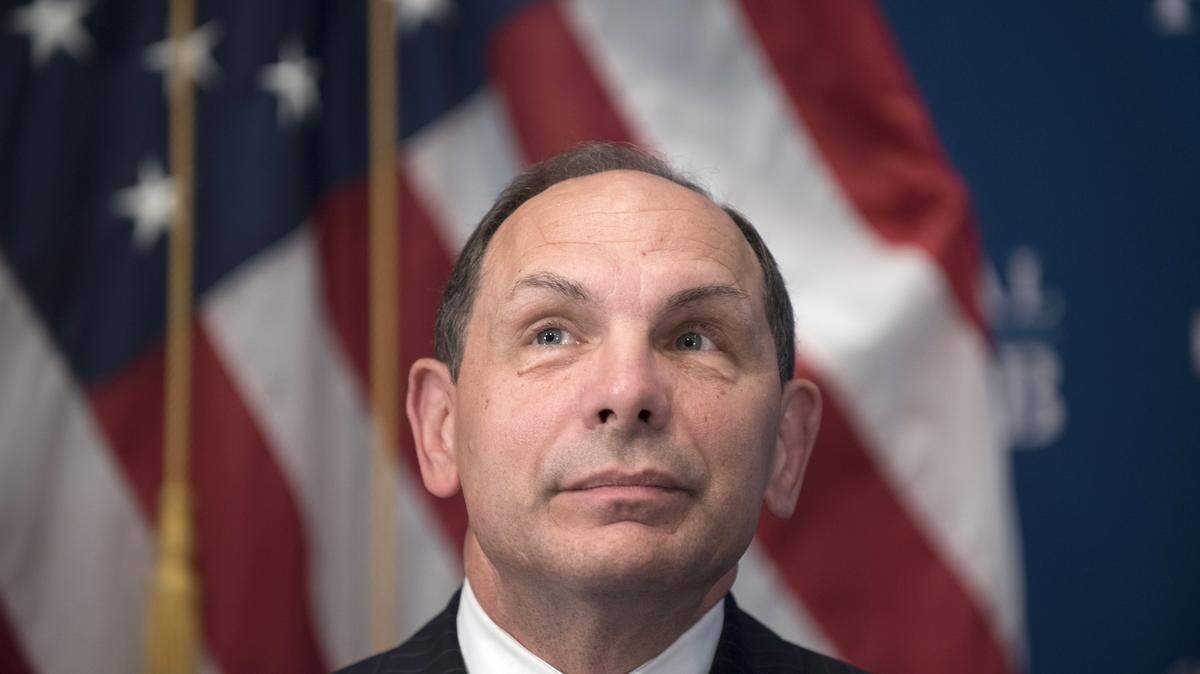
WASHINGTON -- To fix and restore trust in the Department of Veterans Affairs after a scandal over patient care, President Barack Obama tapped a corporate executive to bring efficiency and customer service to one of the government's most complex bureaucracies.
Fifteen months into the job, Robert McDonald says his biggest obstacle in leading the second-largest federal agency has been politicians in Congress.
Not that he doesn't welcome oversight. But McDonald was not prepared to navigate the brutal politics on Capitol Hill, where he says lawmakers in both parties seem more intent on "scoring points" than improving care for veterans.
"As someone from the corporate world, I just wasn't used to the politics," he said in an interview last week. "There are some factions that want you to fail. That was shocking to me, to see 1/8members of Congress3/8 behave differently in front of a camera than they were in private conversations."
As he tries to repair a sprawling agency beset by poor morale, growing caseloads, a shortage of medical staff and a crisis last year over manipulated waiting lists to paper over delays in health care, the retired chief executive of Procter & Gamble has felt bipartisan criticism.
VA may be the one corner of the government that, because there are veterans in every congressional district, Democrats and Republicans can agree on. And the public criticism of how he is leading the agency - more biting from Republicans, not surprisingly - has been unrelenting, from inaction on firing executives who engaged in misconduct to battles over funding.
"I'm used to people being on the same team," the secretary said. "If you really care, you help with the transformation efforts. You don't just throw rocks."
He spoke during a visit to the National World War II Memorial on the Mall in Washington, where an Honor Flight of 45 Vietnam veterans from Nevada had arrived by bus.
"We're working very hard to transform the VA for veterans," McDonald, in a blue pin-striped suit and lapel pin that said "I CARE" (for VA values of integrity, commitment, advocacy, respect and excellence), told the group in a short welcoming address. "We've got a lot of good people working very hard, but for some reason it doesn't get out to the public."
The veterans -- in the warm sun wearing red T-shirts that read "Honor Flight Nevada" -- applauded. "You take a lot of heat and I appreciate it!" one man called out.
A veteran himself, McDonald -- who was a captain in the Army's 82nd Airborne Division -- shook hands with everyone before the group dispersed to see the memorial. Most of them praised VA's health-care facilities in Reno, recently renovated to improve patient care. "See what they're saying?" McDonald told a reporter. "They like the care."
The sentiment is not universal throughout the sprawling VA system, where medical care, exacerbated by staff shortages, is uneven. But McDonald says he is proud of the strides his team has made in improving access to medical appointments, reducing veteran homelessness, shrinking the notoriously long wait for disability claims ("We're totally automated now"), among other improvements.
More than half of his leadership team is new, handpicked by him to improve the organization and the veteran experience. He's put a premium on training senior executives to run a better, leaner agency and have them train their managers to do the same.
But wait times for medical appointments longer than 30 days persist, he acknowledges. The wait for a disability claim to be processed is down, but the system for appealing denials is still cumbersome and outdated, he says.
"There are places, particularly where the population of veterans is booming disproportionately to the rest of the country, where wait times are still unacceptable," he acknowledges.
It's not just members of Congress who have criticized McDonald's leadership as too slow to make changes. Veterans groups and VA employees are impatient. Excessive spending and delays to hospital construction projects, a rocky start to a new program that encourages veterans to get medical care through private doctors, employee misconduct - these and other problems keep dogging the secretary.
He counters that a decentralized system with 340,000 employees where dysfunction has been commonplace in some departments for years cannot be turned around in 15 months.
"We've made progress," McDonald says. "We've got more to do."