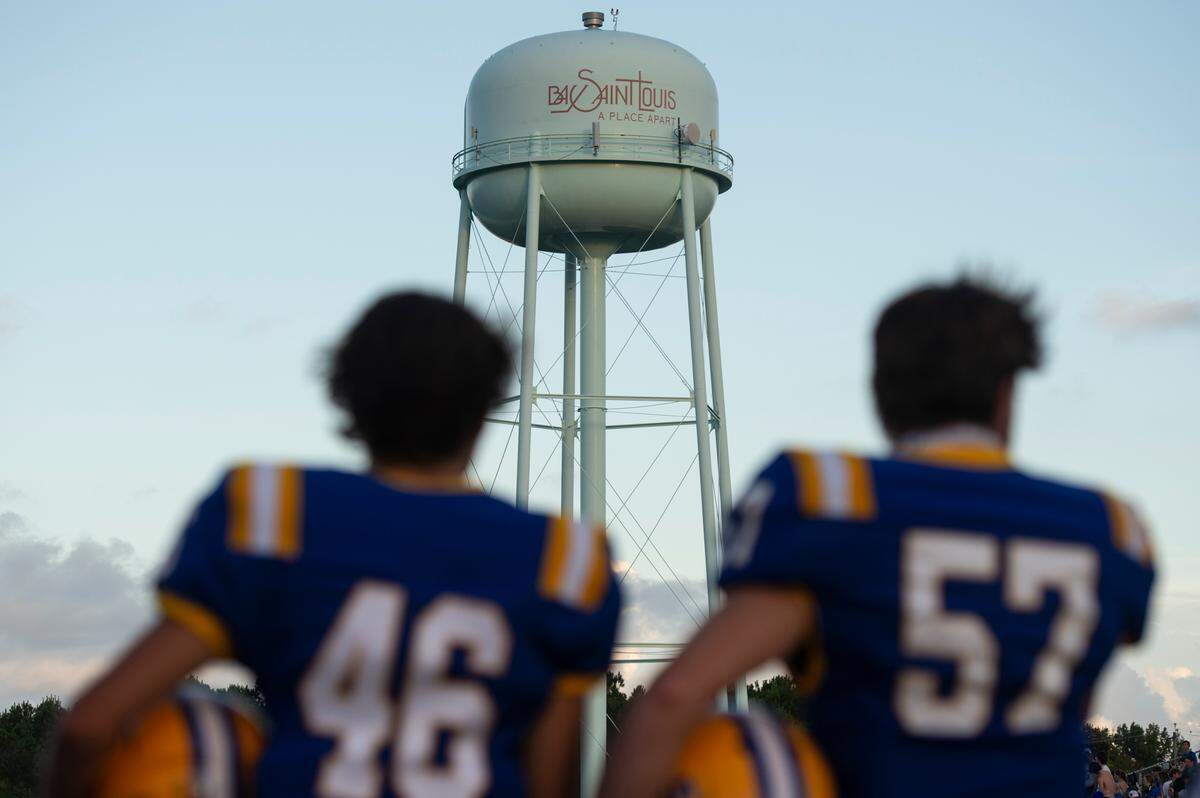
How South MS football team rallied in the face of incredible odds after Katrina
The humidity deep in The Kiln had spiked to 85 percent just in time for kickoff on August 26, 2005.
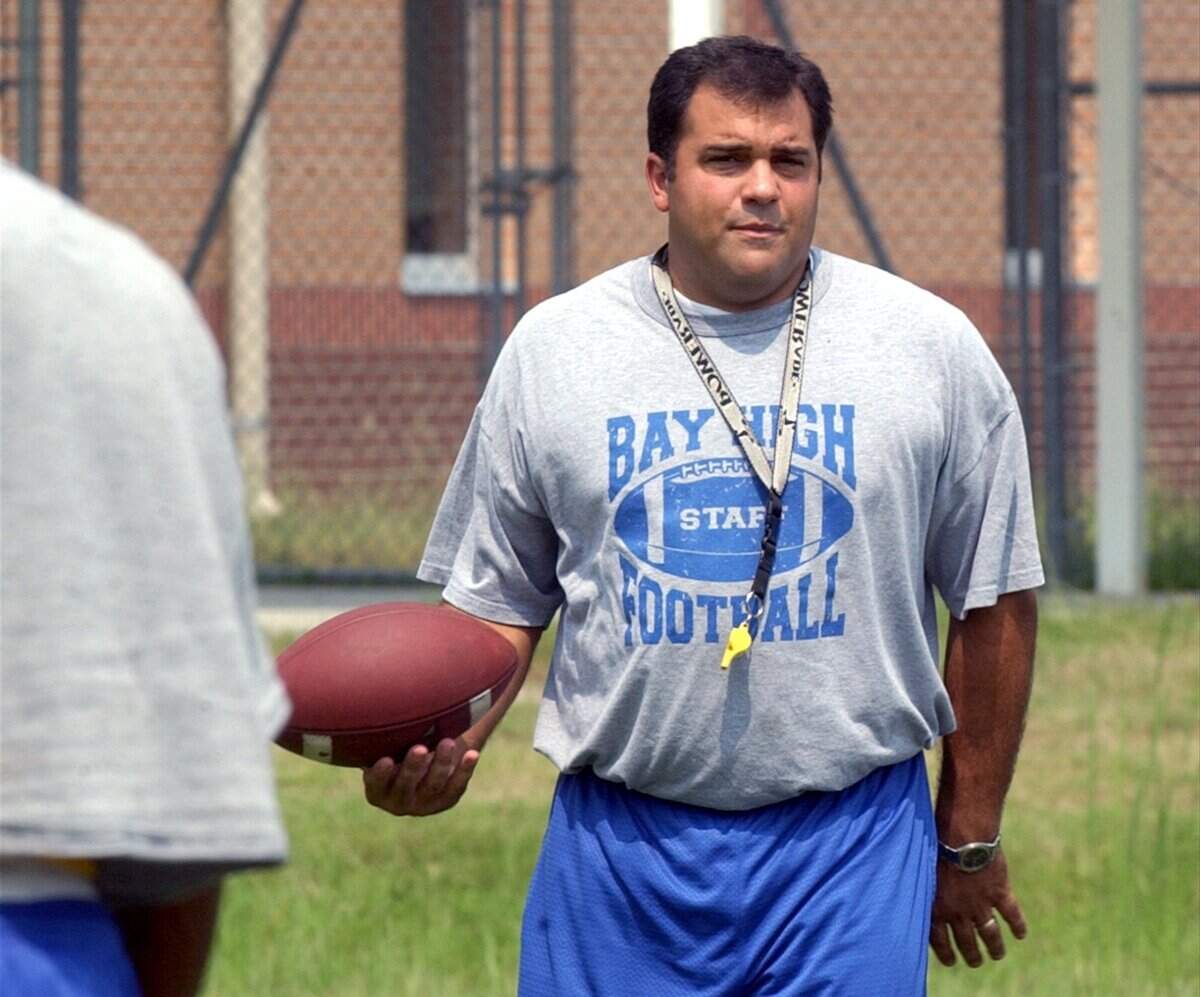
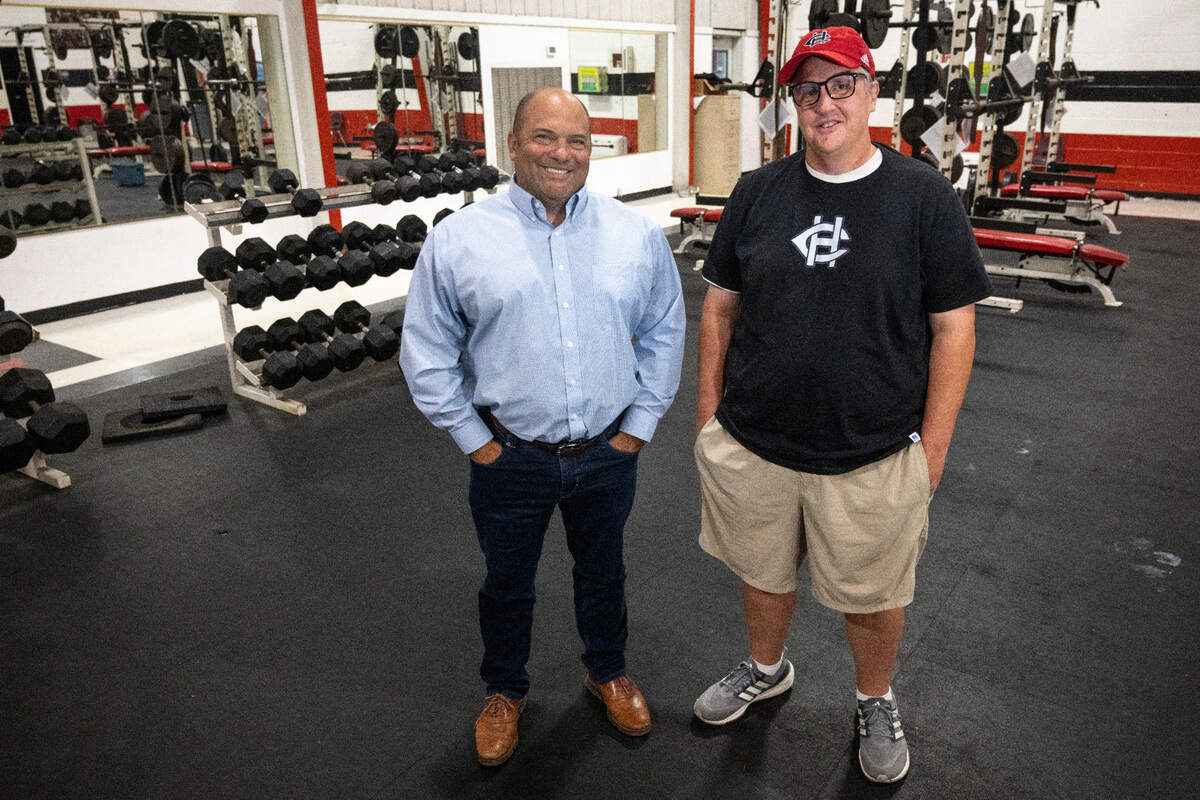
“It was the hottest game I’ve ever coached.” Jeremy Turcotte was an assistant football coach at his alma mater Bay High in 2005 under Brenan Compretta, serving as the school’s special teams coordinator and eighth grade head coach.
“Just the muggiest football game I can remember,” Turcotte told the Sun Herald. “It was miserable. Hancock was miserable. We were miserable.”
The Tigers were loaded that season. In a rarity for a 4A school, The Bay had 22 unique starters across both sides of the line of scrimmage. It took a sledgehammer to Hancock in the season-opener, thumping the Hawks, 30-14, in a game that wasn’t as close as the 16-point win may indicate.
“I walked away from that thinking, man, we could be scary good,” Compretta told the Sun Herald.
But the bus ride home was more uneasy than it was celebratory.
Hurricane Katrina was a Category 2 storm with a projected track shifting west from the Florida Panhandle to the coasts of Louisiana and Mississippi on the evening of the opener.
But the coaches had been busy with game day operations throughout the afternoon and evening. The digital age had not yet dawned and instant news updates were still a thing of the future.
“I just remember getting on the bus and the kids are walking by going, ‘coach, are we going to have school Monday?’” Turcotte said. “And me and another coach are like, ‘what are y’all talking about?’ This is 2005 so you don’t really have cell phone news or anything. But we’re all like, ‘yeah, it’s going to be fine.’ And little did we know.”
The student-athletes and their classmates would not return to school for another 73 days.
Katrina brings devastation and scatters families
It was 4 a.m. on Sunday morning. Compretta was in his recliner feeding his infant daughter as he often did in the earliest hours of the day.
It was only 36 hours after Compretta had told his staff during their weekly Saturday morning meeting he didn’t want to hear anything about the approaching storm as they prepared for their next scheduled matchup against D’Iberville.
But the early morning glow of the television cast an ominous picture.
“I was sitting on a recliner, feeding her bottle, just watching the Weather Channel, and then I saw category five,” Compretta said. “The only other category five I knew was Camille, and I wasn’t alive then, but I heard all the horror stories. So when I saw that, I woke my wife up, I called my parents, called my brother, I said, y’all got to get up. We got to go. And we loaded up and we left.”
Katrina had rapidly developed overnight to a category five storm in the span of just nine hours with maximum sustained wins of 175 MPH and gusts up to 190 MPH.
“I just got up in the middle of the night to go to the restroom and walked in the living room and cut on the Weather Channel,” Turcotte said. “And as soon as I cut on the Weather Channel, it’s that famous picture of it taking up the whole Gulf. And at roughly 3:30 that morning, I woke my wife up and said, ‘get up and everything that you hold dear we got to put in the car.’”
The Compretta family ended up in Valdosta, Georgia. The Turcottes in a motel with a built-in Denny’s past Tallahassee, Florida.
Community members scattered across the country as the storm bore down. It would make its third and final landfall Monday morning at the Louisiana-Mississippi border as a Category three hurricane.
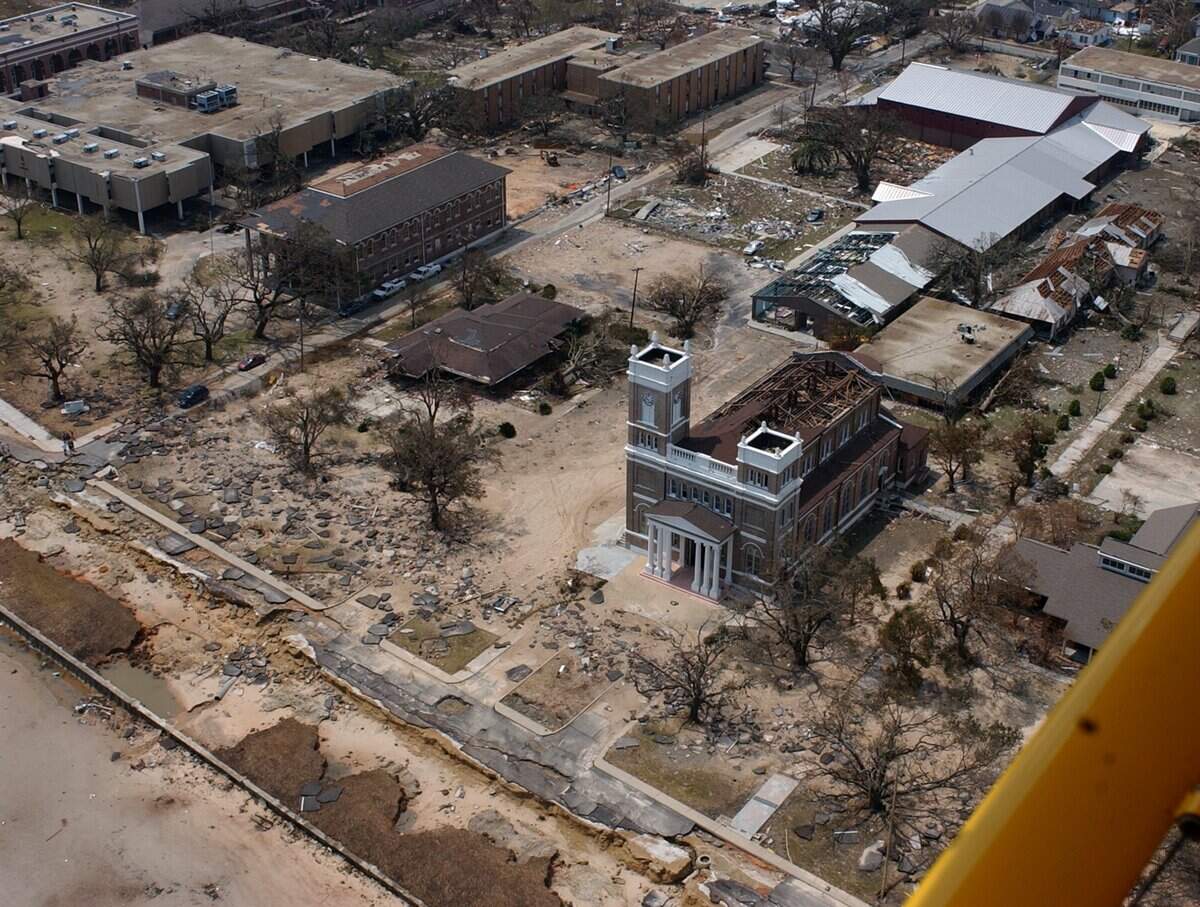
Damage was widespread. Storm surge traveled as far as 12 miles and reached a record-breaking 27.8 feet in Pass Christian. The St. Louis Bay Bridge was destroyed. The low-lying community of Waveland was decimated. Bay St. Louis suffered similar devastation, along with a huge portion of Hancock County and much of the Mississippi Coast.
“It’s like Mad Max,” Turcotte said of what he returned to. His house had been flooded to the ceiling and was leaning. Many others didn’t even have a structure to return to.
Entire homes were swept away. Driveways led to nowhere along the Coast. Many students and their families had nothing to return to.
How does football come about among devastation and confusion?
Encounters were never planned, but always by chance. There was no power and, save for a single spot on the remnants of the Bay St. Louis bridge, there was no cell service.
There was only confusion and the haunting unknowings surrounding the status of loved ones and friends. All there was to do each day was clear wreckage and climb the empty roads in search of familiar faces, never knowing what to expect.
“We’re going down the street, wondering what street this even is, we’re looking around and I spot Matthew McConaughey without a shirt on talking to WLOX,” Compretta said. “My brother and I look at each other, like, this is like the Twilight Zone.”

Compretta and Turcotta linked up when the latter happened to drive by in a Nissan Sentra that had its windows blown out when the storm brought a sudden drop in air pressure.
The two began driving. They found offensive coordinator Jeff Hopgood, who joined them. They found another assistant at home with MRE packs and weights.
“It felt like in a movie where you’re putting a team back together,” Turcotte said.
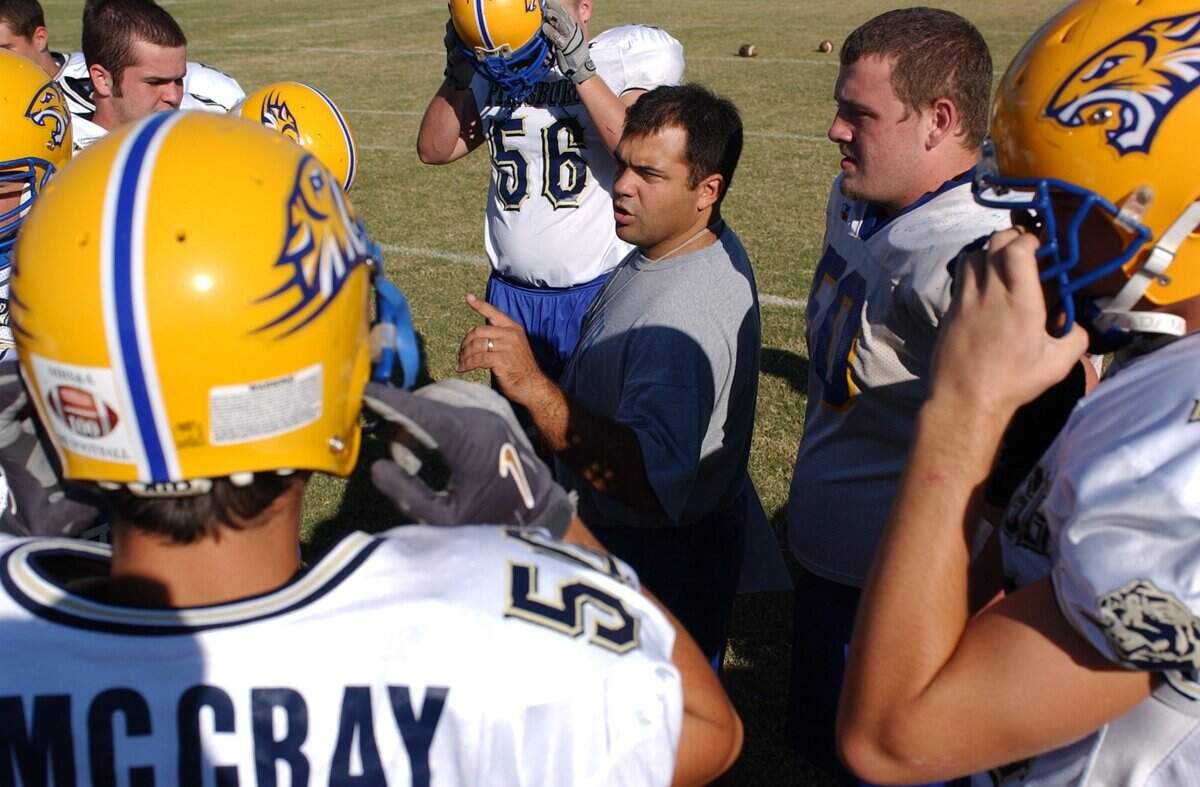
Before Compretta even returned home, he had received a text from a player asking about football. Compretta told the student to round out names and gauge interest. In the meantime, Compretta needed to find out if fielding a team was even feasible.
By chance, Compretta spotted the superintendent and school district attorney at the time near the remains of the field house. Compretta told them his plans to round up a football team, but the response was jarring.
“It was, like, an angry response,” Compretta said. “We got into a little bit of an argument about that.”
Compretta convinced leadership by making a plea on behalf of his seniors. It was also an opportunity to provide a glimmer of routine and normalcy within a community confronting a total structural reset.
“People would be like, ‘how can you think about football?’” Turcotte said. “There was nothing else to do. There was only so much cleaning up you could do and then you’re sitting around in a trailer.”
Numerous challenges stood between Bay High and a football game
The vaunted roster that had coaches believing they were heading for a special season had been gutted. The once-pristine practice field was now the torn up campsite of the National Guard.
Football and basketball jerseys had been looted by people who had nothing else to wear. The scoreboard in the stadium had been swept away and was nowhere to be found.
Equipment was lacking and a head count on where the original players ended up was nearly impossible. Many had moved to the northern part of the state. Some transferred closer to home, like Picayune. A temporary blanket waiver had allowed dispersed athletes to compete right away at their new homes.
A meeting was held entirely from word of mouth. There were 19 kids in attendance. From there, the roster was expanded with whoever wanted to join. Several baseball players wanted in. Two eighth graders were added and three kids from arch-rival St. Stanislaus — which had canceled its season altogether — suited up for The Bay.
The Tigers would be less than 30-strong for their first game back.
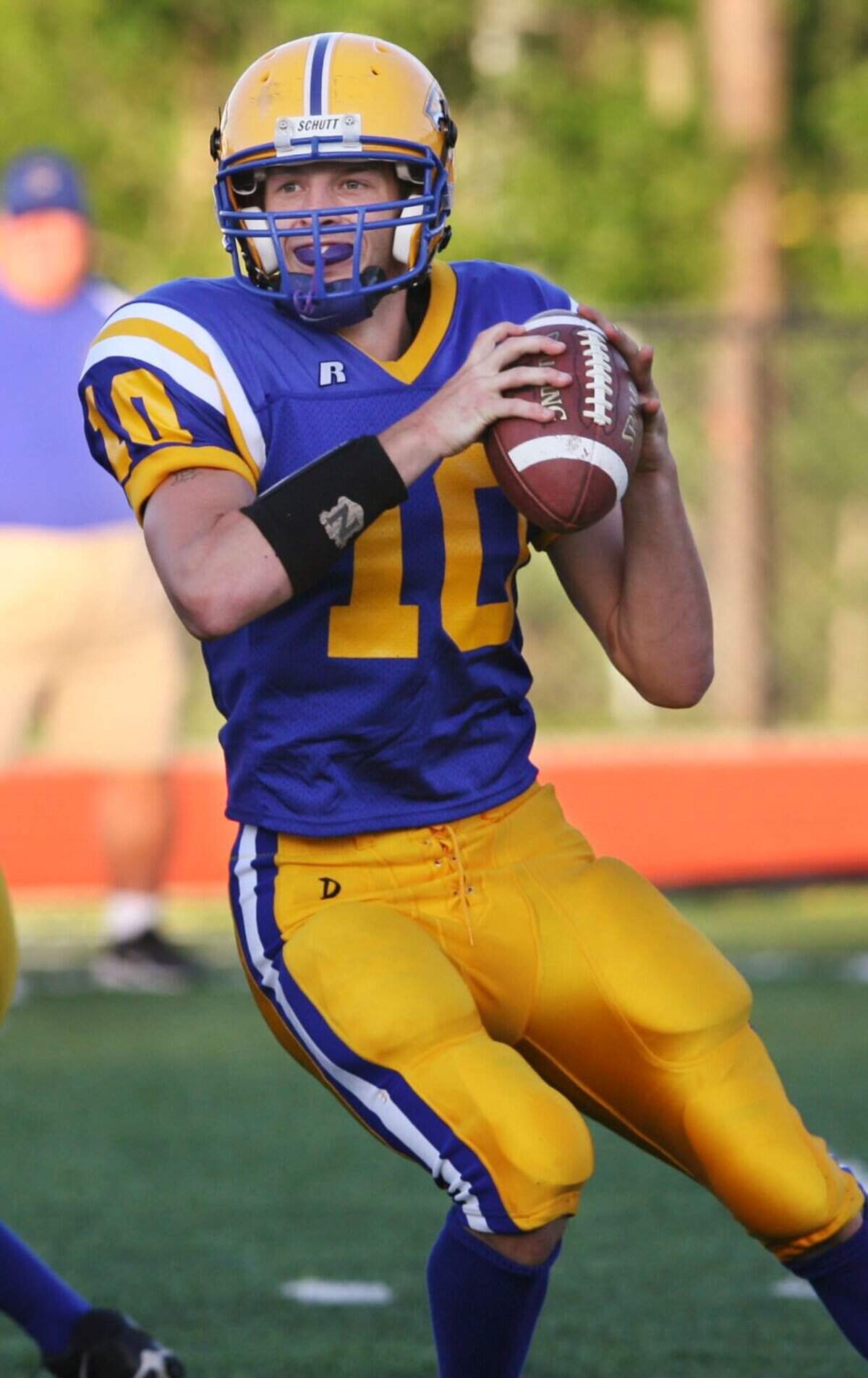
“Things weren’t looking great,” then-quarterback Tyler Brush said. Brush’s family had made their evacuation permanent and settled in Fort Walton Beach, Florida. Brush even began practicing with the local high school football team.
Brush told the Sun Herald he felt it was his obligation as the team’s leader to return once he heard Compretta was rounding up a team, even if it meant fewer opportunities to play in front of college scouts on a patchwork squad for a program without an in-session school.
“Just having a handful of people (at the meeting) and the people we did have, we thought for sure we weren’t going to do very well,” Brush said.
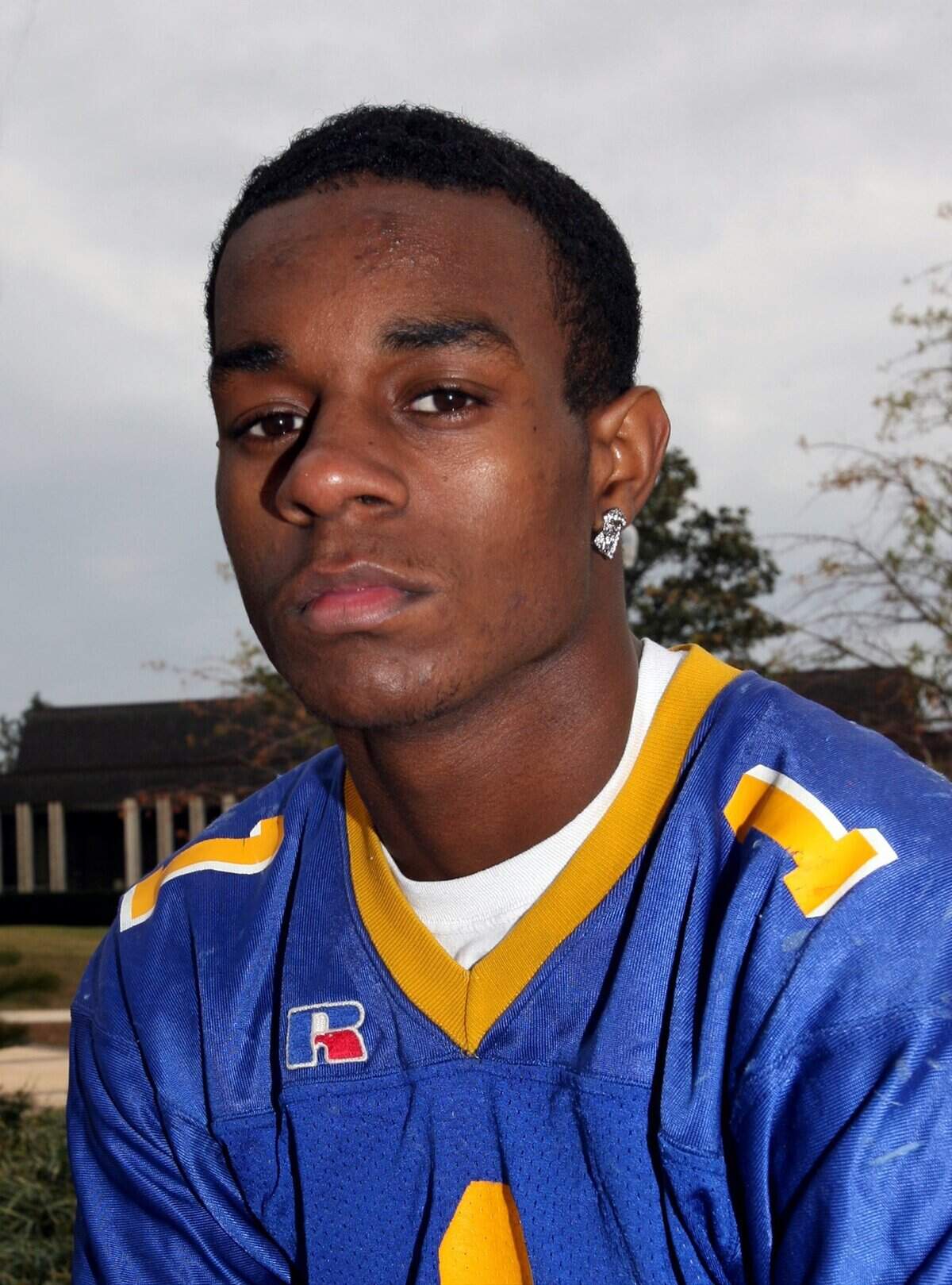
Brush was one of a few keystone players who would return. Star receiver Robert Labat was moved to running back to fill the void created by the backfield’s post-storm dispersal and to get the ball in the team’s most athletic player’s hands as often as possible.
But a large portion of the team would either be new to varsity, new to the program or new to high school football altogether.
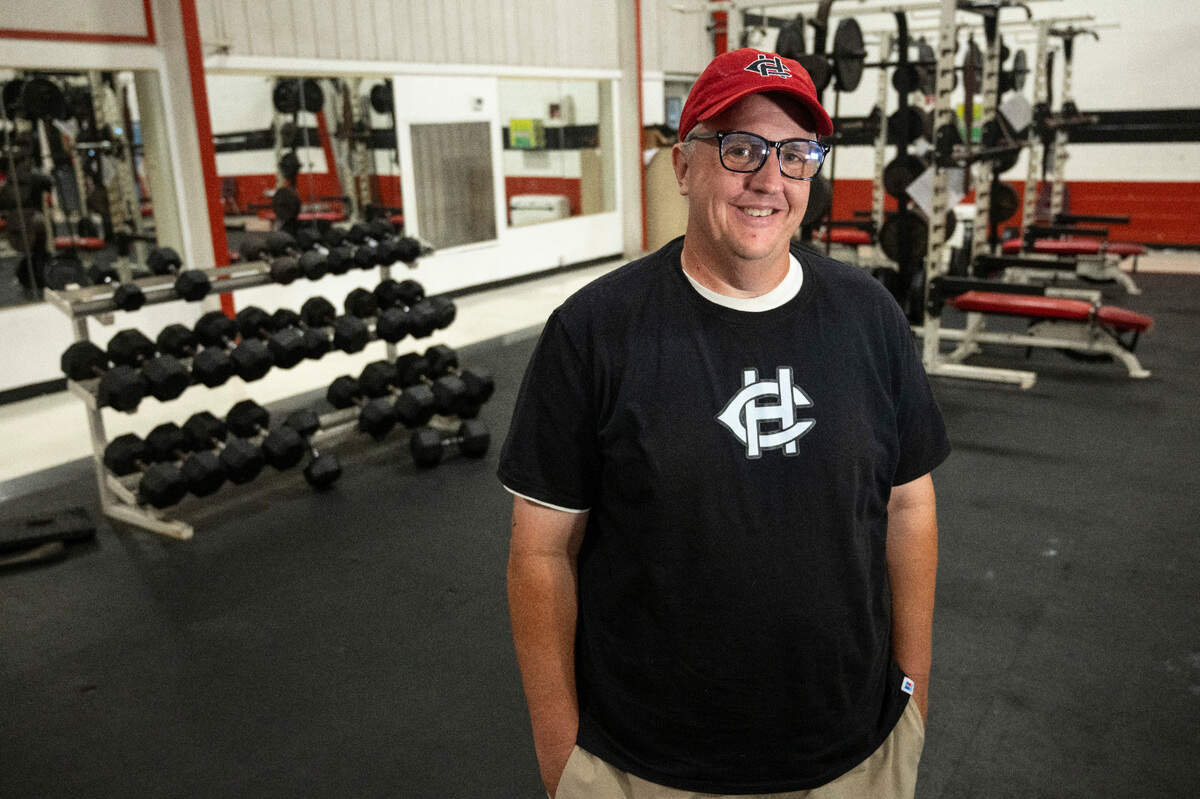
Then there was the matter of equipment and facilities. The field house was no longer usable, instead the coaches erected a makeshift locker room from two-by-fours and nails.
Pads, cleats and jerseys had to be donated and help came from across the country. The Tennessee Titans sent in cleats for the team. The University of Pittsburgh donated their practice jerseys.
And at the last second, on the day of the Tigers’ first game back, the uniforms arrived from a high school in North Carolina.
“If it were not for those groups, we would not have been able to field a team,” Compretta said.
Football returns on The Bay
Several schools on the Coast had already begun playing. Many Harrison and Jackson County teams returned either the week before or the same week Bay High was set to play.
Then the threat of Hurricane Rita — which broke Katrina’s 25-day-old record for strongest Gulf storm on record — moved the R8-4A district opener against Long Beach to Monday.
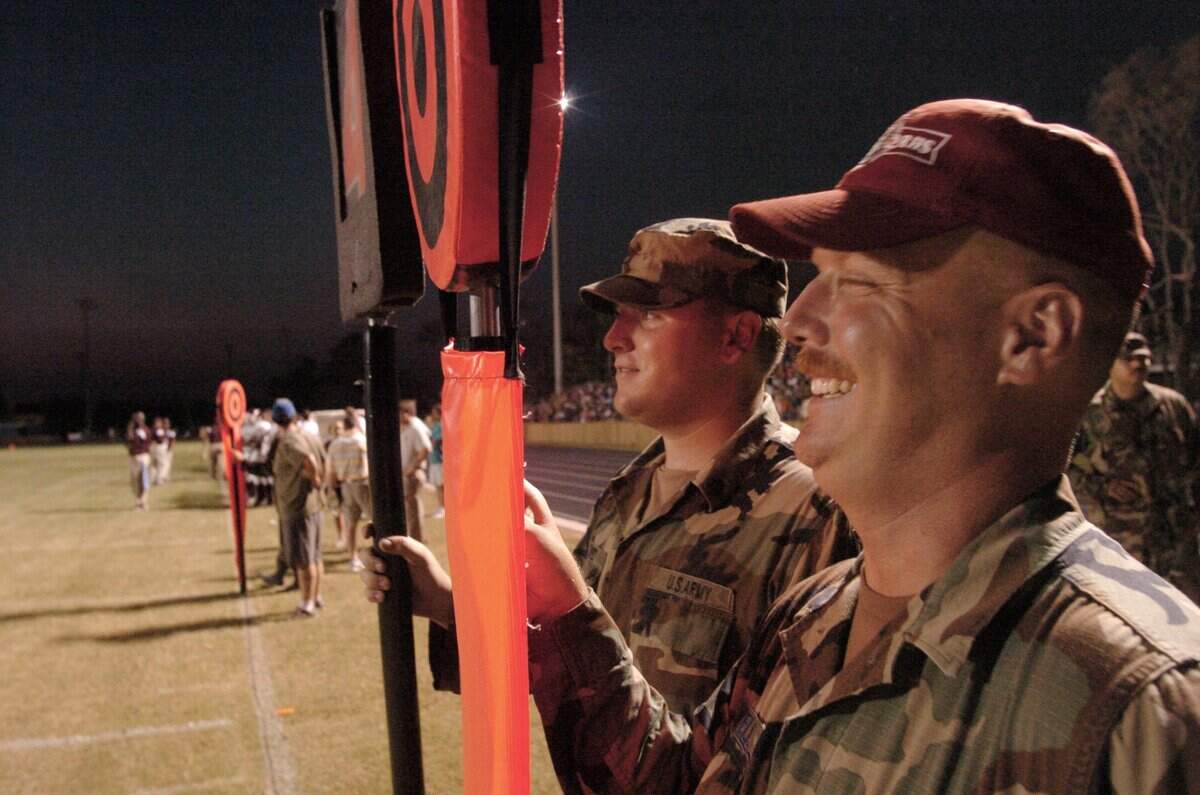
There was no scoreboard. Nobody knew where it was. The lights had to be powered by a generator supplied by the National Guard. The school band consisted of one student with a snare drum. The yard markers were manned by members of the Air Force, who also straightened the leaning goalposts with a front-end loader before the contest.
The Superintendent who had initially opposed the idea of playing football sang the National Anthem.
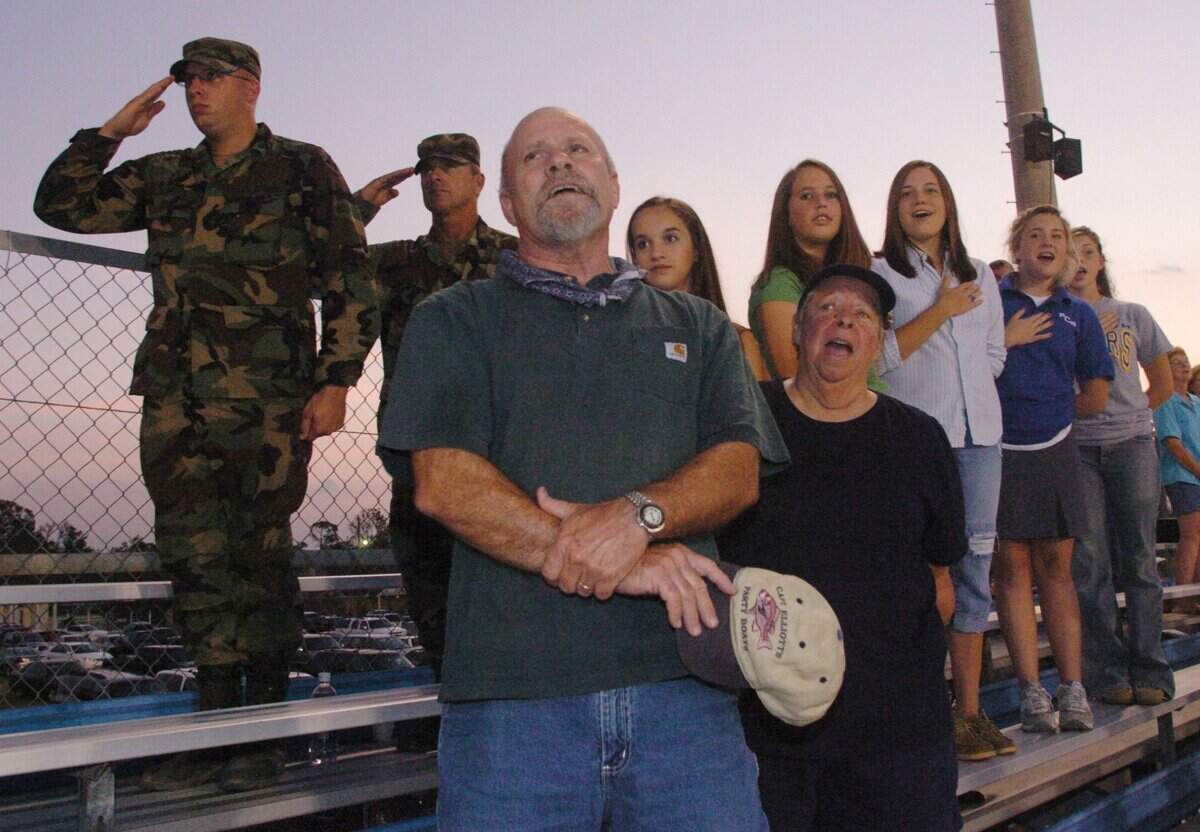
“Several of us probably shed a tear when the ball was kicked off,” Compretta said. “It was like, how in the hell is this happening?”
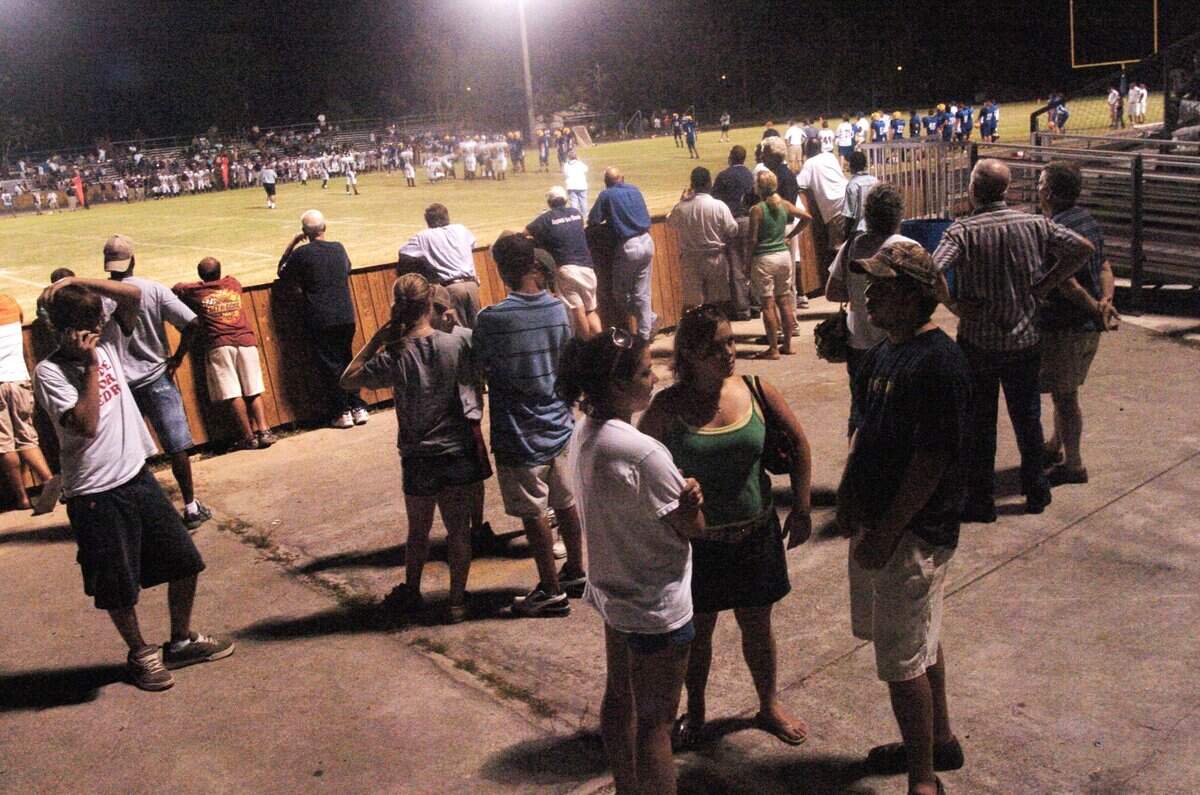
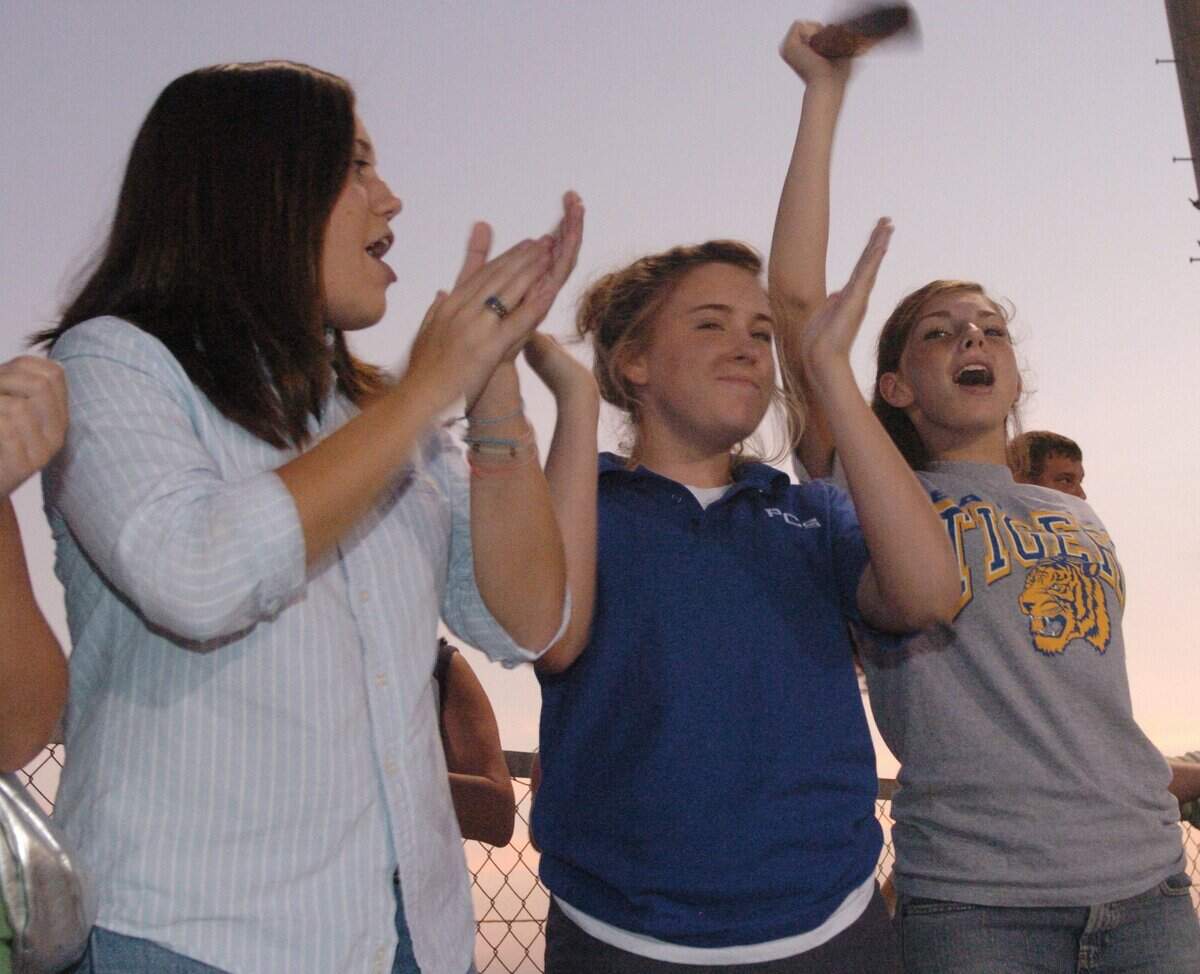
The stands were full. People showed up in droves to watch and be a part of what didn’t seem possible a month prior.
“People were just happy to be in a football stadium,” Gazebo Gazette reporter and St. Stanislaus historian Joe Gex said. Gex spent the season on Bay High’s sideline with his usual post at SSC dormant for the fall. “They were happy to be watching their sons, watching their sons’ friends all compete together to play a kid’s game, a game of football. And it was a sense of community. It was a sense of belonging. It felt like everybody belonged there.”
The first whistle blows on a new season
Long Beach wasn’t spared by Katrina’s wrath. Entire blocks were wiped away and flooding crept north toward the interstate.
“I expected, because Long Beach is not that far from us, I expected them to be dealing with some of the same stuff,” Compretta said.
While the town of Long Beach suffered immense damage, the storm surge wasn’t nearly as devastating as it had been on the other side of the bay.
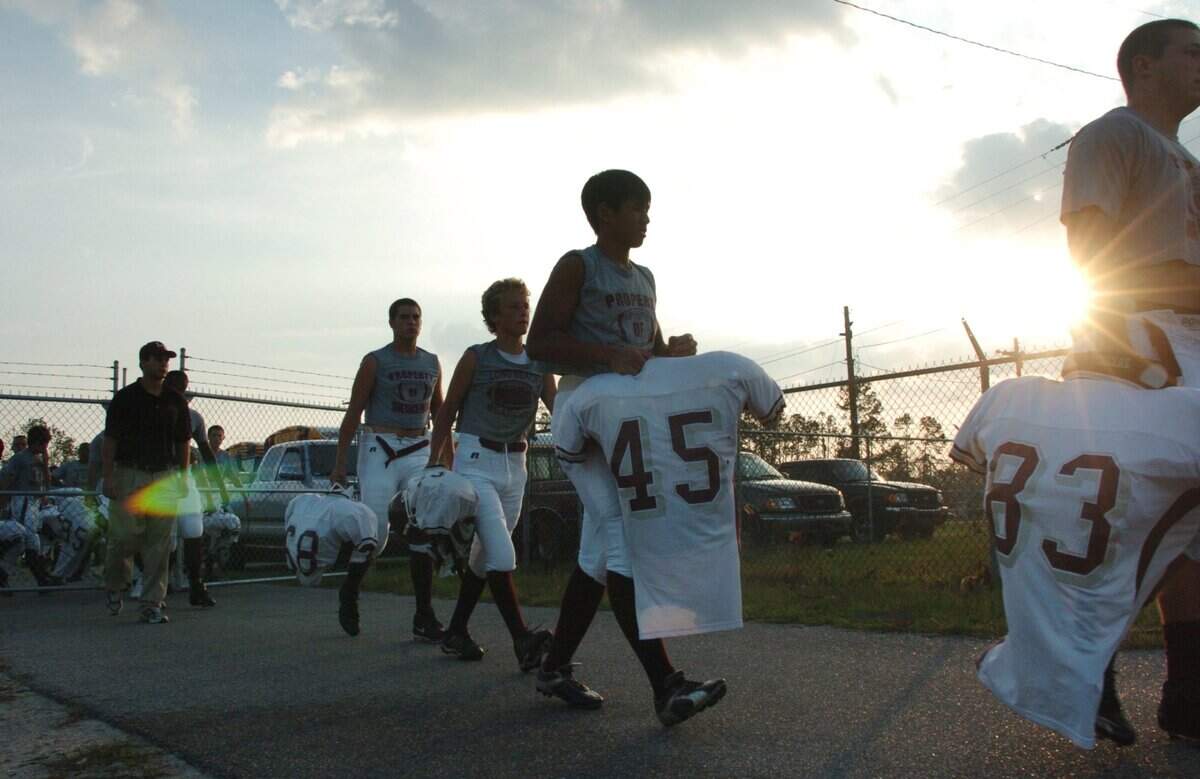
Fewer community members had been displaced and the high school’s football team remained largely intact. They arrived in three busses and stepped onto the field with a significant numbers advantage.
“Oh, we were nervous as hell,” Brush said. “We definitely thought that we didn’t stand a chance when we got on the field. But we were all there and just said we were going to give it everything we got.”
On that Long Beach team was Tramain Brock, who would go on to enjoy a 10-year career in the NFL as a defensive back. Brock would play running back on this night against a starting defense that also served as much of the starting offense.
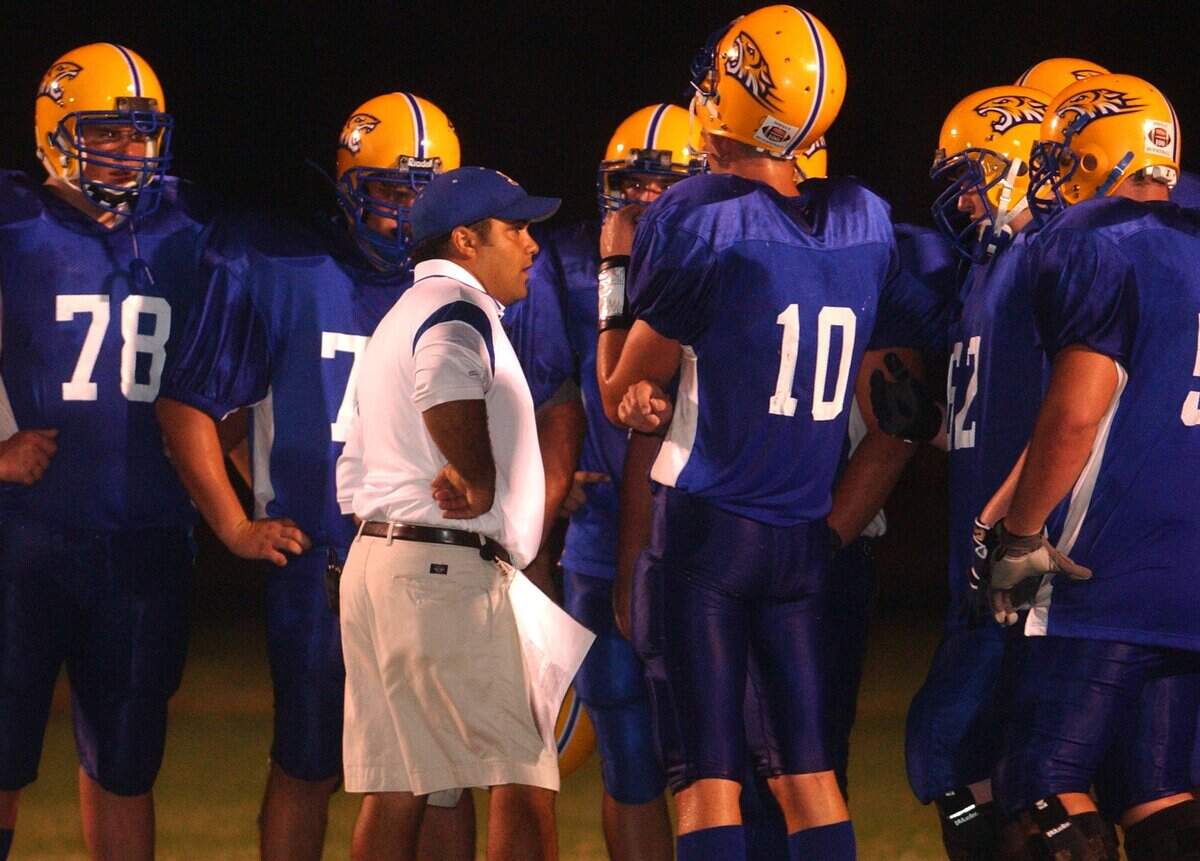
Not only were the players short-staffed, but so were the coaches. There were no defensive coaches, so Turcotte and Greg Necaise became the entirety of the staff for that side of the ball. In total, Compretta recalls there only being four or five other coaches with him that night.
But simply being in that moment in that time overpowered any feeling of being outmatched.
“For me, it was emotional,” Compretta said. “I’m not usually that emotional, but it was emotional for me seeing all the people in the stands and you could just see on their faces that they needed something like this, right? And then once the game got going, we were in coaching mode. It was just like we had never missed a beat.”
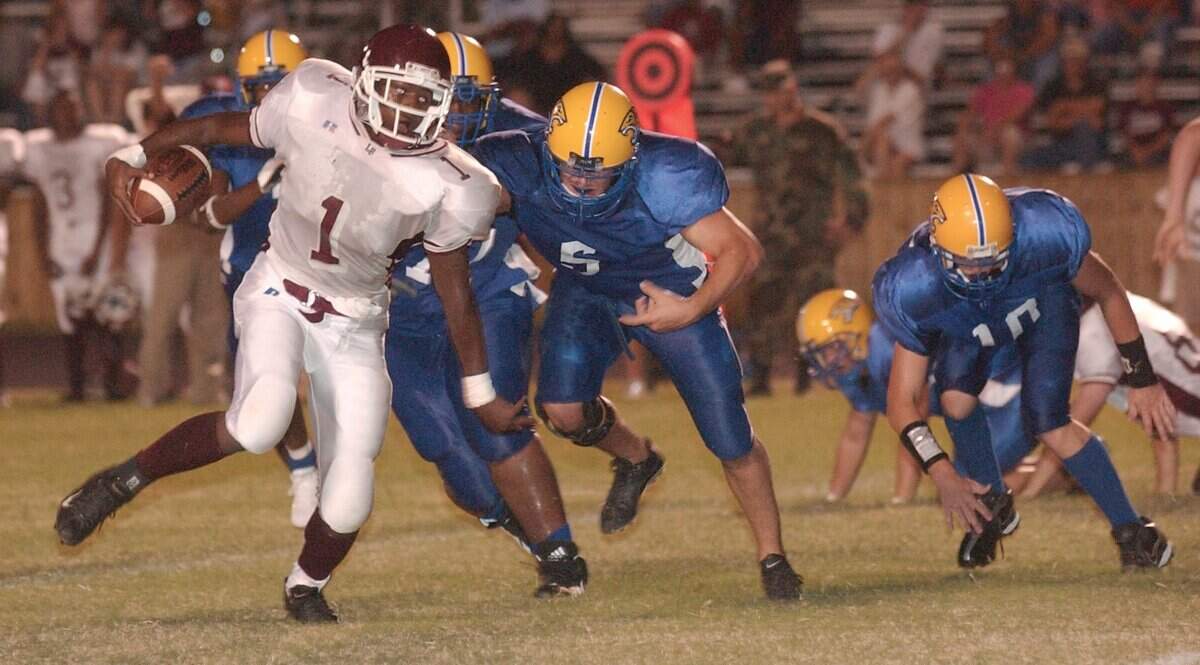
Neither had Labat. The offensive plan that night was simple: Power O. The receiver-turned tailback ran the ball roughly 35 times.
It was initially successful. The Bay opened the game with a commanding 13-play drive that ended in a six-yard touchdown run by Labat. Brock would answer in the second quarter with his own rushing score, but Bay High’s Bryce Morreale blocked the extra point.
The game then hit a slog. Compretta and staff did all they could to protect their players and give themselves a chance.
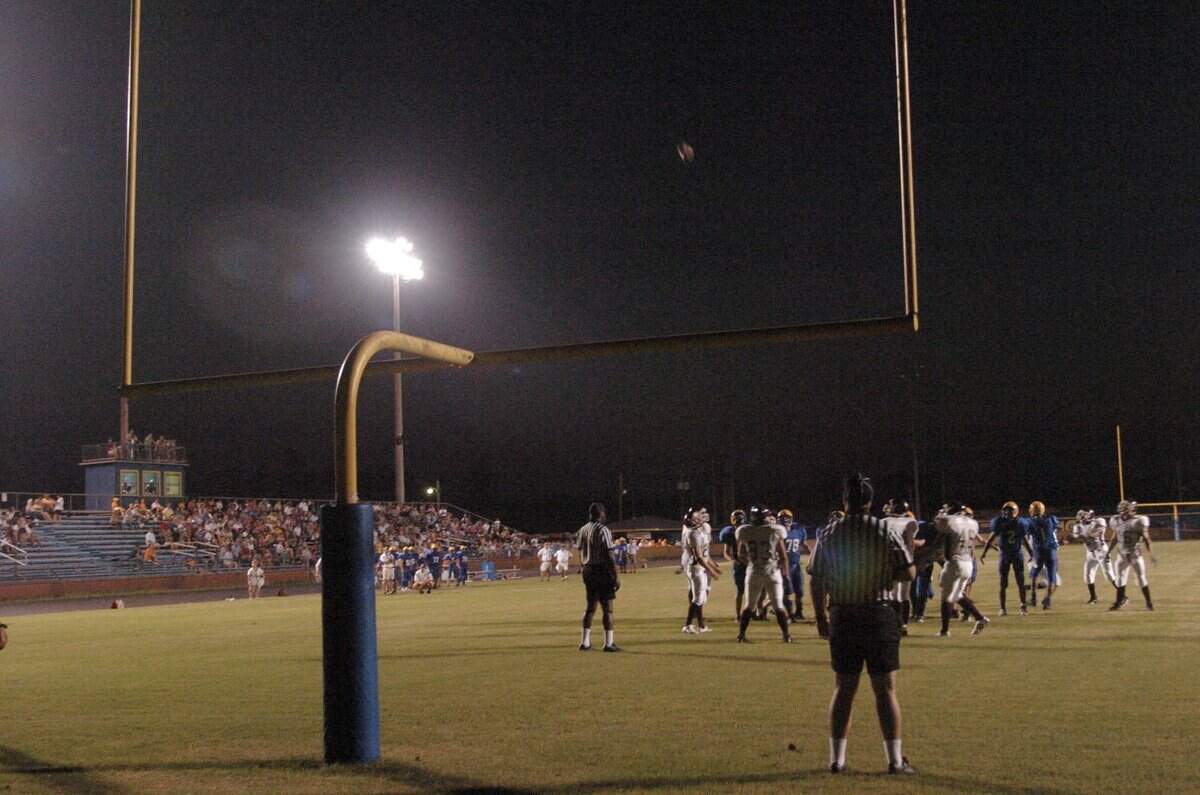
“Our kids and all of those seniors had to play both ways,” Turcotte said. “And every fourth, fifth series come out a couple plays to get a little water. We tried to do things like put up as many young guys on kick off and just kick the thing almost out of bounds, you know. Just simple stuff to keep the clock moving and shorten the game.”
The spark arrived in the third quarter. The Tigers caught Long Beach by surprise with a rare pass from Brush to sophomore Destin Johnson for a 40-yard score. Johnson stayed on the field and forced a Bearcat fumble on the next possession that was recovered and returned for a touchdown by Kyle Moran.
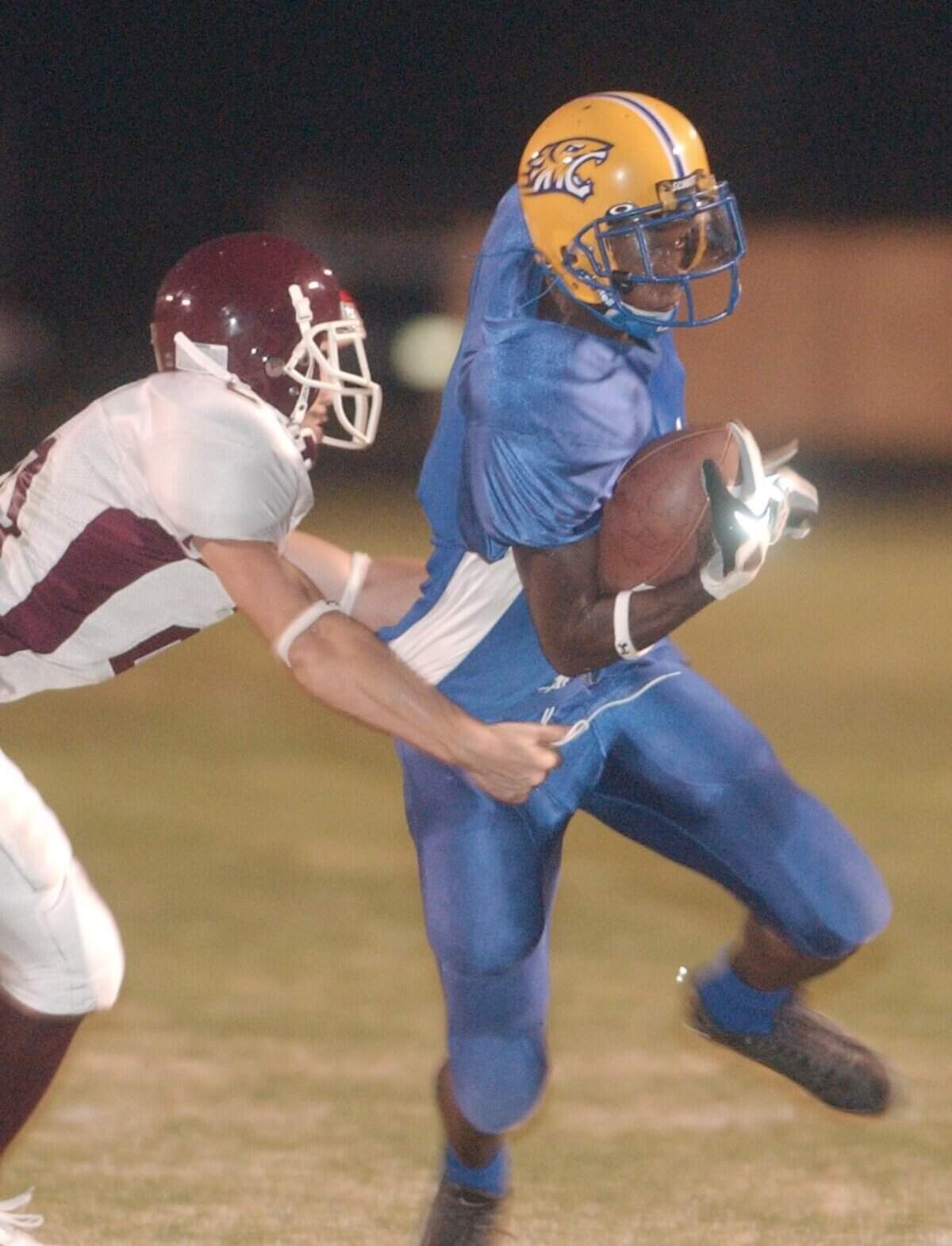
It was 21-6, but the Tigers’ gas tank was nearly depleted.
“Toward the end of the game we started wearing down,” Brush said. “We had all been playing both ways. We were all just exhausted. I had muscle cramps like I never had for the next 24 hours after the game... It felt like we were hanging on by a thread there toward the end.”
Brock scored his second touchdown of the night with under six minutes to go. The Bearcats missed the extra point, but would get the ball back two minutes later. It only took one play for Brock to punish the Tigers again, this time with a 55-yard touchdown run.
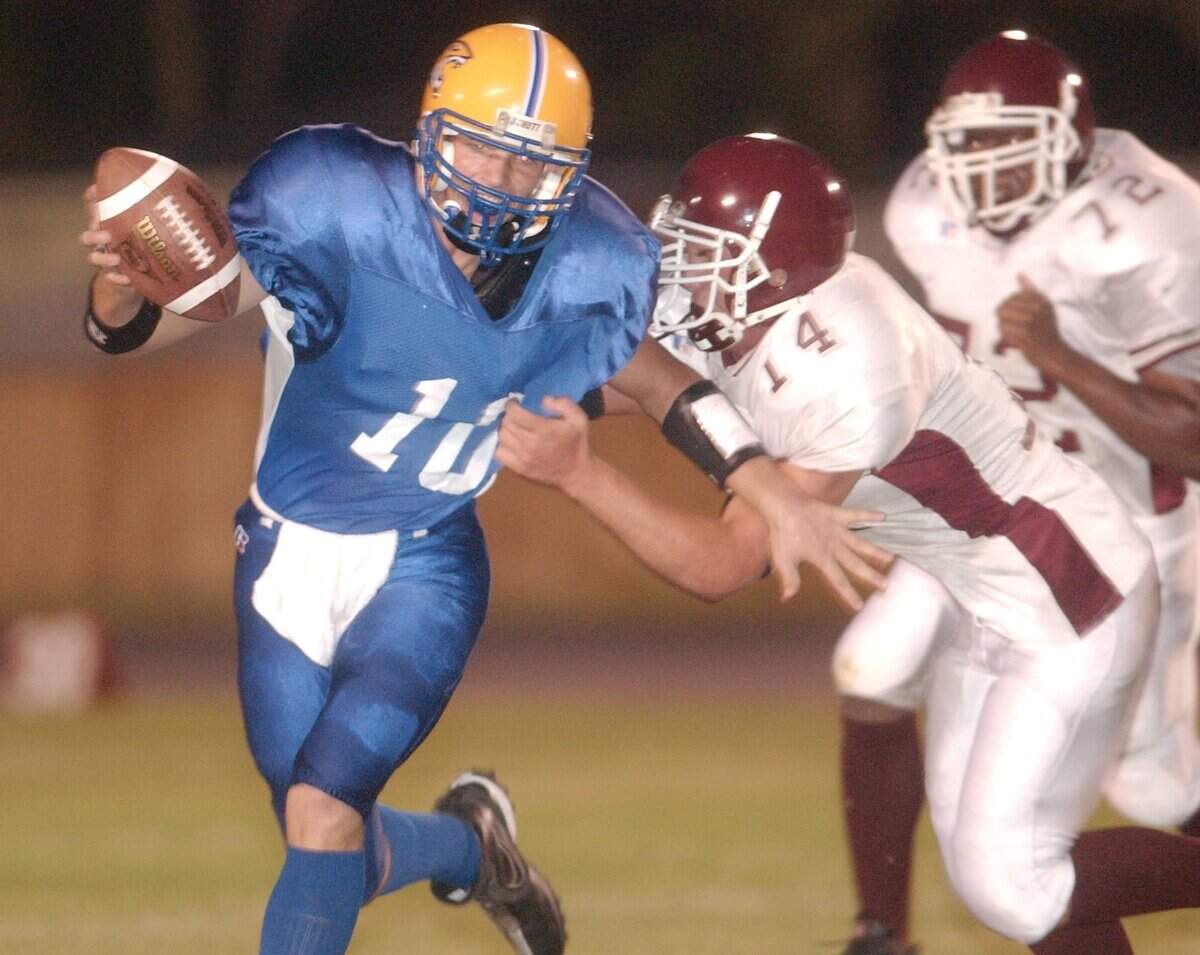
Compretta’s offense was then forced to punt in short order, putting the ball back in Long Beach and Brock’s hands.
“It was in doubt until the very last play,” Compretta said.
Long Beach picked up one first down, but a hectic final play was stopped by the Tigers.
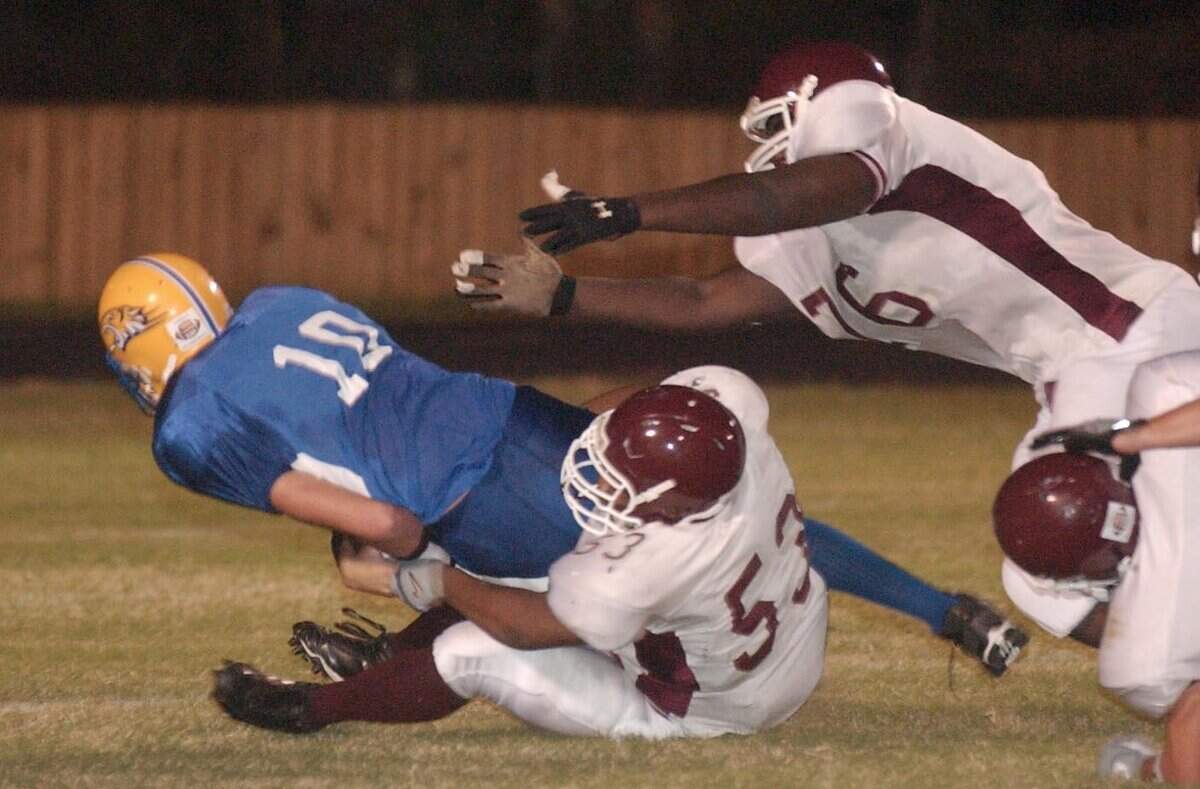
“Everybody cried,” Turcotte said. “Everybody was overwhelmed when it was over. We had to just take a second and everybody was just, like, ‘what did we just do?’”
“It was like we won the Super Bowl,” Compretta added.
“It was a very powerful moment for for the entire Bay High and Bay St Louis community,” Brush said. “There were people crying, people hugging. It was one of the many stepping stones for the community really getting the ball rolling again.”
A community’s rallying point
Football provided a communal hub for hope in the earliest weeks of a grueling recovery. Its impact was felt from students to coaches to parents and residents.
It created a structure and added even more purpose to a surreal day-to-day life for all affected.
“I think it gave people a lot of hope,” Brush said. “The whole city was shut down and we had curfew so as soon as it was nighttime no one could do anything, unless there was a football game. That became the highlight of the town.”
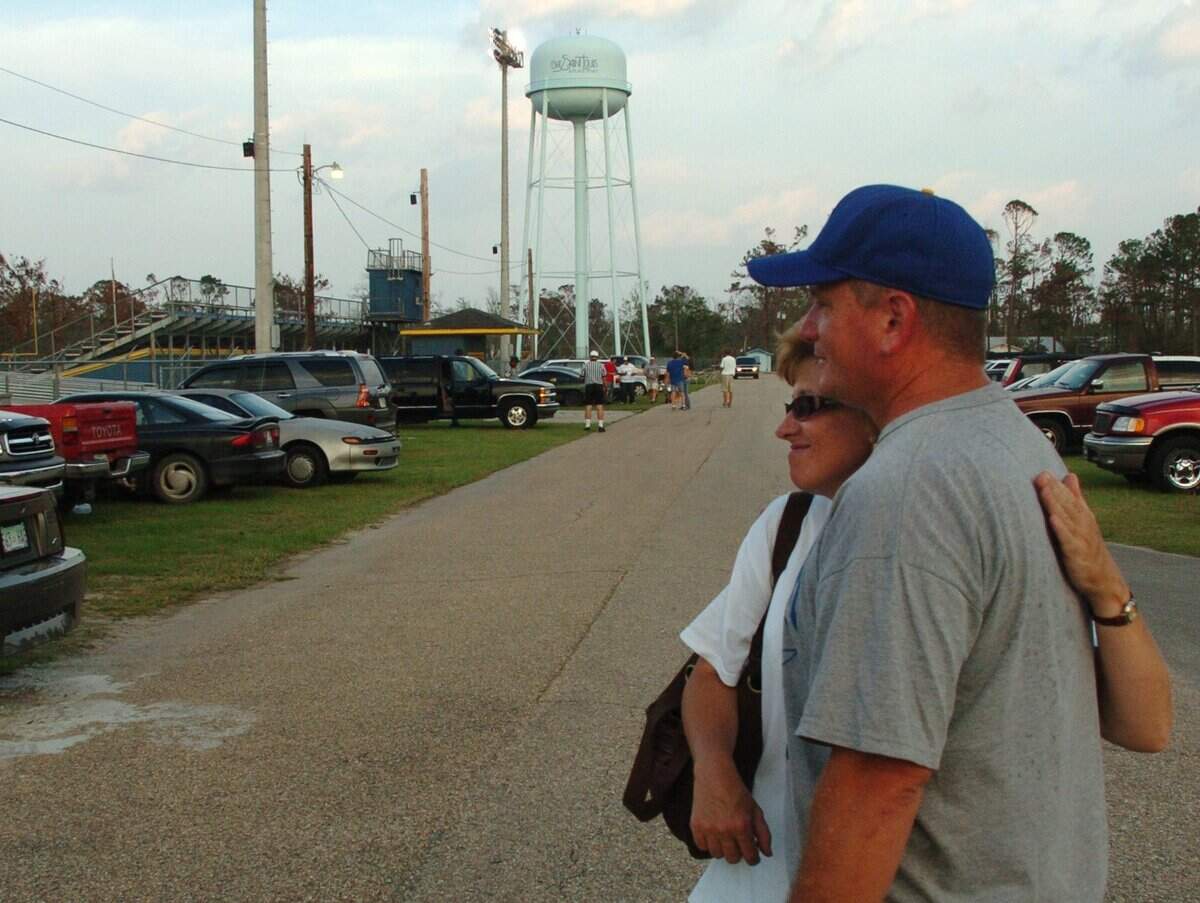
Despite the country’s most well-known modern day natural disaster serving as the backdrop for his senior year, Brush described the season as one of the best times of his life.
He and his teammates and friends would spend the day earning money together by helping remove debris from homes and other buildings. When they were done, they played football.
“We were making money and playing football, that’s really all we did,” Brush said.
“Normalcy” was quickly becoming a tired cliche as folks grappled with insurance, clean up and the basic necessities of water and a roof to sleep under.
Bay High would play six more games, three at home, Each of those Fridays made “normal” feel more attainable than not.
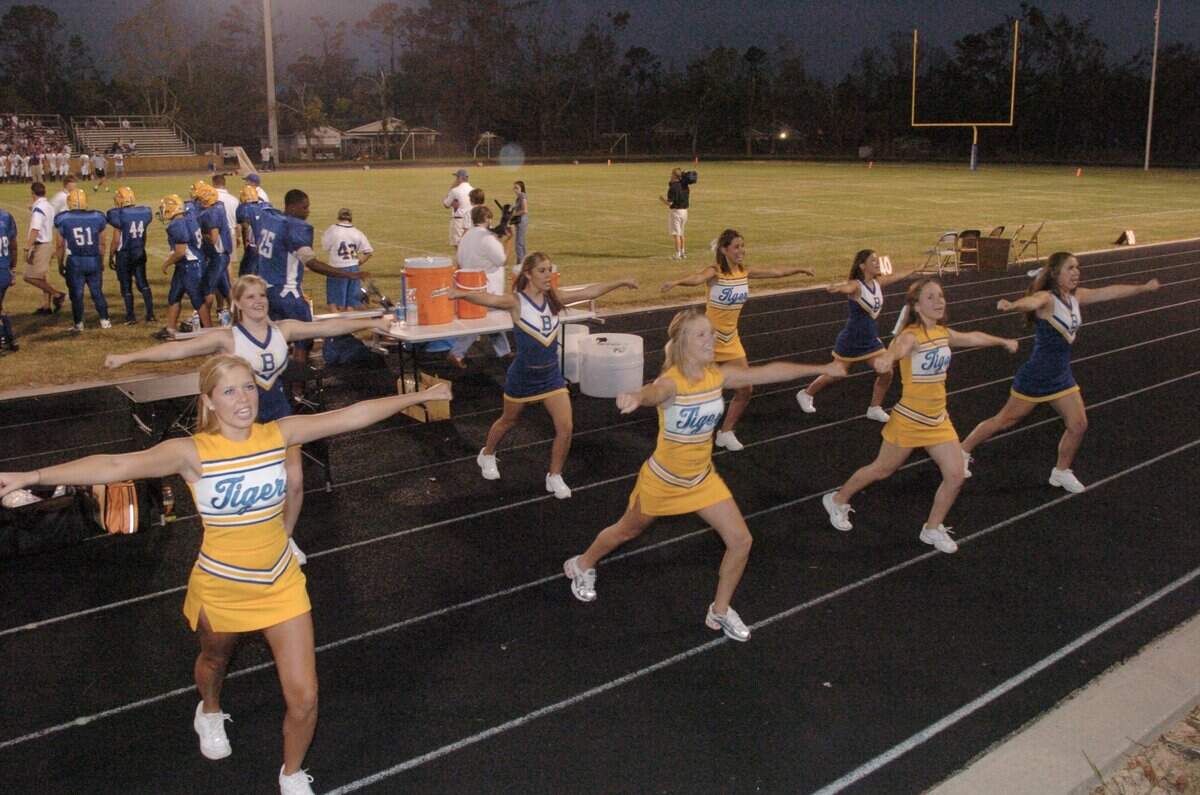
“You got tired of hearing “sense of normalcy,” but looking back on it, it did provide that during that period of time,” Compretta said. “Outside of (football), most people still had to deal with the fact that they had no home and everything that goes along with that. So it was an outlet for them to go and enjoy a few hours.”
By the end of the regular season, the Tigers had put together an astounding 4-3 record and would have won the district if not for a false start penalty bringing back the go-ahead touchdown in a three-point loss to Picayune.
Players slowly trickled back onto the roster as the year wore on. Bay High School and Walmart reopened around the same time, Bay High in portable classrooms and Walmart under a tent.
It was the week of the first round playoff game at stalwart Mendenhall, which ended in a heartbreaking 14-7 loss when Labat dropped what would have been a last-play touchdown pass.
It was the end of a period encompassing roughly 10 weeks that served as a mark of triumphant resilience and a seminal moment in the lives of everyone involved, even 20 years later.
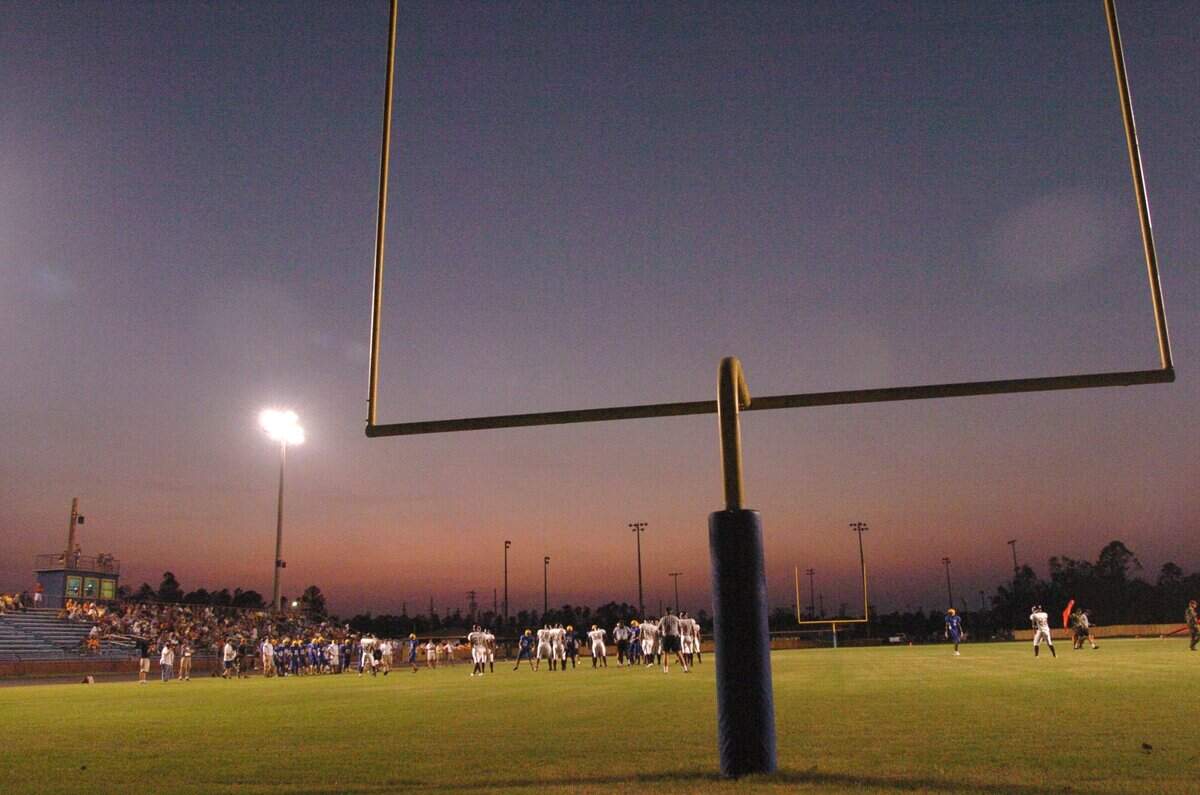
“Katrina was a terrible thing and if I could go back and make it never happen, then I would do that for obvious reasons,” Compretta said. “People died, people lost their homes, people lost their family members and if I could snap my fingers and that was gone, I would do that. But at the same time, I think back on that season and in a strange way it’s my favorite season ever.
“I love those guys. Players, coaches, all of them. And I miss those few weeks. It’s a weird thing to say, again, I don’t wish any of that stuff happened, but what we went through together and the relationships that built over that period of time, it’s that feeling. I miss that feeling.”
Football didn’t solve everything. The program spent the next few years using a National Guard Quonset hut as a weight room. The adrenaline of the 2005 season faded into a laborious grind within makeshift, temporary facilities that closely mirrored the living situations of many students and coaches.
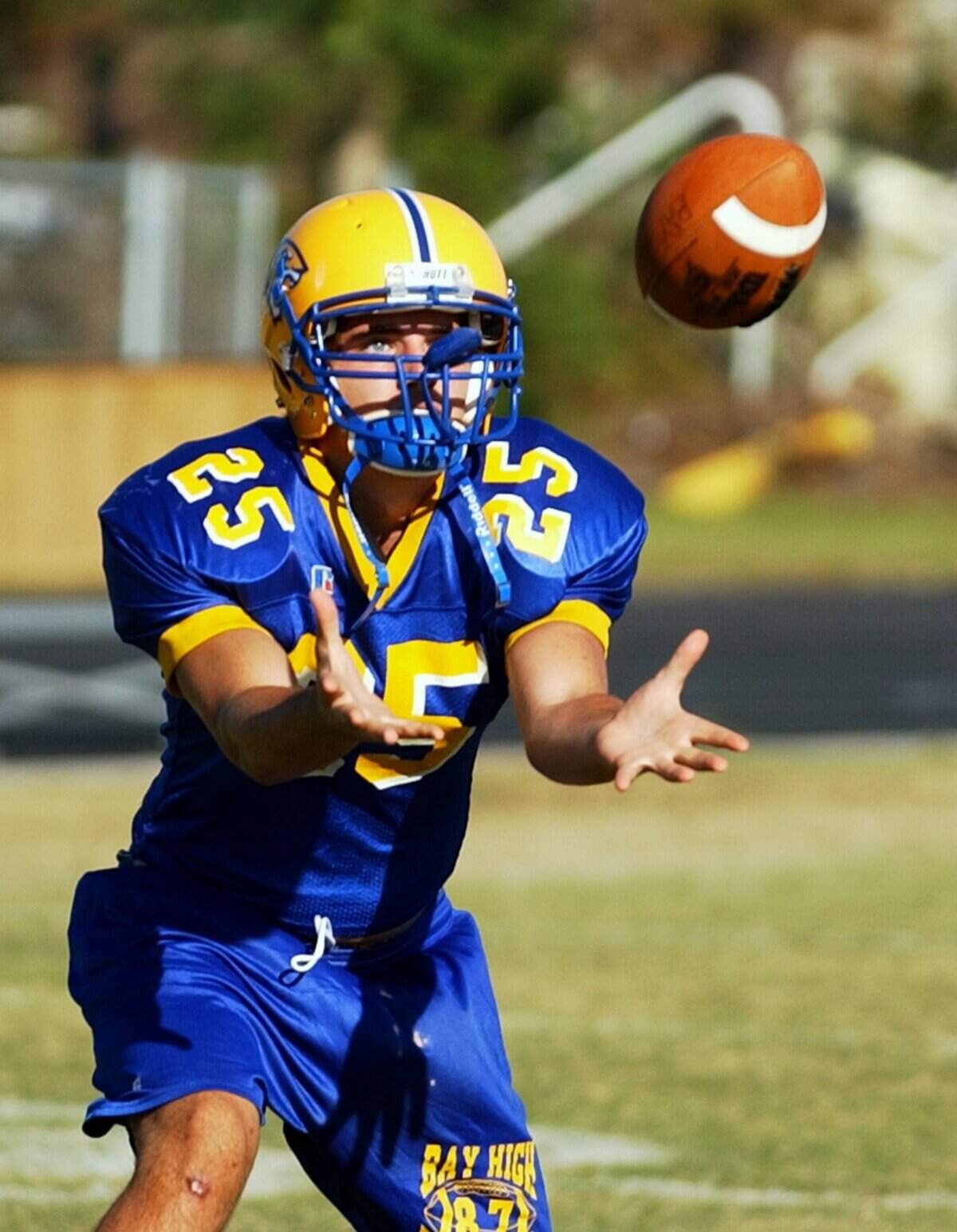
But it did bring together two communities that had long been divided over the game of football stemming from a rivalry between The Bay and St. Stanislaus that had taken a costly turn in prior years.
“There’s really been no bad blood between (Waveland and Bay St. Louis) since then,” Gex said. “The communities seem to function together more so than they did before Katrina.”
When St. Stanislaus punched its ticket to the state title game four years later, it was the Bay High program that surprised the Rock-a-Chaws with send-off gift baskets for the trip.
Gex notes the small gesture likely would not have happened if not for the events that unfolded in the fall of 2005: “Brenan Compretta brought a community together under Friday Night Lights.”