Mississippi has some of the highest student loan debt in the U.S. Here’s the ranking.
Mississippi college students are in more debt than the majority of students in the country.
A study by the personal finance website Wallethub found that Mississippi is the fifth worst state in U.S. for student debt and had the fifth highest student debt.
Researchers compared student debt to available grants and work opportunities open to students in Washington D.C. and each state to determine the best and worst states for student debt.
The study was based on 11 key metrics, including average debt, the number of students with debt, the debt as a percentage of total income, the unemployment rate for people ages 25 to 34, the number of borrowers enrolled in repayment plans and the percentage of student loans in default or past due.
Even adjusted by Mississippi’s low cost of living, the state had the highest percentage of debt compared to income. Mississippians also had the fourth highest percentage of past due or defaulted loans.
The four states that were found to be worse than Mississippi overall were West Virginia, Pennsylvania, South Dakota and New Hampshire.
Utah had the least amount of student debt. Washington D.C., California, Washington and New Mexico rounded out the five best states.
Here are expert tips to minimize student debt
Set a budget and stick to it.
While in school, work part time during the school year and full time during the summer.
Choose a major that will support the level of student borrowing once you graduate. Research the field’s incomes on websites like LinkedIn and Glass Door.
Parents should take advantage of college savings accounts offered in their state.
Choose a school in the state where you live to avoid out of state tuition.
If you do take out a student loan, do not spend any of it on things unrelated to your education.
Pay loan interest during school and during grace periods.
Graduate on time.
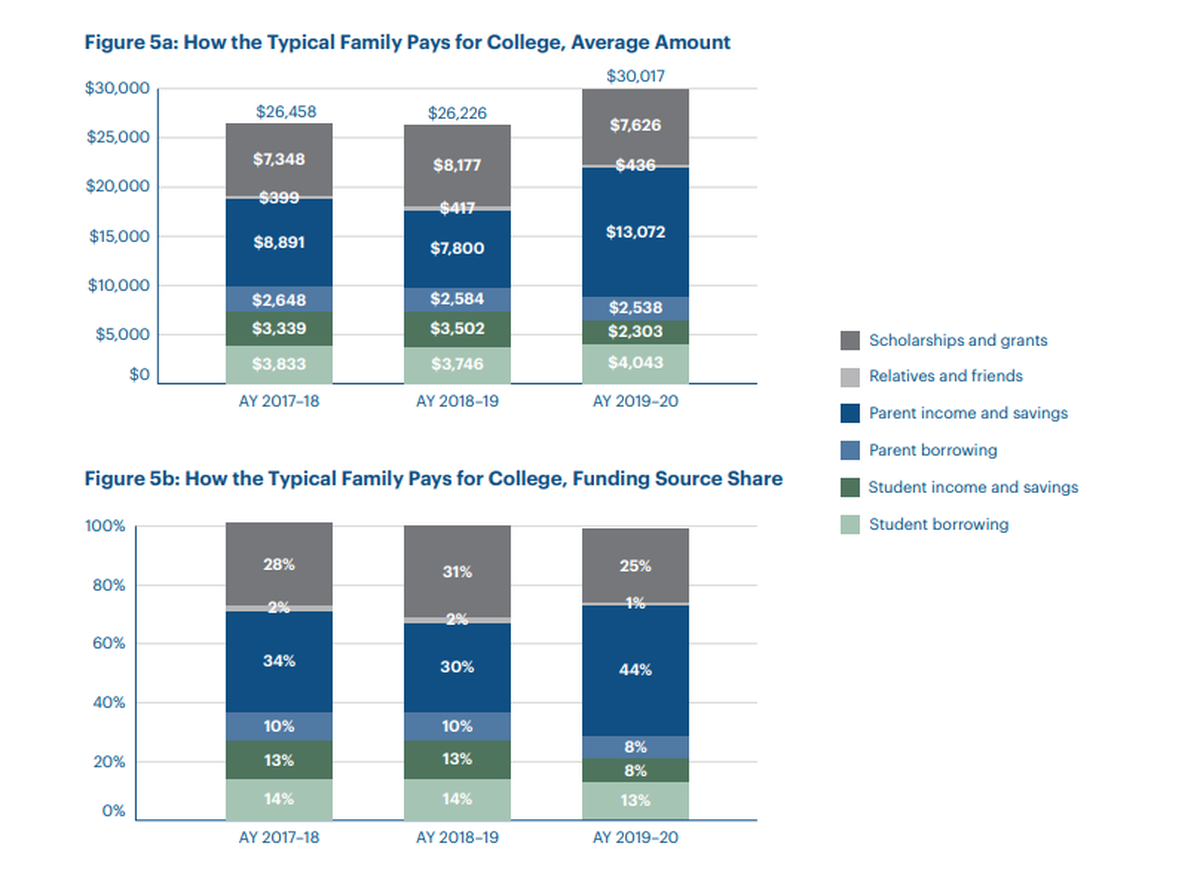
The typical family pays or college using multiple sources. The average cost of the 2019-2020 school year was more than $30,000. Courtesy of Sallie Mae