High-risk Coast kids are ‘panicking’ as delta surge, school outbreaks become new norm
Dell Massey went to school every day carrying two masks and the fear that anyone around him could give him COVID-19.
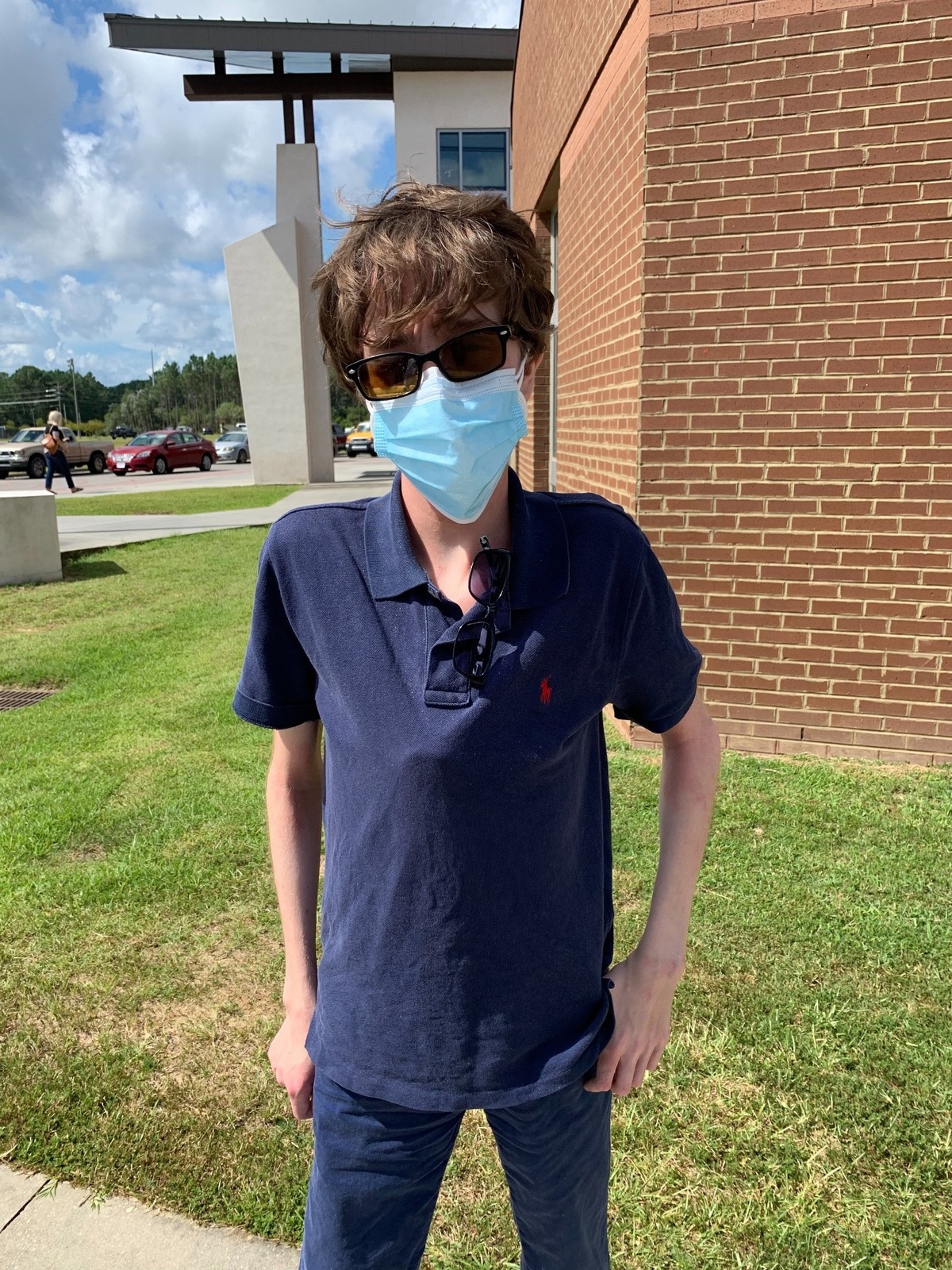
Massey, a senior at St. Martin High School in Jackson County, has a disease called Chronic Inflammatory Demyelinating Polyneuropathy, or CIDP. It’s an autoimmune disorder, and Massey describes himself as “very immunocompromised.”
He spent last year studying from home and from a Delaware hospital where he had foot surgery. He missed seeing people outside his family. He struggled to motivate himself to work alone, staring at a screen, and he failed a class. He was excited to get back to school this year.
With masks optional — he estimated only one in 10 students wearing them — he adopted his own safety protocols.
“Definitely I feel scared all the time in public,” he said in an interview last week. “People coughing. Sometimes very close to me. And I try to distance myself from those people.”
For parents and kids with medical issues that may make them more vulnerable to serious illness from COVID-19, returning to school this month as cases surged brought anxiety and forced new routines.
Families interviewed by the Sun Herald described what felt like an impossible choice: Study at home for another exhausting year, this time with less support as most districts cut virtual options, or send kids into crowded school buildings as the delta variant tears through Mississippi and sickens more children than ever.
Christa Logan was ready to send her kids, including a son who has been prescribed preventative inhalers for possible asthma, back to school after a challenging year of virtual learning. Then the Harrison County School District made masks optional.
“It made my anxiety and my depression really bad, trying to handle everything,” Logan said of helping her children learn at home last year. “But sending them to school isn’t much better. ... It’s like a lose lose.”
Pediatric cases rising as delta surges
Nationally, children now make up about 20% of all COVID-19 cases. At a press conference last week, state epidemiologist Dr. Paul Byers said seven children were in an ICU with COVID-19, six of whom were on a ventilator.
On Aug. 14, 13-year-old Mkayla Robinson died in Raleigh, Mississippi, after attending classes for most of the week. She was the fifth child in the state to die from the virus.
For the week ending Aug. 14, kids under 18 had more COVID-19 cases than any other age group in four Coast counties: George, Hancock, Pearl River and Stone. In Harrison and Jackson counties, kids comprised more than 20% of cases.
Even with delta, the vast majority of kids infected with COVID-19 will have mild cases, medical experts say.
Dr. Andrea Logan, a pediatrician at Singing River, said that for most children under 12, “the risk... continues to be just a cold.”
But the delta variant is far more transmissible, so more kids are getting sick. A Mississippi Today analysis found that in the first two weeks of the school year, the number of COVID-positive students was 830% higher than the same period last year.
The surge caused Logan to shift her guidance to patients on the vaccine.
“I’ve amended my recommendation from, ‘Hey, I suggest getting that vaccine,’” she said, “To please, please get your 12-and-up [kids] vaccinated.”
More COVID, fewer precautions at schools
Despite the rise in cases and the indications that the delta variant is more dangerous to kids, many Coast schools started the year with fewer accommodations and safety practices than last year.
Masks are optional at the Coast’s two largest districts, Harrison and Jackson County. And while both districts started last year with a distance-learning option open to all, this year, participation was restricted to kids with documented medical issues. (Harrison County announced it would offer a two-week virtual option to all families starting Aug. 23.)
An elementary school teacher in the Jackson County School District, who spoke on the condition of anonymity because she fears losing her job, said that last year safety protocols went well beyond the mask-wearing mandated by the governor.
The cafeteria was at half capacity. Drinking fountain mouthpieces were covered so they couldn’t be used. When school started this year, she said, all of that was gone.
“We were like overly-precautious, which was awesome, and it worked in our favor,” she said of last year. “And honestly, it’s like we were being set up for failure this time. Give us a fighting chance.”
Last year, the teacher said, any students who did get COVID-19 were asymptomatic. This time around, she’s seen kids who look sick and then test positive.
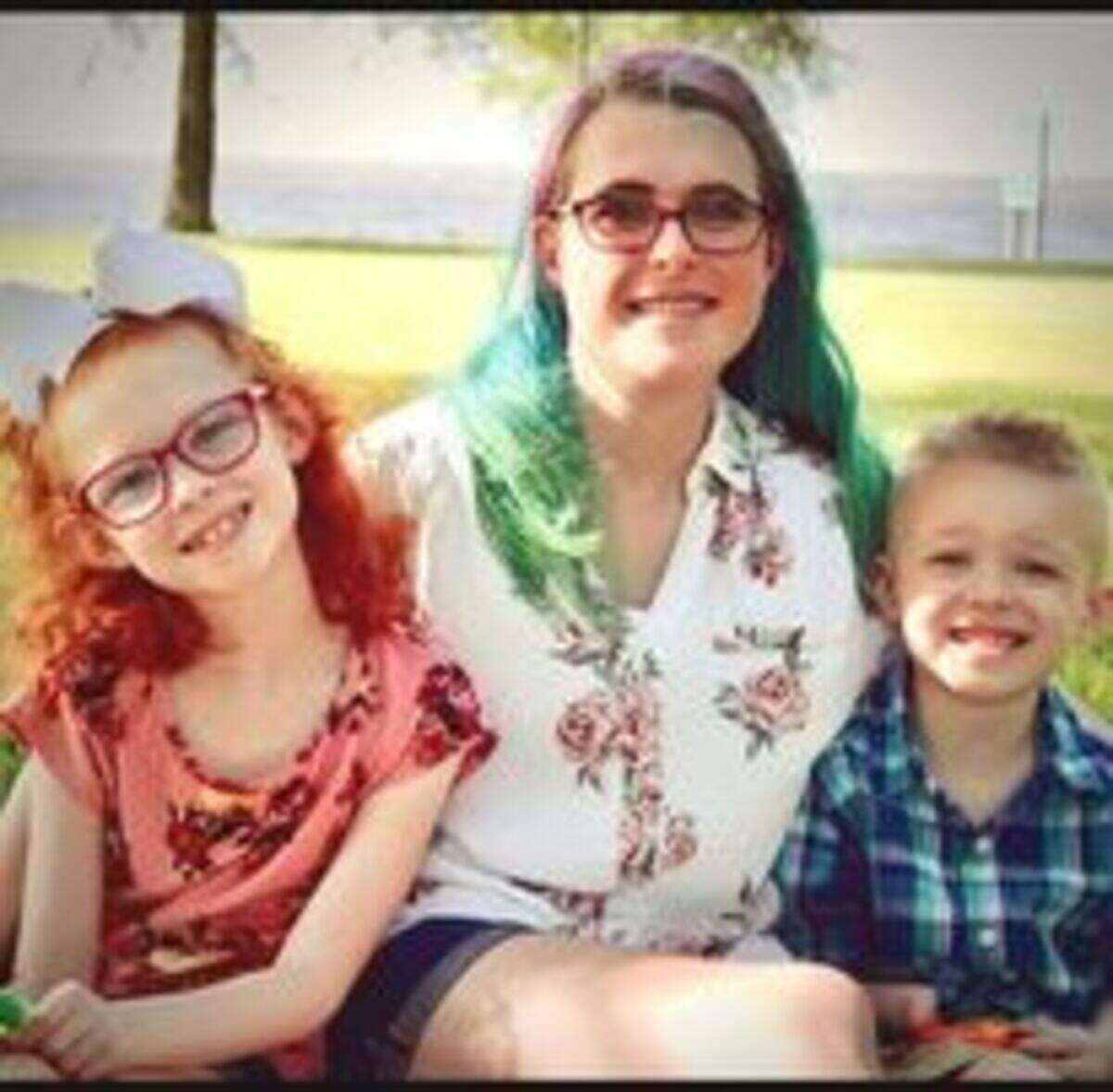
Danielle Herrick has two kids in the Harrison County School District. Her son, 7, has Poland syndrome, a disorder that means he’s missing part of a muscle on the right side of his chest. He can’t take deep coughs, so minor sniffles settle into his chest and cause pneumonia. Herrick had hoped Harrison County would mandate masks like last year. When they didn’t, she started petitioning for her son to learn from home.
Her 11-year-old daughter was afraid of picking up the virus and giving it to her brother.
“I’m panicking a bit,” Herrick said shortly after school started in early August. “And I try not to let my kids see it, because I don’t want them to worry, but I have also made it clear, you keep your mask on, try to stay way from people that are not masked in your class, wash your hands, and sanitize as much as you can.”
Coast kids with special needs
Harrison County’s homebound program requires a doctor’s note and reapproval every 30 days.
Herrick’s son started studying at home on Monday, Aug. 16, after seven full days at school.
Then Herrick faced another concern: Ensuring her son, who is autistic, gets the services that are part of his Individualized Education Program (IEP).
Federal law requires schools to create IEPs for kids with disabilities. Once a plan has been created, schools are legally obligated to provide the support and services it outlines. About 2,000 students in the Harrison County School District have such plans.
Herrick’s son is supposed to get occupational and speech therapy, as well as special academic instruction. But she said the school was slow to provide answers as to when and how they would provide that while he’s learning from home.
In an email, Sheila Curtis, director of special education for the district, said that children participating in the district’s homebound program are entitled to the instruction described in their IEPs.
“A student with a disability receiving special education homebound services would receive the services designated on the IEP, either via virtual online instruction or in-person instruction in the student’s home or other locations,” she wrote.
“We recognize that these are difficult and changing times for everyone, and that open communication is more important now than ever before. With that being said, we encourage our families to contact the student’s Special Education Teacher or School Administrator with any questions or concerns.”
By the middle of her son’s second week at home, Herrick said, the school had started to provide the services that are part of his IEP.
Eating lunch at school outside
On a recent Wednesday morning, Logan parked her black Dodge Durango outside of West Wortham Elementary and Middle School in Saucier. She chose visitor spot No. 3, right next to the door. That way her kids would have as much time as possible to eat their lunch in the truck.
“If the kid next to them has it and they’re sitting there eating lunch, me making them wear a mask all day is kind of null and void,” she said.
While her son KJ’s classmates went to the cafeteria, he went to the office, where Logan picked him up. She balanced her 18-month-old baby, Caleb, on her lap in the driver’s seat while KJ sat in the passenger seat and ate the lunch she had prepared: A tray of hot cheesy bread with bacon, and a separate lunch box filled with juice boxes.
Twenty minutes later, Logan put a cap with a plastic screen on Caleb’s head. Carrying the baby, she walked KJ back inside the school. She came back out with her daughter Aryanna.
“Alright, 11:24, we’re heading back in,” Logan said to Aryanna.
When Aryanna requested water, Logan got out of the truck and found the bottles she’d stashed in a compartment, next to the stroller. She wore a black T-shirt printed with the words: “Mom. The Woman. The Legend. The Queen.”
Logan had planned to go back to work this year. But two weeks into the school year, it was clear that wasn’t realistic. When Harrison County offered a two-week virtual option starting this Monday, she signed KJ and Aryanna up. She’s hoping to find work she can do from home.
A meeting to ask for masks
When Dell Massey learned that his school district was set to make masks optional this school year, he emailed Superintendent Dr. John Strycker asking for a meeting.
Massey ended up meeting with his principal, Dina Holland, and assistant superintendent David Baggett on Aug. 13. Baggett, Massey recalled, praised his “intestinal strength” for speaking out about school policies.
Massey had about a day to prepare. He looked up information from the CDC and the state health department websites to support his points.
At the meeting, he explained that he was concerned about people other than himself: Even healthy people could get seriously ill from COVID-19, and students could bring the virus home to immunocompromised family members.
The administrators, he said, listened respectfully. They reiterated that the district had decided masks ought to be optional.
“After I got out of the meeting, I felt like my fight to try to get a mask mandate in my school district had already been decided as a loss, because I felt like they already made up their mind about it,” he said.
The next week, Massey kept going to school, wearing his two masks except when he had to take a sip of water.
On Aug. 16, Strycker told the Jackson County School Board that about 1.67% of the district’s students had so far tested positive. He’d visited classrooms across the district and found that at most schools, only 5-10% of kids were wearing masks.
“That tells me, as your leader, that just tells me, to continue to push forward with what we are doing,” Strycker said.
By the end of that week, across the district, the number of positive students had risen to 4.4%, according to data on the district’s website.
At St. Martin, 28 students had tested positive on top of 18 the week before and seven the week before that.
Principal Holland announced that students would have to go right to their classes when they arrive on campus, instead of hanging out in common areas. Last Thursday, she delivered a long message over the morning announcements.
“Everything was ‘OK,’ was basically the summary of it all,” Massey said.
Holland declined to comment and referred questions to Strycker.
That same day, Massey found out that 200 students, including the entire band, were in “quarantine” inside the school, because they had been in a group where three or more people tested positive for COVID-19.
The number made him scared. It felt like the virus was getting closer and closer.
That night, he and his parents decided he would go back to virtual learning.
This story was originally published August 26, 2021 at 5:50 AM.