‘Have you ever been afraid?’ Moss Point high schoolers talk policing with local officers
“Why did you become a police officer?”
“Have you ever been afraid to do your job?”
Those are just two of the questions Moss Point High School students asked of local law enforcement this week as they grapple with learning about policing in America.
The Sun Herald sat in on a class to share how young people are learning and feeling after George Floyd’s killing by a Minneapolis police officer led to what may be the largest wave of protests the country has ever seen and intense national debates over race and policing.
Moss Point High School teacher Louis Henderson knew his students would want and need to talk about those issues in the classroom, too.
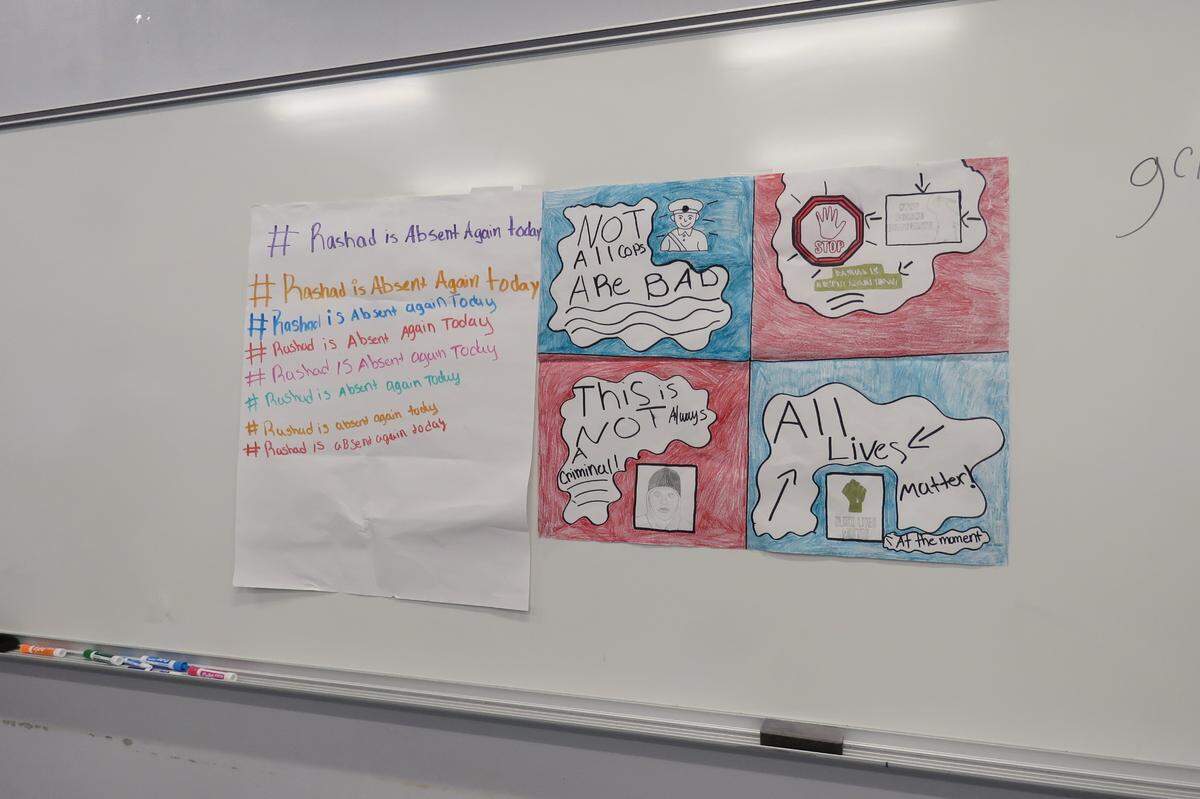
So he assigned his ninth-grade oral communications class the book “All American Boys,” about Rashad, a Black teenage boy who is beaten by a white police officer, and Quinn, his white classmate who witnesses the senseless beating. The students also read articles about police brutality and about biases police can face.
On Tuesday, the class had visitors: two Moss Point police officers and one instructor of criminal justice who spent nearly three decades as a police officer on the Coast.
In conversations with the Sun Herald, they also described their reactions to George Floyd’s death, personal experiences with police, and frustration with social media discourse where they feel they see only flat narratives, or just one side of any story.
“It was helpful to know the police and retired police point of view,” said Kamoria Tisdale. “It wasn’t a social media point of view, always saying the police are bad.”
Policing as community service
The Moss Point officers, Lamar Underwood and Kenny Dunn, and William Carey University criminal justice instructor George Chaix, emphasized that their law enforcement careers gave them opportunities to service their communities.
“I grew up in Moss Point, I played football here, so I saw a lot of what was going on in the Moss Point community?” Underwood said. “What better way to change your community than to become a part of it? So that’s why I wanted to become a police officer, to serve others and to serve my community.”
Indya Triplett called the officers’ discussion of community service “inspiring.”
“You can help out the community and people around you,” she said.
At the same time, many of Henderson’s students, most of whom are Black, said they see a need for change in the criminal justice system.
For most of them, the killing of Ahmaud Arbery by white vigilantes, or Floyd’s death under a police officer’s knee, were the first time they had heard of the Black Lives Matter movement. In the months since, information and opinions about police brutality have been inescapable on their social media feeds.
Tisdale said Floyd’s death had been a reminder of why many Black Americans fear interactions with the police, worrying they could escalate into the unthinkable.
“I thought, white police don’t know what it’s like to be Black,” Tisdale said of her reaction to the video of Floyd’s death. “It’s not all of them, but some — you have to be scared.”
Officers comment on George Floyd’s killing
The officers also shared their perspective on Floyd’s death. Three of Chauvin’s colleagues who were on the scene have been charged for their roles that day. Two had been on the force for less than a week, and their lawyers have argued they were following Chauvin’s orders.
Dunn described his frustration with that defense.
“A human being’s life is being taken, you can be two days on the job, you know it’s wrong for somebody to be taking another person’s life,” he said.
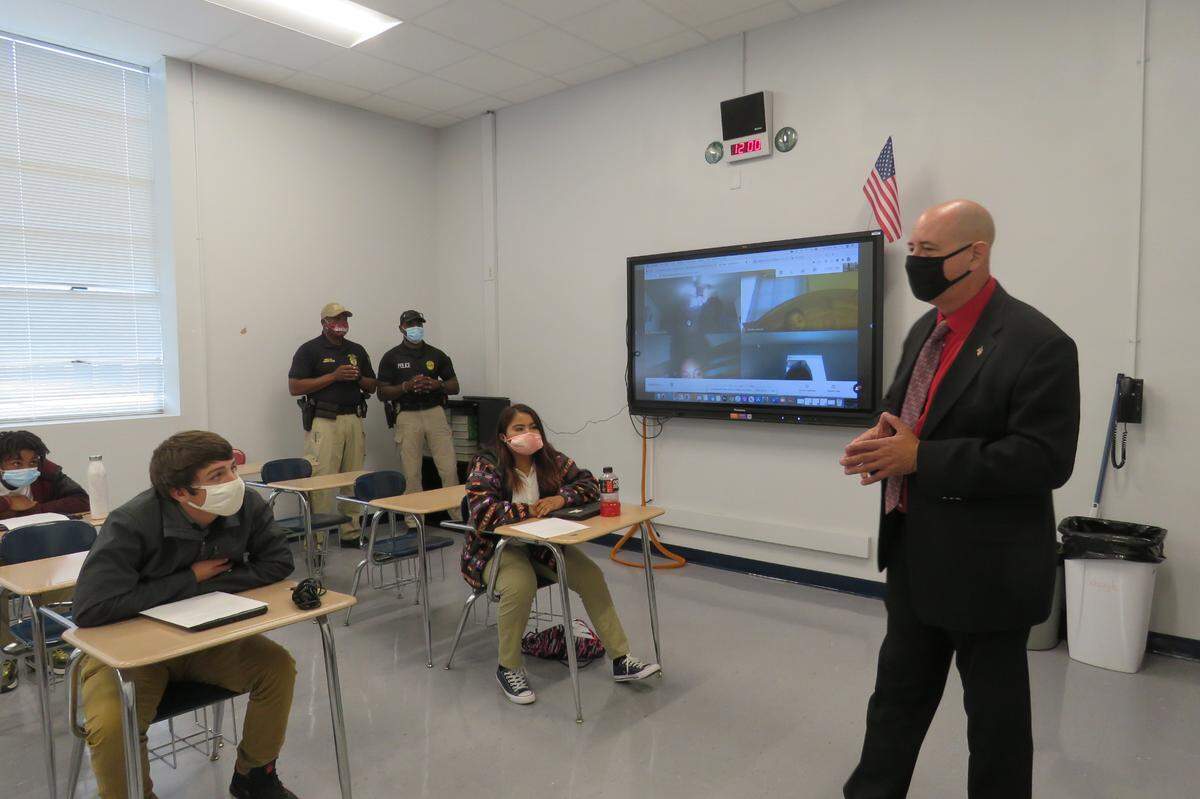
One student asked why some officers “resort to violence” on the job. Underwood said some officers have anger or self-esteem issues that lead them to act aggressively, and sometimes officers can lose control in a tense situation.
“Us as officers, we have to continue to train,” Dunn said. “Not all students are bad students, not all police are bad police, but police can make bad decisions. But you can minimize that by having training, training, constantly training.”
Teaching history as it happens
Henderson has been teaching for 13 years, but he began emphasizing discussions of social justice issues in his classroom just last year, after he participated in the Teacher Leadership Institute, organized by the Mississippi Association of Educators and the National Education Association. The program encouraged teachers to bring critical contemporary issues into the classroom.
When students are interested in the topics in their classes, it’s easier for them to learn the skills they need, like writing and critical thinking, Henderson said.
“What I realized here recently, students become engaged on topics that they can relate to and that they’re witnessing,” Henderson said. “That are relatable to them, that they can hear and they can see about.”
Henderson’s approach is unusual.
All of the students in his class told the Sun Herald they haven’t discussed race, policing, or other social issues in their other classes. And they said “All American Boys” was different from the books they typically read in school.
“Usually in English, we talk about somebody fighting cancer, or a fictional novel,” said Carlos Ojeda, who was attending the class virtually from his home. “School claims they’re going to get us ready for the real world, so we gotta know what’s happening.”
“What we read is happening today,” Cecilliya Wesley said of “All American Boys.”
Earlier this year, the students explored Mississippi history with a focus on the state flag. A college professor served as a guest speaker.
At age 14 or 15, the students said they recognize that they’re in the midst of major social change. Within the last year, they’ve witnessed the most serious global pandemic in a century; mass protests against police brutality and racial injustice; their Legislature retiring the last American state flag to carry the Confederate battle emblem, and the start of a school year transformed by coronavirus precautions.
School should be a place to discuss all of that, they agreed.
“We’re living through history,” Tisdale said. “We can tell our kids about it, and they can grow up to make change.”