
BP fraud case is so massive, federal judge grants trial delay
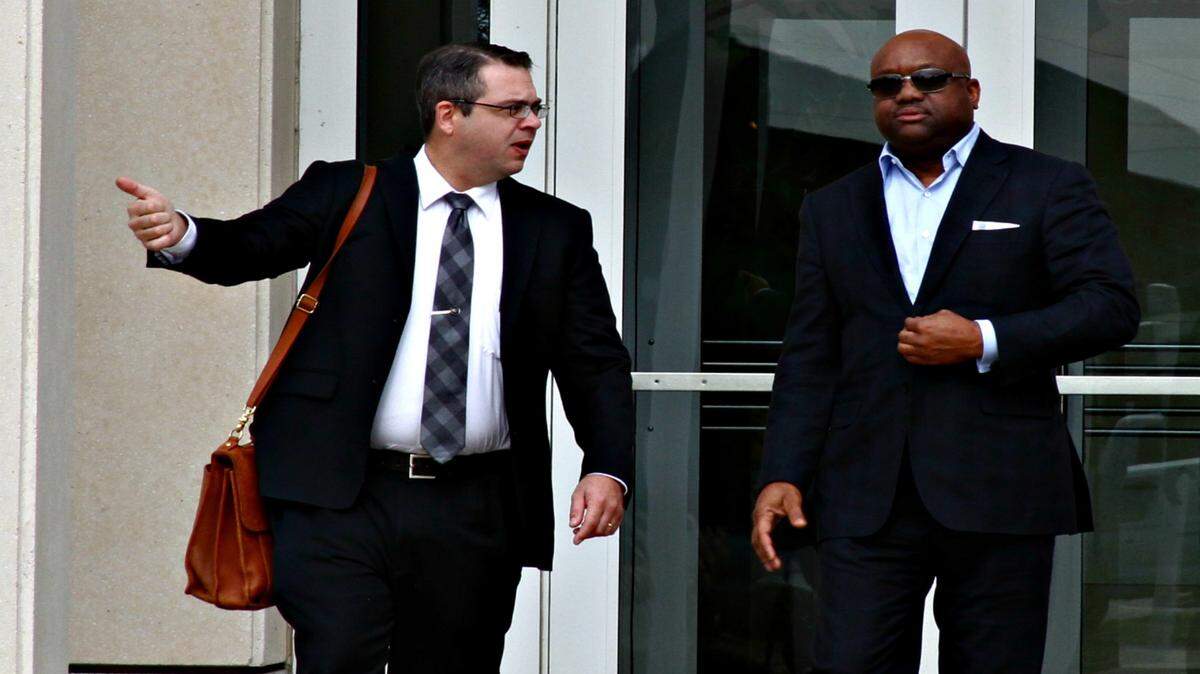
GULFPORT -- U.S. District Court Judge Louis Guirola Jr. agreed to delay until Feb. 1 the BP fraud case against San Antonio attorney Mikal Watts and six associates, finding the evidence so voluminous that attorneys would need more time to prepare their defenses.
Watts wants to go to trial as soon as possible, his attorney Robert McDuff told the judge, because the case has been hanging over Watts' head since a February 2013 search of his law office was leaked to the media. McDuff said he was hired to defend Watts a short time later, but would drop his objection to one delay of the Dec. 7 court date because attorneys newer to the case will need more time to prepare.
The U.S. Attorney's Office and Secret Service investigated the case, indicting Watts, two non-attorney members of his law firm and four field workers on 95 charges each of conspiracy, wire fraud, mail fraud, identity theft and aggravated identify theft. The government claims the defendants manufactured victims of the BP oil catastrophe in 2010 to land Watts a spot on the lucrative BP litigation steering committee and inflate legal fees he might collect.
Watts, an attorney who has earned millions suing corporations over client injuries, maintains his innocence, as do his co-defendants: brother David Watts and Wynter Lee, both of whom work in his law firm; and BP claim field representatives Hector Eloy Guerra of Weslaco, Texas, Gregory Warren of Lafayette, La.; and Thi Houng "Kristy" Le and her sister-in-law, Thi Hoang "Abby" Nguyen, both of Grand Bay, Ala.
Warren and Le set up a BP claims office in the Biloxi area.
The government's case, with Assistant U.S. Attorney John Dowdy of Jackson serving as lead prosecutor, centers on 41 unidentified people whose personal information was allegedly submitted without their knowledge for compensation over losses the spill caused. They were falsely identified as seafood-industry workers, the government contends.
The government alleges Watts and his firm submitted the names of more than 40,000 victims in the consolidated BP case being managed by U.S. District Judge Carl Barbier in New Orleans. In the end, only four clients were found to be eligible for payments, the indictment says.
Pretrial evidence gathered by the government consumes a 3.5-terabyte computer hard drive, the equivalent of 3,584 gigabytes. In addition, 43 to 46 banker's boxes filled with other documents are stored at the Secret Service office in Jackson. Defense attorneys must review the records to prepare their cases.
McDuff has asked that Dowdy narrow down the records that will be used to prosecute the case. The government is legally obligated, McDuff said, 'to do more than give us a hay stack and tell us to find the needle."
Chip Lewis, the Houston attorney representing Hector Guerra, said he expects the prosecution's evidence to include statements some defendants gave the government during the investigation. He said defense attorneys will doubtless argue against those statements being presented to the jury.
Gulfport attorney Ramiro "Remy" Orozco told the Sun Herald after the hearing that his client, Abby Nguyen, gave the government a statement after the Secret Service knocked on her door two years ago. He said Nguyen was a nail salon worker who helped out her sister-in-law a couple of days a week at the BP claims office and at events to sign up clients.
Nguyen, Orozco said, sometimes helped clients fill out claims questionnaires. He added, "But the questionnaires were not a legal document submitted to the government, which is the basis of the alleged fraud."