Death row inmate had a shot at life, but Gulfport prosecutor says he blew it
AI-generated summary reviewed by our newsroom.
- Richard Gerald Jordan kidnapped and murdered Edwina Marter in a 1976 ransom plot.
- MS death row inmate rejected a flawed plea deal that could have spared execution.
- Prosecutor Joe Sam Owen maintains Jordan's choices led to his death sentence.
Condemned killer Richard Gerald Jordan had a shot at living without the fear of execution, but the prosecuting attorney says Jordan’s own greed got in the way.
“You know, he had his day in court,” said Gulfport attorney Joe Sam Owen, who prosecuted the January 1976 kidnapping, robbery and execution-style killing of Gulfport banker’s wife, Edwina Marter, for ransom, along with then District Attorney Albert Necaise.
Owens has long felt that Jordan, now 79 and the state’s longest-serving death row inmate, is responsible for his own death. Jordan has spent the last 49 years on death row.
“If people want to say he was a pretty good prisoner, well, he didn’t have a choice,” Owen said. “He also deprived two sons of their mother and put them through a lot of trauma. He put the family through four trials. He put this family through hell.”
For years, Owen has been steadfast in his belief that Jordan alone is responsible for where he is today.
“Neither I ..nor the jury or anyone else put Richard Gerald Jordan where he is today,” Owen first said in an interview in 2015.
Owen still stands by his statement.
“He did it himself. You know, greed is what prompted this thing to begin with, and he’s still being greedy. He wants life without parole. He had every opportunity, and he didn’t accept it.”
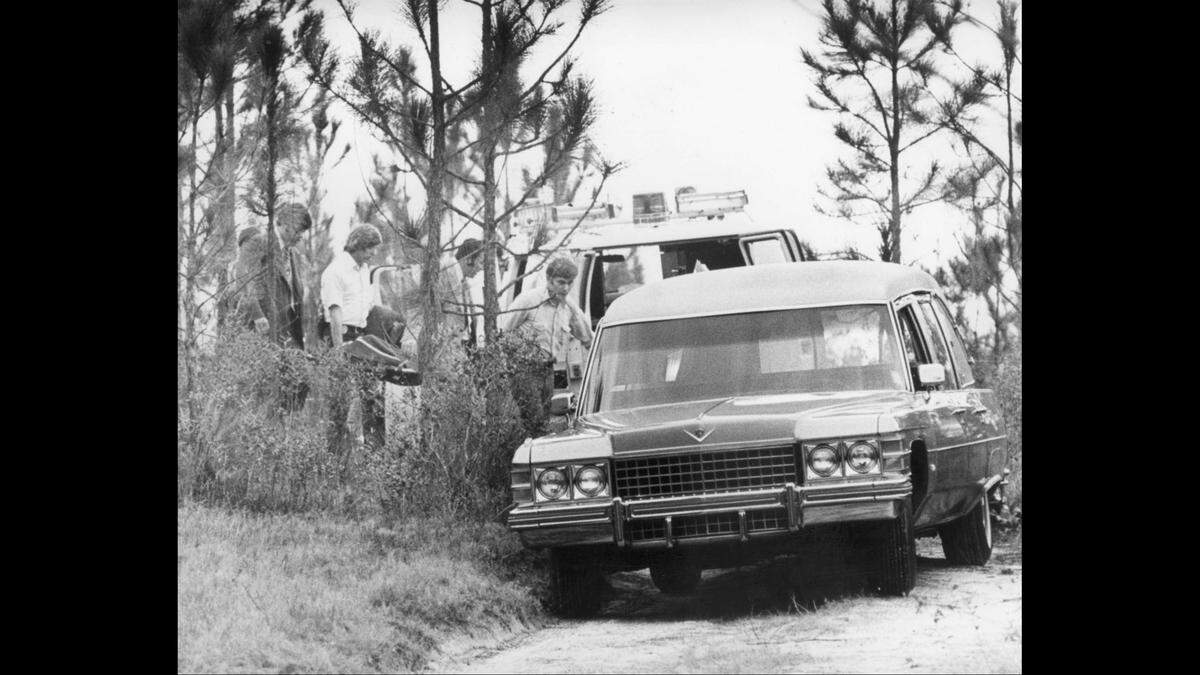
Owen served as special prosecutor on the case years after he’d left the Harrison County District Attorney’s Office to go into private practice. Owen first tried the case as an assistant district attorney along with then-District Attorney, the late Albert Necaise.
“Back in 1976, this was really an outrageous, horrible crime and over the years it stuck with me,” Owen said . “I knew Edwina Marter. I didn’t know her personally, but I knew her. I’m a member of St. James Catholic Church and Edwina was a member of that church, or that parish. It sort of hit home with me.”
A kidnapping, ransom and murder
Jordan kidnapped Marter, 35, on Jan. 11, 1976, from her home on Southern Circle. Jordan came up with the idea to kidnap someone for ransom before he made the trip from Louisiana to Gulfport.
Explaining his motive for the kidnapping, Jordan said at one of his trials that he was unemployed and “deeply in debt.” He said he owed money for a car, a boat, department store bills and “other customary things that a young man with a family has.”
Before he got to the Mississippi Gulf Coast, he stopped by a pawn shop in Baton Rouge, Louisiana, and traded a .16-gauge shotgun of his for a .38 revolver that he used to commit the crime.
When he arrived in Gulfport, he noticed Gulf National Bank on U.S. 90. He stopped at a convenience store across the street and called the bank, asking to speak to the senior loan officer. He learned Charles “Chuck” Marter held that position.
Jordan looked up Marter’s home address in the phone book, something you could still do back then, Owen said, and around noon, Jordan drove by the Marter home.
Jordan didn’t stop the first time he went by because he saw two cars there and assumed Charles Marter had stopped at home for lunch with his wife.
Jordan returned a couple of hours later.
He had on a suit, Owen said, but he had cut out the lining of a pants pocket and strapped his revolver inside it to grab it once he confronted Edwina Marter.
Jordan went to a side door and knocked.
He told Edwina Marter that he was from General Electric, erroneously claiming he was there to inspect the circuit breakers due to complaints.
Once Edwina Marter let him in, Jordan grabbed his gun and ordered her to go with him.
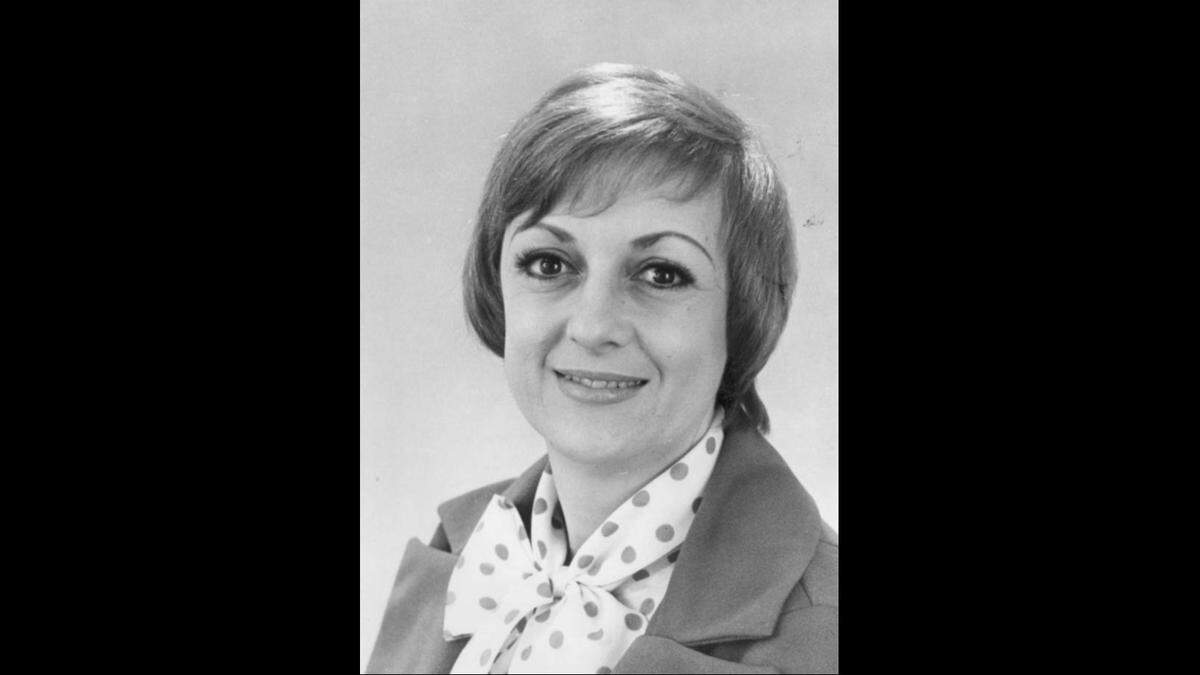
Edwina Marter, Owen said, told Jordan she couldn’t leave because her then-3-year-old son was asleep inside, but Jordan forced her to leave at gunpoint.
After Jordan fled with Edwina Marter, he realized he had left a folder on a table at the Marter home. He went back, grabbed the folder, and left with Edwina Marter again.
Jordan claims that the next stop he made was in a wooded area on Turan Road near the Desoto National Forest, where Jordan subsequently executed Edwina Marter.
Jordan, a certified marksman and Vietnam veteran who served as helicopter gunner and in other capacities in the U.S. Army, claimed he accidentally shot and killed Edwina Marter when she attempted to run away.
Jordan said he was attempting to fire a warning shot over Edwina Marter’s head when the bullet hit her in the back of the head instead.
“I meant to shoot over her head to scare her and let her know I wanted her to stop running,” Jordan said in testimony at one of his trials.
Prosecutors shot down that theory, and Owen said Jordan still hasn’t admitted he shot the wife and mother at close range.
Through forensic testing, authorities determined Jordan had fired the gun 6 to 8 inches from the back of Edwina Marter’s head.
Jordan testified that he planned to use his necktie to tie Edwina Marter’s hands to a tree.
Not so, according to Owen.
Prosecutors believe Edwina Marter was on her knees when Jordan shot her at close range in the back of the head. Her body had been found face down with her hands behind her back.
“There was no warning shot,” Owen said. “It was an execution.”
A Charles Bronson movie, and time on the run
After the killing, Owen said Jordan wasn’t even rattled by his actions because he then drove to a theater in Harrison County’s Orange Grove community and watched the Charles Bronson movie, “Death Wish.”
Sometime after the movie ended, Jordan called Charles Marter, demanding $50,000 in ransom for Edwina Marter’s safe return. By then, Owen said, Edwina Marter had died.
Charles Marter had already called in authorities to help him find his wife.
They set up a pickup location for a ransom, but the first pick-up fell through because Jordan saw some cars he thought were law enforcement around the pickup site and kept going.
Afterward, Jordan called Marter to tell him he knew it was a setup.
Charles Marter demanded to speak to his wife, but Jordan knew that wasn’t possible and managed to appease Marter ‘s husband by telling him she was asking if their two sons were OK.
Charles Marter told Jordan to tell Edwina Marter the kids were OK
Jordan eventually dropped his ransom demand to $25,000. It wasn’t long after that authorities actually spotted Jordan picking up the ransom on Interstate 10 at Canal Road.
An FBI agent and a Harrison County sheriff’s deputy were in a car when they spotted Jordan picking up the ransom and then attempted to stop Jordan.
Jordan got away when he ran the sheriff’s vehicle off the road into a ditch.
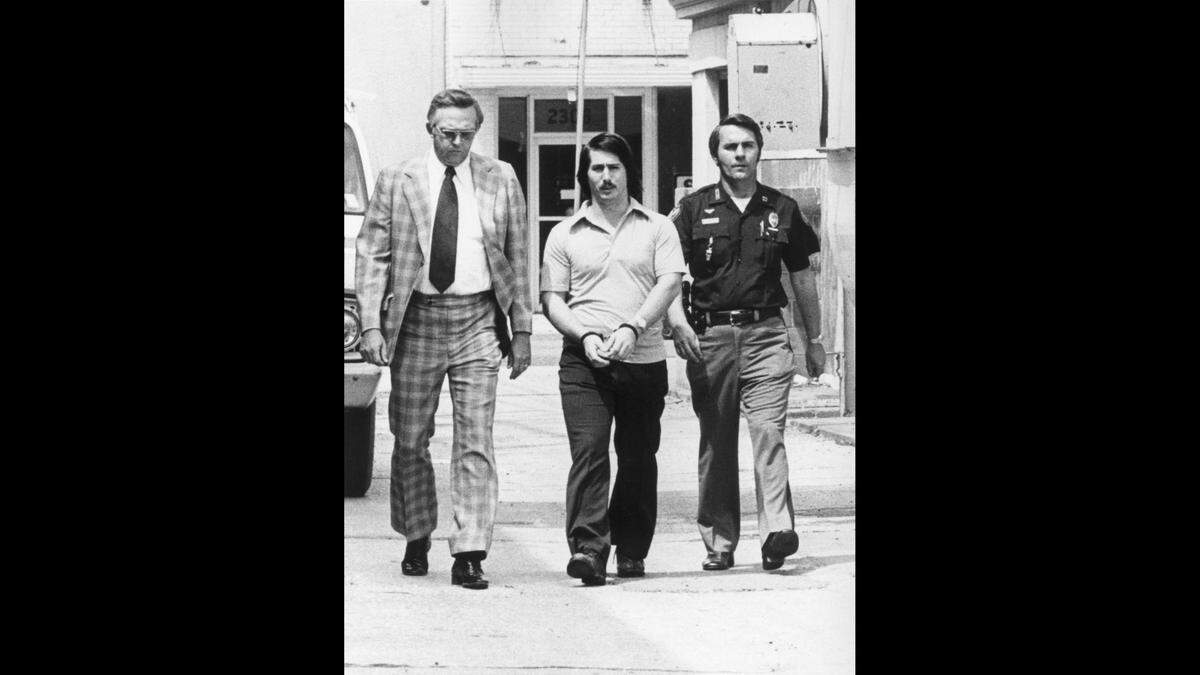
Jordan drove from the interstate to a TG&Y store in the Northgate Mall shopping center in Gulfport, where he bought a new jumpsuit to wear. He kept some of the ransom money on him, Owen said, but hid the rest in an abandoned car behind the store before he called for a cab to pick him up.
Once Jordan got in the cab and told the driver where he wanted to go, Owen said the cab driver told Jordan they’d have to find some back roads to get there because “some fool has kidnapped a banker’s wife.”
The cab driver didn’t realize Jordan was the kidnapper.
A short time later, officers stopped the cab at a roadblock, and an officer recognized Jordan and took him into custody. Jordan confessed to the killing and told authorities where to find Edwina Marter’s body.
A chance at life & the appeal that ended it
The first time Owen and then District Attorney Albert Necaise took Jordan to trial later the same year of the crime, a jury convicted Jordan of capital murder and sentenced him to death.
Over the years that followed, Jordan filed one appeal after another.
In 1991, Owen said Jordan finally got his shot at freedom when he agreed to deal for him to serve life in prison for capital murder. In exchange, Jordan agreed in writing not to appeal the sentence, but Owen said he knew the deal “wasn’t worth the paper it was written on.”
Owen objected to the sentence before then Judge Kosta Vlahos imposed it. The late Cono Caranna was the district attorney who had agreed to the plea deal.
Owen even told the judge that state law dictates the sentencing options, and, at that time, life without parole wasn’t an option. At the time, state law allowed a sentence of life with parole or death for capital murder.
As expected, Jordan appealed the sentence and won.
When Jordan went back before a trial court for sentencing, a jury again sentenced him to death.
Jordan went on to accuse Owen of prosecutorial vindictiveness because Owen asked for a death sentence after the faulty plea deal that had spared Jordan’s life.
Owen wasn’t over the prosecutor’s office when the deal was struck so he had no control over the arrangement.
“I knew Jordan had no intention of abiding by any agreement to waive appeal,” he said. “I so voiced my concern in court.
“Richard Gerald Jordan had every opportunity to save his life, and the classic example was in 1991 ...” Owen said. “There was his opportunity right there to save his life, and he chose not to do that.”
Challenging the lethal injection drugs
Over the decades since the crime, Jordan’s execution has been delayed for other reasons, such as a challenge by him and other death row inmates over the state’s lethal injection medications, something he has continued to raise in his attempt to spare his life..
Jordan’s defense attorneys claim that the first drug used in the execution process could result in him remaining conscious and feeling great pain..
Mississippi began using alternative drugs to carry out executions in the mid-2000s after the state had trouble obtaining pentobarbital, a sedative that was part of a three-drug cocktail used to execute inmates in Mississippi.
The state then opted to replace pentobarbital with midazolam, defined by the state as another type of sedative, in its cocktail for executions.
Jordan’s attorneys are still hoping that a federal judge in Jackson will decide to halt the execution because of questions about the consciousness of a death row inmate after the midazolam is first injected into their veins.
Mississippi Department of Corrections protocol for executions requires the staff to ensure inmates are fully unconscious before injecting the lethal drugs.
The consciousness check is supposed to occur after at least a 3-minute wait time after the sedative is injected, but that didn’t happen in the last execution.
The Mississippi Department of Corrections protocol requires execution staff to ensure that inmates are completely unconscious before proceeding with the lethal drugs. The “proposed consciousness check” is a mandated wait time of three minutes between administering the sedative and the lethal drugs.
In the last two executions, the staff waited one to two minutes before injecting the lethal drugs. As a result, defense attorneys argued that those death row inmates suffered greatly during their executions.
Attorney General Lynn Fitch’s office said that wouldn’t happen again and assured a federal judge that officials would also rub the defendant’s sternum to ensure unconsciousness.
In a letter from MDOC Commissioner Burl Cain, he said MDOC would follow protocol for executions and check Jordan for consciousness after the required wait time.
But Cain said, if the first check shows Jordan is still conscious, Cain said he would follow state protocol for executions and begin the execution process a second time by injecting another round of the sedative.
The defense argues that the state should halt the execution immediately if the initial check after the first injection shows that Jordan is still conscious.
Either way, Owen has little sympathy for Jordan at the this stage of the case.
““We wouldn’t be talking about whether or not his execution would be painful if he ...had just simply taken his life without parole,” Owen said.
Though Owen admits having his own reservations about executing someone from the standpoint of human life, he said, in his own mind, “I reconcile in such a way that this man had every opportunity to save his life.”
“I don’t know how you measure or balance out his death as being cruel and unusual between the backdrop of Edwin Marter’s death, and the impact it had on her children, the fact that the 3-year-old doesn’t even remember his momma, the trauma that Chuck (Charles) Marter has lived through for ... years, the time he’s had to come back and testify in trial and listen to that tape recording between he and Jordan and the fact that he’s just had to live this over and over again.,” Owen has long held.
“The death penalty, I think, is appropriate in some situations, and I think this is one situation where it is appropriate,” Owen said.
This story was originally published June 18, 2025 at 3:49 PM.