
Jail nurse said inmate’s body was found sitting up. Then her story changed, investigator says
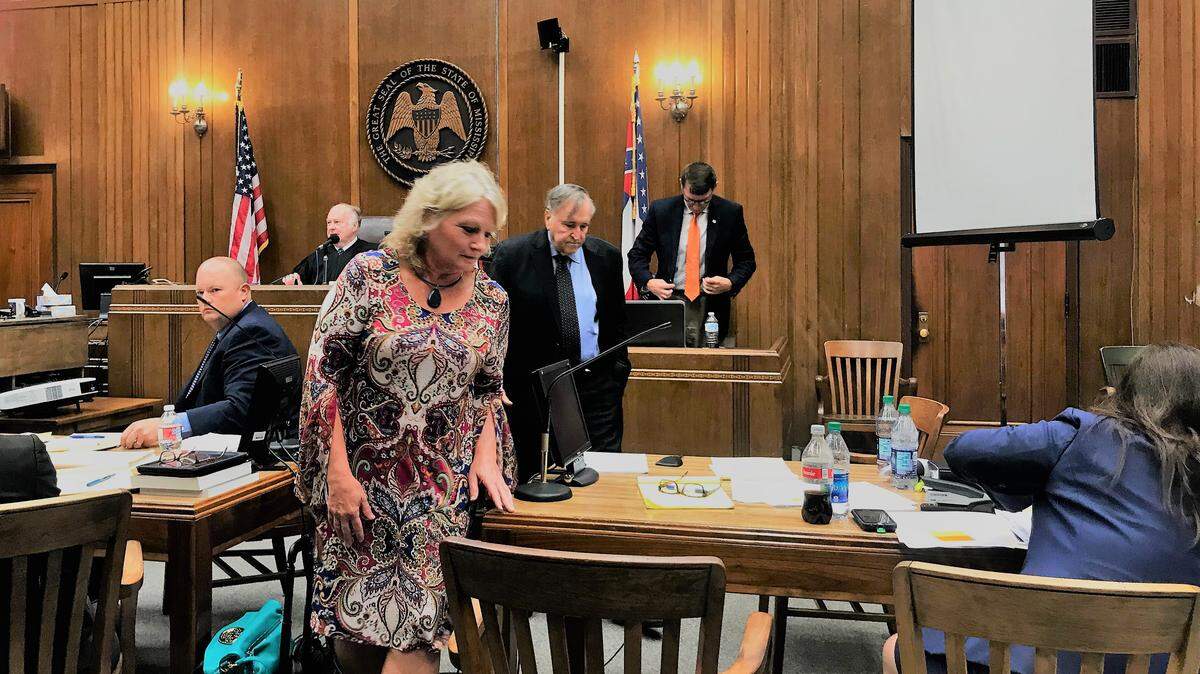
Former George County jail nurse Carmon Brannan first told an investigator jail detainee William Joel Dixon was in an upright position in his cell when he was found dead.
“He was sitting up,” Brannan said in a audio interview with James Ivory, an investigator with the Mississippi Bureau of Investigation. “He was dead. He was ashen color. He was cold and I reached and checked his pulse and he didn’t have one.”
He asked Brannan again if the body of Dixon, an insulin-dependent jail detainee, was an in an upright position when she was alerted to go to his cell that morning of Sept. 24, 2014.
He then showed her a copy of her original statement made after Dixon’s body was discovered.
In it, she said Dixon’s body was on the floor of the jail cell and “he was cold to the touch and his pupils were fixed and I checked his pulse and he didn’t have one.”
“So, was he sitting up or lying down?” Ivory asked Brannan again in the audio recording.
“Oh, gosh, that was a crazy morning,” Brannan said, then took a long pause.
“Yeah, OK,’” she said. “I’m sorry, it has been a while. I apologize. Yeah, he was lying down.”
On Thursday, Ivory said he found it odd that she couldn’t remember the position of Dixon’s body just months after his death.
It’s unclear whether Brannan will testify on her own behalf, though she did at her first trial.
Same position
A jail guard was the first to notice Dixon’s body on the floor of his jail cell and called Brannan immediately.
She had made rounds earlier that morning, Ivory said, only glanced in the direction of Dixon’s cell for less than a second.
She indicated he was standing and talking when she saw him earlier that morning.
Brannan found Dixon dead in his cell, but other testimony suggested Dixon had been dead for some time because his body was in the same position the night before.
She told everyone to stay out of the cell to preserve the scene. She also reported the discovery to the jail warden and a captain in charge and called for an ambulance.
After paramedics arrived Dixon was officially pronounced dead.
Shaking, slurred speech and vomiting
According to witnesses, Dixon was in the special treatment unit for inmates with medical issues for a day and half. During that time, guards said he had slurred speech, his lips shook, and he was vomiting up dark liquids.
Guards said Dixon’s condition worsened to the point he was gasping for breath, asking for help and vomiting if he even took a sip of water.
Witnesses said Brannan chalked up his problems to drug withdrawals because he had admitted smoking 1 to 2 grams of meth a day for some time. In an interview with Ivory, she said she also suspected Dixon had a prescription pill problem and was coming down from that as well.
But Brannan only checked Dixon’s blood sugar once during his seven days in custody, investigators said.
She defended her actions, telling the investigator Dixon had not seen his doctor to treat his diabetes in more than a year because he couldn’t afford it.
Instead, he treated his diabetes with insulin he bought at Walmart and by controlling his diet.
Brannan said Dixon never asked for any insulin and had even refused it in the past.
In July 2014, for example, Dixon signed a form refusing insulin treatment during a four-day jail stay on unrelated charges.
That refusal, however, would not apply to his arrest in September 2014, a corrections official said.
A second trial
Brannan is on trial for manslaughter this week in Warrren County . She’s accused of causing Dixon’s death after he went seven days without insulin. His mother and a police officer said they had insulin brought to the jail to give him but it was never used.
Dixon was jailed after Lucedale police arrested him Sept. 17, 2014, on drug, DUI and child endangerment charges.
Expert talks
Lori Elizabeth Roscoe, a registered nurse in eight states and an expert in correctional health care, said Brannan failed to provide a standard level of care to Dixon.
She pointed out Brannan never did a full medical assessment on Dixon and only checked his blood sugar once during his entire jail stay.
Even if Dixon refused his insulin, Roscoe said, nurses have the duty to go back to the individual to check their sugar levels, do a medical assessment, again offer the medicine they need and document every refusal.
After reviewing Brannan’s files on Dixon, Roscoe said there was no doubt Dixon should have been sent on to emergency treatment in a hospital setting.
“She didn’t have time for Mr. Dixon, but she needed to make time for Mr. Dixon because he relied on her to take care of his medical needs,” she said.
District Attorney Tony Lawrence and ADA’s Cherie Wade and George Huffman rested the state’s case after the expert testified.
On cross examination, the defense questioned whether Roscoe was being paid for her assessment.
She said she was paid and had testified as an expert in other cases in the country through her primary job as a correctional healthcare consultant.
The defense begins
Defense attorneys began to argue their case late Thursday.
The first defense witness, a former shift supervisor, was working the day Dixon died.
She made some of the rounds with Brannan that day, but said she didn’t know of any problems with Dixon’s health.
She also said she had no reason to believe Brannan would try to harm anyone or try to withhold treatment from an inmate.
She said she never went in Dixon’s cell that day or any other day while he was there in September 2014.
An ‘overwhelming’ responsibility
Miranda Cochran, a nurse who took over Brannan’s position, said the nurse’s job at the jail was an overwhelming responsibility because of the large number of detainees.
She said she had to rely on guards and inmates to let her know if there was problem.
When an inmate first arrived, she said she did medical assessments and followed up on ones who needed further attention.
She said she was on-call to respond to concerns from jailers about sick inmates.
She said she told the prisoners they had to fill out a sick call form to let her know what problem they were having so she could treat them.
She did not have any knowledge or how Brannan performed her job.
ADA Wade had one question for Cochran: “Now, if you have an inmate that is getting progressively worse, they’ve been weak, they are complaining constantly about not being able to breath, slurred speech, can’t walk to the point of lying on the floor, what would you do?”
Cochran responded, saying she would “go in and check the patient, take his vital signs, (and) check his blood sugar. If his sugar was high and he was still refusing insulin he would have to give me a reason.”
She said if a inmate couldn’t talk, “they would go the emergency room.”
Cochran has since left her job at the jail. She has no plans to go back.
Defense testimony in the case resumed Friday.
Defense attorneys Mary Lee Holmes and Paul “Bud” Holmes are representing Brannan.