These chickens are like her children. How could South MS woman give them up?
AI-generated summary reviewed by our newsroom.
- Jackson County ordinance bans chickens on subdivision lots under one acre.
- Jamie Nash Stebly spent $12,000 over six months fighting to keep her chickens.
- County investigates backyard chicken complaints only when officially reported.
This story includes discussion of suicide. If you or someone you know needs help, the national suicide and crisis lifeline is available by calling or texting 988. There is also an online chat at 988lifeline.org
Jamie Nash Stebly wept uncontrollably when she saw the letter from Jackson County.
It said she was in violation of county code that applies to backyard chickens. She might have to go to court and pay a fine. Stebly had never been in trouble in her life, so she was scared. Even worse, she was afraid the county would confiscate her “girls,” the chickens that have been with her for almost four years. Her loves, her children.
With her husband Chris Stebly’s backing, she decided to fight to keep her chickens in Gulf Hills, a residential area of Jackson County next to the city of Ocean Springs. The legal fight has taken longer and cost more than expected — more than six months and $12,000. Her childhood best friend started a GoFundMe account to help cover the costs.
Jackson County has been seen its share of disputes over backyard chickens, said Planning Director Marcus Catchot. County ordinance does not allow chickens in subdivisions with lots under an acre.
Overloaded code officers aren’t actively looking for violators, but they do investigate when a complaint is filed.
“Some folks just don’t want farm animals living next to them,” Catchot said.
Ironically, the city of Ocean Springs has a more lenient code for keeping chickens. For a $25 permit fee, residents can keep chickens as pets in enclosures a specified distance from neighboring property.
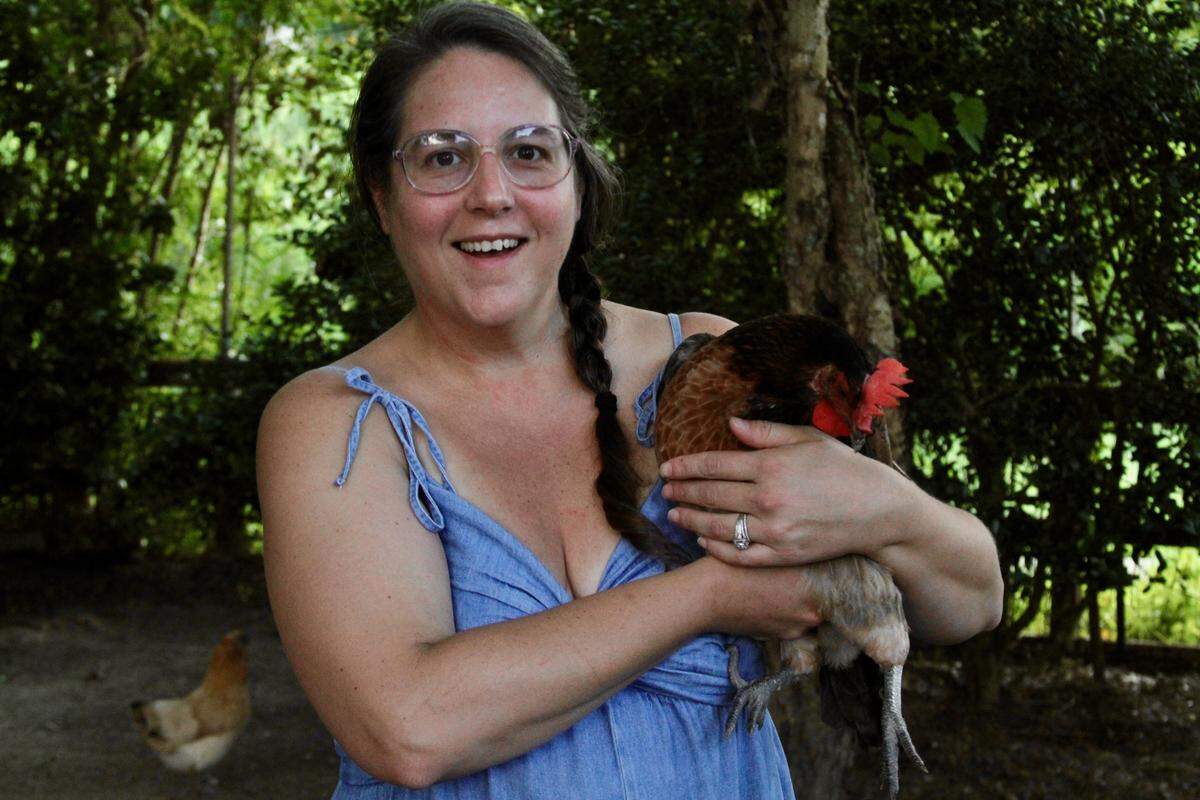
Backyard chickens save grieving daughter
She didn’t know it, but chickens have worked better than medicine for Jamie Stebly. Then Jamie Nash, she was raised on a lake in Madison.
She lost her father to suicide in 2010. She was a daddy’s girl. Six months after his death, she came to visit her childhood best friend, Will Thompson, in Ocean Springs. He wanted to get some chickens, so they did. She wound up staying.
“He exposed me to a world I didn’t know I needed,” Stebly said. The chickens, she said, calm her when she’s stressed. They give her purpose. They are emotional support animals for the 39-year-old artist, who suffers from attention deficit disorder and anxiety.
After she married fellow artist Chris Stebley in 2021, Jamie Stebly got chickens for their backyard. She was used to having chickens in Ocean Springs, but she was now in Jackson County.
She had up to 14 chickens at one time.
“We live in the county,” Jamie Stebly said. “I never dreamed we had a code for having chickens.”
Farm animals as pets
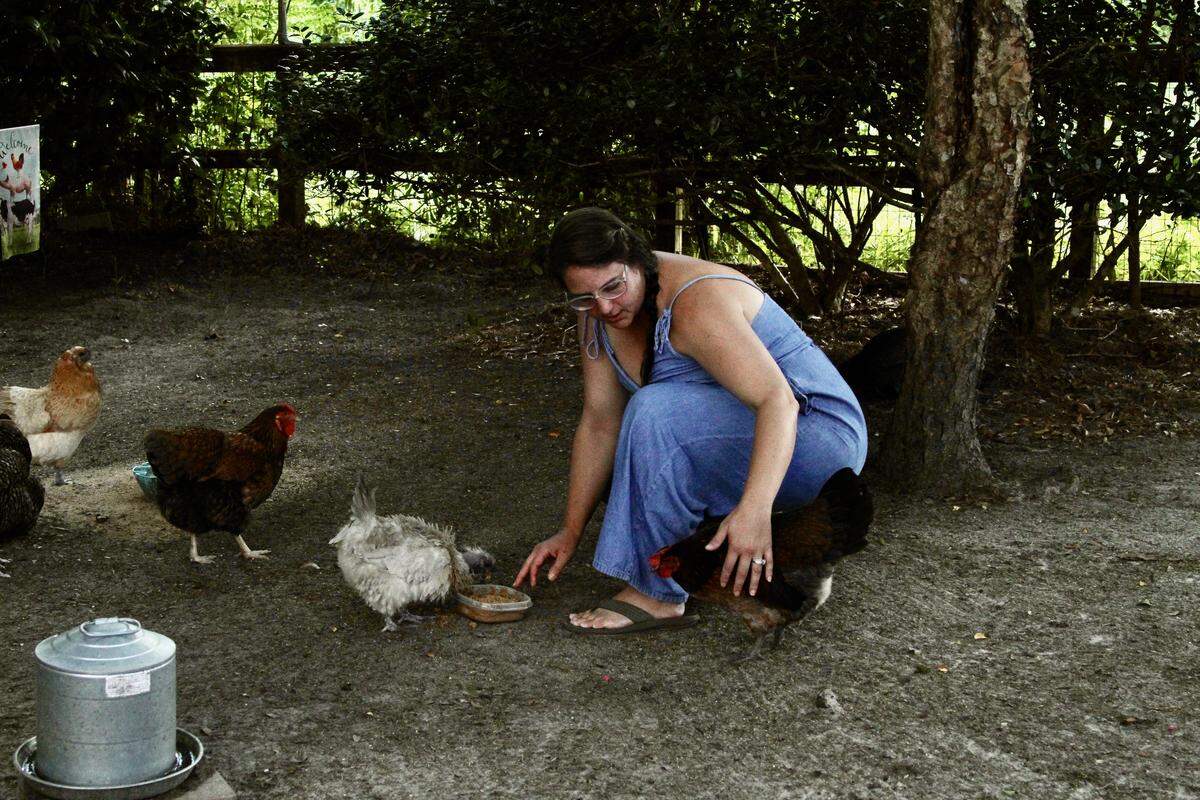
The chickens give her a reason to get out of bed. She tends them at sunrise and tucks them into their coop at sunset. She makes them special “salads” from rye grass planted in grazing stations.
When she feels stress, she can step into the backyard and listen to them “coo.” Or she can look out one of her four sliding-glass doors, where they gather to be closer to her while she is inside. If she is sitting outside, one chicken is usually on her shoulder, another in her lap.
They are endlessly entertaining.
“They’re literally my children,” she said.
The only complaints about the chickens that she’s aware of have come from the elderly couple next door. The letter from code enforcement arrived in February. Stebly decided to follow proper channels and seek a special exception from the county to keep her chickens.
She hired an attorney. They went before the Planning Commission, which denied her request. Stebly appealed to the Board of Supervisors. Her attorney learned through sheer coincidence during a Florida bar convention that a woman had won the right from the state Court of Appeals to keep two horses by leasing enough property to meet the city of Ridgeland’s requirements.
So, Stebly leased a little under an acre from a sympathetic neighbor. With their own lot, this gave the Steblys the one acre they need for chickens under Jackson County’s ordinance. Jamie Stebly and the Steblys’ attorney, Jaklyn Wrigley of Ocean Springs, argued their case in July before the Jackson County Board of Supervisors.
The couple next door spoke, too. They don’t care for the chickens and want them gone. The chickens have gotten into their yard, they said, and they don’t like it. They also believe chickens attract predators, such as foxes, raccoons and possums. They worry about chicken waste washing through the area, which is in a flood zone.
They implored the county to enforce its code and get rid of the chickens. Wrigley pointed to the Court of Appeals opinion. The supervisors delayed a decision so that board attorney Jimmy Colmer could review the opinion.
Jackson County supervisors vote on chicken appeal
At the first meeting in August, Colmer said the Steblys had met ordinance requirements because they now control an acre of land through their lease. Based on Colmer’s review, the board declared the Steblys’ appeal moot, meaning they can keep their chickens.
At the July meeting, planning director Catchot had mentioned a potential change to the ordinance that would prohibit chickens in all platted subdivisions, including those of more than an acre. Rumors soon started up on Facebook about the county’s plans and a number of residents showed up at the August meeting to throw their support behind backyard chickens.
“My chickens are not a nuisance,” a resident of Gulf Park Estates insisted, saying the neighborhood children often visit and learn about her pets. She brought up food insecurity and supply chain issues as excellent reasons to raise chickens.
Supervisor Troy Ross said he doesn’t want to see the ordinance change. He believes residents should be allowed to keep chickens on an acre or more. And he knows plenty of people are tending to chickens on smaller plots, including the ones in his subdivision, where he hears roostes crowing in the mornings when he walks his dog.
“A lot of people are turning them into pets,” Ross said. “It’s, like, their hobby. “
Jamie Stebly is relieved that she can keep her chickens — for now. She’s worried about any changes to the ordinance that might threaten her babies.
“If I had to get rid of them,” she said, “I don’t know what I’d do.”

This story was originally published August 12, 2025 at 10:14 AM.