
Have you ever heard the Pascagoula River sing?
The Pascagoula River Basin is one of the nation’s rarely acknowledged treasures.
Yet its beauty, amazing flora and fauna, vital environmental roles, history and countless opportunities for recreation and commerce are rarely trumpeted at the river’s doorstep, the Mississippi Gulf Coast.
When did you last partake of wild-life watching, tale-spinning, canoeing, trail-walking and affordable boat tours of the swamps and river? Have you sat on the riverbank to contemplate life? Or, listened intently to hear the river’s legendary music?
I have. I’ve never forgotten the melodic buzzing sound, and I’ll swear it was not my teenaged imagination.
Later, as a reporter and history columnist, I learned about the river’s connection to UFOs, suspected Nazi submarines, outlaws, pirate treasures, Indian mounds, endangered wildlife, migrating sturgeons, a vanished Native American tribe and at least four differing folktales on why the river sings.
Scientists have attempted to explain away the sound with whipping winds, fish noises and geological fissures with escaping gases. But Native American tales of unrequited or forbidden love and tribes at war prove more lasting in people’s memories than scientific reasoning.
In the late 20th century, the region’s history-tellers settled on a Singing River version that has the Pascagoula tribe walking into the river, singing and drowning rather than being subjugated by the warring Biloxi tribe over a forbidden love.
The Pascagoula and Biloxi tribes really did live on the river, although their villages and others were decimated by disease likely brought by Spanish exploring Florida. We can thank the French who arrived in 1699 for immortalizing the tribes by using their names for a colonial capital and a river.
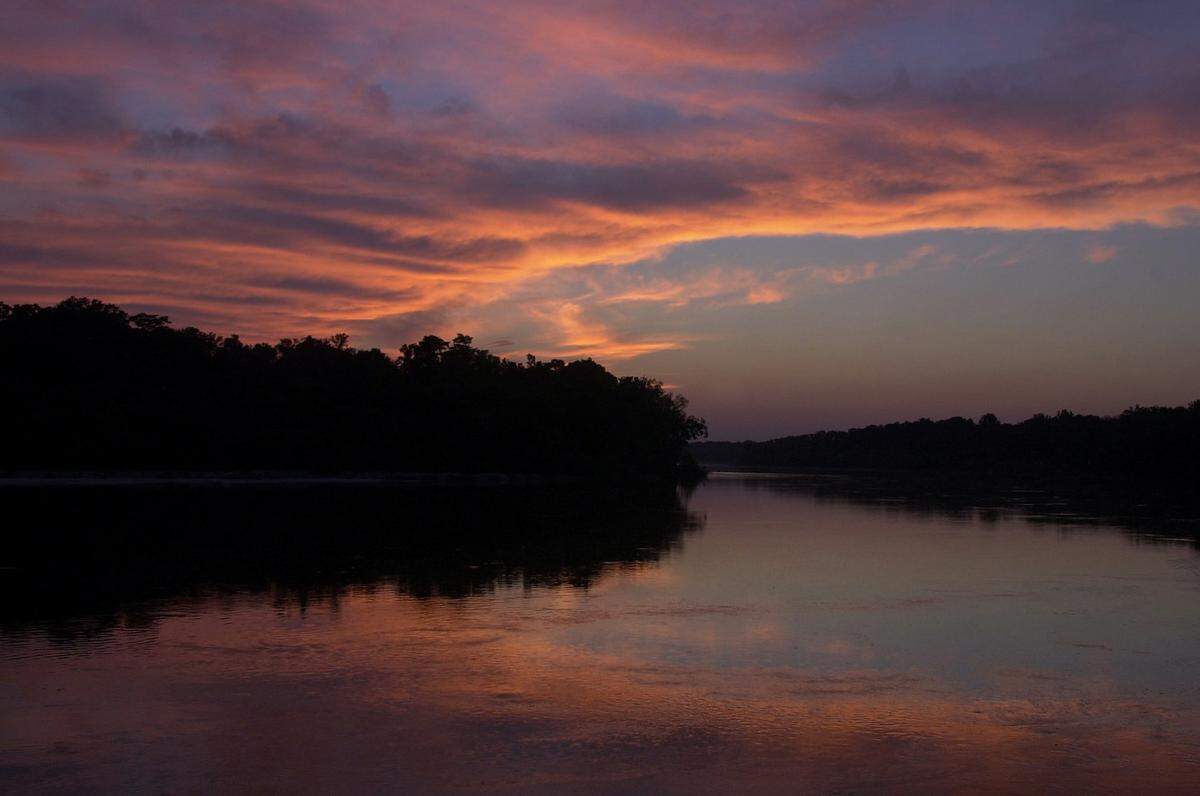
The captain of the shrimp boat on which I crewed every summer for college money was shocked to learn his deck hands had never heard the river music, so he took us to the section of the Pascagoula known as “Singing River.”
That evening, I heard the mysterious sound, but more importantly I was introduced to a fantastic river I’d only seen from a car on the way from Gulfport to Mobile. Coastal denizens like me who never lived in Jackson or George counties easily forget the natural wonderland that is the eastern border of our Coast.
In recent decades, the national spotlight has shown somewhat brighter on the river basin, which is to Mississippi what the Everglades are to Florida, or what the Atchafalaya Basin is to Louisiana. Some even liken its environmental importance to the Amazon Basin of South America.
The Pascagoula is the last major river system in the lower 48 states that remains unaltered by dams, levees and such. Whether it will stay that way is debatable because in recent years in rural George County dams were proposed on Big and Little Creeks.
Lakes created by the dams would open up land for much-coveted development and, claim some, help control river water levels in drought years. Environmentalists and many users of the river’s natural resources oppose damming the nation’s last unencumbered waterway.
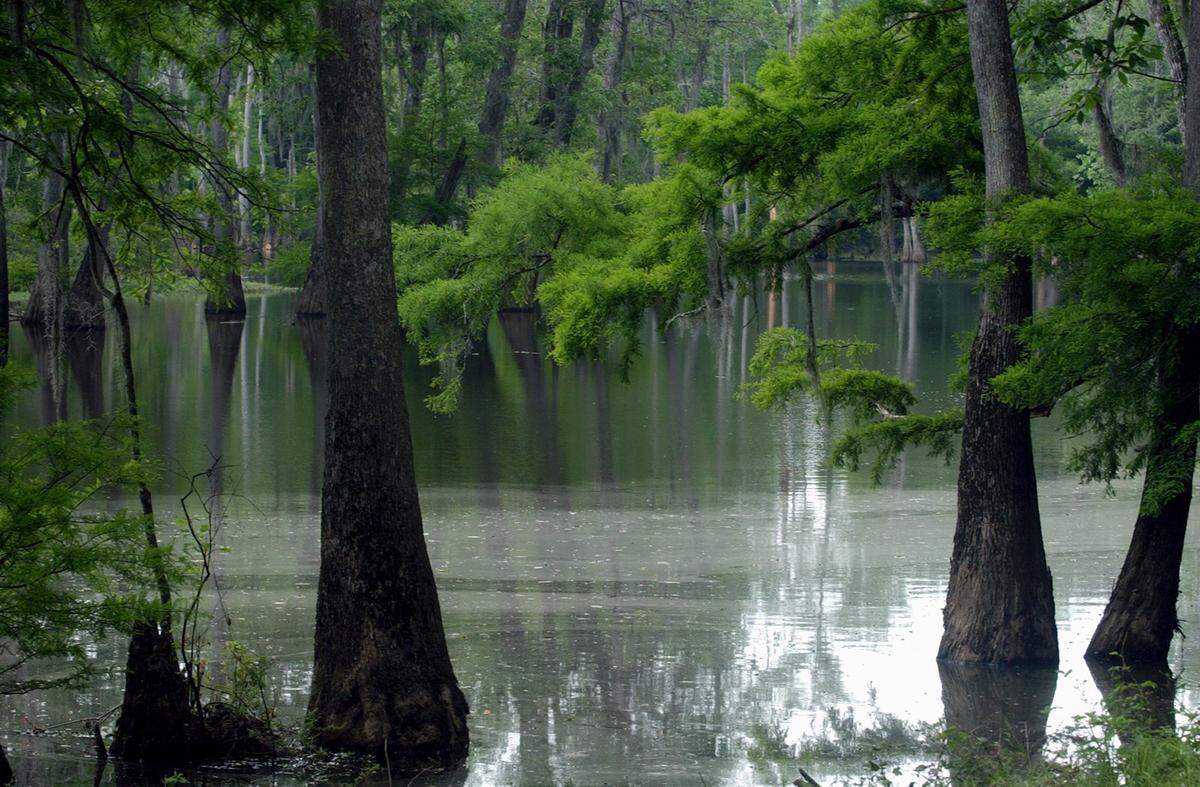
Even if we don’t regularly exploit the Pascagoula’s amenities, isn’t it comforting to know the 9,600-square-mile basin is there, teaming with opportunities for breaks from the everyday noises of civilization?
The river was a sacred place to indigenous Americans who survived on its bounty for over a thousand years, and it should remain so for us in the 21st century. The basin is flanked by thousands of acres of public lands, state parks and wildlife management areas – all worth exploring.
Spend some of this COVID-19 Pandemic downtime researching what river escapes you might take advantage of now or in the future.
At least two national environmental organizations — The Nature Conservancy and the National Audubon Society — have stepped in to help preserve and educate about this treasure. If you’ve never been to the Pascagoula River Audubon Center in Moss Point, put that on your list.
The center’s trail walks, kayak boat rentals, river educational displays, scenic overviews and a native plant botanical garden make great pandemic escapes. Entry fees are currently waived, but be forewarned that hours and open days change. Do your advance due diligence on any planned river activities during this time of uncertainties.
For your river bucket list, also consider Capt. Benny McCoy’s knowledge and his small tour boat. Pascagoula River natives like him know the river better than they do their own back hands.
Of course if you own a boat, you can explore yourself but you won’t find historical markers along the way to explain the river’s importance to early lumber saw mills and later paper mills.
You won’t find markers saying that the 19th century outlaw James Copeland and his gang are suspected of burying ill-gotten gains in the swamp, and you won’t find markers explaining how Spanish pirates made life difficult for colonial settlers.
The best known modern story — an alien abduction — takes place Oct. 11, 1973. Not so surprisingly, you will find a river marker for this story.
On that 1973 date, headlines across America reported two Ingalls Shipyard workers were snatched by an unidentified flying object while fishing south of the East Pascagoula River Bridge. Charles Hickson, then 45, and Calvin Parker, then 19, claimed they were whisked into a spacecraft and examined by an eye-like machine and three aliens with pincer hands.
Frightened, they finally called the sheriff’s office at 11 p.m., and their demeanor and a lie detector test convinced deputies they were telling the truth. This story touched off a flurry of UFO sightings across America. Thousands, some wrapped in aluminum, showed up and sat on car hoods parked near the river, awaiting a UFO return.
If Mother Nature’s bounty is more your thing than history, you should know that 327 bird species breed among the cypress-tupelo swamps, natural oxbow lakes, pine ridges and marshland. The pine Savannah echoes the bugle cry of the rare Mississippi sandhill crane; the woods and wetlands supply habitat for all manner of wildlife.
The river itself is 80 miles long, splits near the end, and drains into the Mississippi Sound then the Gulf, creating an estuary haven vital to our seafood industry. This water life source that begins in northwestern George County at the confluence of the Leaf and Chickasawhay rivers then meanders down to our coastal doorstep.
As I write this, I am reminded of Mole in Kenneth Grahame’s “Wind in the Willow.” Once, after a day of exploring along the river, the adventurous Mole... “sat on the bank, while the river still chattered on to him, a babbling procession of the best stories in the world, sent from the heart of the earth to be told at last to the insatiable sea.”
Kat Bergeron, a veteran feature writer specializing in Gulf Coast history and sense of place, is retired from the Sun Herald. She writes the Mississippi Coast Chronicles column as a freelance correspondent. Reach her at BergeronKat@gmail.com or at Southern Possum Tales, P.O. Box 33, Barboursville, VA 22923.
This story was originally published January 24, 2021 at 8:00 AM.