
Will Gulfport’s $48M road plan ease traffic on Highway 49? The city’s own study says no.
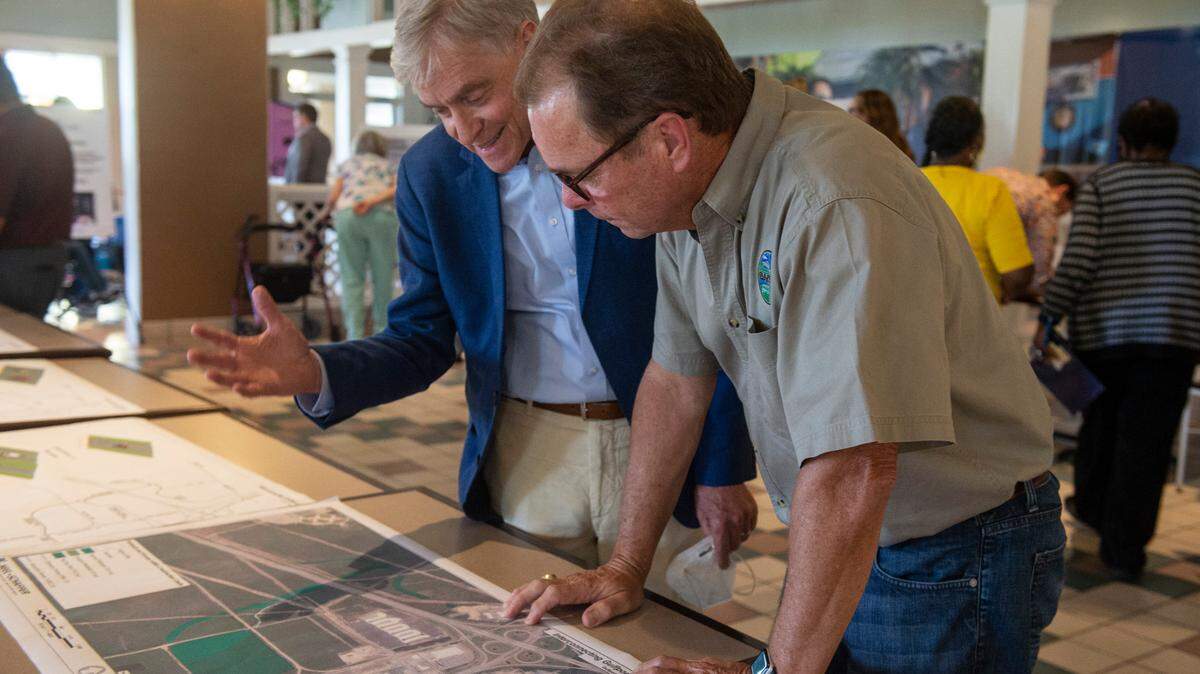
Top city officials say Gulfport’s controversial road development plan, which will cost tens of millions of dollars, is needed to help with traffic flow.
“The point was to find traffic congestion relief,” Gulfport Mayor Billy Hewes told the Sun Herald.
The city’s public works director, Wayne Miller, agrees, saying “the main goal with this would be safety concerns and improved traffic flow. To me, that’s what we’re trying to get out of this project.”
But the city’s own analysis of the new road’s projected impact on traffic suggests that construction of the road will actually lengthen delays at U.S. 49 and Poole Street. It’s the only intersection where a detailed traffic study was conducted.
Critics of the project, including City Councilwoman Ella Holmes-Hines, said the analysis confirms what they have believed for years: the motivation for building the road is to facilitate commercial development on currently inaccessible wetlands west of the highway.
Charges that the city did not consider the road’s likely ecological impact on the nearby historically Black communities of Forest Heights, North Gulfport and Turkey Creek — which could see increased flooding due to the construction through wetlands — have sparked an ongoing federal civil rights investigation within the Mississippi Department of Transportation, which funded the road project.
City officials, however, have stressed that the traffic congestion is frequent and can cause safety issues such as delayed emergency vehicles response times.
Hewes said the location of the road plan’s route was “chosen because this is where our traffic congestion is occurring right now, this is where the problem is, and you’ll see it at Christmastime that it is so dangerous, particularly on the weekends,” adding that traffic frequently “backs up onto 49 and often on the on-ramp onto I-10.”
According to the city’s plan, the new road would
- Extend Airport Road west past its current intersection with U.S. 49 (at Poole Street) before turning north
- Be joined by a new extension of Factory Shop Boulevard
- Traverse Interstate 10 over an overpass before meeting Daniel Road and Canal Service Road north of the interstate
The cost of the road project was most recently estimated at $48.5 million.
Gulfport gave its own project a failing grade
The issues with the traffic analysis conducted by the city were brought to light in a lengthy report from the Mississippi Sierra Club.
The traffic study — based on modeling by the Gulf Coast Regional Planning Commission — compared projections of what the Poole Street intersection traffic will look like during afternoon rush hour in 2045 with and without the construction of the new road.
Without the new road, the city’s analysis found, the projected level of service (a quantitative measure of traffic flow) received an F grade — the lowest possible, according to national highway traffic measurement standards — with an average delay of 118.3 seconds at the intersection.
With the new road in place, projected traffic flow at the Poole Street intersection was still graded at F, and the average delay increased to 124.3 seconds.
Steve Twedt, South Mississippi area manager of Neel-Schaffer — the firm contracted by the city to design the project — did not dispute the analysis by the Sierra Club.
But he said the project will alleviate congestion on U.S. 49 overall by diverting 3,000 cars daily onto the new road, and the positive impact will be felt at a different intersection, half a mile north of Poole Street.
“The highest volume of traffic on the Highway 49 corridor is at Creosote Road, and so this project is going to reduce the congestion at that intersection,” Twedt said.
Mississippi Sierra Club state director Louie Miller said in an interview that Twedt’s arguments were “insulting to anyone’s intelligence” and that the city had furnished “no documentation to support their claim.”
“They did not include this in their traffic study, Creosote Road. They did include Poole. You can’t just make it up as you go along,” Miller said. “It’s clear that they’re trying to do the bait-and-switch here, which is not going to work. You’re going to spend $48 million and you didn’t study Creosote Road?”
Twedt acknowledged that Neel-Schaffer didn’t do “a specific level of service analysis” at the Creosote Road intersection, which he said “isn’t really part of the project.”
Twedt said the Poole Street intersection was studied because, unlike Creosote Road, it directly connects to the proposed project, and the traffic analysis helped engineers determine if any adjustments to signal timing would be necessary.
New retail development, more traffic?
Twedt said he believes Creosote Road traffic would be improved because the proposed alternate route would divert as many as 3,000 cars per day off U.S. 49.
“They don’t have to wait on Highway 49 traffic to get north of I-10,” he said.
Sierra Club attorney Robert Wiygul said the 3,000 figure is not significant because more than 60,000 vehicles drive down U.S. 49 each day.
Wiygul argued that the city’s traffic study actually undercounts the added strain on traffic that the road is likely to have, citing a memo included in the Sierra Club report and written by University of Kentucky traffic engineer Adam Kirk.
Kirk analyzed the city’s traffic study and noted that while the study does not support the city’s conclusions that the project will alleviate congestion, it still does not factor the impact of the new retail and commercial development the city expects the project to enable.
Kirk noted that in a 2019 application for federal funding for the road, Gulfport estimated that up to 2.8 million square feet of development could open along the new road, calling it a “newly accessible commercial area.”
“A retail development of this size would be a regional traffic generator, bringing in additional traffic from outside the adjacent street system,” Kirk wrote in his report.
Using an industry standard for calculating traffic published by the Institute of Transportation Engineers, Kirk estimated the projected retail development would generate 78,000 trips a day.
“None of this additional traffic generated is accounted for in the traffic projections for the project, nor is it accounted for in the traffic analysis,” Kirk wrote. “This high volume of traffic on the Airport Road Extension will further impact traffic operations on US 49 at the I-10 interchange, significantly more than is shown to occur with only the road connection.”
This story was originally published August 10, 2022 at 5:50 AM.