
Bay St. Louis locals torn. ‘We’ve lost our charm — now it’s all about the money’
Another wave of visitors floods this coastal Mississippi city every weekend. The bars fill up and profits spread.
But for residents of Bay St. Louis, the surge is also becoming a dilemma.
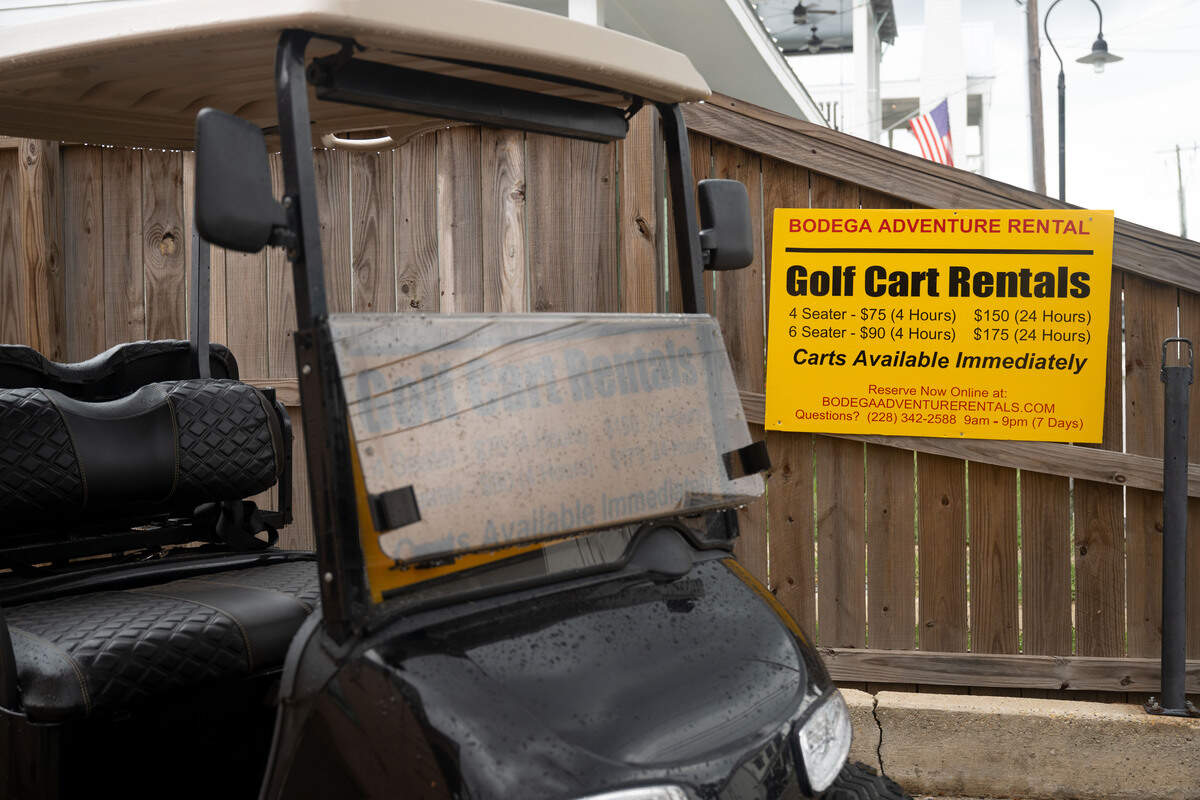
“They come to party,” Harold Weber, a longtime local, said as he steered his golf cart past busy vacation rentals one recent afternoon in the city often called a mini-Destin. “It’s no longer the quiet, little waterfront town.”
There was a time when the visitors coming to Bay St. Louis were just small numbers of Louisiana families on summer break, and neighbors knew each other well. But a rush of national recognition is transforming the city into one of the South’s top beach destinations.
The new crowds are invigorating the local economy, but also stirring resentment among some locals as the city adjusts to a new future.
It is a familiar tension across the Gulf Coast, where cities are wrestling with questions about how to balance increases in tourism with the locals’ way of life. The frustration is also a symptom of extraordinary growth across the region as the population rises and interest from visitors intensifies.
The flood of new visitors and money is also revitalizing Bay St. Louis two decades after Hurricane Katrina. Property values are rising. Sales tax revenues are up.
“You’ve got to try to find a balance in it, and it’s really hard to do that,” said Jordan Bradford, the City Council president. “I’m very thankful that tourists want to come to Bay St. Louis. I don’t want to keep them from coming here. I just want to find a balance to preserve what Bay St. Louis is and was.”
Weber, a retiree, lives a few miles away from the city’s bustling downtown strip of restaurants. But vacation rentals are spreading in his neighborhood, too.
“Tourism in Bay St. Louis is busting at the seams,” said Mike Farley, who has lived in the neighborhood since before Katrina. He was sitting on the patio beneath Weber’s elevated home, sipping a bottle of Miller Lite alongside a group of longtime neighbors. Pickup trucks rolled into the driveways of several nearby vacation rentals, and country tunes warbled over the water.
“We’re turning into a little New Orleans,” Weber said. “We’ve lost our charm — now it’s all about the money.”
A breeze blew across the bayou, and Farley nodded. “The city has definitely moved in the direction of tourism,” he said, then he paused.
“But we liked it out here when it was quiet.”
‘You just feel this swell’
For years, tourism in Bay St. Louis meant New Orleans friends who piled into station wagons for day trips or affluent families who retreated to second homes all summer.
But word of the city’s charm is spreading.
New groups of visitors now arrive each weekend to kick back at the bars and restaurants that have spread along the waterfront. The cars that pack the beach road have license plates from Louisiana and Mississippi, but also Alabama and Tennessee. A new Amtrak route that connects Bay St. Louis to New Orleans began running last summer.
So many Louisiana visitors are converging in the city that some have even started calling Hancock County, which includes Bay St. Louis, by the nickname Hancock Parish.
City leaders say the tourism dollars are helping Bay St. Louis keep taxes low and refurbish parks and beachfronts. The demand from visitors creates jobs in the hospitality industry, and several successful new restaurants have opened recently. Bay St. Louis also started regulating vacation rentals a few years ago and is debating a new zoning ordinance as it adapts to the surge.
The issue has high stakes for the future of the city.
“We do want to be a touristy place, because it keeps us going. But we also want to be a hometown for people,” said Kay Kell, who represents the area on the regional tourism agency’s board of commissioners. “If we don’t strike the balance — if we become just a total tourist spot — then we don’t function as a town.”
Locals are already changing their routines: Some avoid the city’s center during busy weekends and holidays. But they still sense the tourist buzz.
“You just feel this swell,” said Nancy Moynan, a City Council member who usually recognizes her neighbors. On weekends, she added, “I’ll say hi to 15 people in an hour and I don’t have a clue who they are.”
The tensions are not erupting into outright battles: Most tourists are respectful, and locals say life here is still good. But many of Bay St. Louis’ longtime residents feel wistful for the past. Some are buying empty lots to stop vacation rentals from encroaching on their quiet streets. Others worry the city’s best attributes — its small-town feel and strong arts culture — could be lost.
‘You can’t stop growth’
But others view the changes as inevitable. Bay St. Louis — once a French colony — grew as a resort for affluent New Orleanians through the 1800s. Tourism boomed with the construction of a railroad to New Orleans near the end of that century. Money and demand from visitors later helped the city rebuild after Katrina.
“The weekenders are, like it or not, a very important part of Bay St. Louis,” said Cliff Rabalais, another local. “You can’t stop growth. Tourism — unfortunately and fortunately for Bay St. Louis — is the economic driver.”
Weber and Farley were newcomers once, too: They both grew up in New Orleans. They arrived in their tight-knit neighborhood of Bay St. Louis in the days when traffic meant two cars at a red light, and roads in their subdivision were gravel.
Weber still recalls a time when he could look out from his patio over the vast expanse of wetlands, where pelicans dive to catch fish in canals and alligators lurk below the murky surface.
Now the view is blocked by houses, and more vacationers are moving in for good. But the latest cycle of change is not shaking the old friends’ devotion.
“I ain’t leaving,” Farley declared.
Weber whirred the golf cart toward his home, past another driveway where tourists were rolling in for the weekend.
“We’re not going anywhere,” he said.