
Vacant since Katrina, a historic school in the heart of Bay St. Louis could get a new life
AI-generated summary reviewed by our newsroom.
- Second Street Elementary has remained vacant in Bay St. Louis since 2005.
- The historic 1927 landmark is listed for sale through July 17, 2025.
- Local opposition has stalled past redevelopment plans for commercial use.
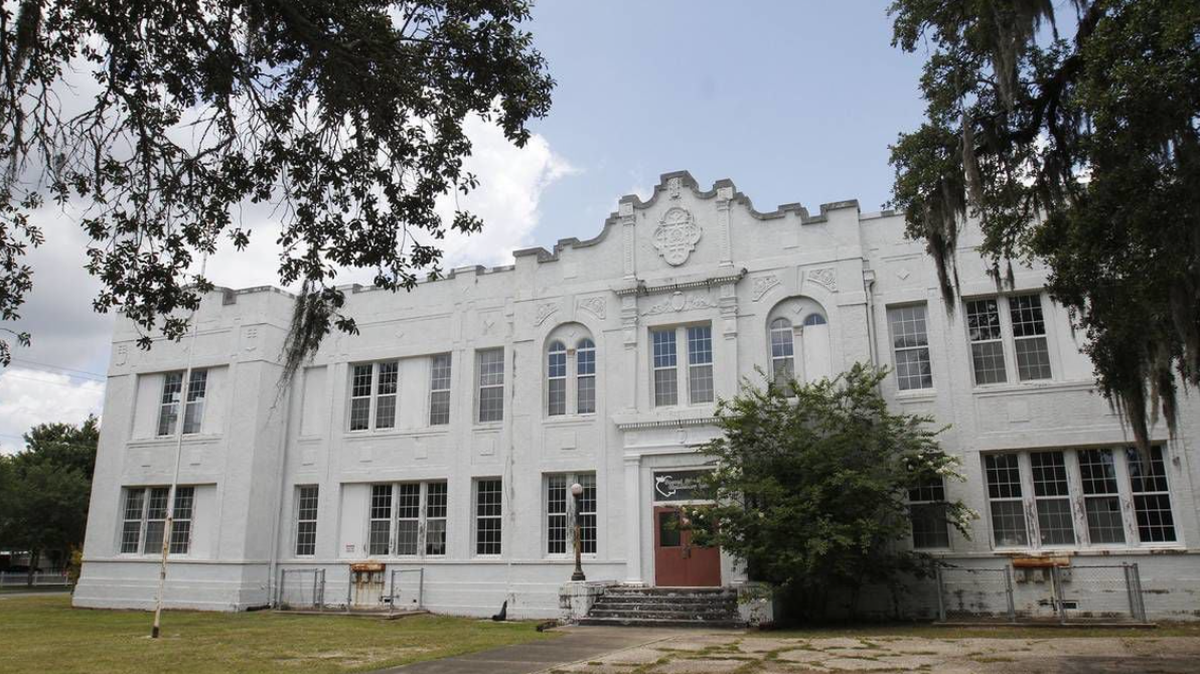
A building that once housed Second Street Elementary School in the heart of downtown Bay St. Louis has been vacant since Hurricane Katrina ravaged the waterfront city. Twenty years later, it could see a rebirth.
The white Spanish Revival-style property is on the market and open to offers until July 17, 2025, according to the listing. Located on North Second Street, it is just a few blocks away from the city’s lively entertainment district packed with restaurants, boutiques, art galleries and antique stores.
At approximately 47,200-square-feet, the property features three structures: a three-story main building, a one-story office building and a one-story cafeteria with a partially constructed kitchen.
Built in 1927 by New Orleans architect William T. Nolan, the former school “represents the modernization of Mississippi’s public education system” during that era, the Mississippi Department of Archives and History said.
The building is one of 14 in Hancock County that is designated a Mississippi Landmark, meaning a permit and approval is required for any proposed alterations.
“The site offers outstanding visibility and accessibility for a variety of future commercial, residential, or mixed-use concepts,” the listing said.
But in a city devoted to historic preservation, discussions over modernizing the century-old building have been approached with opposition from residents in prior years.
In 2018, Jim MacPhaille — a New Orleans developer who owns vacation rentals, PJ’s Coffee, Creole Creamery and a restaurant in Bay St. Louis — withdrew his proposal to convert the former school into a 70-room boutique hotel. Nearby residents had objected his zoning change request, saying the plans for the building were too vague.
“It’s really something for the city to figure out if it wants that property rezoned or fixed so somebody can develop it,” MacPhaille said at the time. “I just don’t want to fight with my neighbors.”
Photos of the building’s interior show exposed roofs and walls within former classrooms, hallways and a large auditorium space. After Katrina, the damage was considered minor and moderate, according to assessment records, with several broken windows and possible water damage.
This story was originally published June 17, 2025 at 5:50 AM.