
What does future hold for historic Black neighborhood in Bay St. Louis? Residents are torn.

A few years ago, David Barback was driving around Bay St. Louis with his wife Lisa, scoping out a neighborhood where they planned to build a second home after retiring from New Orleans.
The Barbacks didn’t have the budget for a property in the city’s increasingly bustling downtown and wanted to live on high ground to avoid flooding, so they found themselves crossing the railroad tracks to explore Backatown, the city’s historically segerated Black neighborhood blocks away from the beach.
On Sycamore Street, curious residents who saw the couple driving around helped connect the Barbacks to the owner of an empty lot for sale that fit all their requirements.
Charmed by how friendly and inviting the community was, Barback bought the property in 2018 for a little over $20,000. He set to work building his house, which he estimates cost him around $160,000 over two years.
In more recent years, the neighborhood has become an increasingly attractive destination for New Orleans transplants, vacation rentals and developers as housing prices have skyrocketed along the beachfront.
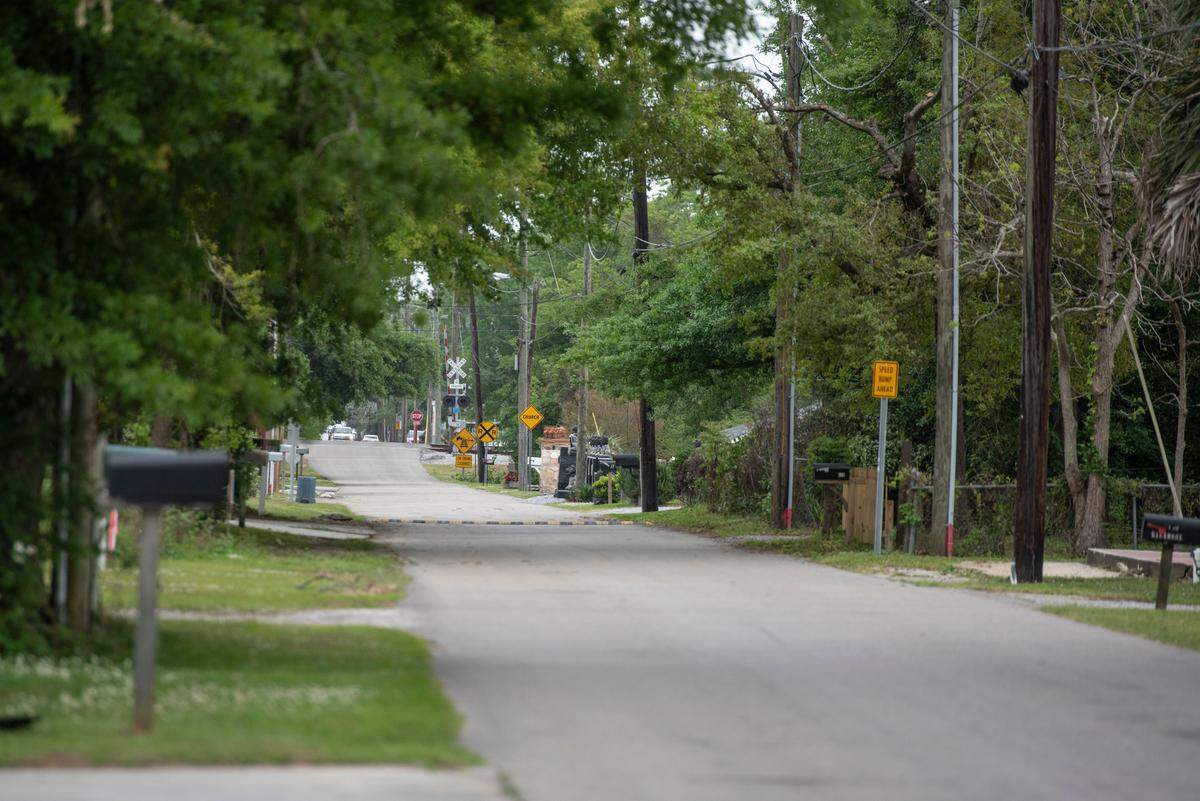
Besides its high elevation — which means lower flood insurance premiums — the neighborhood in Ward 3 will soon begin to benefit from proximity to the city’s Amtrak station, where service from New Orleans is planned to resume later this year, and to the Depot District, a commercial strip the city is revitalizing.
Barback, whose home sits 30 feet above sea level, learned about rich history of both his property and the neighborhood once he moved in.
Neighbors explained that Backatown had once been a vibrant hub of African-American culture on the Coast. On Sycamore Street alone, there were five or six Black-owned barrooms over the years — and his house stood on the former site of one such establishment.
He’s even found material evidence of the property’s history. “Sometimes you’ll dig in the garden and you’ll find, like, an old bottle,” Barback said.
The Barbacks, who are white, attend services at local churches and have become close with their neighbors.
“It is becoming more mixed now and it’s not exclusively African-American. They welcomed us and there is a lot of diversity and it’s really enjoyable. It’s a real model for the principles that we have of wanting inclusion,” Barback said.
As the couple grew increasingly involved with their new community, they began to participate in a central effort of some Backatown residents: what they see as the protection of their neighborhood from the designs of profit-hungry real estate developers.
They have attended public hearings to speak up against some development proposals, and Barback said he is part of a group of residents currently exploring the idea of formalizing “what is now kind of an unofficial neighborhood organization.”
But other community members think the kind of development their neighbors oppose is sorely needed as rents and house prices soar and the area becomes even more desirable.
So what does the future look like for the community in the heart of the booming Third Ward? While some see a rebirth of Black-owned business and new living options, others say they will fight to keep their neighborhood residential.
A leader in historic Bay St. Louis Black neighborhood
The Barbacks both spoke in March at a Bay St. Louis Planning and Zoning Commission hearing, where dozens of residents had gathered to oppose a proposed Sycamore Streret development that would have put eight houses on three lots, as well as the construction of a new road.
The community opposition ultimately proved so strident that the developer, Rodney Corr, dropped his plans before the City Council could approve or deny his rezoning petition.
One of the central figures at the hearing was 68-year-old Paula Fairconnetue. Barback describes Fairconnetue as “the voice, the conscience of our neighborhood.”
Fairconnetue is a retired city government official whose efforts have made her something of a thorn in the side of local developers. In the eyes of many of her neighbors, she is a fearsome community leader.
“She should be in Congress or something. I mean, she is that good,” Barback said.
A few days before the zoning commission hearing, Fairconnetue and her neighbor Andrea Dedeaux, who lives up the block, were studying a pile of maps of the neighborhood they had spread across the kitchen table and marked up to illustrate the boundaries of the proposed development.
Both Fairconnetue and Dedeaux grew up before desegregation, and recalled the Backatown of their youth with a touch of nostalgia as a community bustling with commercial life — restaurants, bars, and stores.
Dedeaux, 78, grew up in Waveland, but attended the Valena C. Jones School, on the current site of the Boys and Girls Club on Old Spanish Trail. Using the map on the dining table, she pointed out the locations of barrooms on the 400 block of Sycamore Street (where we were seated) in the 1950s: the Big Five, the Onion and the Krack.
On the same block there was also a hangout spot called “The Teenage,” reserved exclusively for those under 18. “We went there on Friday and Saturday nights,” she said, for dancing, music, hot dogs and soft drinks.
“We didn’t have games and things like that. You just went and listened to the music, ate and danced,” Dedeaux said.
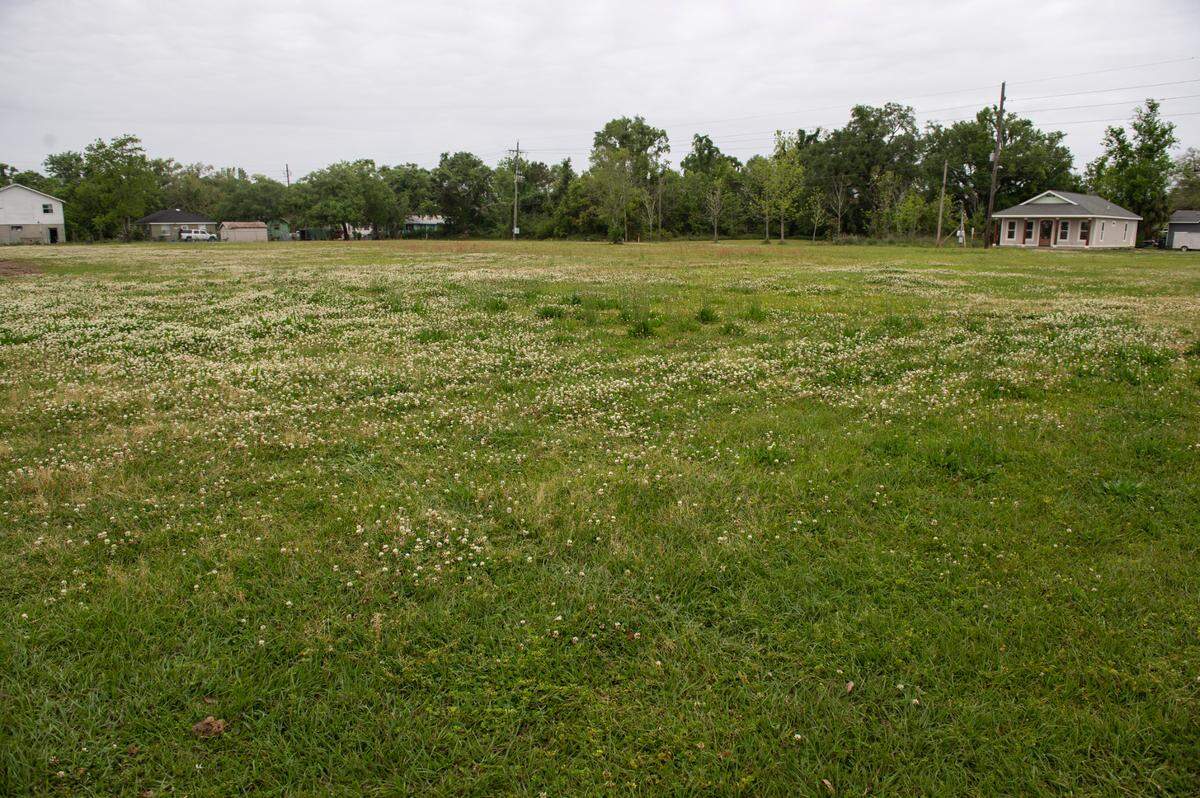
But for all the warmth with which Dedeaux remembers these establishments, and their importance for the social life of Bay St. Louis’ Black community, their concentration on a single block was a product of necessity rather than choice.
If Dedeaux and her friends wanted to visit hamburger shops or ice cream parlors downtown, they had to enter through a back door and were made to feel unwelcome, she said.
“The only library we had access to was there at the school. The town library was for the white folks,” said Dedeaux.
When the local newspaper informed Bay St. Louis students they would be getting new textbooks, “I remember we were so happy,” Dedeaux said.
But when the textbooks arrived at Valena C. Jones, they had the names of students at Bay High written in them. The white students had received the new textbooks and even new biology labs, and students in Backatown got their old ones. “Well, we got their old equipment, the tables with the faucets and a couple of Bunsen burners, and nothing was ever hooked up. We learned all that we could learn out of the old biology books,” Dedeaux said.
Fairconnetue is a decade younger than Dedeaux, but she still has lived memory of segregation. She moved to Backatown when she was 12 and initially lived in the Black-only public housing projects on Sycamore and St. Francis Streets, destroyed in Hurricane Katrina. Despite the passage of the Civil Rights Act in 1964, the schools in Bay St. Louis weren’t integrated until six years later, when Fairconnetue was a sophomore at Valena C. Jones.
At this point, she transferred to Bay High, where “you were thrown together with white people,” and had her first encounters with open prejudice. She asked a girl in her P.E. class why she always avoided her and her classmate responded, “My mama told me that y’all carry knives and that y’all steal.”
After working as a sales rep at the Sea Coast Echo and in marketing at Casino Magic, Fairconnetue was hired as clerk of the Bay St. Louis City Council in the 1990s. This was the beginning of her career in city government, which included stints in community development and in the office of former mayor Les Fillingame.
Black businesses shutter in Mississippi city
In the 1960s, when Bay St. Louis adopted its first zoning ordinances, Fairconnetue explained, the bars on Sycamore Street — a residential zone — were in violation of the new regulations.
But the city grandfathered in the bars, allowing them to continue serving with the stipulation that, were they to cease operations, they couldn’t reopen. And because a bar had to have its doors shuttered for a full twelve months to legally count as closed, Dedeaux said, the Onion resisted closure for years by only opening one day a year, on Mardi Gras.
Eventually, all the bars disappeared. The last holdout was the Krack, which stayed open until the building was destroyed by Hurricane Katrina.
“It looked like it was put together with Scotch tape,” said Dedeaux.
While the neighborhood, like much of the Coast, endured severe damage in the storm, Backatown was “just about the only place in Bay St. Louis that did not flood,” said Dedeaux.
And that proved consequential for the neighborhood.
“We have had a lot of white people coming into the community, buying property, we have a lot of white neighbors in this community. They’re moving in because we didn’t flood,” said Fairconnetue.
And with the new neighbors came an uptick in the price of land. Dedeaux could have bought an empty lot adjoining her house for $1,000 in 1992, but didn’t because her husband “didn’t want to cut all that yard.”
The prices had already begun to climb shortly before Katrina, when the same lot sold for $8,000. And about five years ago, Dedeaux said, another empty lot across the street from her house sold for $18,000.
But the new interest in Backatown has not been accompanied by a return of the neighborhood’s once thriving businesses — and some blame residents like Fairconnetue and Dedeaux for keeping them out.
City leaders, others want new business in Backatown
Backatown sits in the center of Bay St. Louis’ majority-minority Third Ward, represented in City Council by Jeffrey Reed, a bishop at the non-denominational Powerhouse of Deliverance church.
Reed was a supporter of the proposed housing development rejected at last month’s zoning meeting, he told the Sun Herald, because he has a vision for the future of his ward, which includes rezoning some of Backatown for commercial development and apartments.
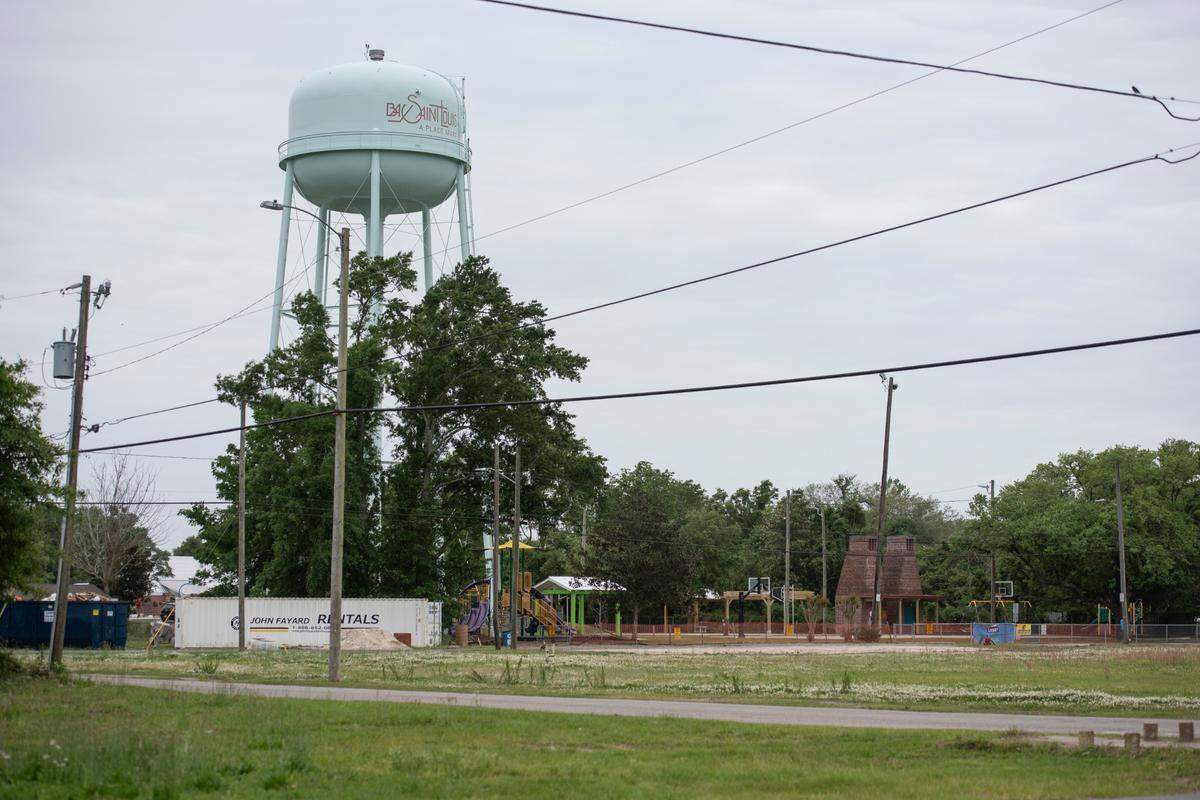
On a sunny March day at Martin Luther King Jr. Park — where Reed is overseeing a major renovation — he pointed across the street to the site of the former projects where he (and Fairconnetue) lived as a child, and said there used to be a mom-and-pop grocery store on the next corner, as well as a multitude of small businesses.
“Many times, my mom and dad sent me right across the street to get what we needed to eat, what they needed to cook with. If not here, a block up, there was another grocery store,” he said. “There was a clothing store. There were barbers, a seamstress, midwives, carpenters, bricklayers, stucco finishers. There were fishermen, there were bakeries, there were dentists, there were gas stations.”
Reed says the neighborhood “needs to come back to somewhat what it used to be, but just modernized.”
He argues that the all-residential zoning stands in the way of helping the neighborhood thrive, noting that the city’s other wards have much more commercial activity.
Reed said he thinks businesses haven’t come back “because you have a certain group of residents, citizens in the third ward, that all they want to see is R1, and they don’t understand that you need a mixture.”
One developer whose construction plans have repeatedly been thwarted is Charles Vincent, 61, who also grew up in the demolished projects on Sycamore and was later Reed’s roommate at Pearl River Community College.
Vincent says he had secured funding after Hurricane Katrina from the Mississippi Development Authority to build a duplex on Bookter Street, but the property was rezoned to R1 before he could finish the project.
“I lost $78,000 on the Bookter building, because I was in the process of doing it when they changed the zoning in the middle,” and the MDA funding was provided per unit, Vincent said.
Fairconnetue doesn’t see herself as against development, but she is anti-overcrowding. She is joined in this opinion by many of her neighbors, including Barback, who said he welcomes the construction of single-family dwellings and even duplexes “within the limits of sensibility with regard to overdevelopment.”
Fairconnetue and others have also warned that overdevelopment could strain the area’s sewers and drainage infrastructure, which are crucial during storm season, as well as increase traffic.
Gentrification in Bay St. Louis
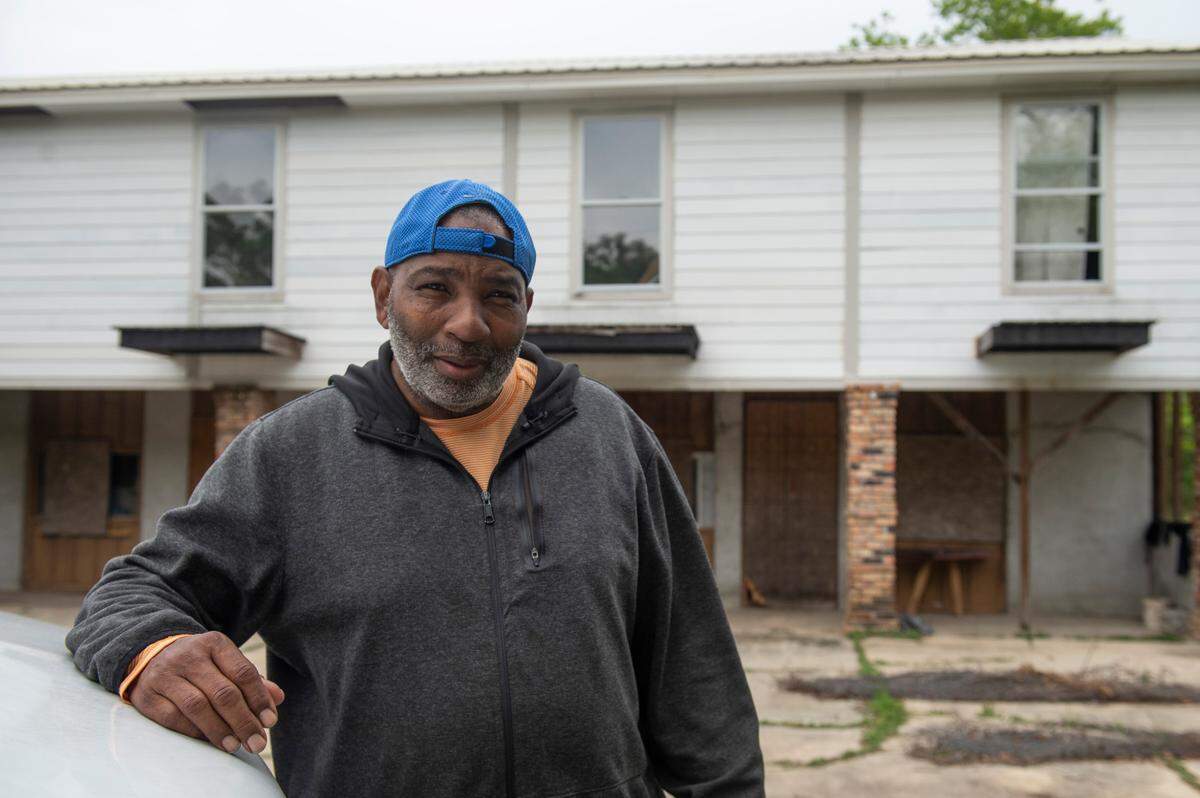
As more people moved into Bay St. Louis, Reed said, “everybody’s taxes went up”—and some residents are getting priced out of Backatown.
Tanisa Washington, a cashier at Lucky’s Food Market and Backatown’s only operating business, is experiencing the flip side of the rush of money into Bay St. Louis.
Washington grew up in Backatown, where her mother has lived in the same house for 57 years. But now, as a 42-year-old single mother of three children aged 3, 17 and 22, she makes $7.35 an hour at Lucky’s and her rent has jumped to $850 a month. “You gotta have two or three jobs to make ends meet around here.”
“By the time you pay the light bill and the water bill you can’t eat,” she said.
While there is some low-income housing nearby, the wait lists are long and the red tape involved is daunting, said Washington.
“People get tired of applying and applying and getting rejected.”
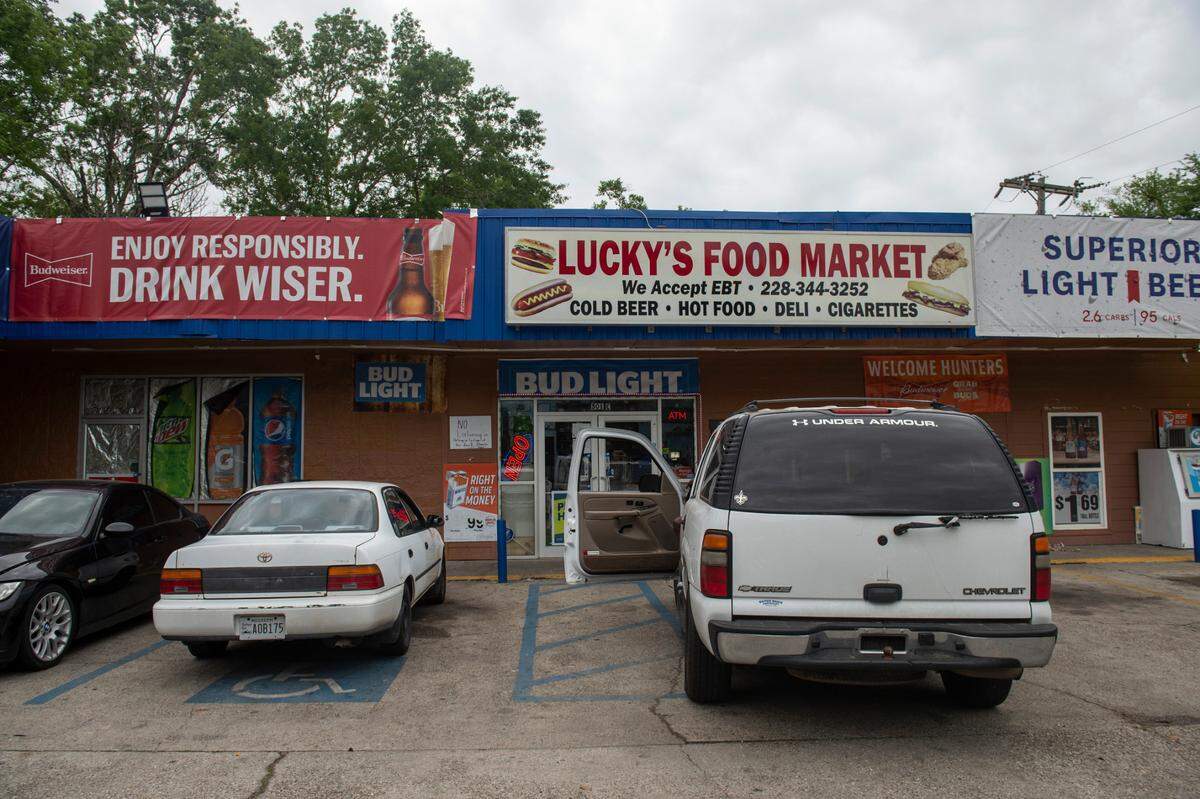
She called for new housing and commercial establishments to be built in Backatown, saying there is plenty of development near the beach.
“They’re not putting anything in this area,” she said.
And in Washington’s eyes, the reasons are squarely connected to the politics of race. Gesturing across the railroad tracks toward downtown, she said, “When we go that way, it’s a different atmosphere—you get treated a different kind of way.”
The shadow of segregation in Bay St. Louis
Conversations about development and gentrification in Backatown can be emotional and raw. Perennially underlying the debate — like so much else in American urban politics — is the fraught legacy of segregation, and its scars as felt differently on all sides.
Vincent has never even tried to build near Old Town, which is less than two blocks from Backatown. It would be venture he regards as doomed to fail.
“If a Black man wants to open up a business, I ain’t going to go over the railroad track,” he said. “For one, the numbers is higher. And it normally creates a problem when you try and interchange the two cultures. You got one way of doing things and they got one way of doing things.”
Vincent sees himself as someone who escaped his circumstances: “My motto was, I had nothing when I got started. The worst thing that could happen is I have nothing when I finish. My mom was a factory worker and then she was a janitor.”
And he believes development projects would directly help the people in ward where he grew up.

In the 1990s, while Fairconnetue was the City Council clerk, the Planning and Zoning Commission held a hearing much like the one that drew a crowd last month, only for a different property on Sycamore Street. The meeting was held to discuss a plan to reopen the Onion, one of the historic bars that had been closed for years.
Dedeaux attended the meeting.
“Several of us spoke and said that we no longer have to contain our businesses, our homes, and everything in the same area,” she said. “So if the Onion wanted to open, they could open someplace else.”
“It was fun for us back then,” said Fairconnetue of the crowded, lively Backatown of her youth.
And while Dedeaux acknowledged the role the old barrooms played in anchoring and supporting the city’s Black community, she said, “as segregation went away, it became less necessary, and you had both black and white people going to the same places according to what they like.”
Where Reed sees commercial redevelopment in Backatown as a chance for the area to catch up to the rest of Bay St. Louis’ wards, perhaps some of his opponents view the idea of concentrating Black-owned businesses in a dense, walkable quarter not as an urban privilege but rather a reminder that, not so long ago, they weren’t welcome anywhere else.
This story was originally published May 17, 2022 at 9:00 AM.