Record-breaking heat spreads across US, experts say. How hot could MS Coast get?
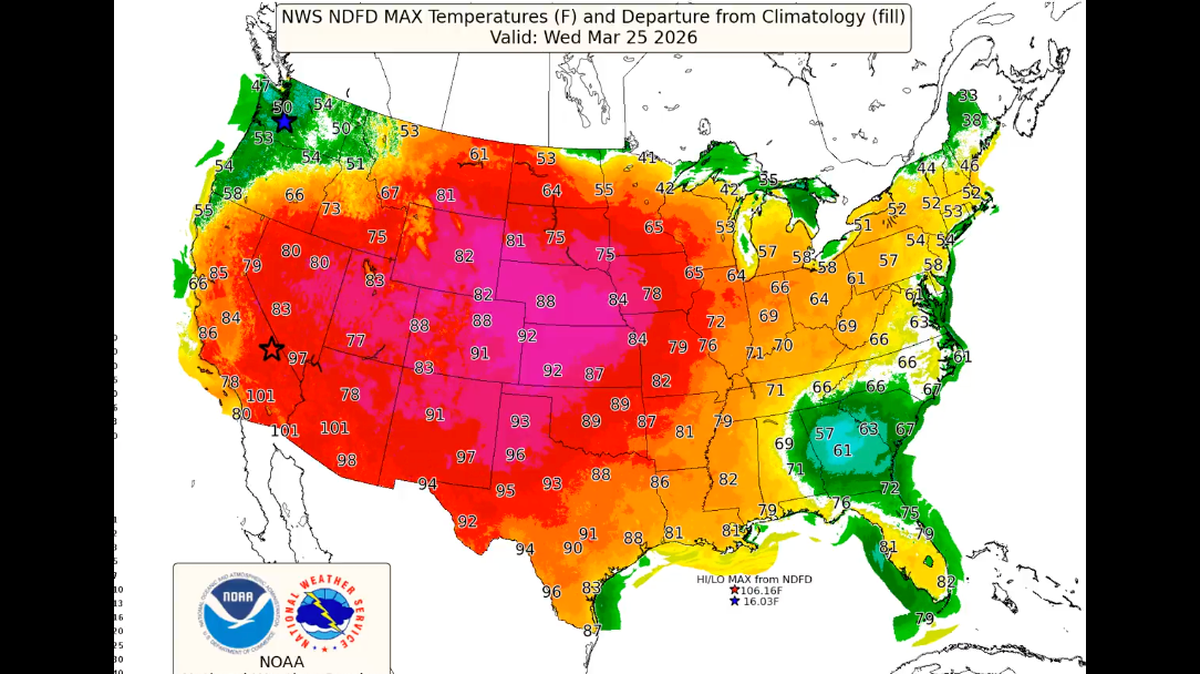
Spring is here, bringing the long-anticipated balmy weather to back Mississippi — but a new forecast reveals residents will soon get much warmer temperatures than expected for the season as a wave of record-breaking heat expands across the United States.
Much of the western part of the country is currently experiencing unseasonable and dangerous highs, with some places in California breaking March records, National Oceanic and Atmospheric Administration experts said.
“Over 200 new record high temperatures are forecast this week,” the NOAA National Weather Service said in a March 23 post on X, formerly known as Twitter.
So, will the heat spread to the Mississippi Coast? And how hot could it get? Here’s what to know.
What’s causing the heat?
According to NOAA experts, a “heat dome” is driving the record-breaking temperatures. The agency’s satellite found areas of high pressure in the Northern Hemisphere, with sinking air compressing and warming it as it descends to Earth’s surface, according to a March 18 forecast.
“When an area of persistent high pressure occurs over a location, it can trap heat close to the ground for a prolonged period — causing a ‘heat dome,’” experts said in the forecast.
According to Climate Check, a data analytics company for real estate, “heat domes” can last for multiple days or weeks.
This type of extreme warmth can increase the risk of other disasters, worsen drought conditions and increase wildfire risk, experts said.
How warm could MS Coast get this spring?
Mississippians have likely already noticed the warm up, but in the coming days, the region could reach temperatures about 70 to 80% higher than average for the season, the NWS New Orleans said in a March 22 post on X.
How to stay safe during a heat wave
Here are some tips for protecting yourself and loved ones during a heat wave, according to the NWS:
- Drink plenty of water and beverages with electrolytes. Try to avoid alcohol
- Apply sunscreen (SPF 30 or higher) every two hours
- Wear lightweight, loose-fitting and light-colored clothing
- Take regular breaks in the shade