Is the pollen season worse on the MS Coast this year? Here’s what we found
If it feels like everyone around you has been sneezing and sniffling lately, there’s a good reason: pollen season has arrived in Mississippi.
Each spring, parts of the South are covered in a fine blanket of powdery yellow pollen released by certain plants and trees as part of their reproductive process, according to the National Institute of Environmental Health.
While pollen is necessary for plants and trees, it can also trigger pesky seasonal allergies for many people.
Here’s what to know about pollen levels on the Mississippi Coast this year and how to prevent and manage seasonal allergies.
When are pollen levels the highest in MS?
Mississippi is one of the worst states in the country for people with seasonal allergies, and Jackson — the state capital — often claims the top spot out of the five worst cities to live in with allergies, according to Wyndly, a telemedicine company focused on allergy symptoms.
The state’s warmer climate makes for a longer allergy season, running from February through November, but pollen counts are typically at their highest in April, May, June and September, Wyndly experts said.
“During these months, try limiting your time outdoors or going out in the evening when pollen counts tend to be lower in Mississippi,” experts said.
Which plants on the MS Coast produce the most pollen?
These are the trees and plants that produce the most pollen by season, according to Wyndly:
- Spring: oak, cedar, willow, ash, hickory and mulberry trees
- Summer: ryegrass and Bermuda, corn and bent grasses
- Fall: ragweed, march elder and amaranth
What’s the pollen count? Is it getting worse?
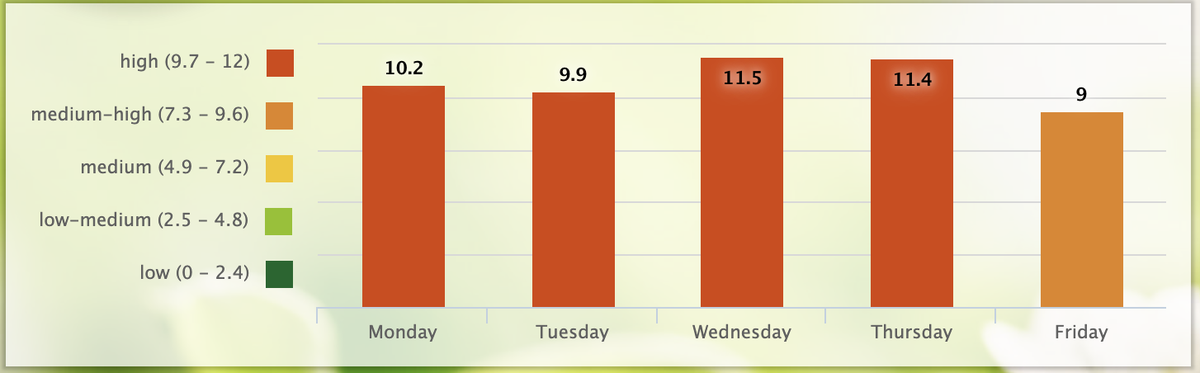
The pollen forecast in Gulfport shows a high to medium-high pollen count for the week of March 9, with numbers peaking March 11 and 12 at 11.5 and 11.4, respectively, according to national allergy forecast pollen.com.
The national pollen count has gotten longer and more intense annually, according to the United States Department of Health and Human Services.
“Our changing climate has caused shifts in precipitation patterns, more frost-free days, warmer seasonal air temperatures and more carbon dioxide in the atmosphere,” HHS experts said. “These changes may lead to both higher pollen concentrations and earlier and longer pollen seasons.”
How does pollen impact health?
Pollen can trigger allergic reactions due to its nature as an airborne allergen, according to HHS.
The following symptoms are triggered by pollen and “have been linked to negative impacts on sleep, daily activities, productivity, concentration and quality of life,” experts said:
- Sneezing, runny nose and congestion
- Red, watery or itchy eyes
- Asthma or other respiratory exacerbation
What are the symptoms of a pollen allergy?
These are some common allergy symptoms Mississippians should look out for, according to Wyndly:
- Runny nose
- Coughing
- Congestion
- Sneezing
- Headaches
- Scratchy throat
- Itchy eyes
- Watery eyes
- Hives
- Aggravated asthma symptoms
How to prevent and manage seasonal allergies
The best way to manage seasonal allergies is by minimizing your exposure to allergens. Here are some tips to do so, according to Wyndly:
- Watch the pollen count and stay inside if it’s going to be high
- Keep your home clean to reduce pollen in your space
- Trim trees, cut grass and pull weeds
- Keep your windows closed
- Take showers and wash your clothing after going outside