South MS will be home for state’s only primate sanctuary. Here’s an inside look
The property in Perkinston could be just like any other in South Mississippi — a semi-rural, one-story house on several acres of land with a wide front porch, trucks parked on the long driveway, dogs playing in the large, rolling yard, and geese enjoying a spacious pond — except for one thing: the screeching sound of monkeys in the background.
The scenic property serves not only as the family home for military veteran April Stewart and her husband, Stone County Sheriff Todd Stewart, but will also one day be home to up to 50 primates living at a new primate sanctuary, Gulf Coast Primate Sanctuary, founded by April.
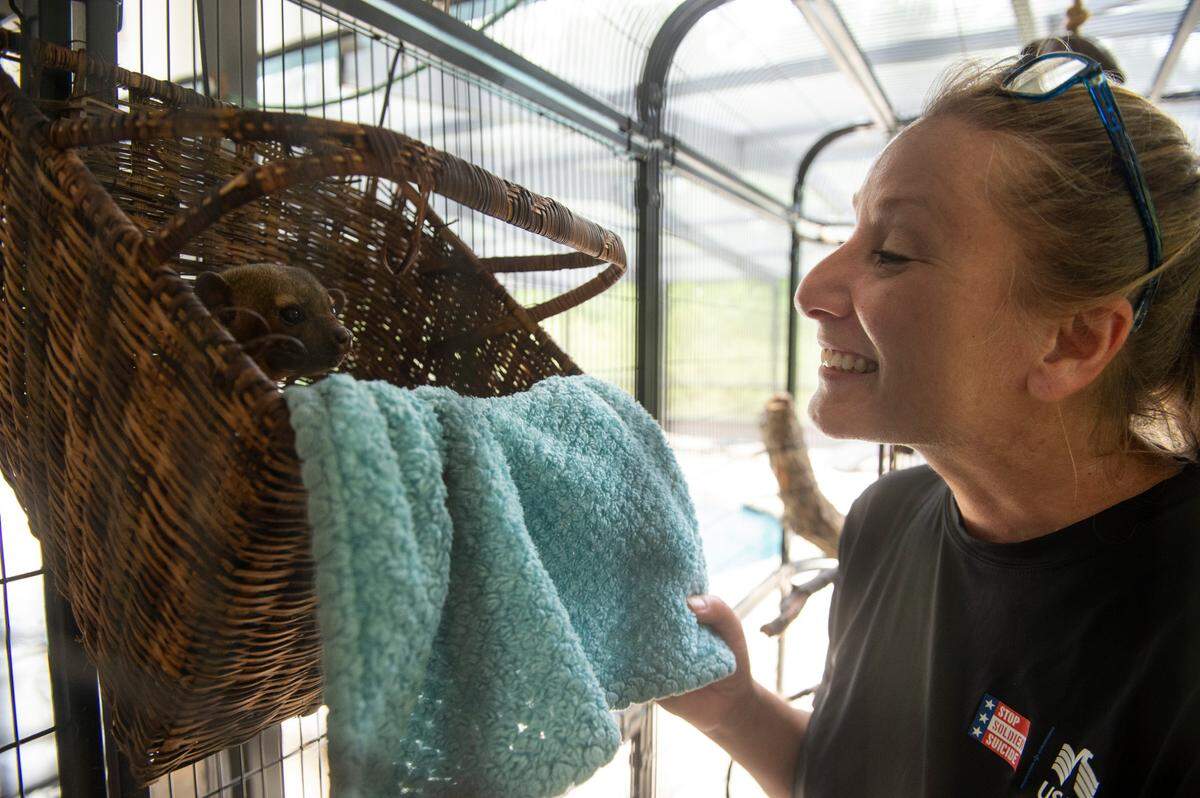
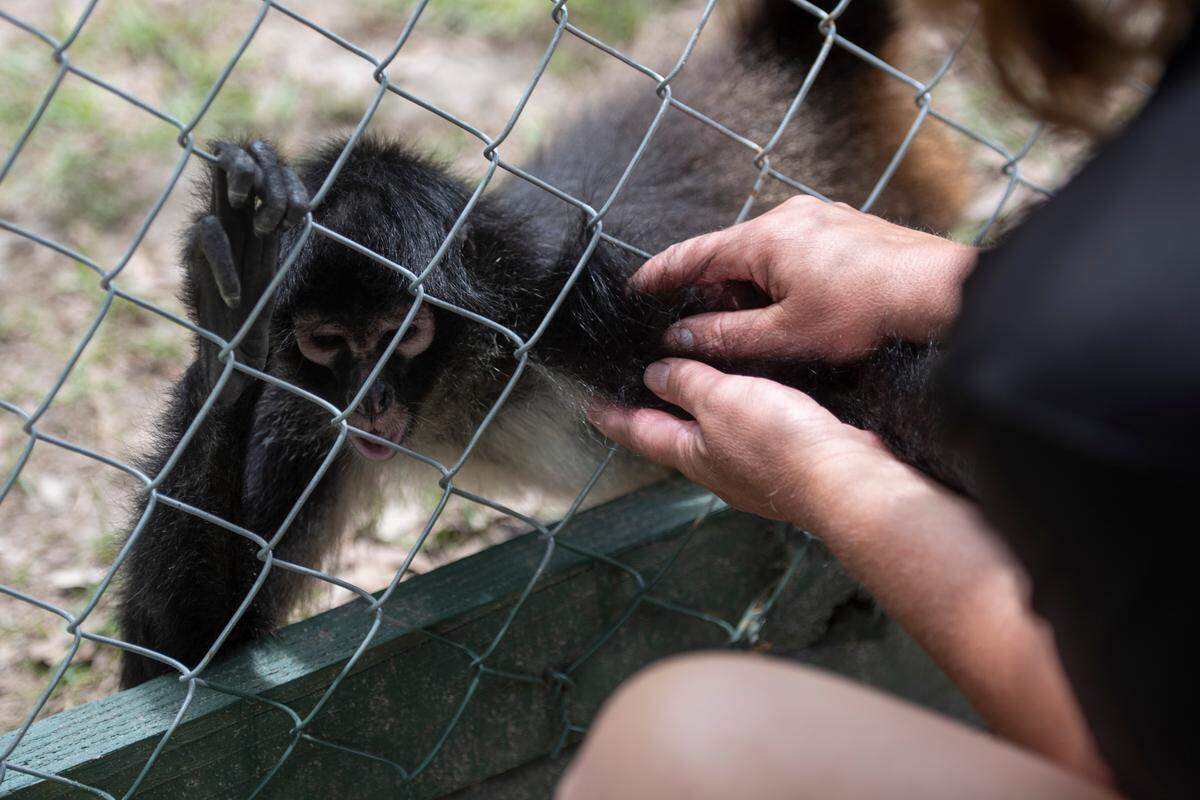
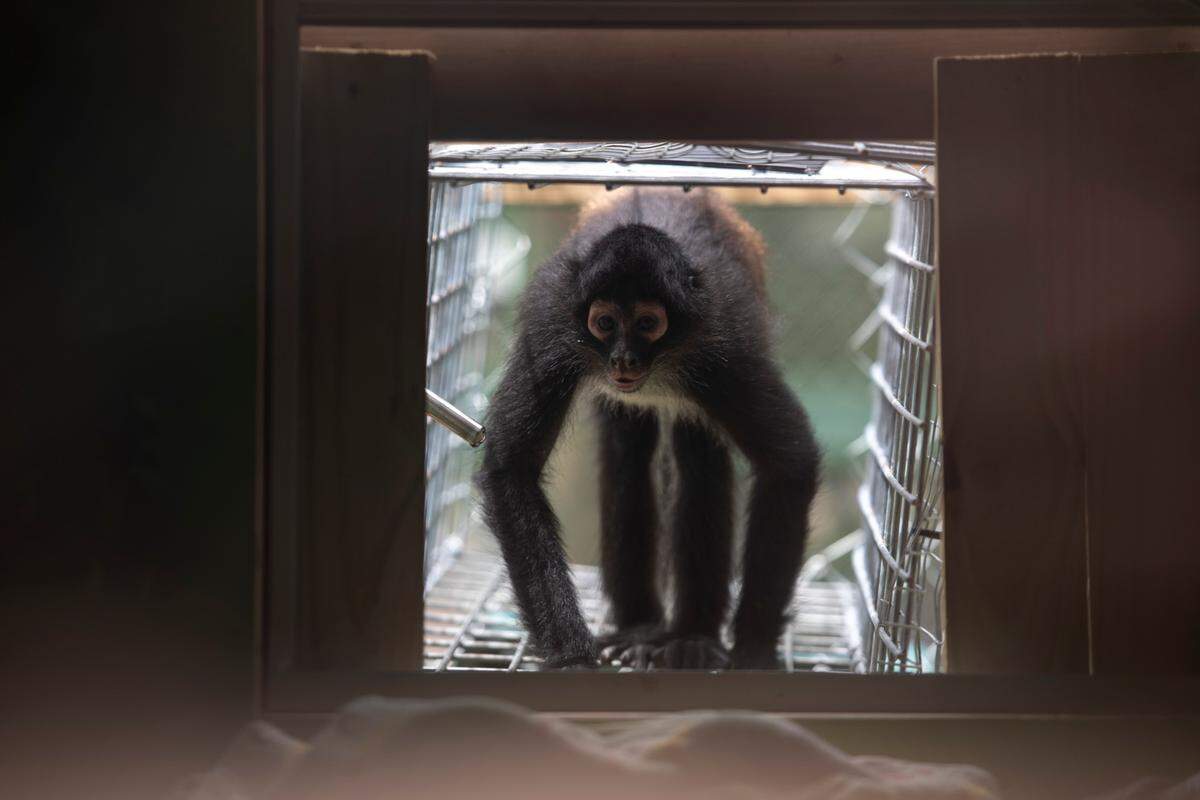
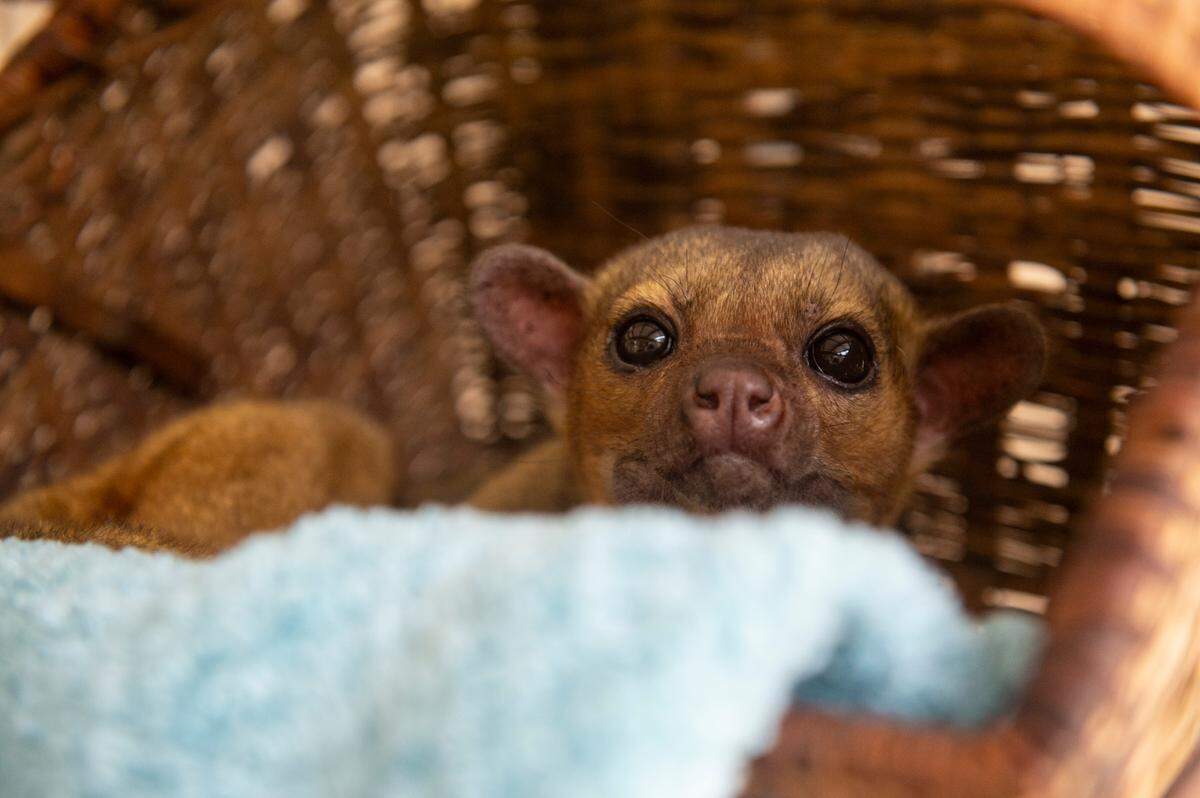
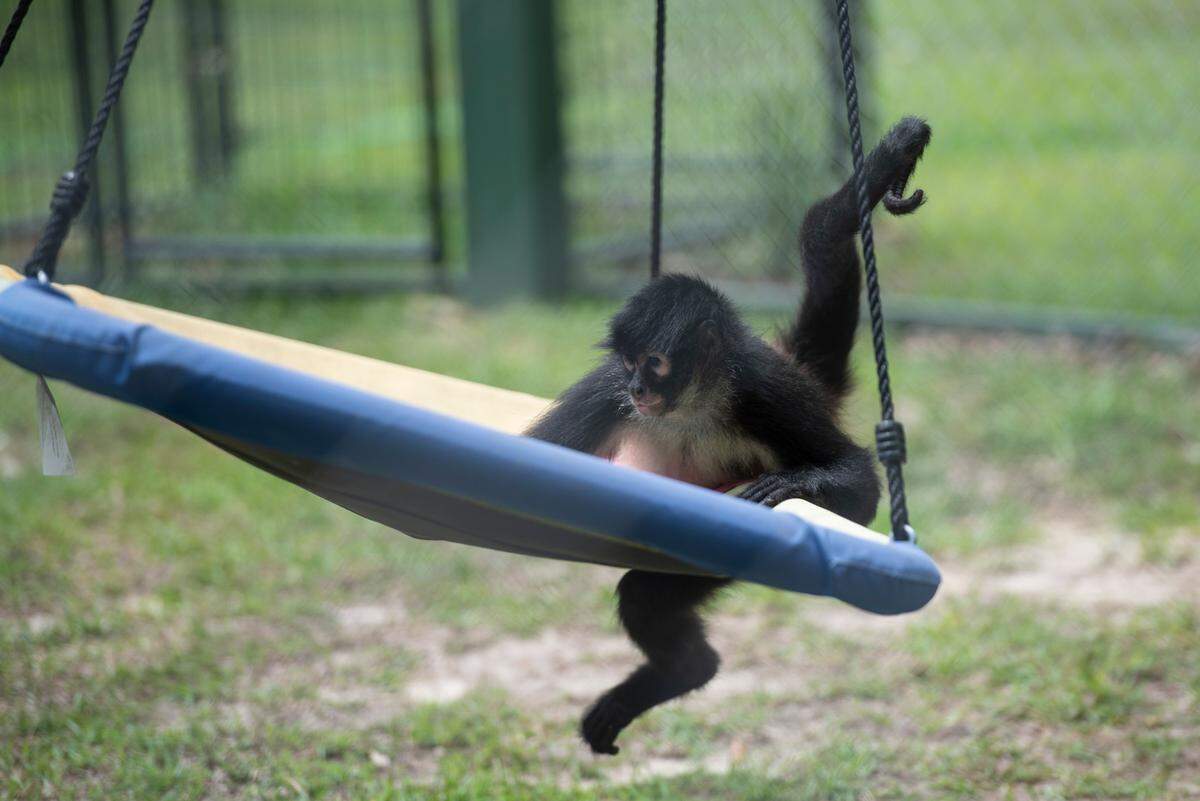
The sanctuary’s first residents are Louie, a 19-month-old spider monkey, and kinkajous Balou and Diego. Kinkajous are a nocturnal tree-dwelling species more closely related to raccoons than primates. Another spider monkey, Bella, is occasionally cared for at the property but is a pet owned by someone Stewart knows.
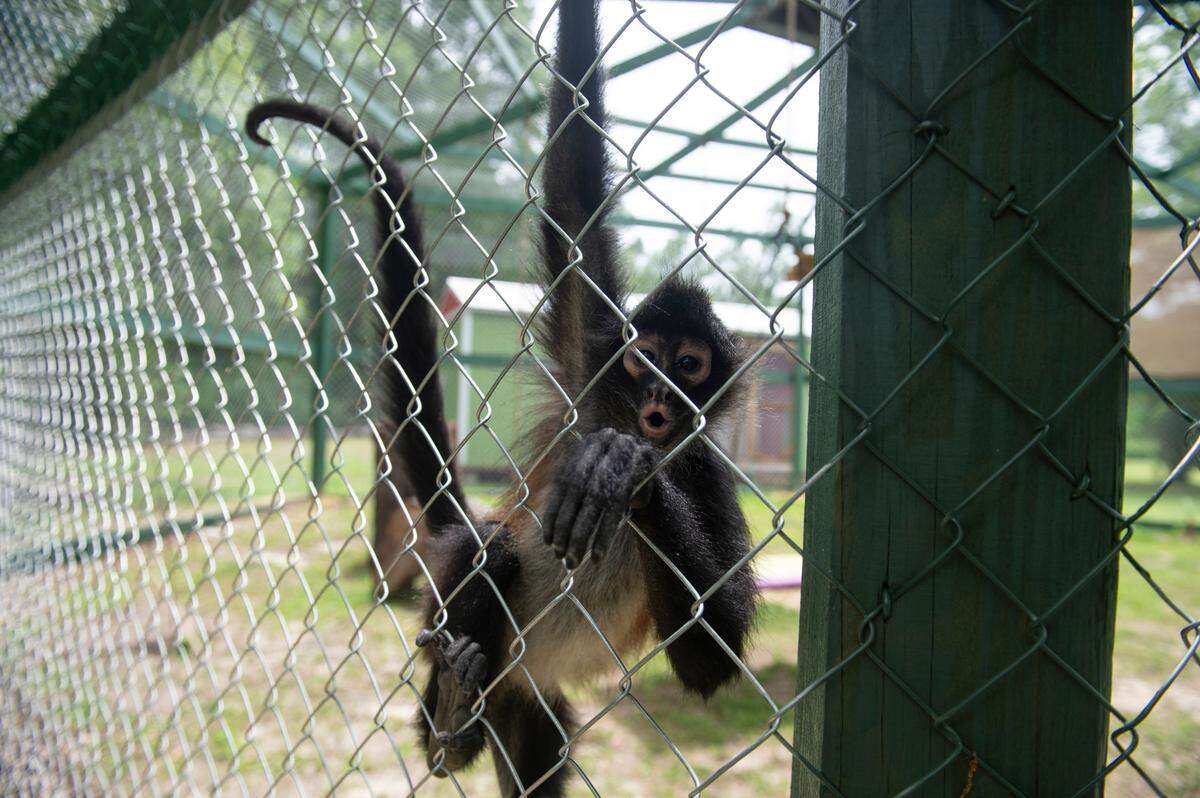
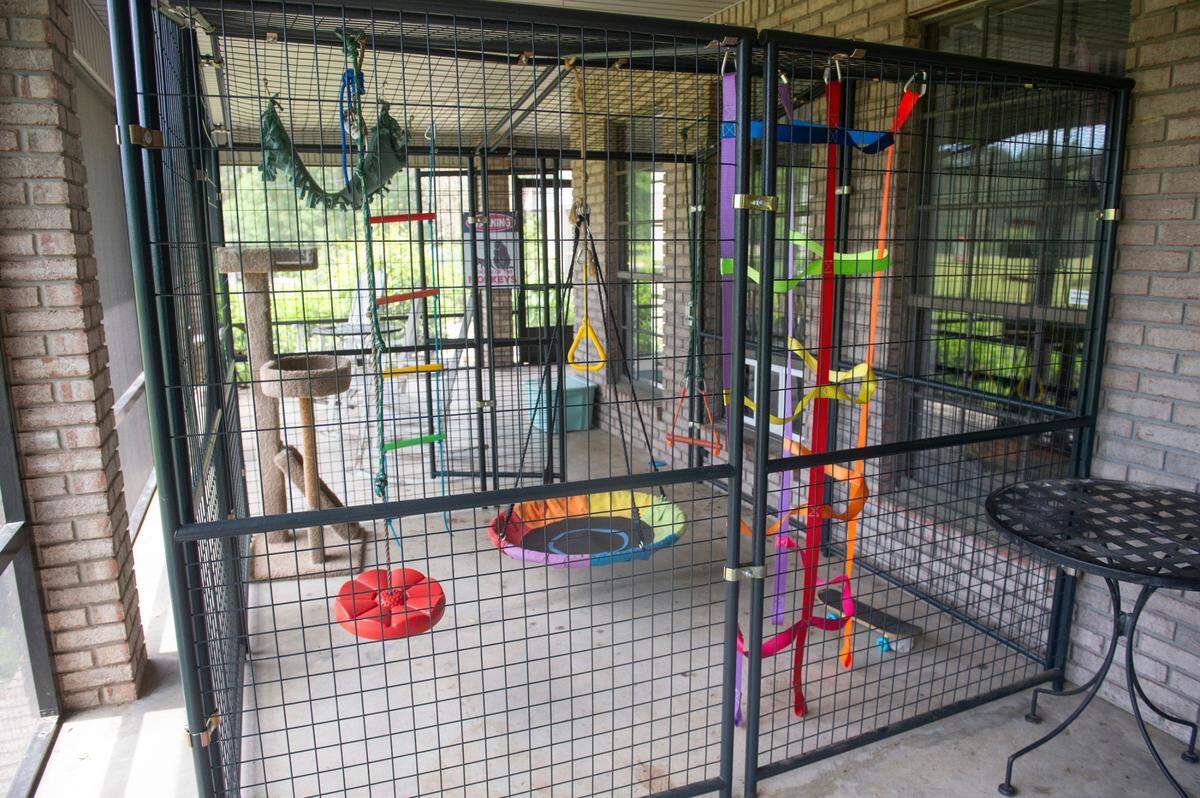
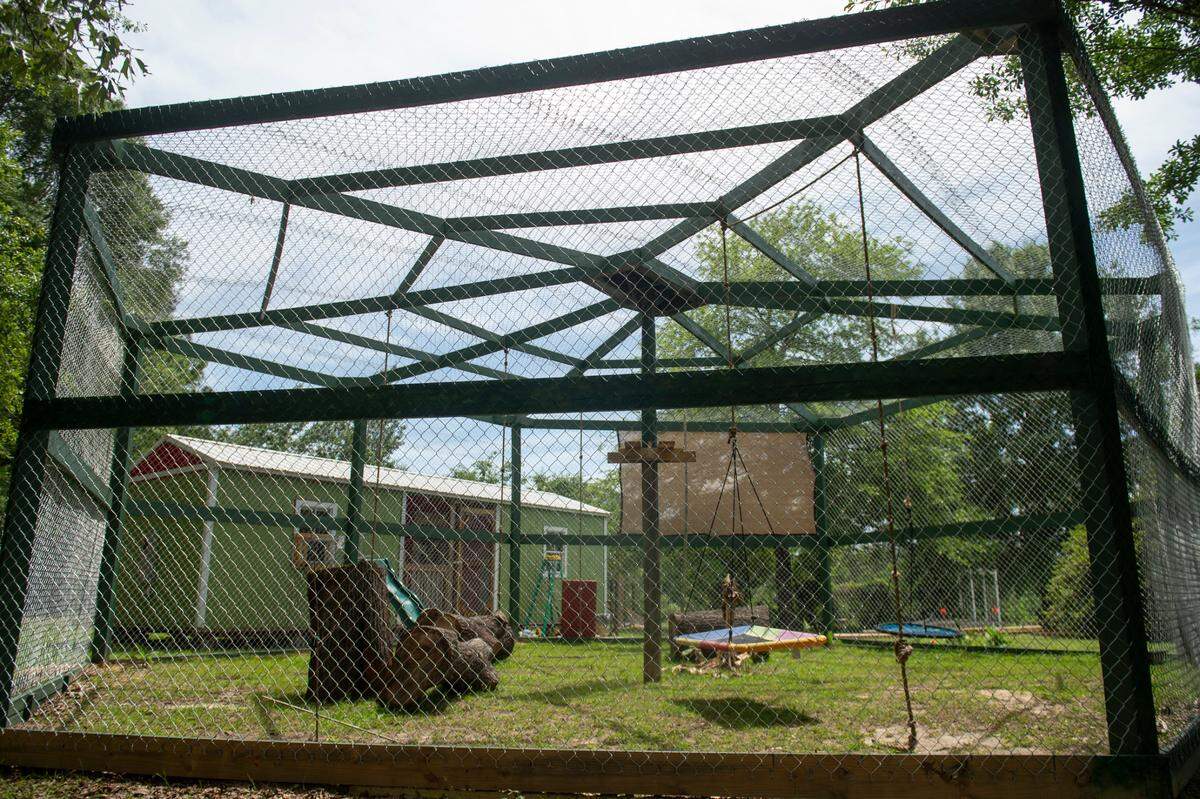
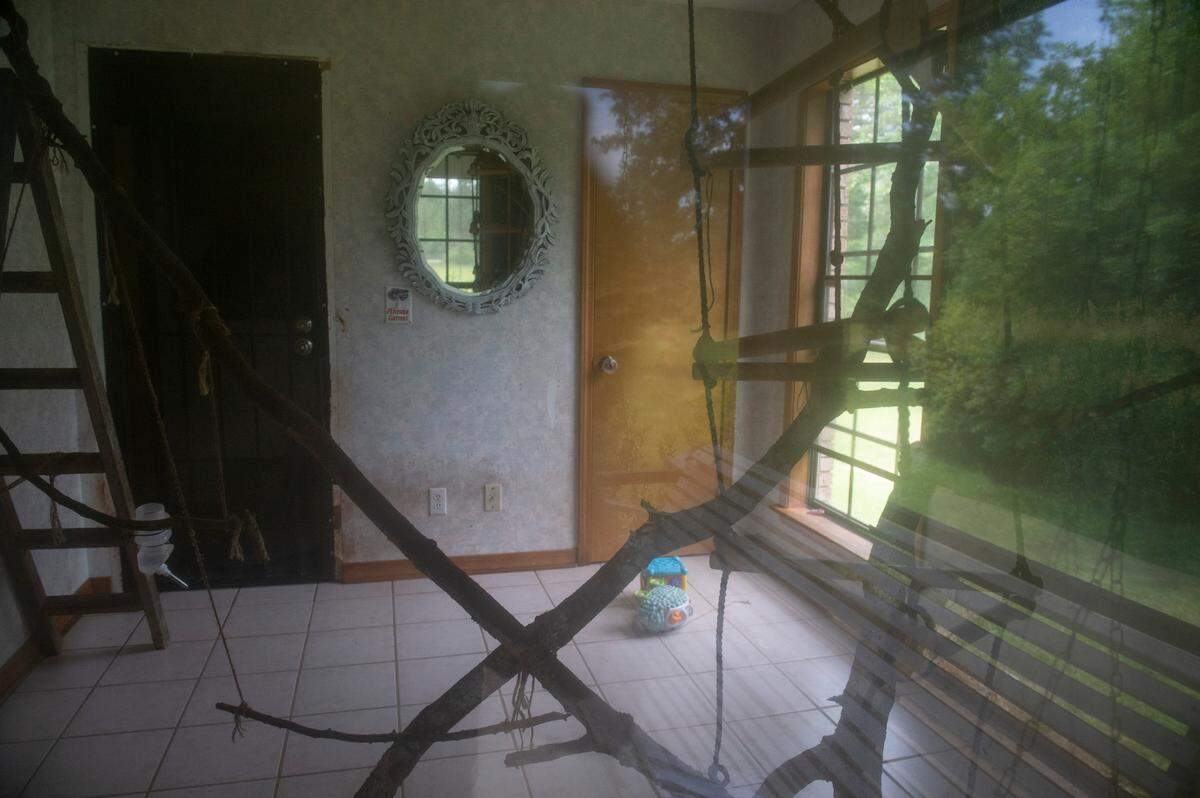
Adjacent to the family’s house is the sanctuary’s first enclosure — a two-story, hexagonal-shaped structure covered in fencing and filled with logs, swings and slides that will be home to spider monkeys, including Louie. The enclosure, which the Stewarts built in October 2024, also has an attached building where the monkeys can be indoors. The enclosure will be getting an expansion so that she can keep spider monkeys separated if need be.
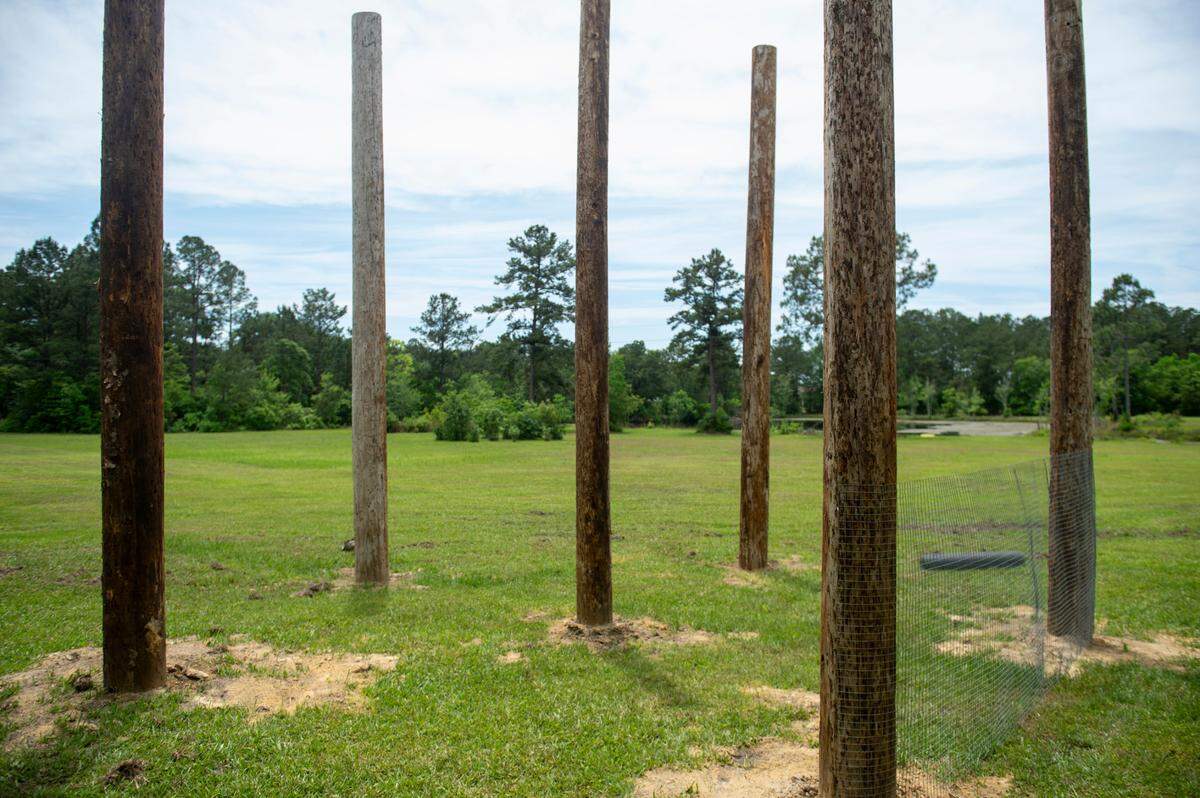
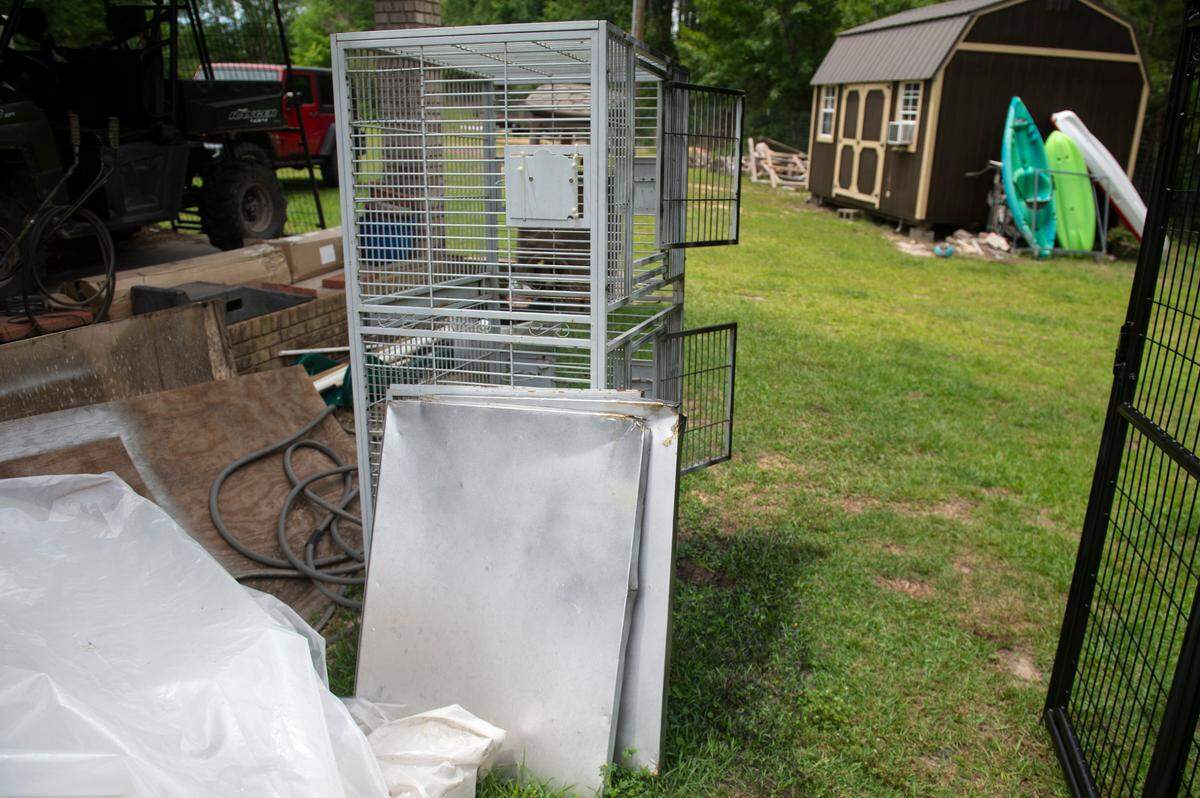
Eventually the property will feature several different enclosures for different types of primates, April Stewart says. An enclosure for the kinkajous is almost finished, according to Stewart, and she recently broke ground on an enclosure for two squirrel monkeys she’s in the process of taking in from an Alabama woman who could no longer care for them as pets.
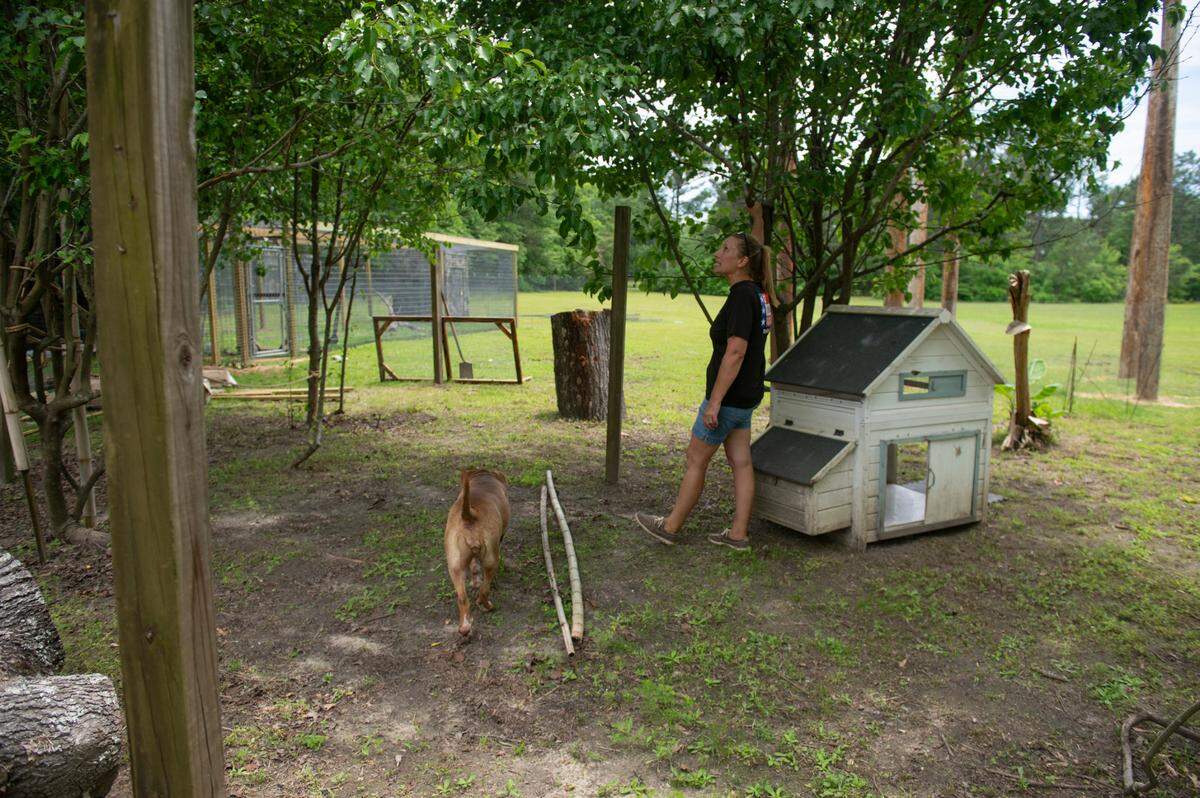
Stewart says she and her husband saw a need for a South Mississippi primate shelter due to the rise in baby monkeys on the exotic pet market. According to Stewart, there are a lot of primate owners in Mississippi, especially on the Coast. She wants to provide a lifelong option for people who need to rehome their primates, as well as a place to take in retired lab animals, retired circus animals and animals seized in court orders.
“Our goal is to provide the monkeys food, shelter, somewhere warm to sleep, and others of its own kind,” Stewart said. “Once those monkeys’ basic needs are met, they can enjoy just being a monkey, and it’s really about refocusing their life on what they need so they can just be happy with who they are.”
Why a primate sanctuary?
According to April Stewart, the plans for the primate sanctuary came at a dark time in her life. After serving with security forces in the Air Force, she worked as a radiographer for Memorial Hospital until PTSD forced her to retire early.
“PTSD basically destroyed my life,” Stewart said.
After leaving Memorial, she says she struggled to move forward in life. She says she isolated from people and felt lost without having a career to be defined by.
“I was trying to figure out who I was,” she said. “Throughout my whole lifetime, animals have always been there.”
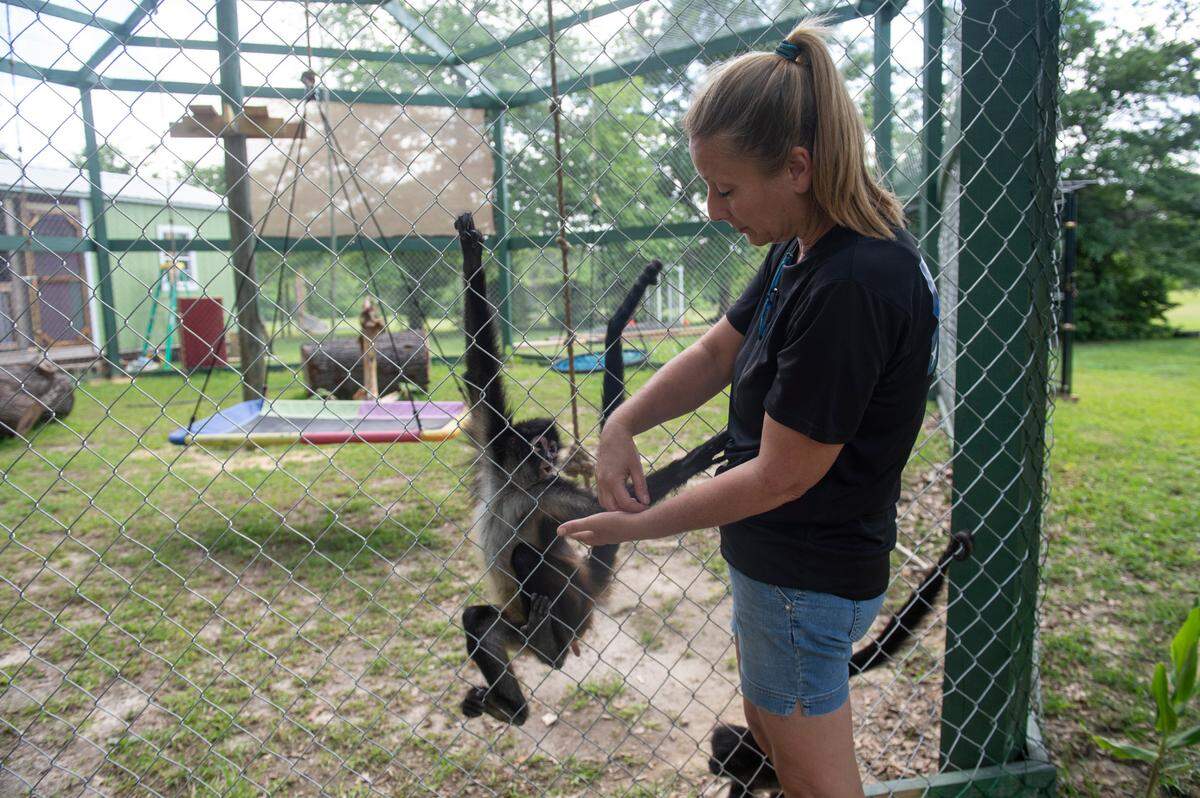
Although Stewart has no professional experience working with primates, she and her husband Todd have rescued several animals, including a capuchin named Lucy. According to April, they purchased Lucy from a U.S. Department of Agriculture certified facility that was shutting down after hearing that Lucy could be sold to a breeder. After having Lucy for a few months, they realized Lucy needed to be around other capuchins and donated her to Wild Acres, a private zoo in McHenry.
In late 2023, April adopted Louie, a spider monkey, from someone who was rehoming him. April says when a USDA inspector was vetting Louie for April’s individual USDA certification, the inspector recommended setting up a primate sanctuary. Stewart then applied for and received a USDA exhibitor license for up to 50 primates.
Stewart says she hopes the sanctuary will give people like her who are experiencing PTSD a place to heal and relax as well as provide a safe place for primates who have also experienced trauma to live in a more natural environment.
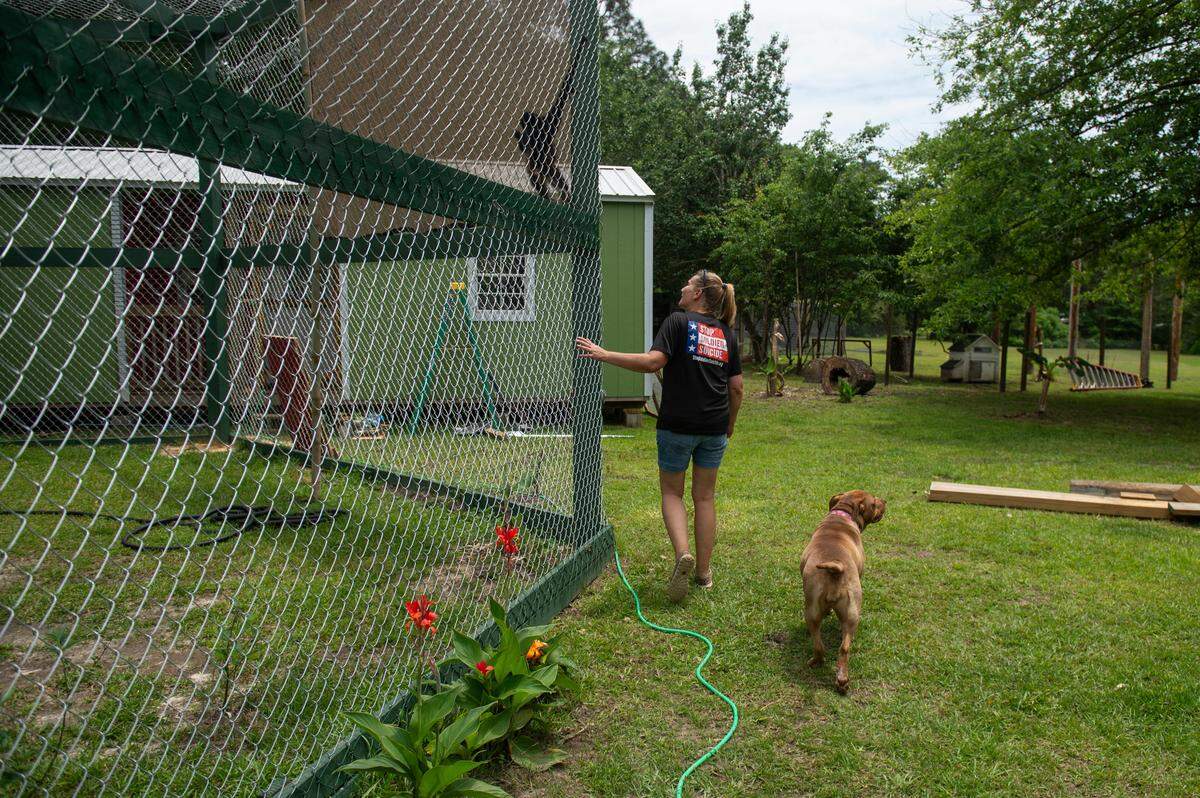
“Our sanctuary was born out of trying to heal,” she said. “I’m a veteran. My husband’s a veteran. My kids are veterans. We all have PTSD from the military. We’re seeing PTSD in primates, too.”
One of the sanctuary’s volunteers, John Richard, who is also a veteran, says being around Louie has really helped him.
“Being out here helped a lot, being around animals is very therapeutic,” he said. “It’s helped me more than going to the VA.”
Stewart says she realizes trauma is one of the reasons people adopt primates as pets in the first place. She hopes her sanctuary will still give others dealing with PTSD a place to enjoy the primates.
“One of the things that I’m seeing is so many people who go through trauma are adopting these baby primates, thinking that one is going to fix their trauma,” she said. “They’re looking for that unconditional love, and it’s great for the first year. They’ve got a little baby monkey, and it’s going to love them, and they can put diapers on it and they can put clothes on it, but you know what? That monkey’s gonna grow up and it’s gonna cause a lot of issues for them that they never took into account.”
What are the regulations around primates?
Documentaries and news articles about abuses of primates have brought a lot more scrutiny on primates in captivity. The HBO docuseries Chimp Crazy brings attention to a particular facility, the Missouri Primate Foundation, which was accused of keeping chimpanzees in cramped, squalid conditions before it was eventually shut down.
Debbie Metzler, PETA’s senior director of captive wildlife, has studied primates for 20 years and has worked with primates in sanctuary settings for over 10 years.
According to Metzler, all primate facilities that are open to the public have to be USDA-certified, meaning that the animals have to have food and water and access to veterinary care, but many facilities fall short of even meeting those guidelines, and the USDA is failing to enforce those regulations.
Metzler says the Global Federation of Animal Sanctuaries and the North American Primate Sanctuary Alliance have much higher standards for sanctuaries, and sanctuaries that fail to meet those standards lose their accreditation.
“Anyone can slap the name sanctuary or refuge on their facility,” she says. “We’ve seen this in places that we’ve kind of dubbed pseudo sanctuaries, because they call themselves a sanctuary, but they are absolutely not a sanctuary. Sanctuary is not there for the guests. It’s there for the animals, and it’s there to ensure that they have the highest quality care possible.”
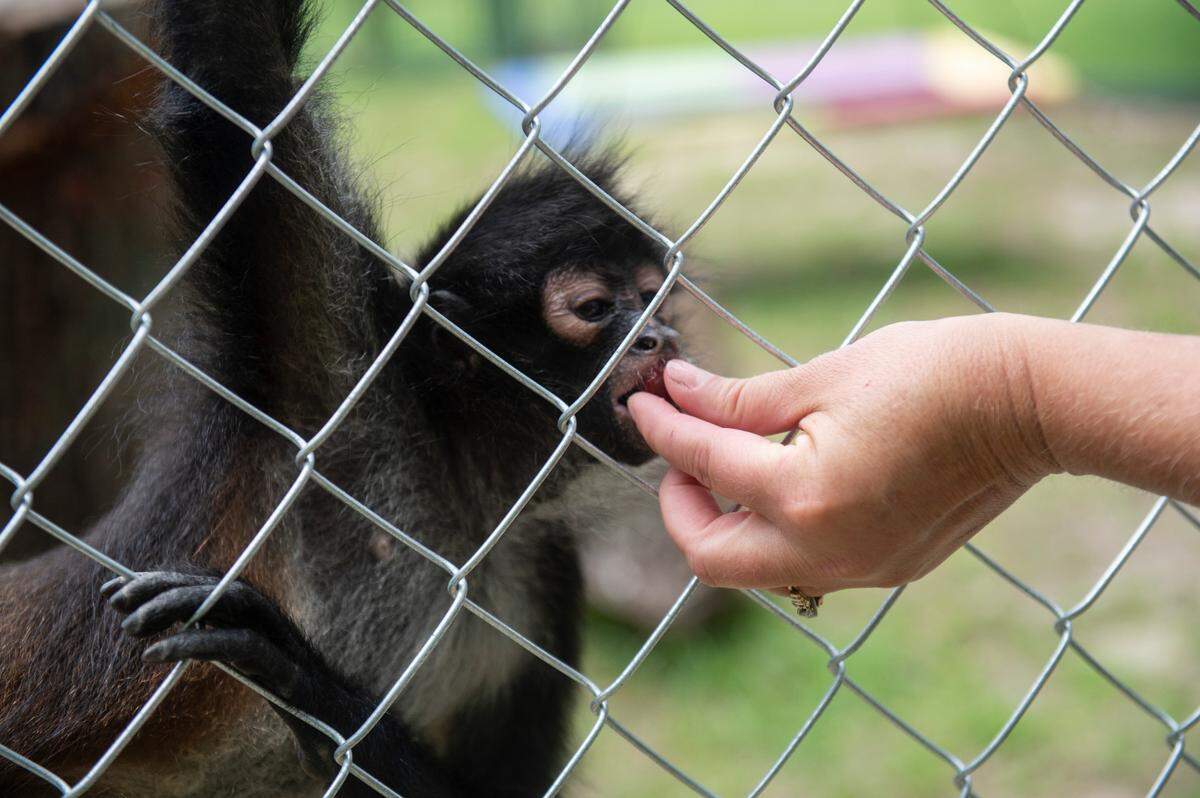
According to Metzler, red flags include facilities that allow the public to have direct contact with primates, breed primates or sell primates. She says sanctuaries should have enclosures where the animals are living in an environment that mimics their natural habitat — including ways for the animals to mimic foraging behavior, climbing and nesting.
Metzler acknowledges that there is a need for more primate sanctuaries due to many facilities with USDA citations closing and a rise of primates being kept as pets, including so-called pet primate influencers who are posted in videos on social media.
“The number of pet primates is astronomical,” she said. “It’s probably more than I can’t really even estimate because there’s no regulation of those animals.”
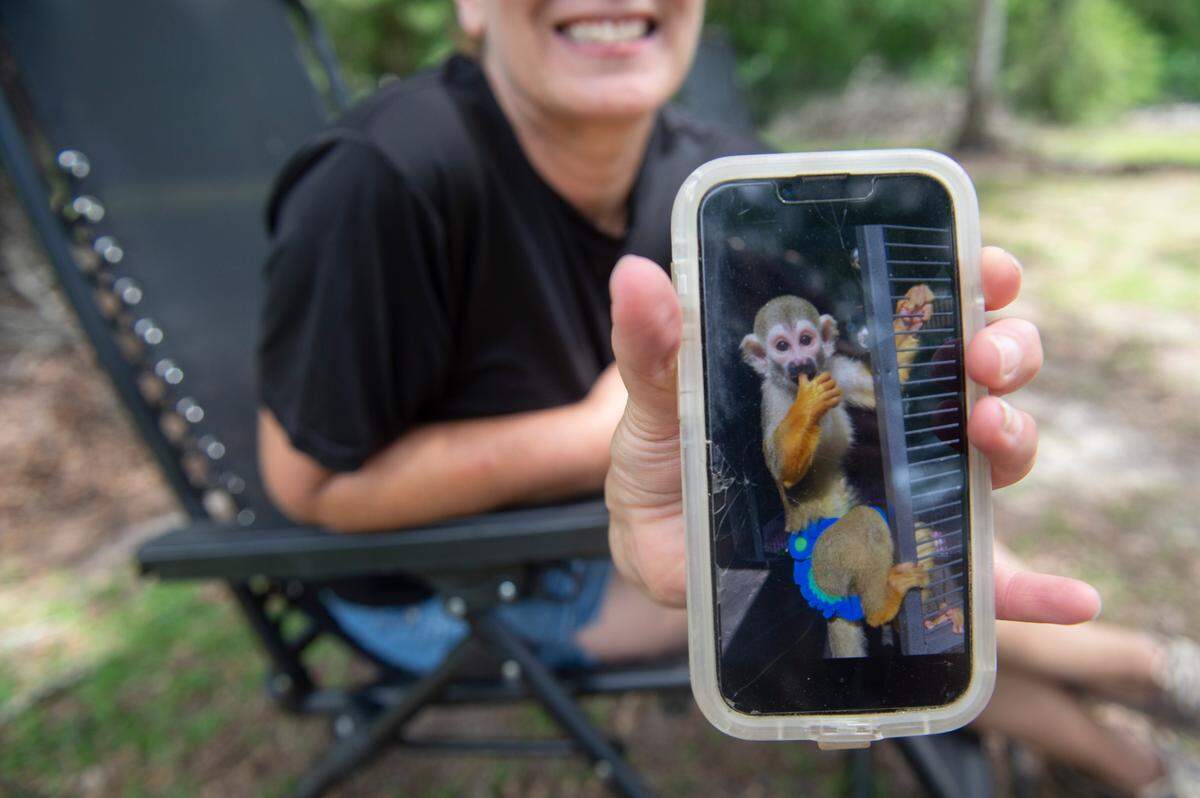
Stewart admits that she originally got Louie the spider monkey as a pet and fell into the trap of posting videos of him wearing outfits on social media.
“I deleted a lot of the videos because I was like, I don’t want to encourage people to get monkeys,” she said. “I don’t want to be the reason somebody got a monkey. They don’t need to be in a human home.”
Stewart says she can’t even watch a lot of social media videos now because seeing baby monkeys in human clothes and small cages upsets her. She claims after she started speaking out about conditions for pet primates on social media, an exotic animal broker called her and told her to stop saying primates don’t make good pets.
“We need more sanctuaries,” Stewart says. “And not the crazy lady in the house with nine monkeys and they’re all staying in little cages with diapers, because that’s not sustainable. That woman falls dead. Where are the monkeys gonna go anyways? Sanctuaries.”
In Mississippi, it is legal to own a primate as a pet with the proper permits.
Any non-human primate that is brought into Mississippi from out of state, even temporarily, has to have an entry permit from the Mississippi Board of Animal Health as well as a health certificate from a veterinarian. If the animal is considered an inherently dangerous animal — which would be gibbons, orangutans, chimpanzees, siamangs, gorillas, macaques and baboons — then a permit from the Mississippi Department of Wildlife, Fisheries and Parks is also required.
According to Colt Mooney, a biologist with the Mississippi Department of Wildlife, Fisheries and Parks, there are currently 13 ‘inherently dangerous’ primates permitted through MDWFP. Of those, most of them are animals in zoos or wildlife parks — only 3 of them are personal animals.
Because there are many primates that don’t fall under MDWFP’s ‘inherently dangerous’ designation, including Stewart’s primates — and some owners fail to obtain permits — it’s hard to know just how many primates are kept as pets in Mississippi. The Mississippi Board of Animal Health declined to give data on how many permits they issue.
Plans for the future
The Gulf Coast Primate Sanctuary is not yet a member of the Global Federation of Animal Sanctuaries or the North American Primate Sanctuary Alliance, but Stewart says she is working towards that and already has a USDA exhibitor license. According to Stewart, she recently got status as a 501(c)(3) organization so she can operate as a nonprofit. The Gulf Coast Primate Sanctuary is not yet listed on the IRS lookup but is listed on Mississippi’s charitable organization lookup.
Stewart says she hopes to bring the standard of care she’s providing beyond the USDA’s requirements and that she will not be selling or breeding animals at the sanctuary. So far, each enclosure has indoor and outdoor space, swings, logs and other engaging objects, as well as primate-safe edible plants growing in the enclosures. Two veterinarians, Dr. Stephanie Stubbs and Dr. James Askew, who also serves as a veterinarian for Wild at Heart Rescue, are listed as Gulf Coast Primate Sanctuary board members.
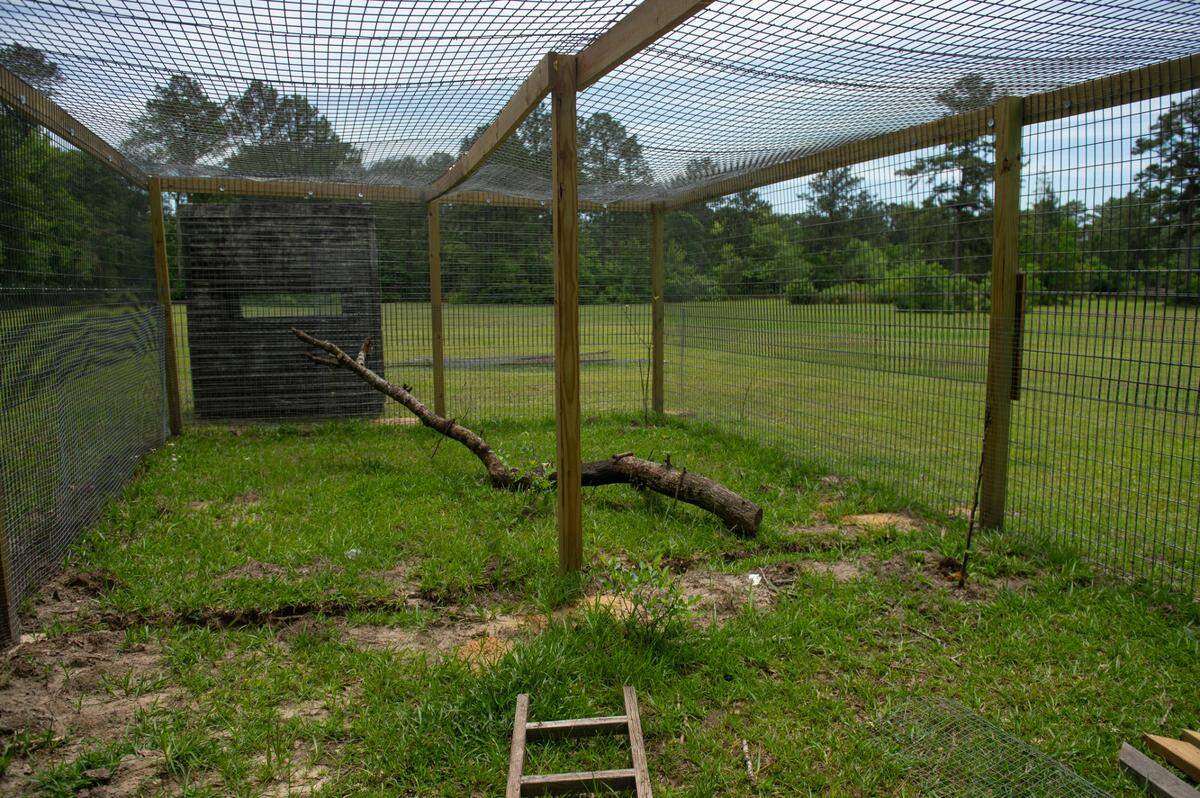
Stewart plans to mainly work with new world primates — marmosets, tamarins, spider monkeys, squirrel monkeys and capuchins — and take in animals slowly, building enclosures for them as she works with pet owners who are looking for a place to take their primates.
“A lot of these private owners are thinking that the government is going to come in and just take their monkeys. That’s not what we’re about,” she said. “We don’t want your monkeys if you’ve got proper set up. We want to be an option where, if life circumstances change and you can no longer take care of that monkey, we’re here and you can visit but that monkey is going to transition to a more natural life.”
Stewart hopes the sanctuary can eventually be open to the public, but not as a petting zoo. She wants to be able to host guided tours, as well as special events for veterans, foster kids and other groups. Because she has applied for nonprofit status, she doesn’t plan to charge admission, but hopes to arrange fun runs and other activities as fundraisers.
So far, all the work on the property has been done by the Stewarts and volunteers. She hopes to eventually have an experienced staff that can care for the primates around the clock.
Overall, Stewart says, she wants her sanctuary to be a place to find peace.
“When people step out here, the peace is what we want people to feel. And we want the animals to feel that, too.”
This story was originally published May 13, 2025 at 5:00 AM.