Getting texts saying you missed court and must pay to avoid arrest? Ignore it. Here’s why

No, you don’t have to pay toll fees, you haven’t missed a court date, the cartel is not threatening you and you don’t owe postage fees for a delivery. However, that won’t stop scammers from flooding your inbox with fraudulent texts.
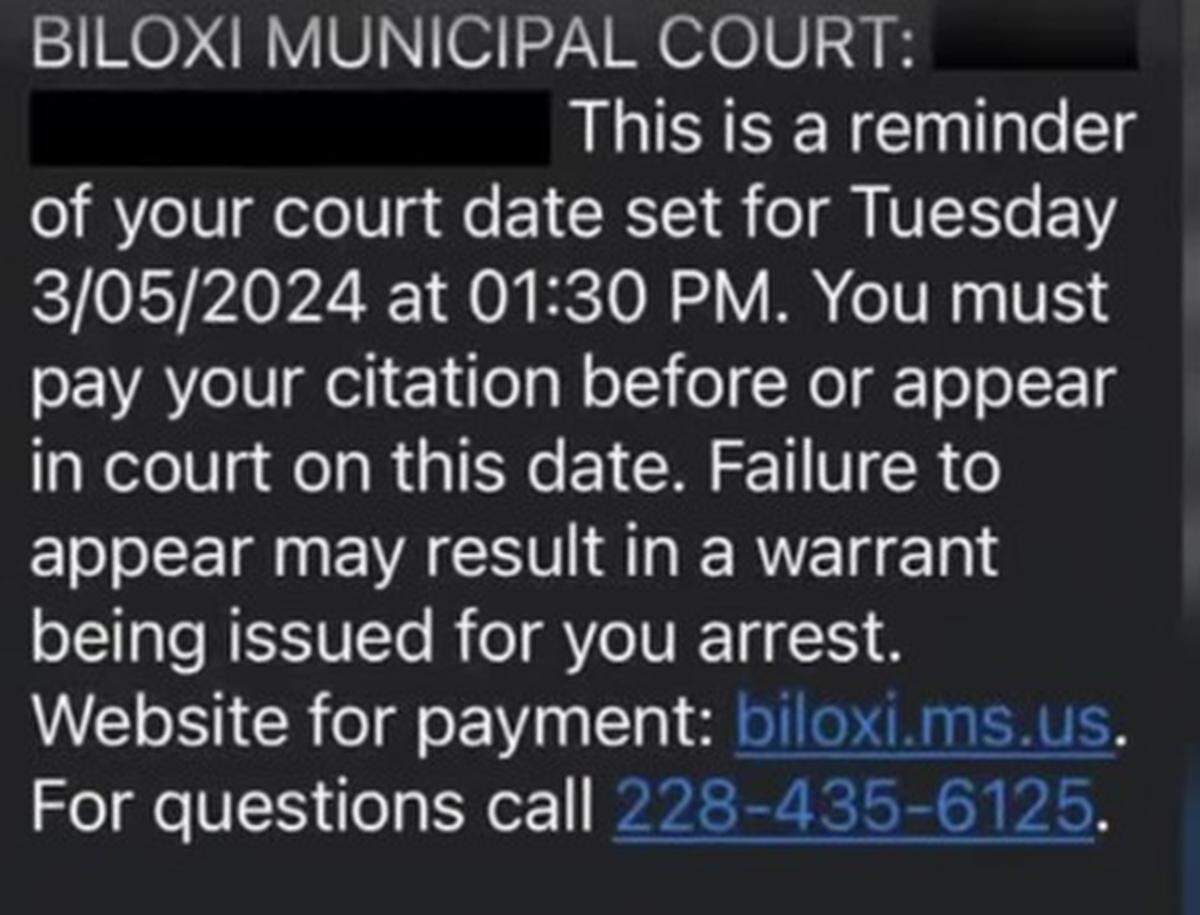
Mississippi residents are facing an uptick in scams delivered by text, called “smishing.” Smishing, a combination of “SMS” and “phishing,” can be particularly deceptive because they often impersonate legitimate organizations and prey on people’s fears of legal consequences.
Beware of these scams in Mississippi
Even though Mississippi was listed in a Forbes list as the second-least affected state by phishing scams, it does not slow the speed at which scammers are inventing new ways to get your personal information.
Missed court date: Texts demanding money or cash to avoid arrest are always fraudulent.
Fake toll collection: Despite Mississippi having no toll roads, residents continue to receive texts claiming unpaid tolls and threatening penalties.
Cartel threats: Some residents have received disturbing texts, claiming to be cartel members, demanding money and threatening violence.
Package delivery scams: Some texts claim to be from delivery services like USPS, requesting payment for delivery fees or to click a link to claim your undelivered items.
Credit Union account verification: Scammers are targeting credit union members with texts requesting personal information for account verification.
Mississippi officials are on the case
Mississippi Attorney General Jim Hood issued a warning to consumers via the Mississippi Free Press. He said, “Never, ever give out your personal information to anyone in this manner. Also, realize that your credit union most likely will not communicate with you via text message.”
North District of Mississippi’s Service Commissioner Chris Brown told Q106, “Not only is the scammer trying to steal your money, but if you click the link, they could get your personal info (like your driver’s license number) — and even steal your identity.”
What should you do about these texts?
Most importantly, resist the urge to click any links. The FBI advises recipients of the texts to file a complaint on their Internet Crime Complaint Center at ic3.gov.
There’s not much more to do beyond that, besides delete the text and move on.
How can you help the less tech savvy?
Putting your number on the Do Not Call list does not effectively help with scam texts because scammers tend to ignore those lists. The scammers are using more sophisticated technology these days, using “spoofed” numbers that transmit fraudulent numbers to your caller ID.
The evolution of these kinds of hoaxes are particularly dangerous to senior citizens and younger children, who may not have as much experience with this kind of deceit.
There are a few techniques you can try to educate them:
Discuss common scams: Stay informed about the kinds of scams that affect them most like Medicare scams, IRS impersonation and grandparent scams.
Install call blocking apps: Some popular ones to investigate are Ooma Premier, Hiya, Robokiller and Truecaller.
Encourage call screening: Suggest they only answer calls they know and let the rest go to voicemail.
Protect personal information: Emphasize never sharing sensitive data over the phone.
Have you or someone you know fallen victim to a scam or do you have a special technique you use to combat these kinds of plots? Email me at srose@ledger-enquirer.com or find me on Instagram.