Part 2 of 4: Amtrak, NIL and 20 years since Katrina — the biggest South MS stories of 2025
Editor’s note: This is the second in a four-part series looking ahead to 12 of the biggest stories of 2025 across South Mississippi.
Crowds of people and even brass bands greeted the Amtrak Sunset Limited when the Amtrak inspection train rolled across South Mississippi in 2016.
At that time nobody knew passenger train service between New Orleans and Mobile — with stops in Bay St. Louis, Gulfport, Biloxi and Pascagoula on the Mississippi Gulf Coast — would take another nine years to pull off.
Finally the parts are in place, the stations are updated or getting ready, and Knox Ross, Southern Rail Commission chairman, says he believes it will be summer 2025 when the service returns for the first time since Hurricane Katrina.
The downtowns in South Mississippi are coming alive, he said, with new restaurants and other development awaiting tourists. He expects people from the east and west will cometo the Coast for a day with money to spend, or stay overnight to enjoy more time at the beaches, casinos and attractions.
For locals, the trains will mean an easier commute than driving I-10, he said. Most kids have never been on a train, he said, and this will be a new family experience. And riders can take Amtrak to catch a cruise out of Mobile or New Orleans, or stay aboard to take the Crescent from New Orleans to Atlanta and New York, or the Sunset Limited to San Antonio, Phoenix and Los Angeles.

Name, Image and Likeness
The rapid evolution of college athletics has already had an impact on high school sports with the introduction of the transfer portal, but the effects of a constant stream of landscape-altering rule changes haven’t finished seeping into the prep sports world.
Name, Image and Likeness (NIL) created a market for collegiate athletes and completely replaced the traditional recruiting cycle with a form of free agency.
Many states have signed laws allowing high school athletes to earn NIL compensation, including Mississippi when it quietly amended the Mississippi Intercollegiate Athletics Compensation and Publicity Rights Act last April, permitting anyone who has at least signed their National Letter of Intent to earn money from NIL.
George County quarterback Deuce Knight was the first to take advantage of it in a significant way, signing a deal with Leaf Trading Cards ahead of the 2024 season. Many more could soon follow.
And at a time where high school athletes transferring schools is becoming more common, NIL could have a noticeable impact on team rosters. This is especially true for baseball, whose athletes typically sign collegiately before their senior season begins.
That’s not the only thing that could impact high school athletes in Mississippi in the coming year. A court order recently granted Vanderbilt quarterback Diego Pavia an extra year of eligibility, returning a year that Pavia spent in junior college and ruling that the NCAA could not count his JUCO season against his four-year eligibility clock.
While the ruling specifically applied to Pavia, it opens the door for other former JUCO athletes to challenge the NCAA with a court precedent and get their years back. This in turn could force the NCAA to alter its rules.
With athletes having a path to four years of eligibility after two years of JUCO, taking the latter route out of high school becomes much more attractive for both high school athletes and four-year programs that may use the new rule to create a minor league system of sorts that churns out older, experienced players with a full four years left to play.
Mississippi has one of the most talent-rich football and baseball juco systems in the country and is one of only a small handful of states fielding a full league of JUCO football teams. This gives local athletes a leg up when it comes to taking advantage of the changes.
Milestone Katrina anniversary
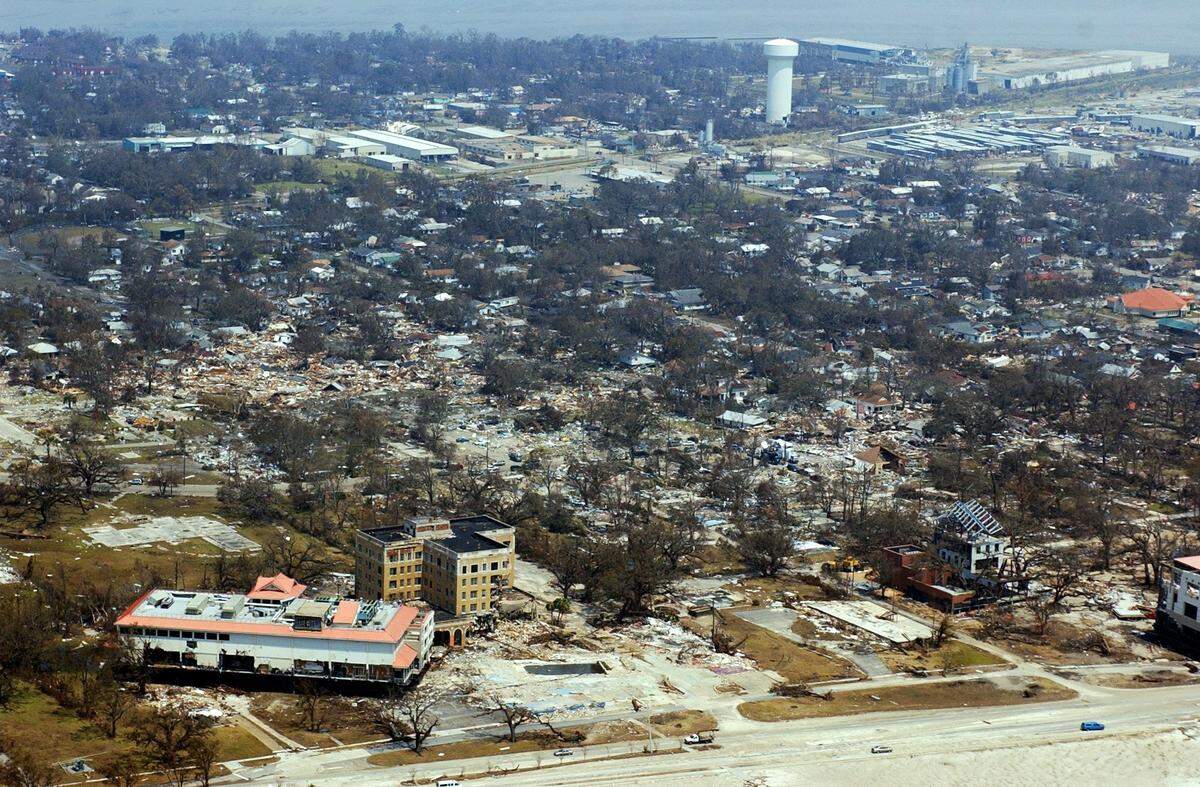
Before Hurricane Katrina and After Hurricane Katrina is the way many Mississippi Coast residents mark time, with the 20th anniversary of the unprecedented storm arriving Aug. 29, 2025.
Despite the intense hurricanes in recent years, Katrina remains the costliest natural disaster in the nation’s history, with total losses estimated at $200 billion by the National Centers for Environmental Information.
It was also one of the nation’s five deadliest hurricanes, with 1,392 fatalities, either direct, indirect or indeterminate, a National Hurricane Center report says
Although Katrina did not directly hit New Orleans, fatalities were highest there because of levee breaches that flooded about 80% of the city.
Katrina reached Category 5 status over the Gulf after an initial south Florida landfall, with its highest sustained winds at 174 mph. It made landfall as a Category 3 hurricane in Buras, Louisiana, near the Mississippi-Louisiana line.
The surge from Hurricane Katrina was overwhelming, measuring up to 28 feet in eastern Hancock County and western Harrison County. The surge scoured the waterfront from state line to state line, with damage stretching 6 miles inland, and up to 12 miles inland along bays and waterways, the NHC report says.
Katrina’s size explains its surge, with hurricane-force winds extending 75 miles east from the center. Many Coast residents, having survived record-breaking Category 5 Camille in 1969, stayed for Katrina and died.
“Even though Hurricane Camille was more intense than Katrina at landfall while following a similar track, Camille was far more compact and produced comparably high storm surge values along a much narrower swath,” the NHC report explains.
Katrina’s statistics fail to capture the heroics that saved lives during the storm, the suffering in its aftermath or the battered Coast’s rebirth, assisted by volunteers from all over the country who rallied to rebuild.
Stories of 2025
Part 1: Buc-ee’s, potholes and our waterways
Part 2: Amtrak, NIL and Katrina
Part 3: Casinos, the seawall and Benjamin Taylor
Part 4: Our changing downtowns, elections and an execution
This story was originally published December 29, 2024 at 5:00 AM.