Green Comet will pass Earth for 1st time in 50,000 years. How to see it in Mississippi.
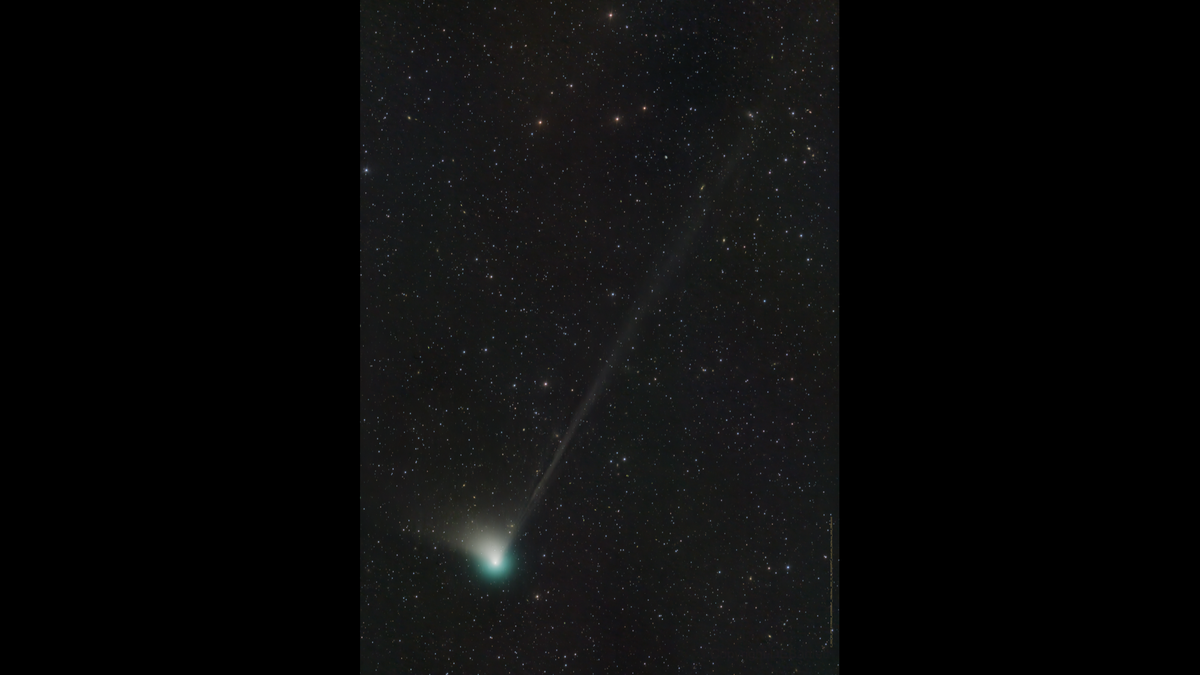
The Green Comet with the official name C/2002 E3 will be passing near Earth for the first time in 50,000 years and stargazers may be able to see it with the naked eye in late January, NASA says.
On Thursday, Jan. 12, the comet will be at perigee, or closest to the sun, according to the National Aeronautics and Space Administration.
For a chance to see it Thursday, those with a telescope or binoculars should look low on the northeastern horizon just before midnight, according to EarthSky.
NASA said the comet should be visible with binoculars in the dark morning sky during most of January. It can be distinguished from stars by its streaking tails of dust and energized particles, according to CNN, and the glowing green coma surrounding it.
The comet will be closest to Earth on Feb. 1, and the last few days of January are the best chance to see the comet with the naked eye.
The comet will pass Earth at a distance of 26.4 million miles and will be visible in the predawn sky, NASA said.
“The brightness of comets is notoriously unpredictable, but by then C/2022 E3 (ZTF) could become only just visible to the eye in dark night skies,” NASA said.
NASA advises checking a skywatching app for the comet’s position by the date you’re observing.
Whether or not amateur astronomers or casual stargazers will see the Green Comet depends on a variety of factors such as location and light pollution, according to Space.com.
Watch online
The Virtual Telescope Project will provide a free livestream of the comet beginning at 10 p.m. central time Thursday. Watch on the project’s website or on its YouTube channel.
The comet was discovered March 2, 2022 by astronomers Frank Masci and Bryce Bolin using the Zwicky Transient Facility at Palomar Observatory in Southern California, At that time it was just inside Jupiter’s orbit and Space.com reports they originally thought it was an asteroid.
Astronomers determined it was a comet and the last time it passed through the solar system was during the Old Stone Age.
Other events in the sky
In addition to the comet, stargazers will be see the moon and several planets have close encounters and bright stars in the constellations Orion, Taurus, Gemini, Canis major and Canis minor, NASA says in its January Skywatching Tips.
All month after sunset, four planets will be visible without binoculars or a telescope. Look for Mars in the east, Jupiter high overhead, and Saturn in the southwest with Venus.
From Jan. 18-24, Venus will cross paths with Saturn over several days after sunset in the southwest.
This story was originally published January 12, 2023 at 7:00 AM.