He drew ‘the map to a guilty verdict’ in the Sherry murders saga. His death ends an era.
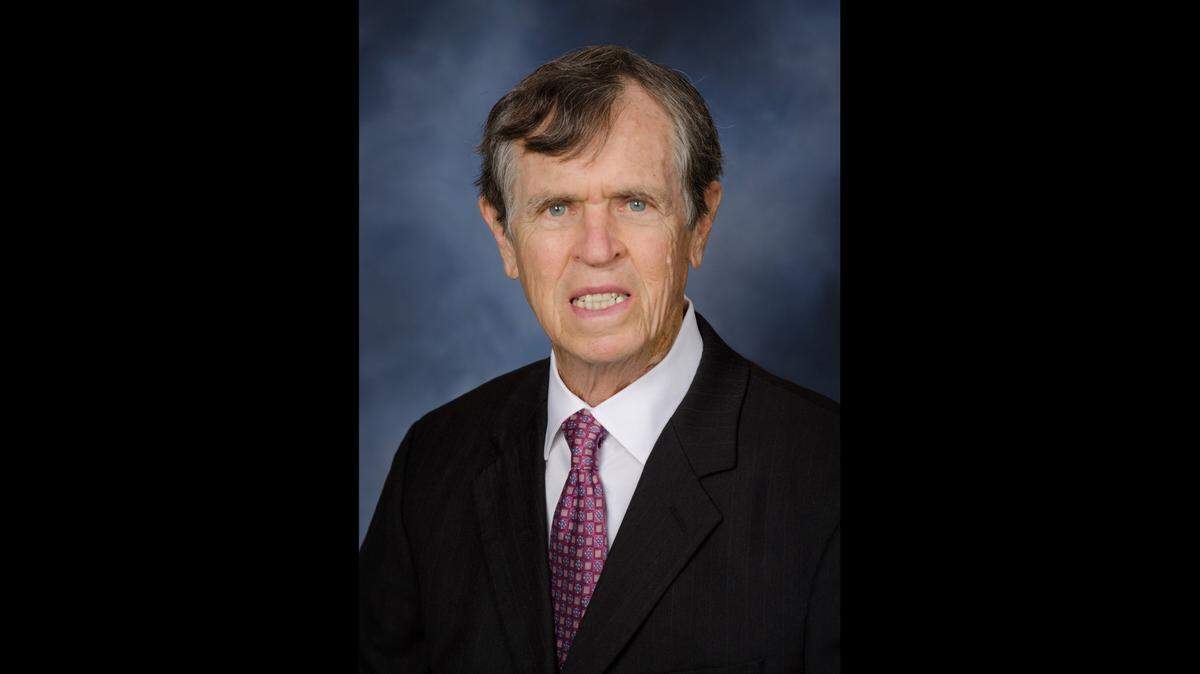
An era ended in Mississippi with the death Tuesday of former federal prosecutor James B. Tucker.
Tucker’s imprint was on the biggest criminal cases the federal government prosecuted in South Mississippi over a 30-year period.
They included the notorious Sherry murder-conspiracy in Biloxi, an attempted extortion by the state’s third most powerful leader, then-state Sen. Tommy Brooks, the roundup of a criminal ring headed by former Harrison County Sheriff Leroy Hobbs, and statewide indictments against corrupt county supervisors that led to changes in the way Mississippi county governments operate.
The list of Tucker’s accomplishments is much longer, but nobody ever heard him brag. He was a humble assistant U.S. Attorney and acting U.S. Attorney who mentored and trained some of the best lawyers in the state.
His mentorship continued when he retired from the Southern District office in 2001, joining the Butler Snow law firm, where he built a white-collar defense practice and team.
Tucker, who lived in Jackson, died at age 82 of complications from throat cancer that he staved off back in 2009. His death was unexpected.
“He struggled and fought it and fought it but the body just gave out,” said his close friend, defense attorney John Colette of Jackson. “Until the end, he knew what was going on. He was Raising Cain about this and that.”
This prosecutor was always fair
Tucker’s friends will remember him as a brilliant lawyer who was, above all, fair.
“We’ve lost a true hero in Mississippi because this guy was about as straight as they come,” Colette said.
In the U.S. Attorney’s Office, Tucker never held back evidence from defendants and rejected cases when they were too weak.
“Most people see prosecutors as out for blood and ‘send people to jail at all costs’,” said Kent McDaniel, a former assistant U.S. attorney who worked with Tucker and a retired Rankin County Court judge. “He was the opposite of that.”
“He was just the backbone of that whole concept, ‘Let’s be fair to everybody.’ You don’t find that often in prosecutors.”
His work on Coast’s Sherry murders
Of their many cases, the Sherry murder-conspiracy stands out. Trials in the case spanned seven years, from 1991-97, with all the conspirators eventually convicted and jailed. The indictments Tucker wrote with help from McDaniel and others were considered masterpieces.
They told the story of a scam that an inmate started at Angola state prison, eventually leading to the law office of Pete Halat and Vincent Sherry, whom the inmate wrongly believed had stolen his proceeds. Vincent Sherry, by then a Circuit Court judge and his wife, former Biloxi councilwoman Margaret Sherry, were gunned down in their home on the evening of Sept. 14, 1987.
Four conspirators, including the inmate, were convicted in a 1991 trial. Former Assistant U.S. Attorney Peter Barrett of Gulfport, remembers the indictment well.
“It was the map to a guilty verdict,” he said. “It was excellent. I’ve said more than one time, ‘If you want to draft a great speaking indictment, get James to draft it.”
Halat, elected mayor after the deaths of his friends, was eventually tried and convicted in 1997 as part of the conspiracy.
Sherry case agent Keith Bell, now retired, said, “I considered him an outstanding prosecutor who handled many of my most complex cases.”
In the 1980s, Tucker also was one of the first prosecutors to use a relatively new federal bribery statute to convict public officials, in this case county supervisors taking kickbacks from contractors. As state auditor at the time, former Gov. Ray Mabus worked closely with the federal government on the sweeping Operation Pretense cases, which netted 57 supervisors.
“He went looking for public corruption. He did not duck it,” Mabus told Associated Press reporter Emily Wagster for a news obituary on Tucker. “It sort of offended him that people were stealing public money.”
Entering private practice in Jackson
Attorney Amanda Barbour of Butler Snow had the privilege of working closely with Tucker from the time she joined the firm in 2005. She had previously worked as a state prosecutor. The two teamed up on white-collar defense cases until he retired a year ago.
She received an email from him on her first day, saying he was sorry he couldn’t be there to greet her but looked forward to catching up with her soon. She later learned he was taking a family member to Houston for medical treatment and was impressed that he took the time to email her.
“That just set the tone for our entire relationship” Barbour said. “It just shows you the kind of person he was, always thinking of others, just so kind.”
“James really took me under his wing and introduced me to everybody he knew.”
And he knew so many people, including higher-ups in the Justice Department with whom he hunted and fly fished, one of his passions.
He treated everyone with the same deference, his friends said, whether they were a judge or a receptionist.
“All of the sudden, this white collar practice exploded at Butler Snow,” Barbour said. “Everybody wanted to talk to James.”
Even as a senior attorney, Tucker still did his own research and wrote briefs rather than relying on junior associates, she said. He loved the work. Yet he often stood back and nudged the younger attorneys he mentored into the spotlight, including Barbour.
He taught her the importance of mentoring the next generation of lawyers, she said.
“This takes time and a willingness to give up opportunities yourself to provide a chance for someone younger to learn by doing it themselves,” she said. “He did that for me and I am forever grateful.”
His wife always packed them drinks and snacks for road trips to courthouses in Oxford and other parts of the state. If his truck wasn’t clean, she would insist they take her SUV.
James Tucker ‘glue’ of his family
As hard as he worked, Tucker was devoted to his family. He met wife Jeanne Tucker in a lawyer’s office while both were working after-hours. They started out as friends and the relationship grew from there, said their daughter, Lisa Rainey Fletcher.
James and Jeanne Tucker married in 1972. From the beginning, his wife’s three children, then 9 to 14, were his children, too. Fletcher said she bristled if anyone called him her stepfather rather than her father.
“I just don’t think there’s a finer man,” Fletcher said. “My brother said he was a great man but, more important, he was a good man.”
“He was just our glue.”
He would not allow the children to call him Dad because he did not want to dishonor their biological father. Fletcher wanted him to join her biological father in walking her down the aisle when she married the nephew of country singer Willie Nelson, who became a friend of Tucker’s.
Her biological father was onboard.
But Tucker wouldn’t do it. Instead, he rode to the church with her in the limousine. He finally acceded to the title of grandpa for his son Chuck Rainey’s youngest child. Tucker proudly displayed a cap in his office that said, “Elijah’s Grandpa.”
“James was one of a kind,” his friend John Colette said. “No one can replace this guy. He was a public servant through and through.”
This story was originally published December 31, 2021 at 6:50 AM.