
Local

Drone photos show the beauty of MS Coast marshes endangered by climate change

The view from above is, in some ways, indescribable.

The marshes that surround the area near Silver Slipper Casino in Hancock County are natural wonders.

But climate change and rising seas puts them in danger of dying out, which would could be detrimental to the Mississippi Gulf Coast’s fishing and seafood economies.

In a Hancock County marsh, the Mississippi Department of Environmental Quality undertook a $50 million living shorelines project with BP restoration funds.
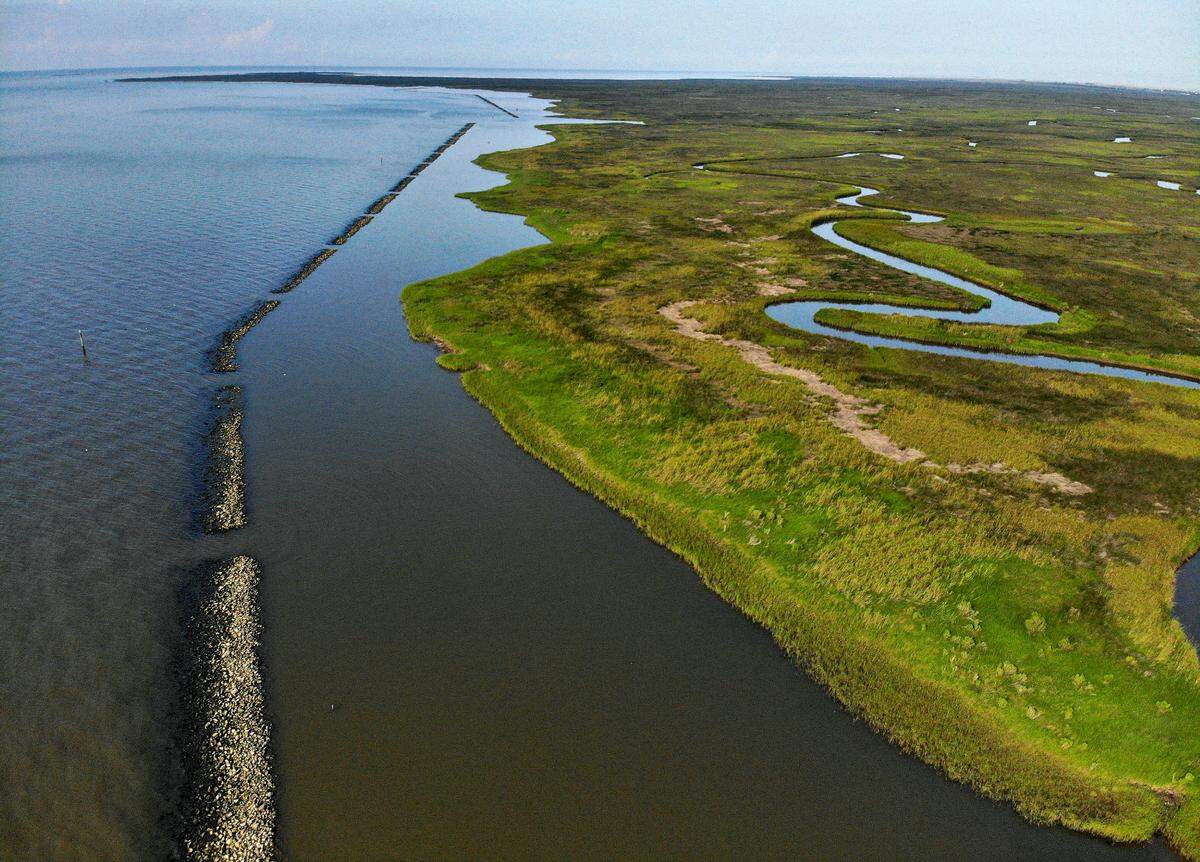
A section of breakwater, designed to reduce wave energy, protects six miles of living shoreline at Heron Bay in Hancock County. The breakwater and living shoreline are part of a $50 million project, funded by BP restoration money, to stabilize the erosion of the marsh.
A section of breakwater, designed to reduce wave energy, protects six miles of living shoreline at Heron Bay in Hancock County. The breakwater and living shoreline are part of a $50 million project, funded by BP restoration money, to stabilize the erosion of the marsh. Amanda McCoy amccoy@star-telegram.com

The project installed six miles of breakwater, including a stretch along Heron Bay, to absorb wave energy, 46 acres of marsh created inside a containment berm with sediment dredged from Hancock County’s Port Bienville and a 46-acre oyster reef planted in the bay to further absorb wave action and grow oysters in an area that was once highly productive.
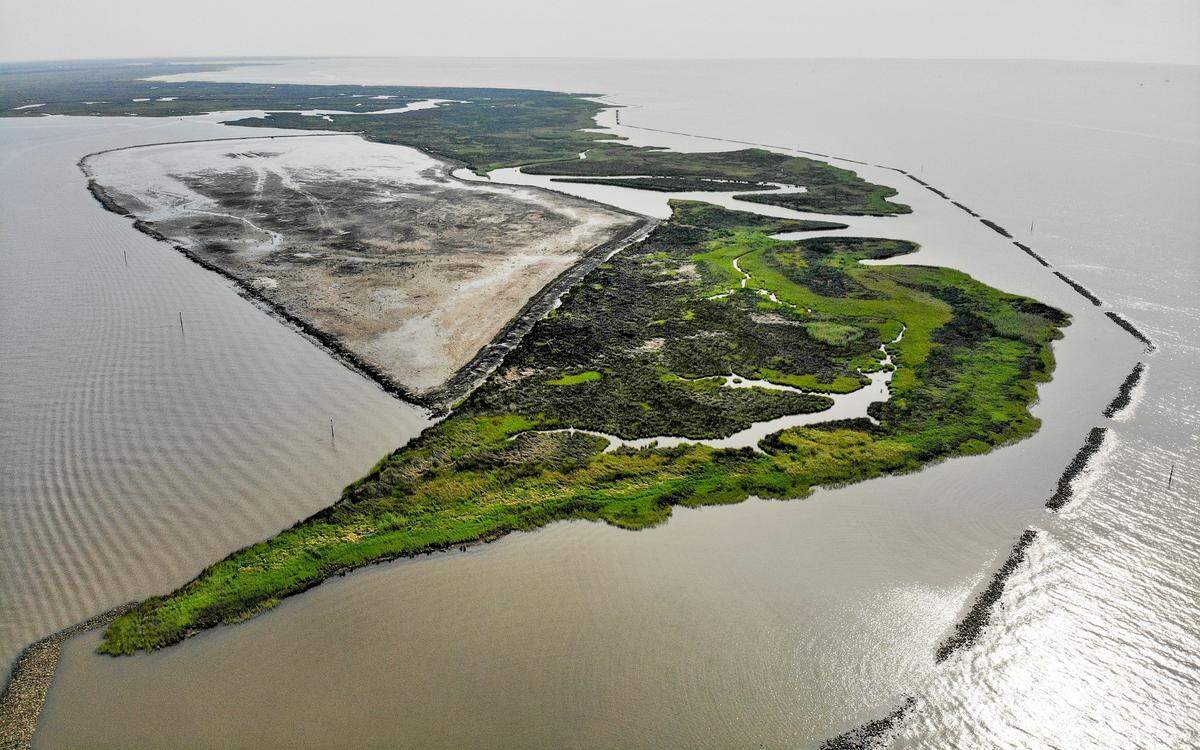
A $50 million project, funded by BP restoration money, hopes to stabilize the erosion of marsh at Heron Bay in Hancock County. The project included a six mile living shoreline and a line of breakwaters to protect from wave energy, construct of 46 acres of reclaimed marsh using dredge material and 46 acres of subtidal oyster reef.
A $50 million project, funded by BP restoration money, hopes to stabilize the erosion of marsh at Heron Bay in Hancock County. The project included a six mile living shoreline and a line of breakwaters to protect from wave energy, construct of 46 acres of reclaimed marsh using dredge material and 46 acres of subtidal oyster reef. Amanda McCoy amccoy@star-telegram.com

The marsh was eroding at a rate of 6-10 feet annually in the area where the new marsh was created, according to the Department of Environmental Quality. Vegetation is already growing on the marsh, which was a big mud flat in May after all the sediment was pumped in.
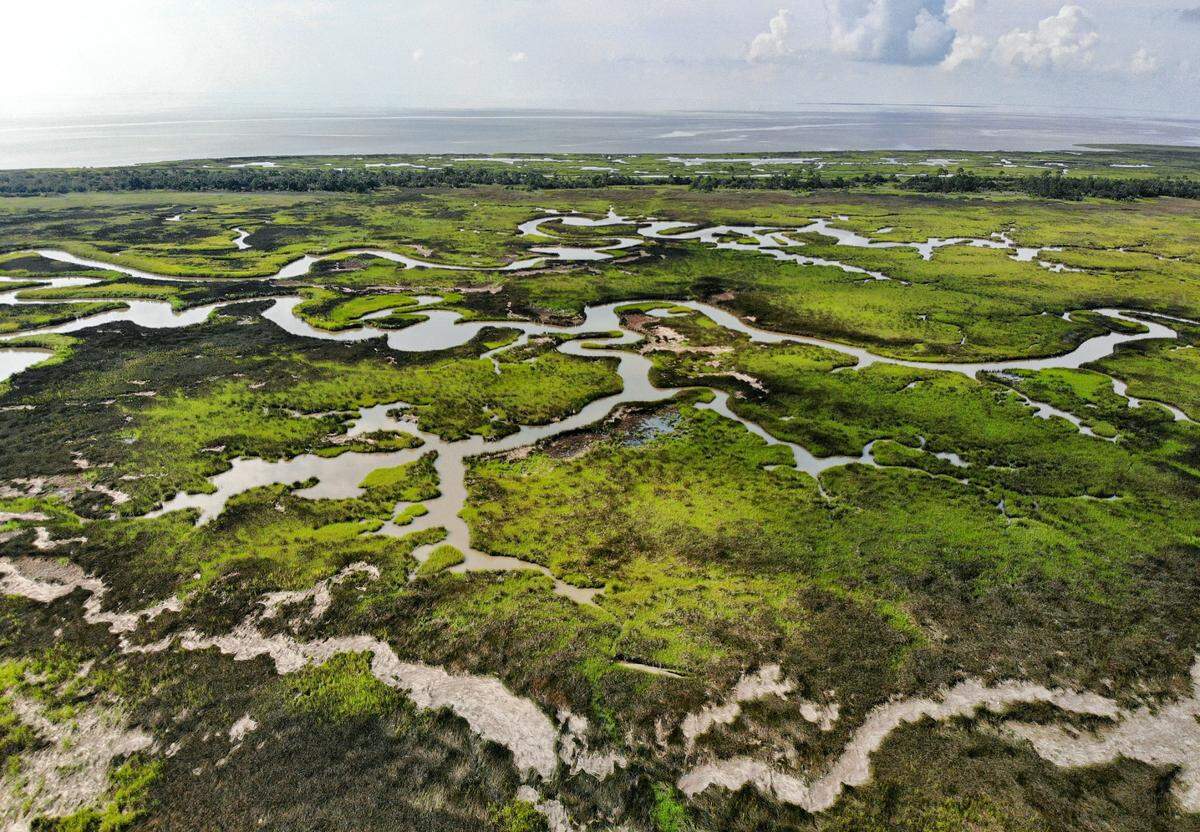
Estuaries weave through marsh near Bayou Caddy in Hancock County on Monday July 26, 2021.
Estuaries weave through marsh near Bayou Caddy in Hancock County on Monday July 26, 2021. Amanda McCoy amccoy@star-telegram.com

Vegetation is already growing on the marsh, which was a big mud flat in May after all the sediment was pumped in.
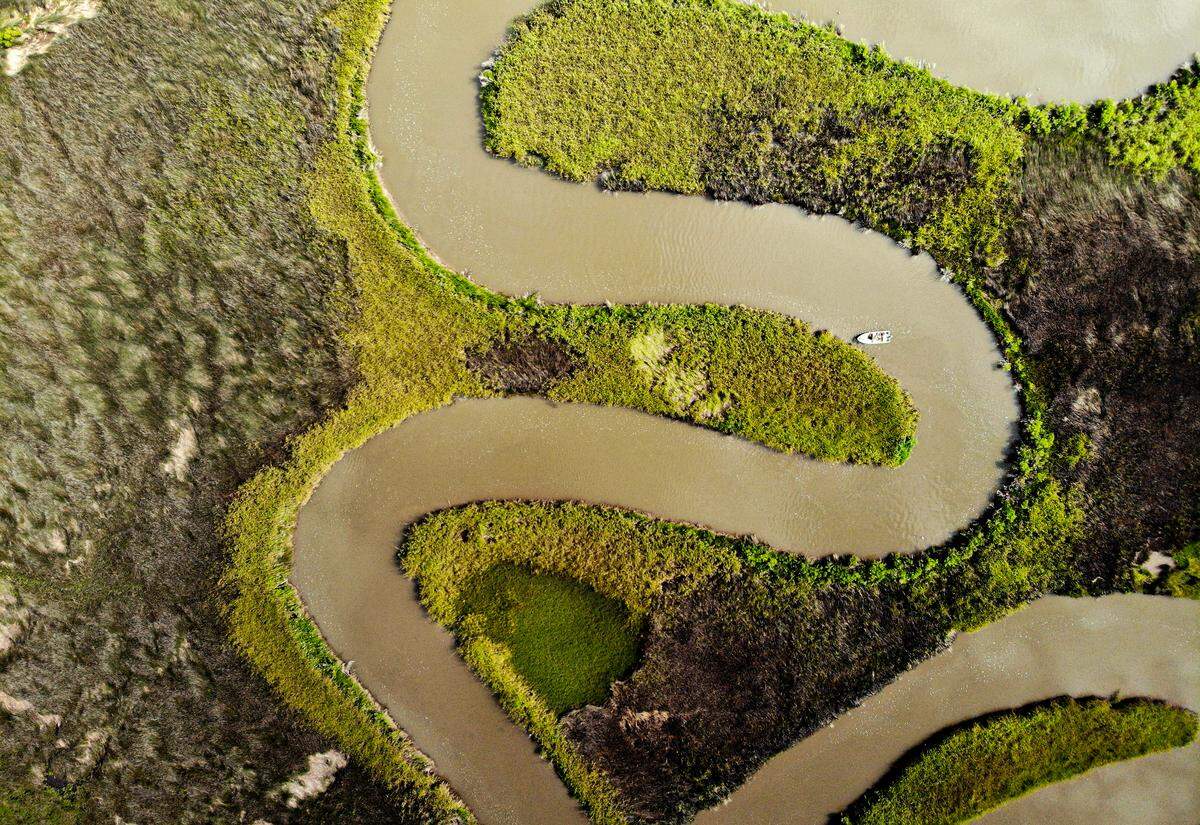
A crabber checks his traps along an estuary of Hancock County marsh near Bayou Caddy on Monday July 26, 2021.
A crabber checks his traps along an estuary of Hancock County marsh near Bayou Caddy on Monday July 26, 2021. Amanda McCoy amccoy@star-telegram.com

The marshes around Bayou Caddy are vital for fisherman like Danny Peterson

Peterson has been fishing all his life and can see the loss of marshland on the Gulf Coast. “I can run the boat over what used to be land, drive right through there,” Peterson said of some areas that were once marked as land on his navigation charts.

You can read more about the fight to save the Mississippi Coast’s vital marshes in Rising Tides, Sinking Future.

Get unlimited digital access
#ReadLocal

Try 1 month for $1

CLAIM OFFER