
The Mississippi Coast’s best success story is shrimp, which revved the economy
Why did the shrimp cross the road?
... To get to the other tide.
Why are shrimp so healthy?
... Because they have access to Vitamin Sea.
What is a shrimp that only cares about himself?
... A little shellfish.
Enough of the jokes!
Let’s get to the meat of today’s topic: Shrimp are responsible for pulling the Mississippi Coast and other Gulf states out of the post-antebellum doldrums. These little 10-footed crustaceans revved a seafood and tourism economy that continues into the 21st century.
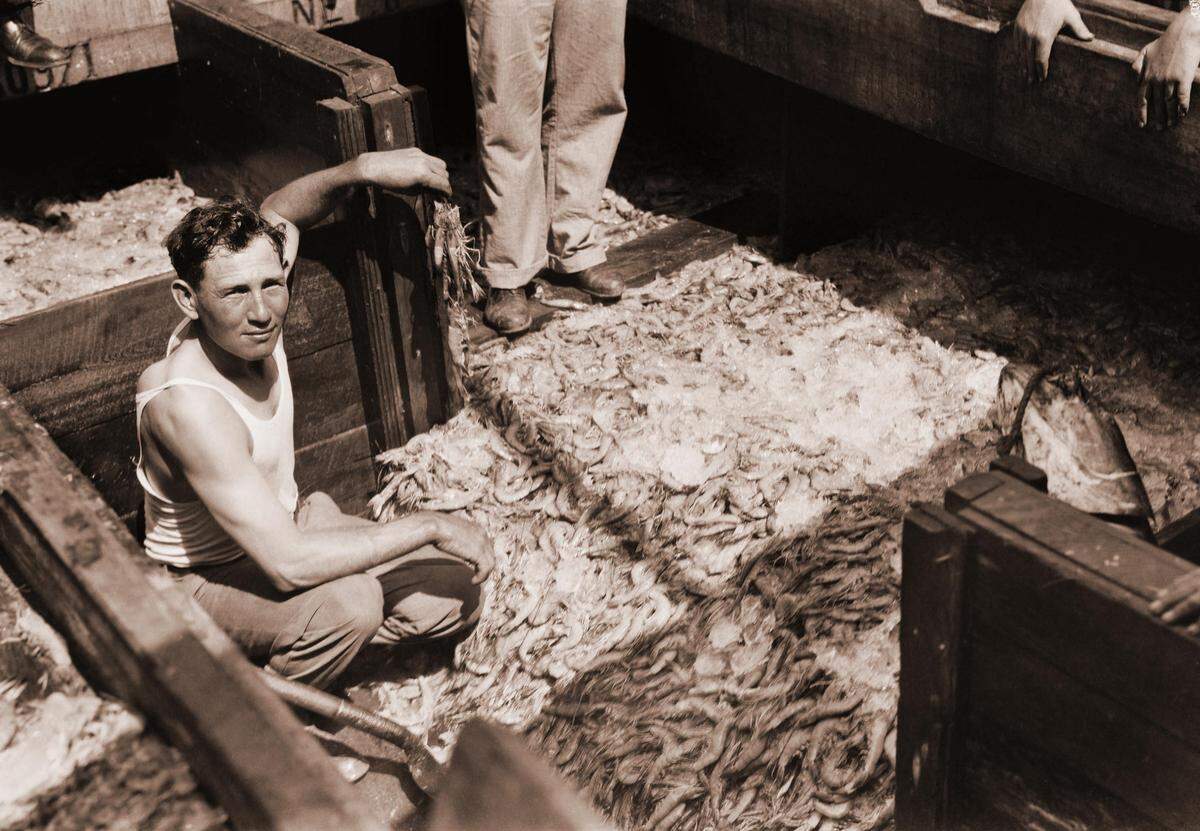
True, shrimp aren’t as plentiful as they were when long ago their discarded molting shells littered sandy coastlines. Nor are they as plentiful as when one trawler in the mid-1900s could easily harvest hundreds of pounds of shrimp after just one day or night of trawling.
A number of factors contribute to their population decline, including man-made and natural disasters, most recently the BP oil spill and repeated opening of the Bonnet Carré Spillway. Changing environments and over-harvesting before regulations became law also have contributed. Despite this, the Gulf Coast manages to cling to its reputation for tasty, wild-caught shellfish.
Do you realize that the U.S. imports more shrimp today than it catches off its own coasts, with 747,921 tons imported from other countries last year? Those imports represent more than 90% of the shrimp consumed by Americans.
The five Gulf states currently harvest about 80 million pounds a year, and those who live near their coastlines can buy from seafood markets specializing in local catches. Most Americans, however, must settle for imports that may be regulated differently than in this country.
Our appetite for shrimp — about 4.4 pounds annually for every man, woman and child — has made the U.S. the biggest importer of shrimp.
Seafood entrepreneurs are figuring out ways to farm-raise shrimp to fill this growing world-wide appetite, but in my prejudiced opinion, no shrimp taste better than those netted in the Mississippi Sound or the Gulf. I don’t use “prejudiced” lightly, because shrimp helped pay for the college journalism degree that landed me this job.
For seven summers in high school and college, I crewed on a 56-foot wooden trawler of the famous but now seldom seen Biloxi lugger design. The work was both exhausting and exhilarating. As Herman Melville penned in a 1850 book, “Let me snuff thee up, sea breeze! And whinny in the spray!”
Today, however, is not about my early shrimping adventures. Today is meant as a mini-education on the little shrimp and its mega role in history. The next time you sit down to a mess of boiled (or fried or scampied or grilled or gumbo-ed) shrimp, I hope you will eat them with a bit more respect.
About 2,000 species of shrimp exist in every ocean and in some freshwater lakes and streams across this planet. A number of them are commercially important as food and have been eaten by humans for thousands of years.
To boot, shrimp are a nutritional star high in protein, low in calories and a source of antioxidants and anti-inflammatory carotenoids. Among their vitamins and minerals are selenium, copper, iodine, zinc Omega-3s, the important B, E and A vitamins.
The oldest known shrimp fossil, found in Oklahoma, dates to 360 million years ago. Today’s shrimp are not living fossils but they have evolved through the millennia and played an important role as developing man found ingenious ways to harvest meals from the waters.
Fast forward to 1280 and Marco Polo, the Italian explorer, noted the prevalence of shrimp in Chinese marketplaces, where their popularity dates to at least the 7th century. Explorers and traveling merchants to other cultures also helped spread the idea of eating shrimp.
The English were trawling for shrimp by the 1370s. One famous 1700s painting by William Hogarth, titled “The Shrimp Girl,” shows a woman with a shrimp-filled basket on her head as she peddles seafood on the London streets.
America’s shrimp history is just as rich although seldom told. Evidence abounds that early indigenous people and Native Americans harvested this highly nutritious seafood.
The Roanoke Island colonist John White in 1583 observed the Algonquin tribe fishing from canoes for shrimp and other crustaceans by first making weirs, or water enclosures, to entrap the seafood. Also, earlier natives made traps of branches and Spanish moss to ensnare shrimp, and Mexican Aztecs figured out how to dry shrimp for preservation.
When Chinese from the Pearl River Delta came to the U.S. during the California Gold Rush, they brought their shrimp netting traditions with them and soon people were using nets in San Francisco Bay. Some historians call this the beginning of the American shrimping industry.
When pollution from gold mining killed off the California shrimp trade by the 1880s, the Gulf South stepped into the picture and, eventually, the South Atlantic Coast. This is where the history of the Mississippi Coast shrimp industry kicks in and why Biloxi became The Seafood Capital of the World in the early 1900s.
The American Shrimp Processors Associations, founded in Biloxi 57 years ago, has compiled a shrimp timeline that begins in 1750 in Mobile as a premiere seafood spot. That quickly moved to Louisiana with the first public market offering shrimp in 1784.
Several decades earlier the French were using large nets in lakes south of New Orleans or seining along the bays and beaches of South Louisiana. The French, many of whom were Acadians or “Cajuns” from Canada, were naturals at fishing.
It’s interesting to note that the Biloxi-Ocean Springs area had served as the earliest French capital in America but eventually the French settled on swamp-plagued New Orleans. As the city grew New Orleanians flocked to Biloxi and other coastal towns to escape disease and steamy heat. This recognition of the Coast’s natural amenities set the scene for the shrimping industry.
In 1867, the Dunbar family in New Orleans became the first in the U.S. to can shrimp and oysters. Three years later the L&N Railroad joined New Orleans with Mobile as well as all the Mississippi towns in between them. Ice for preservation became easier to obtain.
Now Mississippi’s seafood pioneers could do more than just sell to local markets. In 1881 Biloxi got its first seafood cannery, sooner or later joined by Pascaguola, Bay St. Louis, Pass Christian and other Coast towns. Not surprisingly the New Orleans’ Dunbars also joined Mississippi’s boom.
Then came the two biggest innovations that turned shrimping into a profitable industry. The Otter Trawl, which uses a net bag drawn by chains, boards and wenches, was first tested in 1917. Also around that time, shrimpers began converting sailing schooners to gasoline or diesel engines.
Still in use today, these inventions required fewer men to bring in nets and opened up shrimping in deeper waters. Voila! The self-styled 20th Century’s “Seafood Capital of the World” was born and shrimp became ingrained in the Mississippi Coast economy, foodways and way of life.
So, what do you call an all-you-can eat shrimp dinner?
... Overkrill.
Kat Bergeron, a veteran feature writer specializing in Gulf Coast history and sense of place, is retired from the Sun Herald. She writes the Mississippi Coast Chronicles column as a freelance correspondent. Reach her at BergeronKat@gmail.com or at Southern Possum Tales, P.O. Box 33, Barboursville, VA 22923