‘It’s never over.’ 16 years after Katrina, new book tells stories of Black women on Coast
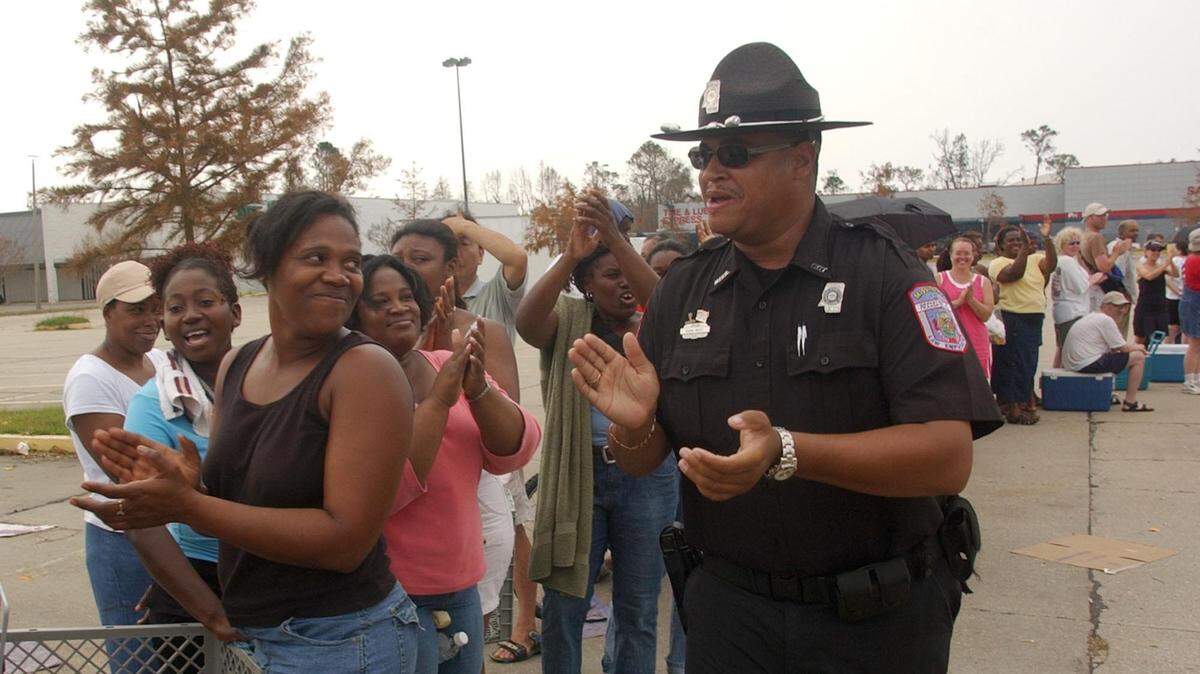
Sixteen years after Hurricane Katrina, the storm remains to most Americans a story about New Orleans. Hundreds of books describe the storm and its aftermath in New Orleans, while scholarship about its long-term consequences on the Mississippi Gulf Coast remains scarce.
Hurricane Katrina became a symbol of how social inequality, race and class shape experiences of disaster in the United States. But the many scholarly and journalistic articles that have addressed that theme mainly focused on New Orleans, leaving the Mississippi story far less documented.
Five years after Katrina, a Sun Herald editorial described “Mississippi’s Invisible Coast,” and decried how national media coverage had turned the state’s experiences of the storm into “a footnote.”
Scholar and native Mississippian Ophera Davis wanted to correct the imbalance. Starting two months after the storm, she began making regular trips to the Coast to interview women about their experiences before, during and after Hurricane Katrina.
Her new book, “The Overlooked Voices of Hurricane Katrina: The Resilience and Recovery of Mississippi Black Women,” makes three major contributions to the field of disaster studies in the United States.
First, it tells the stories of Mississippians after the most devastating hurricane in American history.
Second, it highlights the experiences of women, because gender was generally ignored in disaster studies until the 1990s. And finally, it focuses on Black women, whose long-term experiences after a natural disaster have rarely if ever before been the focus of a study like Davis’s.
In this interview, Davis talks about her new book and what she learned by following 12 Black women from Gulfport, Biloxi and Pass Christian in the 16 years after Hurricane Katrina.
Could you start by talking a little bit about why you decided to write this book?
I grew up in the Mississippi Delta area. Like most Mississippians, we know that the Coast is our treasure, and most people don’t know about it, because they always go to New Orleans or Mobile.
I also knew as a Mississippian that if something happened as serious as it happened with Hurricane Katrina, to New Orleans, then something happened to the Mississippi Gulf Coast, where I spent vacations.
Before 2005, I was not a disaster researcher, but because I knew something happened seriously down there, I decided that I was going to use my research skills as a trained Ph.D. and initiate a study on Hurricane Katrina and women.
How did you decide to narrow the focus of your study to Black women in Mississippi?
The disaster research didn’t have a lot there on women, first of all, and second of all the disaster research did not have a lot on Black women at all, prior to Katrina. After Katrina, disaster researchers started to investigate Black women in disasters. But before Katrina, there was very, very, very little on Black women in general.
Initially I looked at Black women, white women, any woman who would give me an interview. After looking at the disaster research, I realized that you know what, I’m going to narrow this down and focus on a group that has never been studied in disaster research.
You write that the voices of Mississippi women were “overlooked and missing” from coverage after Hurricane Katrina. I’m wondering if you could talk a little bit about how you saw the overlooking of Black women and particularly Black women in Mississippi playing out in real time. What did it look like in the media coverage and in subsequent scholarship to see that absence?
Because New Orleans is such a beloved city, that was the headline. And that is one of the reasons that Mississippi was overlooked in the media’s coverage. New Orleans is beloved. Hardly anybody wants to come to Mississippi. You know I hate to say that. But I’m from Mississippi so I can say that.
Another reason I think the media focused on New Orleans, or overlooked Mississippi, is because well — first of all, the media are not experts on disasters. They cover disasters. So they cover the big story line.
[Disaster scholars] know that whatever is on the dirty side of the storm, will get the worst brunt. [The media] didn’t know that. They saw that water. We saw that water. We all saw it — we were like, what in the world! When I saw it, it prompted me to say, I have to see what happened to Mississippi.
The media doesn’t cover a lot in Mississippi. They’re covering the pandemic because of the numbers. They’re covering that because Mississippi has high COVID numbers and they’re going up and the hospitals are running out of beds.
But our state, I love the state, it’s not a state that is typically covered in the media especially in big ways, and so that’s another reason why I wrote this book, because this book empowers women to describe their actual experience, after Hurricane Katrina as survivors, and then it allows them to discuss and talk about their recovery, their resilience, in their own words.
Why was it so important to emphasize women speaking for themselves?
Thank you so much for asking me that. One, I think that women’s voices have barely been heard in society. Two, in the last 20 years, women’s voices are becoming silenced again. And three, there have never been any voice for women, regardless of ethnicity, in disaster studies. So to have these Black women’s voices in their own words, to allow people to hear them, from their own orientation, that is one of the most important features, for me.
I wanted to analyze their stories as a researcher. That’s what I do. But it was also important that people read what they said. That validates their experience. I will analyze their experience, but that validates what they said and what happened to them during a disaster.
What is the importance in disaster studies of devoting specific focuses to women, to Black women, you could probably do a fascinating study of Vietnamese American women on the Coast after Katrina, too — why is that such an important lens to take?
When we think about American culture, we are made up of lots of people. Researchers call it the salad bowl. So we have all ingredients in our culture. Therefore, since we have all ingredients, any ingredient someone likes, you add it to the salad bowl, from different cultures, ethnicities, orientations. So that in itself is a reason enough to conduct studies on all disaster survivors, not just some disaster survivors.
How did you find the women who became the focus of your study?
The storm happened in August. And I found these women in October. Which meant it was a mess. People were still all over the place. I went down to like a community service agency there in Biloxi. And I just said, can I please interview women, any women that you know who might be willing to give me an interview. That’s how I started.
It just snowballed into one woman telling me about another woman and another woman telling me about another woman. I was meeting brand new people who were just willing to allow me to audiotape their interview, and tell me their story, from what happened before the storm, during the storm, what’s going on with you right now. Some of the interviews were on the phone, some of them were in person. So after I left I kept interviewing women over the phone and audiotaping their stories.
It was Black and white women at that time. I only narrowed the study down to just Black women because after I read the disaster literature on women survivors in the country, there was so little first on women, and there was practically nothing on Black women in disasters.
Now it’s a little different because Katrina happened and a lot of researchers did look at New Orleans black women. But they didn’t come to Mississippi.
Could you share the arc of one woman in particular and how her story evolved over the years after Katrina?
There’s one woman who evacuated for storms all the time, cause she lived on the Coast many, many years, as most of the women in the study. They boarded up their home, got everything ready, then they evacuated. They went to family in the other part of the state, away from the Coast. Then they had to try to get back. The roads weren’t passable. So they were letting very few people into the area. And finally when they were allowed to go back to the area, they found their street, and when they found their street, they looked at the place where their home was and she saw nothing but cement. Nothing but cement.
I’m having difficulty myself right now describing this because I can’t imagine going home and seeing nothing. But anyway, she saw nothing. She ended up, thank God she had family there. She ended up having to live with family for a good while. Until she could get a FEMA trailer. And eventually that came, and I mean late, like months late, for her in particular. They lost everything. Nothing was left.
She didn’t lose any family in Katrina. She rebuilt her home, she’s changed jobs. She tries to bring some levity, honestly, to the situation, where she says things like — this is not an exact quote, me paraphrasing — she says, “My daughter teased me after we got the new home. She said mom, at least you got a new home out of Katrina and all your furniture is new, carpet is new!” Things she complained about probably before the storm.
And one thing about the job change for her — she used the word calling. She’s like, I feel like I’m in a calling. Because she gets to help many people in her new job. And this is a woman who lost everything after Katrina.
What was the importance of following the women for more than 15 years?
When I read all the disaster literature, there was no studies on Black women, one. Two, the comment of the women who said, we hope you don’t forget about us. And three, after reviewing the literature further, I found that there are very few studies that look at a recovery stage of disaster. Most just look at the disaster hit, the mitigation of the storm and those types of things.
I didn’t want the women to feel I had forgotten them. And the disaster literature said that we need longitudinal studies on women through the recovery stage.
When we talk about “natural disaster” it can be really hard to separate the one event from the wide range of other factors — like a person’s economic status before the event — that affect their experiences. And that applies to “recovery,” too. Recognizing that this is sort of an impossible question, do you feel like the women in your study have fully recovered from Katrina? Is Katrina over for them?
I’m going to almost paraphrase another woman: No. Katrina will never be over for them. Katrina will be a part of their lives forever. It will never be completely over. Katrina changed their lives. They learned how to live with a catastrophic experience and how to work through it and keep going til they can get back to some normalcy in their lives. So Katrina will always be a part of their lives. It’s never over.
“The Overlooked Voices of Hurricane Katrina: The Resilience and Recovery of Mississippi Black Women” is available for purchase on Amazon starting Sept. 24, 2021.