
Is January or February the coldest month on the Mississippi Coast?
Burr! Which month is traditionally the coldest on the Mississippi Coast?
Do you know the lowest temperature ever recorded here?
Answer one is January. In modern times, the first month of the year traditionally reaches the coldest temperatures. Are you old enough to remember Jan. 21, 1985, when it was 4 degrees Fahrenheit? Or 1989, when just before Christmas it dropped to 9 degrees? My memory is of frozen water pipes everywhere.
But those aren’t the record colds.
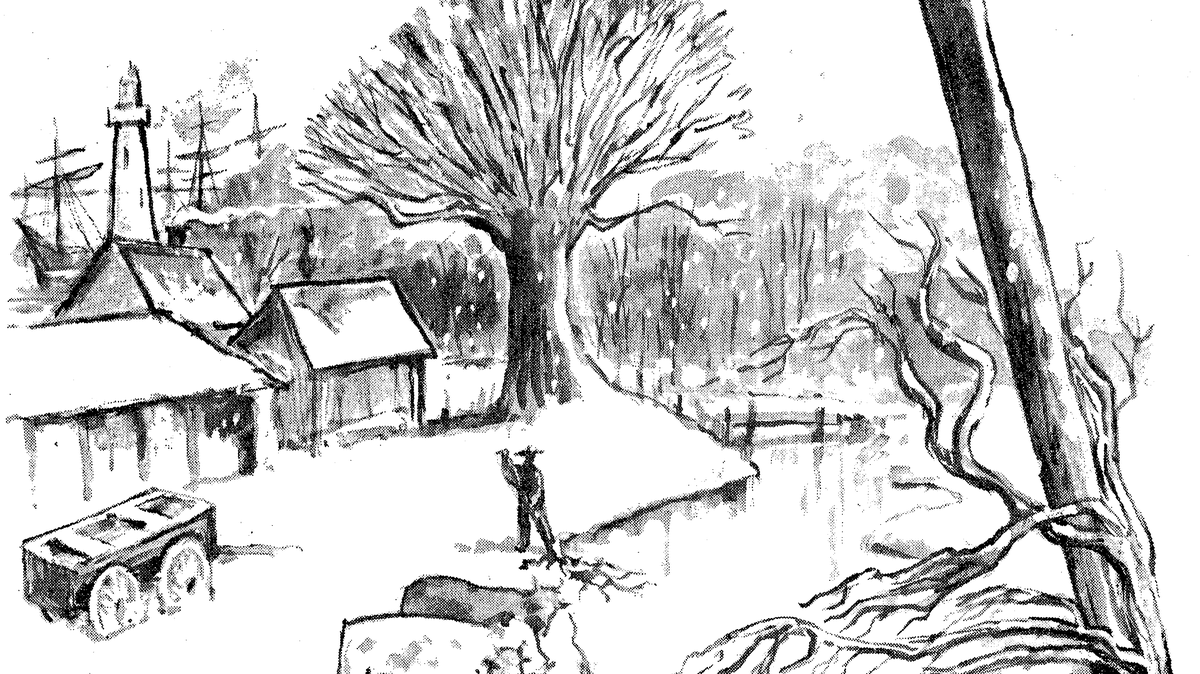
Answer two is February. The coldest-ever recorded Coast temperature came Feb. 12, 1899, a Sunday, when according to this newspaper the thermometer dipped “below Cairo.” Years ago, when I discovered that forgotten winter storm in old microfilm, I was hooked on the “Blizzard of ‘99,” as the locals dubbed it.
The word imagery in the 1899 newspapers is shivery because much of the nation was frigid. Small icebergs floated down the Mississippi River. Orange crops froze in subtropical Louisiana and Florida.
On the Coast, ears froze off cows. Buzzards’ feet froze to tree limbs. Summer foods canned in glass jars burst in cupboards. Nearly-frozen fish floated belly-up in the Mississippi Sound and on the bays. Slick runners were put on doctors wagons so they could go around fixing broken bones.
“La Grippe,” likely the flu, was rampant weeks after the icy snow melted. Coal and firewood bins emptied. Gas lines froze. Electric lights went dark.
Burr, indeed.
The storm — high winds and ice mixed with snow — lasted through the next day, Feb. 13, with the freezing cold continuing even longer.
The problem with reporting on a winter storm of 122 years ago is accuracy, especially with temperatures. Most of my information was gathered from items in newspaper personal columns written at a time when news staffs were minuscule, sometimes with only one proprietor-editor-writer wearing many hats.
Early in my research, I found paragraphs with local residents claiming their thermometers registered 0 degrees Fahrenheit on the 12th or maybe the 13th. The correct date and official temperature escaped me as I was distracted by so many noteworthy things happening in the ‘99 Blizzard. I found more storm stuff than I could shoehorn into a story.
Finally, six years ago I decided to confirm the official temperature and date. I called Timothy Destri, a meteorologist at the National Weather Service in Slidell. That NWS office is where today’s reporters call when they need Coast weather information. Luckily for me, Tim is a senior forecaster who enjoys delving into past weather history
His early digging into official records came up with January 1886 when temperatures dipped far below freezing for five days in a row. Had I been wrong all those years about the ‘99 Blizzard being the coldest?
Eventually, Tim said what I hoped to hear: “Ah, here it is, Feb. 12, 1899. This is probably your all-time lowest temperature. It was one degree above zero.”
I again called Tim today to see if another more recent date has stolen the ‘99 Blizzard’s title.
“No, it’s not reached that low again, not close,” Tim has assured me.
Being a research nerd, I also reread the 1899 papers to find “new news,” maybe something I had missed or forgotten. Bingo!
“Probably there is no person living on the Coast who has experienced such cold weather as that of the last 48 hours. At the local weather bureau yesterday morning at 6 o’clock, the reading of the thermometer showed 1 degree only above zero, while that of Captain Walker in the immediate neighborhood marked zero,” Herald proprietor George W. Wilkes wrote.
“Both the front and back bays were frozen out a distance of several hundred feet and of sufficient thickness to bear the weight of a strong man.
“Captain Torries of the steam tug Biloxi reports that his vessel experienced great difficulty in getting through Dog Keys Pass... ice blocked the channel and as the tug plowed through with great loads of ice clinging to her, every pound of steam was required.”
The ice and strong winds caused boats and ships to lose their moorings, and some beached on Ship Island. Before the Port of Gulfport was built, the island was the main harbor for vessels hauling away the Coast’s once vast supply of yellow pine. At least 20 cargo schooners at the island were “clothed in a coat of ice.”
Thousands of frozen fish also floated near the island with hundreds more scooped up by locals from Bay St. Louis to Pascagoula for, according to the Herald, “no cost and no money.” Already harvested oysters froze in their shells, hitting hard the pockets of seafood processors. Farmers and home gardeners lost their winter crops, making fresh vegetables a thing of the past.
Amazingly, across the Coast only one human death was directly attributed to the ice and snow. However, broken bones and cases of pneumonia and “la grippe” mounted. Even the newspaper proprietor got sick.
Schools closed because there simply was no wood or coal left for heating classroom, causing the Herald to declare “a coal famine.” Coal was a common heat source for coastal houses at that time. One lasting story concerns Buck Chinn, owner of the Biloxi flour mill credited with saving people from freezing to death by opening, at cost, his overflowing coal bins.
Such kindnesses and sharing of scarce food appear far more prevalent in the old newspapers than the advantage hoppers and price gougers.
The flip side of the ‘99 Blizzard coin is sheer fun: “Sleighs of all kinds were hastily improvised and a jolly good time was had.”
The flip side is also a rare scene that only ice storms or snows can bring to a normally tepid, sunny region. Reported the Herald as the Coast began to thaw:
“Old Sol shone forth in resplendent beauty, prismic colors were reflected as in a view from the Fairyland.”
The February blasts in the late 19th century are definitely historic exceptions.
Remember, we started this chilly Sunday missive reporting that January is traditionally the coldest month of the Coast year. Twenty-one days still remain in January.
Kat Bergeron, a veteran feature writer specializing in Gulf Coast history and sense of place, is retired from the Sun Herald. She writes the Mississippi Coast Chronicles column as a freelance correspondent. Reach her at BergeronKat@gmail.com or at Southern Possum Tales, P.O. Box 33, Barboursville, VA 22923.