MS Coast lacks real protections for LGBTQ residents despite ‘open-minded’ reputation
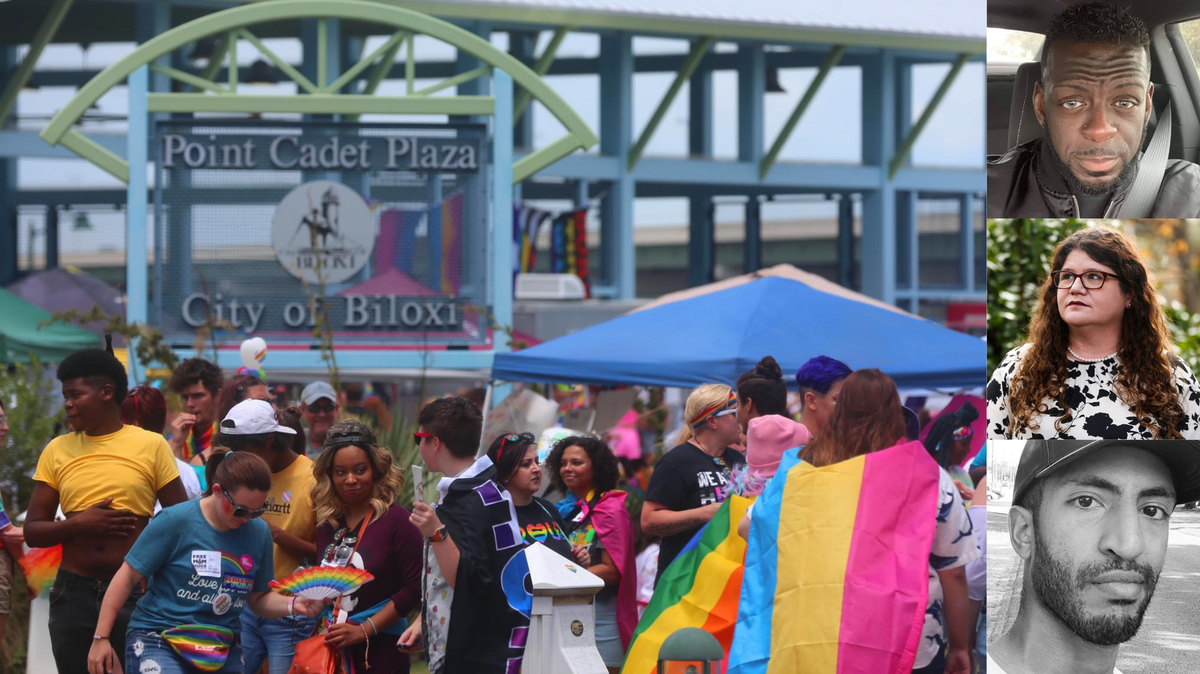
There are small indications that life for LGBTQ people can be easier on the Gulf Coast than in many other parts of Mississippi.
There’s the well-attended Pride festival in Biloxi and the Gulf Coast Equality Festival. The Coast is home to large employers with protections and equal benefits for LGBTQ employees. Small businesses hang signs declaring “All are welcome” and some restaurants host monthly brunches featuring drag performers.
But an annual report by the Human Rights Campaign makes clear that firm legal protections for LGBTQ residents across the Coast are still sorely lacking.
No city on the Coast has a non-discrimination ordinance, leaving LGBTQ citizens vulnerable to discrimination when they seek housing or patronize businesses. (If not for a Supreme Court ruling this summer, it would also be legal for Coast businesses to fire someone for being lesbian, gay or transgender.)
Local police forces and municipal governments lack liaisons to address the specific concerns of LGBTQ people. While every Coast town got some points for local leadership’s statements in support of LGBTQ equality, only one — Biloxi — got any points for that leadership actually supporting policy changes.
David Pelkey, vice president of the Gulf Coast Equality Council, a local nonprofit that advocates for the LGBTQ community, moved to the Coast in 2016 for his work in the Navy. A New Yorker, he didn’t know much about the area. When he arrived, he Googled “gay places near me” and was pleasantly surprised to find three gay bars nearby (one has since closed).
The Coast was welcoming enough that he decided to stay after leaving the Navy. People are generally tolerant, he said, and even Christian conservatives he’s met aren’t interested in criticizing or attacking him. But he does see the region’s conservatism and religiosity reflected in the laws and policies of Coast cities.
He described the thought process as: “Well, I don’t really care what they do, so it doesn’t really bother me, but the conservatives are leaning this way, so we’re gonna go with that.”
Four Coast cities are among the Mississippi cities evaluated in the HRC’s Municipal Equality Index: Bay St. Louis, Biloxi, Gulfport and Ocean Springs. The others were Jackson, Hattiesburg, Oxford, Southaven and Starkville.
While Biloxi and Gulfport were included because of their size, Bay St. Louis and Ocean Springs were evaluated because U.S. Census records show they have a relatively high proportion of same-sex couples living together, said Rob Hill, state director for HRC Mississippi. But they also got the lowest scores on the Coasts, 3 and 4 respectively.
Bethany Fayard, a native of Ocean Springs, is a lesbian woman and the fifth generation to run her family’s shrimp company. She was surprised by the Coast’s low scores.
“Specifically on the Coast, we have a reputation for being really open-minded and more liberal than the rest of the state,” she said. “Everyone says south of I-10 is much more friendly place.”
The Index is “a very well-respected judge” of a town’s protections for LGBTQ people nationally, she said, and the Coast’s reputation for tolerance probably doesn’t mean much to outsiders if it isn’t backed up by legal protections.
“Business owners, people that are looking to move here, they do pay attention to these things, and it can affect our economy in a big way,” she said.
Mississippi scores low in equality index
The index evaluated 506 cities nationwide. The average score was 64 out of 100. Among Mississippi cities, the average was 22.
That figure was pulled up by Jackson, which got a score of 80, thanks to non-discrimination laws, LGBTQ liaisons in the mayor’s office and the police force, and enforcement of non-discrimination laws through a city Human Rights Commission.
Hattiesburg got 38 points in part because of its LGBTQ liaisons and leadership’s strong support and advocacy for LGBTQ equality.
College towns Oxford and Starkville scored similarly, with 17 and 16 points respectively. Southaven got the state’s lowest score, with 0 points.
Gulfport got almost all of its 13 points because it reported 2018 hate crime statistics to the FBI, and Biloxi got points for that as well. No other Mississippi town did.
Molly Kester, board president of the Gulf Coast Equality Council, said that was significant.
“That is meaningful,” she said. “Because the ones that don’t report it, it’s kind of whitewashing what actually happens to the LGBT community.”
Ocean Springs got only four points, all in the category of “Leadership’s public position on LGBTQ equality.” Mayor Shea Dobson has said he supports LGBTQ people.
Bay St. Louis scored got the lowest score on the Coast, with only three points. But Kester said that score didn’t capture the attitude of the town’s business community, where many owners are LGBTQ. Other businesses have made a point of welcoming LGBTQ customers and putting up “Y’all Means All” stickers, especially in the wake of HB1523, which effectively legalized discrimination against LGBTQ people on the basis of religion.
“The index is good as far as knowing kind of what the governments are doing, but it’s really not a full-blown out [picture of] what the communities are,” she said.
Among the aspects of LGBTQ life and community that can be hard to capture in an objective measure like the HRC Index are important factors like the social scene.
Anthony Hubbard, a new board member of the Gulf Coast Equality Council, was born and raised in Gulfport but spent 14 years in Jackson working as a male entertainer and drag performer. Hubbard, who is African American, observed that Jackson’s gay community was much more racially segregated than the Coast’s.
At the Coast’s gay bars, he said, “You have straight, gay, Black, white, all just intermingling together, having a good time.”
Hubbard also said he feels the business community and local police on the Coast are more accepting than in Jackson, where police acted like “they didn’t care” when he called them after being harassed because of his sexuality.
Index pushes Biloxi to change
The index is designed not only to evaluate cities’ livability for LGBTQ people, but also to help local governments understand what specific policy changes could benefit LGBTQ residents, Hill said.
One change Biloxi made this year came as a response to the index: changing the non-discrimination policy for city employees to protect people from discrimination based on sexual orientation and gender identity. That gave the city 14 points, bringing their score from 15 last year to 30 this year.
“Being a city that we like to think is hospitable and open to all, there were some changes we could make right way and the mayor said, ‘Let’s do this,’” said Biloxi spokesman Vincent Creel.
But other changes would take more effort and politicking.
“Some of the other things are involving the changing of public policy, which is going to require a broader discussion,” Creel said.
Walking the talk?
Noelle Nolan-Rider and her wife chose to buy a house in Ocean Springs because they had the impression it was a particularly liberal place on the Coast. But they were frustrated when the Ku Klux Klan left threatening fliers at gay residents’ homes and local police didn’t take it seriously, they felt.
Fayard, who lives in Jackson County, was also disappointed a few years ago when Ocean Springs declined to pass a non-discrimination ordinance that was legally enforceable. Instead, they got a statement of opposition to discrimination, with no teeth.
Nolan-Rider is now looking toward the 2021 municipal elections with a plan to gather information about where candidates stand on LGBTQ issues, and hopefully create accountability and momentum for policy changes. She’ll distribute questionnaires to each candidate asking whether they’d support a non-discrimination ordinance. The answers will be published on a Facebook page she started called Vote Your Pride Mississippi. If someone declines to answer, that’ll be noted as well.
She hopes that even if Ocean Springs doesn’t make policy changes in the next administration, her activism, and even small actions like flying a rainbow flag on her bike and car, will help young LGBTQ people.
“I feel like especially for the youth growing up here that are queer, I want them to know that there’s representation and that we are caring, community-minded, successful people, that are wiling to work for equal rights,” she said. “I want them to feel like there is representation here. I don’t want them to feel alone.”
The Gulf Coast Equality Council is also hoping to open its new LGBTQ community center in 2021. Pelkey, who attended an LGBTQ community center in Buffalo, New York, said he hopes the community center will become an important resource for information, health care, and socializing, especially for young people.
“It’d be a place where people that don’t go to the bars could come, older or younger, a place where parents can come and ask questions,” he said.
Fayard said that in addition to a non-discrimination ordinance, she’d like to see community liaisons in each city government. The Ocean Springs Board of Aldermen, she pointed out, is entirely comprised of straight white men. A liaison could help them “get out of their bubble” and understand community members’ concerns, she said.
“Some of these things are so easy and basic and they just should be common sense,” she said. “They shouldn’t have to be law. But they’re not.”